

Mayriella transfuga
- Scientific Name
- Mayriella transfuga
- Tribe
- Crematogastrini
- Subfamily
- Myrmicinae
- Author
- Baroni Urbani, 1977
- Distribution
- Found in 5 countries
Mayriella transfuga Overview
Mayriella transfuga is an ant species of the genus Mayriella. It is primarily documented in 5 countries , including Brunei Darussalam, Hong Kong, Indonesia. Detailed taxonomic data and occurrence records can be further explored via authoritative databases such as AntWeb or the Global Biodiversity Information Facility (GBIF).
Mayriella transfuga
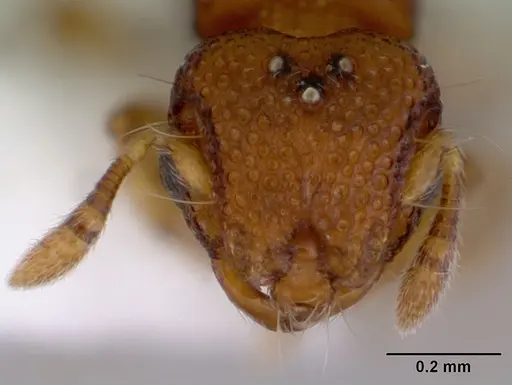
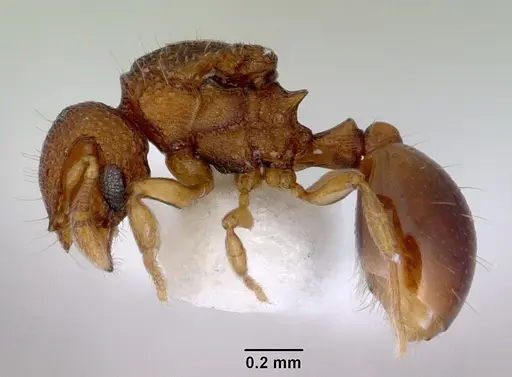
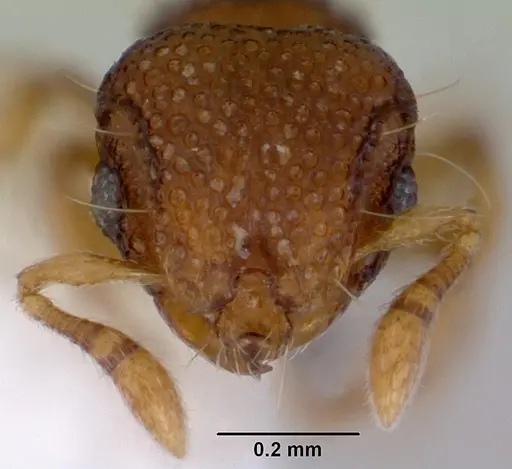
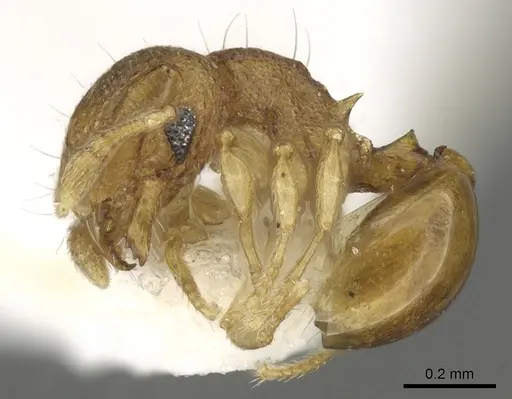
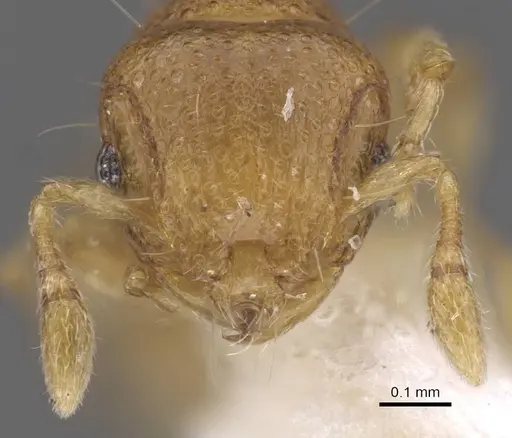
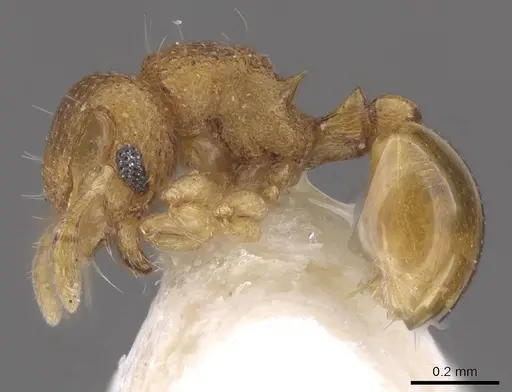
Mayriella transfuga is a tiny myrmicine ant native to South and Southeast Asia. Workers measure just 0.39-0.45mm in width, making them one of the smaller ant species kept in captivity. They have distinctive features including well-developed sculpturing in the antennal scrobe, large pits on the mesosoma, and relatively long propodeal spines. The species was originally described from specimens collected in Bhutan and Nepal in 1977,but is now known to range from Nepal and India east to Hong Kong and the Philippines, south to Borneo and Java [1].
These ants are cryptic leaf-litter foragers that prefer moist rainforest environments. Nests typically contain 50-100 workers and are often polygynous, with about half of queen-containing nests having multiple egg-laying queens. They nest in soil under stones or in rotting logs, with workers foraging through leaf litter [1].
Quick Summary
- Difficulty: Medium
- Origin & Habitat: Native to South and Southeast Asia, ranging from Nepal and India east to Hong Kong and the Philippines, south to Borneo and Java. Found in primary and secondary rainforests where workers forage in leaf litter or nest in soil [1].
- Colony Type: Polygynous, colonies typically have multiple queens (about half of queen-containing nests have more than one queen). Nests average 50-100 workers [1].
- Colony: Polygyne
- Size & Growth:
- Queen: Unconfirmed, no specific measurements found in available research
- Worker: 0.39-0.45mm width,0.40-0.46mm head length [2]
- Colony: Average 50-100 workers per nest [1]
- Growth: Unknown, no development data available
- Development: Unknown, no direct development studies found. Based on typical Myrmicinae patterns, estimate 6-10 weeks at optimal temperature. (Development timeline has not been directly studied. Related Mayriella species suggest moderate growth rates.)
- Antkeeping:
- Temperature: Keep around 22-26°C. These are tropical rainforest ants that prefer warm, stable conditions. A gentle gradient allowing workers to self-regulate is ideal.
- Humidity: High humidity is essential, think damp forest floor. Keep the nest substrate consistently moist but not waterlogged. Provide a water tube for drinking access.
- Diapause: Unknown, being a tropical species, they likely do not require true hibernation but may slow down during cooler periods.
- Nesting: Use a naturalistic setup with moist substrate, or a Y-tong/plaster nest that retains humidity well. They nest in soil under stones in the wild, so provide appropriate substrate depth. Tight chambers scaled to their tiny size work best.
- Behavior: Mayriella transfuga is a cryptic, secretive species. Workers are small and forage through leaf litter, making them less visible than larger ants. They are not aggressive and pose no threat to keepers. Their tiny size means escape prevention is critical, they can squeeze through the smallest gaps. Colonies are polygynous, meaning you may have multiple queens. Activity level is moderate, they are not particularly active outside the nest but will forage regularly.
- Common Issues: escape prevention is critical due to their very small size, use fine mesh and tight-fitting lids, high humidity requirements can lead to mold if ventilation is poor, slow colony growth may frustrate beginners expecting rapid development, small colony size means they are sensitive to disturbance, polygynous colonies may have queen conflicts during establishment
Housing and Nest Setup
Mayriella transfuga requires high humidity housing due to their rainforest origins. A Y-tong (AAC) nest or plaster formicarium works well because these materials hold moisture consistently. Alternatively, a naturalistic setup with a deep soil layer under a glass plate allows you to replicate their natural soil-nesting behavior. If using a test tube setup, ensure the water reservoir is adequate but not prone to flooding, these tiny ants are sensitive to standing water. The nest should have chambers scaled to their very small worker size (under 0.5mm), as they prefer tight spaces. Place the nest in a location away from direct sunlight and vibrations. [1]
Feeding and Diet
In the wild, Mayriella transfuga forages in leaf litter, likely feeding on small arthropods and honeydew. In captivity, offer small protein sources such as fruit flies, pinhead crickets, or small mealworms. Due to their tiny size, prey items should be appropriately sized, no larger than they can handle. Sugar water or honey can be offered occasionally, though acceptance may vary. Feed small amounts every 2-3 days and remove uneaten food to prevent mold in the humid environment. Fresh water should always be available. [1]
Temperature and Humidity
Maintain temperatures between 22-26°C, which mimics their tropical rainforest habitat. A heating cable on one side of the nest can create a gentle gradient, allowing workers to move between warmer and cooler areas. Humidity is critical, keep the nest substrate consistently moist like damp forest soil. However, balance this with adequate ventilation to prevent mold growth. A water tube attached to the nest provides drinking access. Monitor condensation levels, excessive moisture can be as problematic as dry conditions. [1]
Colony Structure and Behavior
Mayriella transfuga is polygynous, meaning colonies naturally contain multiple egg-laying queens. About half of all queen-containing nests in the wild have multiple queens, making this a normal and stable colony structure for the species. Colonies are relatively small, typically containing 50-100 workers. Workers are cryptic and spend most of their time foraging through substrate or tending brood. They are not aggressive and do not sting, making them safe to handle. The species is patchily distributed in the wild, with colonies often localized to specific areas. [1]
Growth and Development
The exact development timeline from egg to worker has not been documented for this species. Based on typical Myrmicinae patterns, expect approximately 6-10 weeks at optimal temperature (around 24°C). Growth is likely moderate rather than fast. Colonies start slowly during founding, with the queen raising the first few workers (nanitics) alone. Once the first workers emerge, colony growth typically accelerates. Given the small natural colony size (50-100 workers), do not expect massive colonies even in established setups.
Seasonal Care
As a tropical species from rainforest environments, Mayriella transfuga does not require true hibernation. However, they may experience seasonal slowdowns during cooler periods in captivity. If room temperatures drop significantly in winter, colony activity may decrease, this is normal and they should recover in spring. Do not attempt to force hibernation on tropical species. Maintain consistent temperature and humidity year-round for best results. [1]
Frequently Asked Questions
How long does it take for Mayriella transfuga to produce first workers?
The exact timeline is unknown, but based on typical Myrmicinae development, expect 6-10 weeks from egg to first worker at optimal temperature (around 24°C). Founding is a slow process as the queen raises her first brood alone.
Can I keep multiple Mayriella transfuga queens together?
Yes, this is normal for the species. Mayriella transfuga is polygynous, meaning colonies naturally have multiple queens. Unlike many species where multiple queens fight, this species coexists peacefully with multiple egg-laying queens.
What do Mayriella transfuga ants eat?
They are generalist foragers that likely eat small arthropods and honeydew in the wild. In captivity, offer small protein sources like fruit flies, tiny crickets, or small mealworms. Sugar water or honey can be offered occasionally.
Do Mayriella transfuga ants sting?
They are not known to be aggressive and pose no threat to keepers. Their small size means they cannot penetrate human skin even if they tried.
How big do Mayriella transfuga colonies get?
Colonies are relatively small in the wild, typically containing 50-100 workers. Do not expect massive colonies, this is a naturally small-colony species.
Are Mayriella transfuga good for beginners?
They are considered medium difficulty. While not aggressive, their small size and high humidity requirements make them more challenging than larger, more resilient species. Beginners may struggle with escape prevention and humidity control.
What temperature do Mayriella transfuga need?
Keep them warm at 22-26°C. These are tropical rainforest ants that prefer stable, warm conditions. A gentle temperature gradient allows workers to self-regulate.
Do Mayriella transfuga need hibernation?
No, being a tropical species, they do not require hibernation. Maintain consistent temperature and humidity year-round.
Why are my Mayriella transfuga escaping?
Their tiny size (under 0.5mm) means they can squeeze through incredibly small gaps. Use fine mesh on all ventilation holes, ensure lids fit tightly, and apply barrier tape (like fluon) to edges. Escape prevention must be excellent.
When should I move Mayriella transfuga to a formicarium?
Keep them in a test tube or small setup until the colony reaches at least 20-30 workers. They prefer tight spaces and high humidity, so any formicarium should retain moisture well. A Y-tong or plaster nest works well.
References

This caresheet is licensed under CC BY-SA 4.0 .
CASENT0172446
View on AntWeb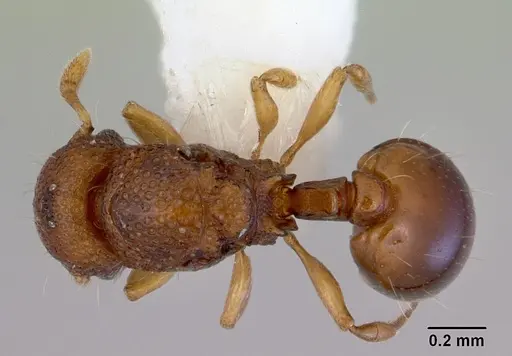
CASENT0172447
View on AntWeb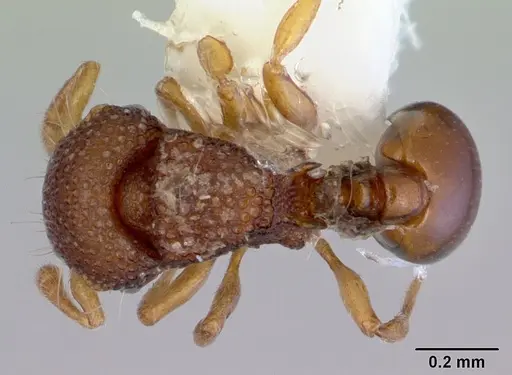
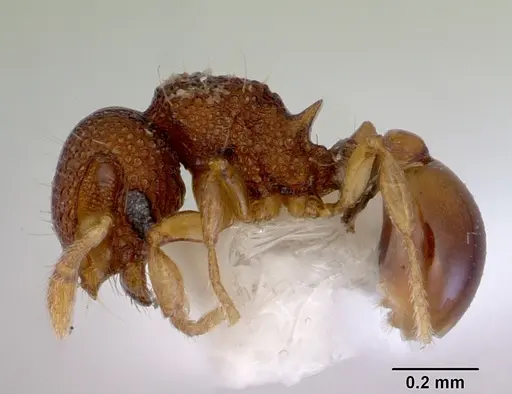
CASENT0902377
View on AntWeb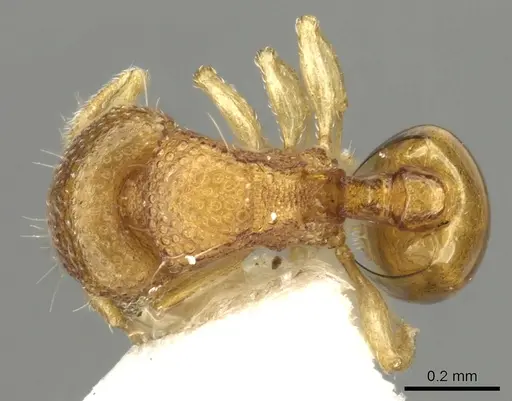
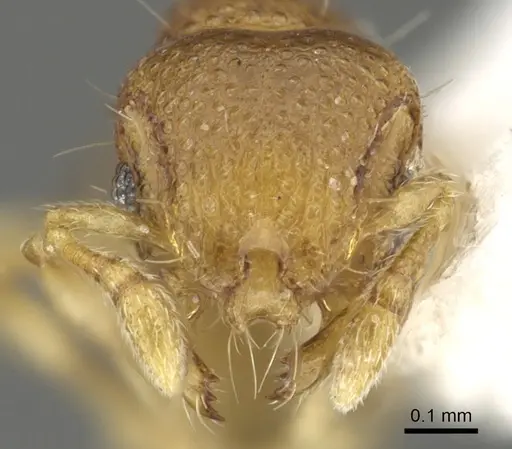
CASENT0913960
View on AntWeb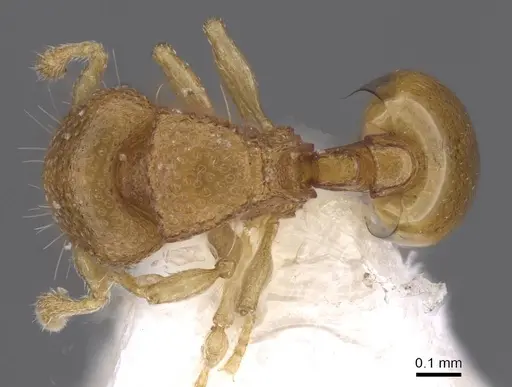
Literature
Loading...Loading products...