

Mayriella granulata
- Scientific Name
- Mayriella granulata
- Tribe
- Crematogastrini
- Subfamily
- Myrmicinae
- Author
- Dlussky & Radchenko, 1990
- Distribution
- Found in 1 countries
Mayriella granulata Overview
Mayriella granulata is an ant species of the genus Mayriella. It is primarily documented in 1 countries , including Viet Nam. Detailed taxonomic data and occurrence records can be further explored via authoritative databases such as AntWeb or the Global Biodiversity Information Facility (GBIF).
Mayriella granulata
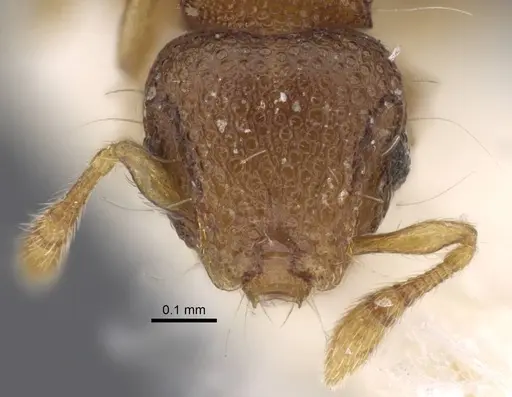
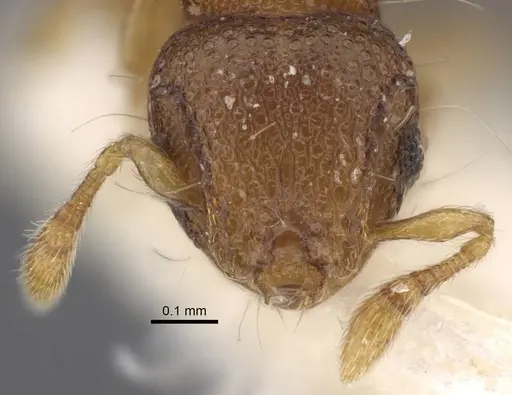
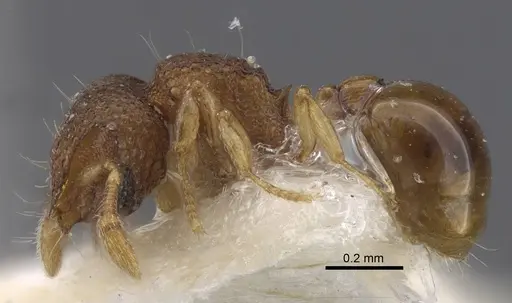
Mayriella granulata is a tiny myrmicine ant native to Vietnam and southern China. Workers measure just 0.42-0.43mm in head width, making them one of the smaller ant species kept in captivity. They have distinctive heavy sculpturing on the head and mesosoma, with large foveae (pits) that are nearly touching each other on the promesonotal region. The propodeal spines are relatively short and broad compared to similar species like M. transfuga. These ants are native to Southeast Asian rainforests where they nest in rotting twigs, under stones, and within the leaf litter layer.
Quick Summary
- Difficulty: Medium
- Origin & Habitat: Vietnam and southern China. Found in moist rainforest and wet sclerophyll forest habitats, typically in palm forests and dipterocarp forests on hills [1][2]. Nests in rotting twigs, under stones, and in the litter layer [1][3].
- Colony Type: Polygynous, colonies typically have multiple queens. About half of nest series containing queens have more than one queen, suggesting this species is polygynous (multiple-queen colonies). Average colony size is 50-100 workers [3].
- Colony: Polygyne
- Size & Growth:
- Queen: Not documented in primary research, estimated based on genus patterns at 3-4mm. Signal if estimated.
- Worker: 0.42-0.43mm head width,0.45mm mesosoma length [4][1].
- Colony: 50-100 workers on average [3].
- Growth: Moderate, based on typical small Myrmicinae development patterns. Signal if estimated.
- Development: Estimated 6-8 weeks at optimal temperature based on related small Myrmicinae. Signal if estimated. (Development timeline is not directly studied for this species, estimate based on genus patterns.)
- Antkeeping:
- Temperature: Keep at 22-26°C. They come from tropical Vietnam where temperatures are consistently warm year-round. A gentle gradient is beneficial but not critical since they're found in forest floor habitats rather than exposed locations [1].
- Humidity: High humidity is essential, these ants live in moist rainforest environments. Keep the nest substrate consistently damp but not waterlogged. Provide a water tube for drinking access. Mist the outworld occasionally and maintain 70-80% relative humidity in the setup.
- Diapause: No, as a tropical species from Vietnam, they do not require hibernation. Keep them at stable warm temperatures year-round.
- Nesting: Use a naturalistic setup with small chambers or a Y-tong/plaster nest with tight passages scaled to their tiny size. They naturally nest in rotting twigs, under stones, and in leaf litter, a naturalistic setup with small decor pieces, leaf litter, and moist substrate works well. Avoid tall open spaces.
- Behavior: Mayriella granulata is a docile, non-aggressive species that forages quietly in the leaf litter layer. Workers are small and quick-moving. They are not known to sting and pose no danger to keepers. Escape prevention is critical, at just 0.4mm, they can squeeze through the tiniest gaps. Use fine mesh and ensure all connections are sealed. They are polygynous, meaning you may see multiple queens coexisting in established colonies.
- Common Issues: escape prevention is critical, their tiny 0.4mm size means they squeeze through gaps that seem impossible, high humidity must be maintained or colonies will decline, they come from rainforest habitats, colonies are small (50-100 workers) so don't expect massive populations, wild-caught colonies may have parasites that can devastate captive colonies, slow founding phase, be patient during the claustral period
Housing and Setup
Mayriella granulata requires a setup that matches their natural rainforest floor habitat. Because they are tiny (workers are only about 0.4mm), you'll need excellent escape prevention, fine mesh on all openings and sealed connections are essential. A naturalistic setup works well: use a small container with moist substrate (like a mix of soil and sand), add some leaf litter and small pieces of rotting wood for them to nest in. Alternatively, a Y-tong or plaster nest with small chambers scaled to their size works well. They prefer tight, cozy spaces rather than open areas. A water tube should always be available for drinking. Keep the nest area humid, these ants come from moist Vietnamese forests and will decline in dry conditions. [1][3]
Feeding and Diet
Like most small Myrmicinae, Mayriella granulata likely accepts small protein sources and sugar. In the wild, workers forage in leaf litter and likely consume honeydew from aphids, small insects, and other arthropods. For captivity, offer small live prey like fruit flies, pinhead crickets, or small mealworms. They will also accept sugar water or honey as an energy source. Feed small amounts twice weekly and remove any uneaten prey after 24 hours. Because colonies are small (50-100 workers), avoid overfeeding. [3]
Temperature and Seasonal Care
As a tropical species from Vietnam, Mayriella granulata needs warm, stable temperatures year-round. Keep the nest area between 22-26°C. They do not require hibernation or cooling periods. Room temperature within this range is usually sufficient, but you may need a heating cable on one side of the nest if your room runs cool. Avoid temperature fluctuations and cold drafts. Maintain consistent humidity alongside the warmth, these go hand in hand for this species. [1]
Colony Structure and Growth
Mayriella granulata is polygynous, meaning colonies naturally have multiple queens. About half of all nests containing queens have more than one queen, which is unusual among ants and means you may see multiple egg-laying queens in your colony. Colony size averages 50-100 workers, which is relatively small compared to many common ant species. This is normal for the genus, don't expect massive worker populations. Growth is moderate. Be patient during the founding phase, small Myrmicinae can take several months to establish a stable first brood. [3]
Escape Prevention
This is the most critical aspect of keeping Mayriella granulata successfully. Workers are extremely small at only about 0.4mm, smaller than many springtails. They can and will squeeze through gaps that seem impossibly small. Use fine mesh (at least 0.5mm or smaller) on all ventilation holes. Seal all connections between the nest and outworld with tape or other barriers. Check for gaps regularly. Even a tiny crack will result in escapes. This is non-negotiable for this species.
Frequently Asked Questions
How long does it take for Mayriella granulata to produce first workers?
The egg-to-worker timeline is not directly studied for this species. Based on typical small Myrmicinae patterns, expect 6-8 weeks at optimal warm temperatures (24-26°C). Be patient, small species often take longer to establish than larger ants.
Can I keep multiple queens together in one colony?
Yes, Mayriella granulata is naturally polygynous, meaning colonies have multiple queens. Unlike many species where multiple queens will fight, this species naturally coexists. You can introduce multiple foundress queens together if you start a colony from scratch.
Do Mayriella granulata ants sting?
No, they are not known to sting and pose no danger to keepers. They are small, docile ants that prefer to flee rather than engage. However, their tiny size means they can still escape very easily.
What size colony does Mayriella granulata reach?
Colonies are relatively small, typically 50-100 workers at maturity. This is normal for the genus. Don't expect the massive populations you might see in species like Lasius or Camponotus.
What do Mayriella granulata eat?
They likely accept small protein sources (fruit flies, small crickets, mealworms) and sugar sources (honey water, sugar water). Feed small amounts twice weekly. Remove uneaten food promptly to prevent mold.
Do Mayriella granulata need hibernation?
No, as a tropical species from Vietnam, they do not require hibernation. Keep them at warm temperatures (22-26°C) year-round. Cold temperatures can be harmful or fatal.
Why are my Mayriella granulata escaping?
This species is extremely tiny (about 0.4mm) and can squeeze through gaps that seem impossible. You need fine mesh on all openings and must seal every connection. Even a tiny crack will allow escapes. Check your setup thoroughly.
Is Mayriella granulata good for beginners?
This species is rated as Medium difficulty. While not aggressive, their tiny size makes escape prevention challenging, and they require high humidity and warm temperatures. They are better suited for keepers who have some experience with small ant species.
References

This caresheet is licensed under CC BY-SA 4.0 .
CASENT0917358
View on AntWeb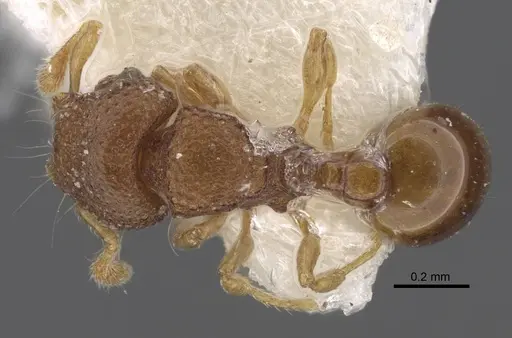
Literature
Loading...Loading products...