

Martialis heureka
- Scientific Name
- Martialis heureka
- Subfamily
- Martialinae
- Author
- Rabeling & Verhaagh, 2008
- Distribution
- Found in 1 countries
Martialis heureka Overview
Martialis heureka is an ant species of the genus Martialis. It is primarily documented in 1 countries , including Brazil. Detailed taxonomic data and occurrence records can be further explored via authoritative databases such as AntWeb or the Global Biodiversity Information Facility (GBIF).
Martialis heureka
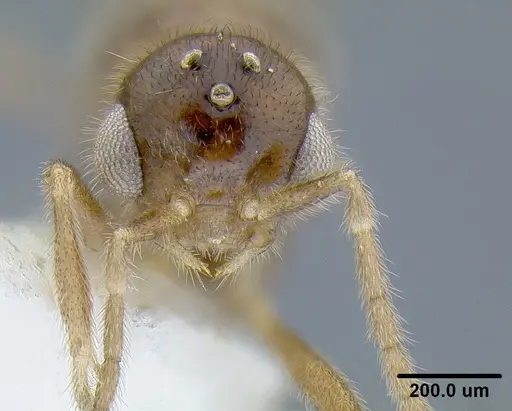
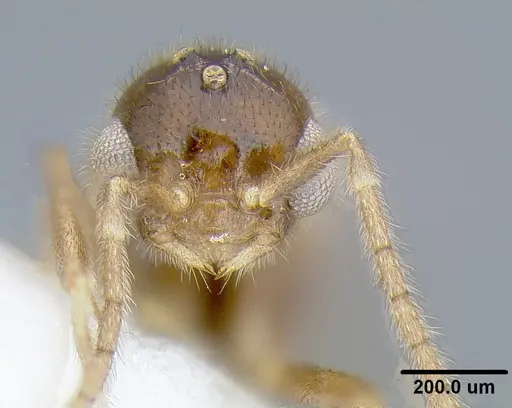
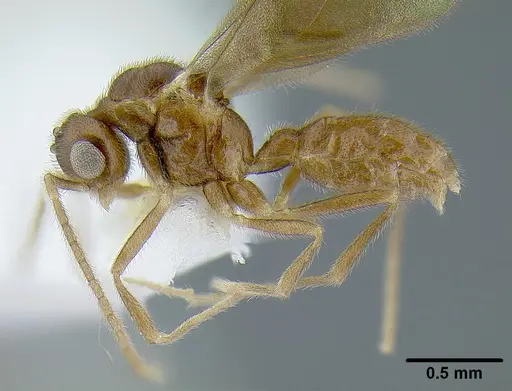
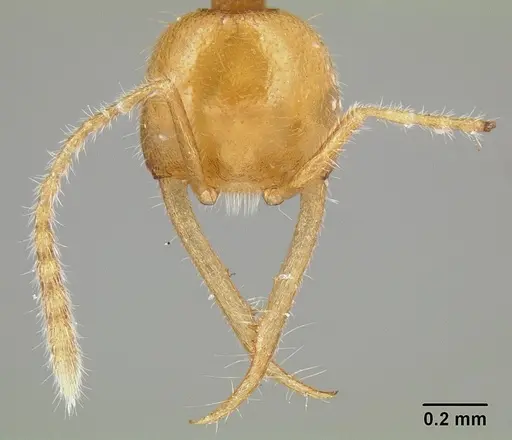
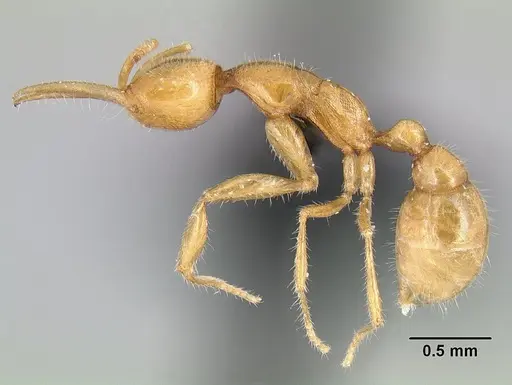
Martialis heureka is one of the rarest and most scientifically significant ants in the world. This tiny, pale, blind ant was discovered in the Amazon rainforest near Manaus, Brazil in 2003 and was so unusual that it was placed in its own subfamily (Martialinae), the first new ant subfamily described since 1920. Workers are only about 2.5mm long, pale yellow, completely eyeless, and possess incredibly long forceps-like mandibles that are even longer than their head capsule [1]. These mandibles are unique among all known ant species and are thought to be specialized for dragging soft-bodied prey like termites and insect larvae out of underground cavities [2]. The species name 'heureka' (Greek for 'I found it!') reflects the dramatic story of its rediscovery after two earlier specimens were lost. The queen has never been found, and this species has never been kept in captivity, making it one of the most challenging and mysterious ants you could potentially work with [1][3].
Quick Summary
- Difficulty: Expert
- Origin & Habitat: Amazon basin near Manaus, Brazil (Amazonas state). Found in primary tropical lowland rainforest at elevations of 40-90m. Lives in leaf litter and soil, possibly using pre-existing underground cavities like hollow rotten roots [1][2].
- Colony Type: Unknown, queen has never been documented. Only workers and males have been collected. Males were collected in January, February, April, and October, suggesting year-round nuptial flights in the tropical climate [3].
- Size & Growth:
- Queen: Unknown, queen has never been found or described [3]
- Worker: Approximately 2.5mm in total length, head width 0.65mm, Weber's length 1.02mm [4][1]
- Colony: Unknown, only a handful of workers have ever been collected [3]
- Growth: Unknown
- Development: Unknown, no captive colonies exist to document development [5] (Development timeline is completely unstudied. Related subterranean ants in the Leptanillinae subfamily typically develop in 4-8 weeks at tropical temperatures, but this is a rough estimate only.)
- Antkeeping:
- Temperature: Based on its Amazonian habitat, keep warm at 24-28°C. The Manaus region maintains consistently warm temperatures year-round [1].
- Humidity: High humidity required, these are forest floor/subterranean ants. Keep substrate consistently moist but not waterlogged. The Amazon rainforest has humidity typically above 70% [1].
- Diapause: No, as a tropical species, they likely do not require a diapause period. Males were collected throughout the year including the dry season months [3].
- Nesting: This is a completely subterranean species. A naturalistic setup with deep, moist substrate (at least 5-10cm of soil or a soil-filled acrylic nest) would be most appropriate. They likely nest in pre-existing cavities in soil or rotting wood rather than excavating their own tunnels [1][2].
- Behavior: Completely blind and likely nocturnal or active only in low-light conditions. Workers forage on the surface at dusk, likely hunting soft-bodied prey like termite larvae, annelids, and other soft arthropods [1][2]. The enlarged front legs (procoxae twice as large as mid and hind legs) appear adapted for prey capture rather than digging. They are not aggressive and have a small sting that is likely ineffective against anything but the smallest prey [2]. Escape risk is moderate, at 2.5mm they are small but not as tiny as some species. Standard escape prevention should suffice.
- Common Issues: This species has never been kept in captivity, there is no established care protocol, The queen has never been found or described, making colony founding impossible, Only a handful of wild workers have ever been collected, obtaining specimens is extremely unlikely, Their specialized predatory diet (soft-bodied prey only) would be difficult to replicate in captivity, Their completely subterranean lifestyle and blindness mean they may be highly sensitive to light and disturbance
Why Martialis heureka Is Unique
Martialis heureka represents one of the most significant discoveries in ant taxonomy in recent decades. When the first worker was collected in 2003 near Manaus, Brazil, it was so unlike any known ant that researchers placed it in its own subfamily, Martialinae, the first new ant subfamily described since 1920 [1]. This makes it one of the earliest-branching lineages in the ant family tree, either sister to all other ants or closely related to the Leptanillinae subfamily [6]. The workers are completely blind with pale, almost translucent cuticle, a stark contrast to the heavily pigmented, visually-oriented ants most keepers are familiar with. Their most remarkable feature is the forceps-like mandibles, which are longer than their entire head capsule and unlike anything seen in any other ant species [2]. These mandibles have two rows of tiny teeth and are thought to be specialized for dragging soft prey like termite larvae and small annelids out of narrow underground cavities [1]. The fact that only 3 workers and 25 males have ever been collected in over 20 years of searching speaks to how elusive and rare this species truly is [3].
The Mystery of the Missing Queen
One of the most frustrating aspects of Martialis heureka for antkeepers is that the queen has never been found or described. All we have are workers and males, the reproductive female caste remains unknown to science [3]. This is unusual but not unprecedented among subterranean ants. Researchers speculate the queen might be ergatoid (worker-like, wingless) rather than the typical alate (winged) queen form, or perhaps she rarely leaves the nest [3]. Without knowing what the queen looks like, we cannot determine whether this species is monogyne (single queen) or polygyne (multiple queens). We also cannot confirm their founding behavior, whether queens seal themselves in and raise the first brood alone (claustral) or must forage during founding (semi-claustral). For antkeepers, this means establishing a colony would be essentially impossible without first locating and describing the queen, which would require significant field work in the Brazilian Amazon.
Housing and Environment
If you were to attempt keeping Martialis heureka, you would need to replicate their natural subterranean habitat as closely as possible. In the wild, they live in the leaf litter layer and upper soil of primary Amazon rainforest, possibly in pre-existing cavities like hollow rotten roots [1]. Workers have been collected from soil core samples during the day and from leaf litter at dusk, suggesting they may surface briefly to forage at night [1]. A naturalistic setup with deep, moist substrate (at least 5-10cm of soil or a soil-filled acrylic nest) would be most appropriate. The substrate should be kept consistently moist but never waterlogged, think damp forest floor. Because they are completely blind and likely photosensitive, the nest should be kept in darkness or very low light conditions. Temperature should be maintained at 24-28°C to match their tropical Amazonian habitat. Ventilation should be adequate to prevent mold but not so much that the substrate dries out quickly.
Feeding and Diet
Based on morphological analysis, Martialis heureka is a specialized predator on soft-bodied invertebrates. Their unique forceps-like mandibles appear designed to drag prey items like termite larvae, annelids (worms), and other soft-bodied arthropods out of narrow cavities [1][2]. The mandibles have two rows of tiny teeth and a specialized shape that would be ineffective against heavily sclerotized (hard-shelled) insects [2]. In captivity, you would likely need to offer small live soft-bodied prey such as termite larvae, small mealworm larvae, or other soft insects. They would NOT accept hard-shelled prey, sugar water, or typical ant feeds. This specialized diet would make them extremely difficult to keep, you would essentially need a constant supply of soft-bodied prey. The venom apparatus is present but small, suggesting limited venom capacity and that prey is subdued more by the mandibles than by venom injection [2].
Obtaining This Species
Martialis heureka is not available in the antkeeping hobby and likely cannot be legally obtained. This species is known only from a tiny region in the Brazilian Amazon near Manaus, and only a handful of specimens have ever been collected in over 20 years of scientific sampling [3]. There are no documented captive colonies anywhere in the world. Additionally, as a scientifically significant species, it would likely be protected under Brazilian law, and exporting such specimens would require special permits. For all these reasons, Martialis heureka remains a species that exists only in scientific collections and cannot be kept by hobbyists. If you are interested in unusual ants, consider other subterranean or blind species that are more commonly available, such as Leptanilla or certain Proceratiinae species that have been kept by advanced antkeepers.
Frequently Asked Questions
Can I keep Martialis heureka ants?
No, this species has never been kept in captivity and the queen has never been found or described. There is no established care protocol, and they cannot be legally obtained since only a handful of specimens exist in scientific collections. The species is known only from a tiny region in the Brazilian Amazon.
What does Martialis heureka look like?
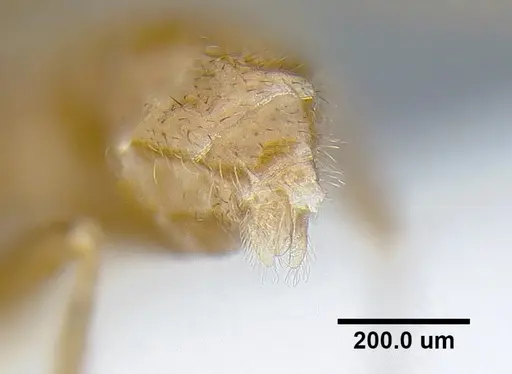
Workers are tiny at about 2.5mm, pale yellow/white in color, completely blind (no eyes), and have incredibly long forceps-like mandibles that are longer than their head capsule. They have enlarged front legs and a slender, elongated body. They look unlike any typical ant, more like a pale, ghostly creature.
Where does Martialis heureka live?
Only known from the Amazon basin near Manaus, Brazil. Specimens have been collected from primary tropical lowland rainforest at elevations of 40-90 meters. They live in leaf litter and soil, possibly in pre-existing underground cavities.
What do Martialis heureka eat?
Based on their morphology, they are specialized predators on soft-bodied prey. Their unique mandibles are designed to drag soft prey like termite larvae, annelids, and other soft-bodied arthropods out of cavities. They cannot handle hard-shelled prey.
Why is Martialis heureka so special?
It is the only species in its own subfamily (Martialinae), representing one of the earliest branches in ant evolution. It was the first new ant subfamily described since 1920. The workers are completely blind, pale, and have unique forceps-like mandibles not found in any other ant species.
Has anyone successfully bred Martialis heureka?
No, there are no documented captive colonies of this species anywhere in the world. Only 3 workers and 25 males have ever been collected, and the queen has never been found or described.
Do Martialis heureka ants have a queen?
Yes, they must have a queen to reproduce, but the queen has never been found or scientifically described. Researchers speculate it might be ergatoid (worker-like, wingless) rather than the typical winged queen form.
Are Martialis heureka dangerous?
No, at only 2.5mm with a tiny, weakly-developed sting, they pose no danger to humans. They are specialized predators on soft-bodied invertebrate prey and would be completely harmless to people.
What temperature do Martialis heureka need?
Based on their Amazonian habitat, they would need warm conditions around 24-28°C. The Manaus region maintains consistently warm temperatures year-round with little seasonal variation.
Do Martialis heureka need hibernation?
No, as a tropical species from the Amazon rainforest, they would not require a diapause or hibernation period. Males have been collected throughout the year, suggesting year-round activity.
References

This caresheet is licensed under CC BY-SA 4.0 .
ANTWEB1041466
View on AntWeb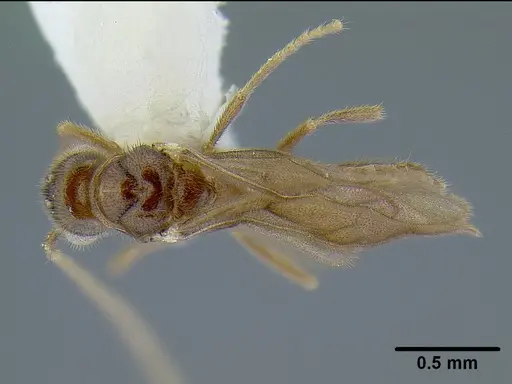
CASENT0106181
View on AntWeb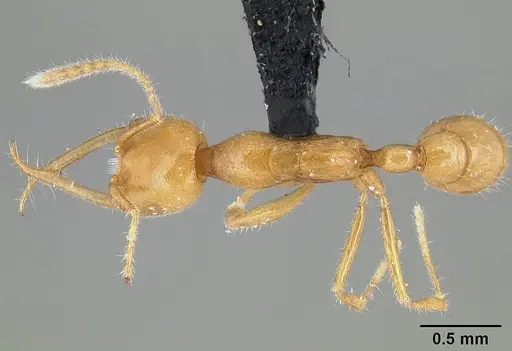
Literature
Loading...Loading products...