

Malagidris sofina
- Scientific Name
- Malagidris sofina
- Tribe
- Crematogastrini
- Subfamily
- Myrmicinae
- Author
- Bolton & Fisher, 2014
- Distribution
- Found in 1 countries
Malagidris sofina Overview
Malagidris sofina is an ant species of the genus Malagidris. It is primarily documented in 1 countries , including Madagascar. Detailed taxonomic data and occurrence records can be further explored via authoritative databases such as AntWeb or the Global Biodiversity Information Facility (GBIF).
Malagidris sofina
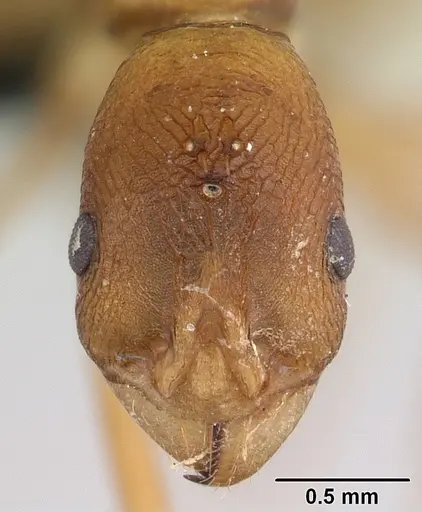
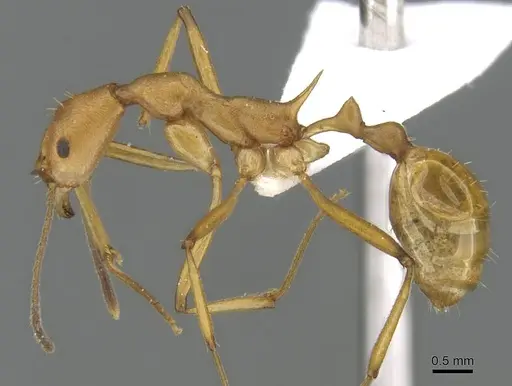
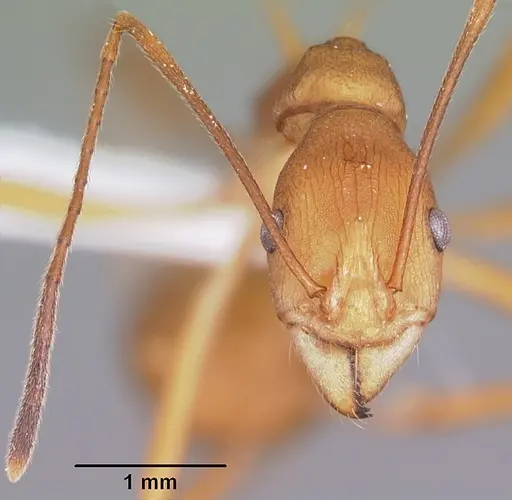
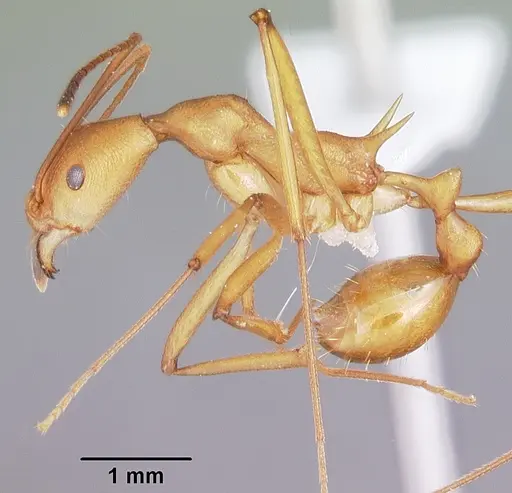
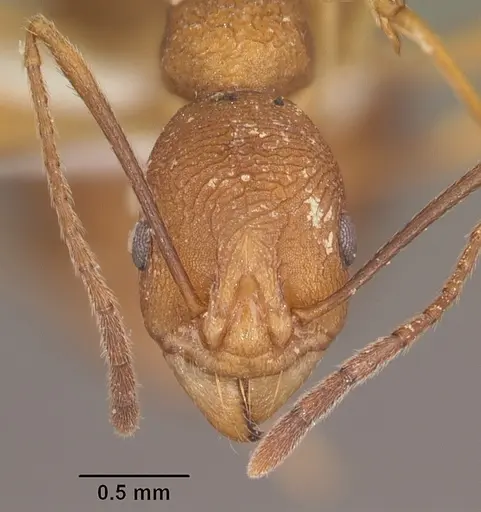
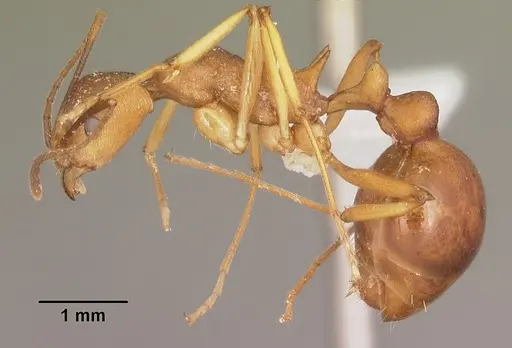
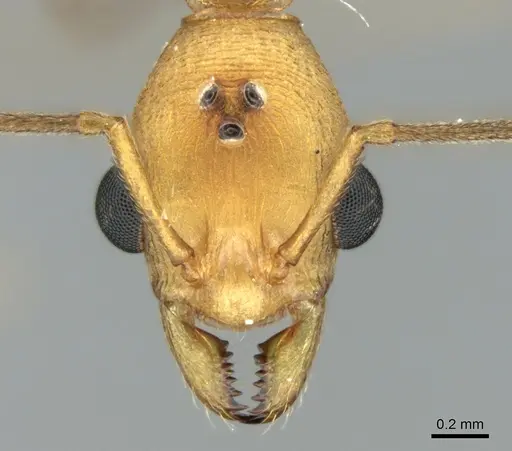
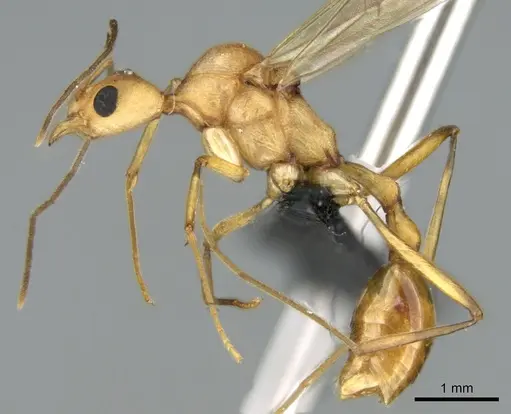
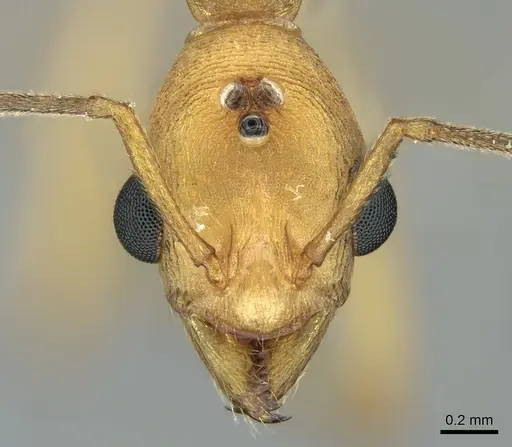
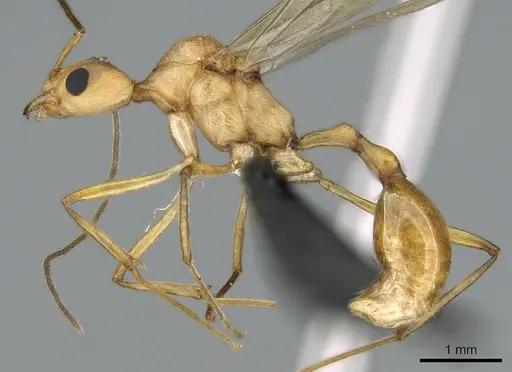
Malagidris sofina is a medium-sized myrmicine ant endemic to Madagascar, easily recognized by its extremely long antennae scapes (over twice the head width) and pale yellow to orange-yellow coloration. Workers measure 5.5-7.8mm with notably slender, elongated legs and a distinctive funnel-shaped nest entrance that projects horizontally from cliff faces. This species inhabits the wet forests of northwest Madagascar below 1,200m elevation, where it nests exclusively on vertical cliff faces, sandstone alcoves, or clay banks. The most remarkable aspect of this species is its specialized nest architecture, the funnel-shaped entrance serves a critical function in gas exchange, increasing airflow over sixfold compared to simple tube entrances, which is essential given the enclosed nest environment [1][2].
Quick Summary
- Difficulty: Expert
- Origin & Habitat: Endemic to northwest Madagascar, found in rainforest, montane rainforest, and tropical dry forest below 1,200m elevation. Nests on vertical cliff faces, sandstone alcoves, and clay banks in the Sambirano seasonal rainforest region [1][2][3].
- Colony Type: Single-queen colonies with one ergatoid (permanently wingless) queen. Colonies reproduce by fission, the queen walks to a new nest site accompanied by workers. Facultatively polydomous, meaning colonies may occupy multiple closely spaced nests [1][2].
- Colony: Monogyne
- Size & Growth:
- Queen: 7.0-7.8 mm (ergatoid queen) [3]
- Worker: 5.5-7.8 mm [3]
- Colony: 16-127 workers, average 62.5 workers [1][2]
- Growth: Moderate, inferred from colony size and fission reproduction
- Development: Unknown, no direct development data available. Based on related Myrmicinae and colony size, estimate 8-12 weeks at optimal temperature. (Development timeline unconfirmed for this species. Related genus patterns suggest moderate development speed.)
- Antkeeping:
- Temperature: Keep around 22-26°C. This species comes from warm, humid Madagascan forests. A gentle gradient allowing them to thermoregulate is beneficial.
- Humidity: Requires high humidity (70-85%) matching their rainforest origin. Keep nest substrate consistently moist but not waterlogged. The funnel nest structure naturally handles some moisture management.
- Diapause: Unknown, no specific diapause data available. As a tropical species from Madagascar, likely minimal or no true diapause. Consider a slight cooling period (18-20°C) for 2-3 months during winter months to simulate seasonal slowdown.
- Nesting: This is the most critical aspect of keeping M. sofina. They require vertical surfaces or cliff-like structures, a Y-tong or acrylic nest with vertical orientation works well. Provide a naturalistic setup with a vertical cliff face or stone alcove. The nest entrance should allow them to build or have a projecting funnel-like structure. Avoid horizontal test tube setups, they need vertical surfaces to mimic their natural cliff-face nesting.
- Behavior: Generally timid but capable of localized defense. In encounters, about 58% of the time workers retreat without aggression. When they do defend, they fight one-on-one rather than swarming. Their most remarkable defense behavior is 'cliff jumping', when an intruder is grabbed, workers will deliberately drop off the cliff edge (up to several meters) while clinging to the invader, then separate on the ground and climb back up. Workers have enhanced tarsal grip allowing them to cling to surfaces even when inverted, an adaptation to cliff dwelling. Escape risk is moderate, while not tiny ants, their slender build and climbing ability means standard barrier methods should be used [2].
- Common Issues: Vertical nesting requirement is critical, they will not thrive in horizontal test tube setups, Funnel-building behavior may be disrupted in captive nests, potentially affecting gas exchange, High humidity needs make them prone to mold if ventilation is poor, Limited availability since this is a rarely kept species with restricted range, Timid nature means colonies may be slow to establish and may not readily accept new foods
Nest Preferences and Housing
This is the most critical aspect of keeping Malagidris sofina. In the wild, they nest exclusively on vertical cliff faces, sandstone alcoves, and clay banks. The nest entrance is a distinctive funnel-shaped structure that projects horizontally from the cliff surface, this is not just decorative but serves essential functions for gas exchange and water diversion. In captivity, you need to replicate this vertical cliff environment. A Y-tong or acrylic formicarium with vertical orientation works well. The nest should have a small chamber (around 1-2cm interior diameter) connected to a projecting funnel-like entrance area. You can create a naturalistic setup using flat stones or clay to form a cliff face with an alcove. The key is providing vertical surfaces, they will not thrive in standard horizontal test tube setups. The nest material should be slightly porous to allow some gas exchange, similar to the natural mud walls that have small holes [1][2].
Feeding and Diet
In the wild, M. sofina forages mainly on the ground and in leaf litter, also climbing low vegetation. They likely scavenge and hunt small invertebrates. For captive colonies, offer a varied diet: small live prey like fruit flies, pinhead crickets, or small mealworms (appropriately sized to their 5.5-7.8mm workers). They will likely accept protein sources readily. Sugar water or honey can be offered occasionally, though their primary diet appears to be insect-based. Feed protein 2-3 times per week and provide a constant sugar water source. Remove uneaten prey within 24-48 hours to prevent mold. Given their small colony sizes (typically under 130 workers), avoid overfeeding [3].
Temperature and Seasonal Care
As a species from the warm, humid forests of Madagascar, M. sofina prefers temperatures in the 22-26°C range. A slight temperature gradient within the nest allows workers to choose their optimal conditions. Since they come from a tropical environment, they do not require true hibernation, but a slight cooling period during winter months (dropping to 18-20°C for 2-3 months) may help simulate natural seasonal patterns and promote colony health. This is optional since specific diapause requirements are unknown. Avoid temperatures below 15°C or above 30°C. Heating cables should be used carefully, place on the top of the nest to create gentle warmth without drying out the substrate too quickly. Maintain humidity by misting or providing a water reservoir connected to the nest [1][2].
Unique Defense Behaviors
M. sofina has some of the most unusual defensive behaviors documented in ants. Rather than swarming attackers, workers typically respond timidly, in studies,58% of encounters resulted in workers simply retreating into the nest without aggression. When they do defend, they engage in one-on-one combat. The most remarkable behavior is called 'cliff jumping', workers will grab an intruder (whether another ant species or a predator) and deliberately jump off the cliff edge while clinging to the invader. They then separate on the ground below and climb back up the cliff. This behavior was observed in 41% of aggressive encounters where the invader was dragged to the cliff edge. This is an extreme anti-predator adaptation that likely confuses or drops attackers away from the nest entrance. In captivity, you may observe this behavior if the nest is positioned at a height and the colony feels threatened [2].
Colony Structure and Reproduction
M. sofina colonies are relatively small compared to many ants, with 16-127 workers averaging around 63 workers. Each colony contains a single ergatoid queen, a permanently wingless queen that cannot fly. Reproduction occurs through fission (also called dependent colony foundation), which is unusual. Instead of mating during a nuptial flight, the queen simply walks to a new nest site accompanied by a group of workers. This explains why they are restricted to cliff faces, the queen cannot disperse by flight and must walk to new locations. Colonies can also be facultatively polydomous, meaning they may occupy multiple closely spaced nests (as close as 3cm apart). Workers move freely between these nests without aggression. This fission-based reproduction and small colony size means colonies grow slowly, expect gradual growth over many months rather than rapid expansion [1][2].
The Funnel: Nature's Engineering
The most distinctive feature of M. sofina is their funnel-shaped nest entrance. This is not optional architecture, it serves critical functions. The funnel projects horizontally from the cliff face (median 2cm beyond the nest wall), with an entrance area about 6 times larger than the interior chamber. This dramatic flaring enhances diffusive gas exchange over sixfold compared to a simple tube, essential because a colony of 63 workers produces enough CO2 to raise concentrations to over 12 times atmospheric levels in an enclosed chamber. The funnels also divert water away from the nest during rain, with water running around or dripping off the lower lip rather than entering the nest. The funnels are also relatively impermeable, experiments showed iodine solution did not diffuse through the mud walls. In captivity, providing a similar funnel-like entrance structure may help maintain proper gas exchange. If the ants cannot build a natural funnel, a flared nest entrance can partially replicate this function [1][2].
Frequently Asked Questions
Can I keep Malagidris sofina in a test tube?
Standard horizontal test tubes are not ideal for M. sofina. This species nests on vertical cliff faces in the wild and needs vertical surfaces to thrive. A Y-tong or acrylic formicarium with vertical orientation, or a naturalistic setup with a cliff-like structure, is much more appropriate. They need the ability to create or use a funnel-like entrance for proper gas exchange.
How long does it take for Malagidris sofina to produce first workers?
The exact development timeline is unconfirmed for this species. Based on related Myrmicinae patterns and their small colony size, expect approximately 8-12 weeks from egg to worker at optimal temperature (22-26°C). Their fission-based reproduction means new colonies start with workers already present, so you won't experience the typical claustral founding period.
How big do Malagidris sofina colonies get?
Colonies are relatively small, typically reaching 16-127 workers with an average of about 63 workers. This is smaller than many common ant species and reflects their specialized cliff-face habitat and fission-based reproduction. They are unlikely to become massive colonies in captivity.
Do Malagidris sofina ants sting?
Yes, they have a stinger and will use it in defense. However, they are generally timid, in most encounters they retreat rather than attack. When they do defend, workers will grab intruders with mandibles and attempt to sting, then drag them to the cliff edge. For humans, the sting is likely mild given their small size.
Are Malagidris sofina good for beginners?
No, this is an expert-level species. They have very specific nesting requirements (vertical cliff faces), require high humidity, and are difficult to obtain since they are endemic to Madagascar with a restricted range. Their unique funnel nest architecture and fission reproduction also make them challenging to keep successfully. Beginners should start with more adaptable species.
Do Malagidris sofina need hibernation?
As a tropical species from Madagascar, they do not require true hibernation. However, a slight cooling period (18-20°C) for 2-3 months during winter may benefit colony health, simulating natural seasonal patterns. Avoid temperatures below 15°C.
Can I keep multiple queens together?
No, M. sofina is a single-queen species with ergatoid (wingless) queens. Colonies reproduce through fission where the queen walks to a new location with workers. There is no benefit to keeping multiple queens together, and doing so would likely result in fighting.
What makes Malagidris sofina unique compared to other ants?
Several things make them unique: they are one of the few ants with ergatoid (permanently wingless) queens that reproduce via fission instead of nuptial flights, they build specialized funnel-shaped nest entrances for gas exchange, they exhibit 'cliff jumping' defense behavior where workers drop off cliffs with attackers, and they have enhanced tarsal grip adapted for vertical cliff faces.
Why is my Malagidris sofina colony declining?
Common causes include: incorrect nesting orientation (needs vertical surfaces), inadequate humidity, poor gas exchange from lack of funnel-like entrance, overfeeding causing mold, or stress from disturbance. They are sensitive to husbandry errors. Ensure the nest has proper vertical orientation, maintain high humidity without stagnation, and minimize disturbances to the nest.
References

This caresheet is licensed under CC BY-SA 4.0 .
CASENT0003236
View on AntWeb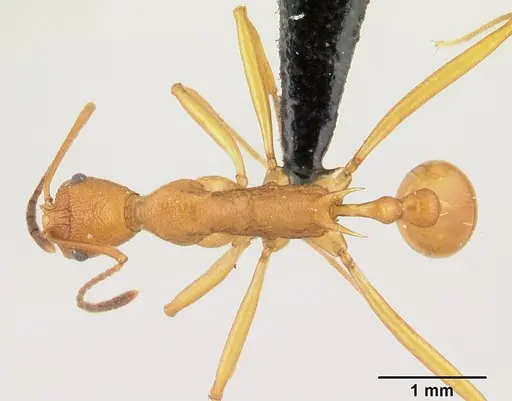
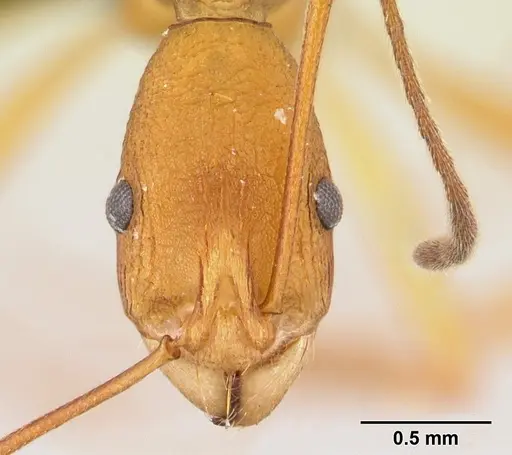
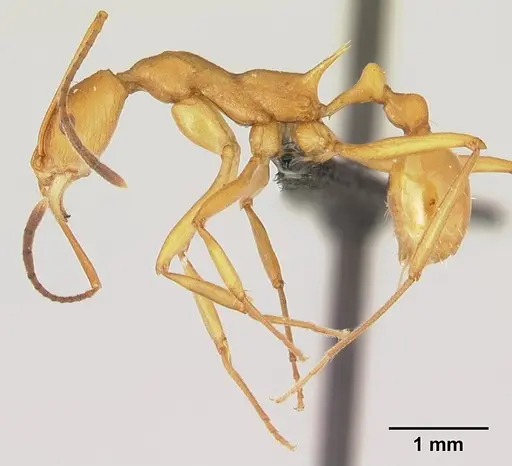
CASENT0420020
View on AntWeb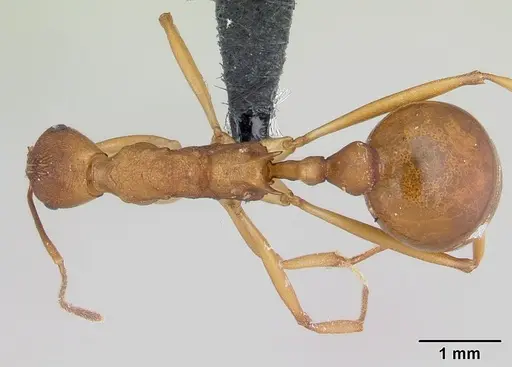
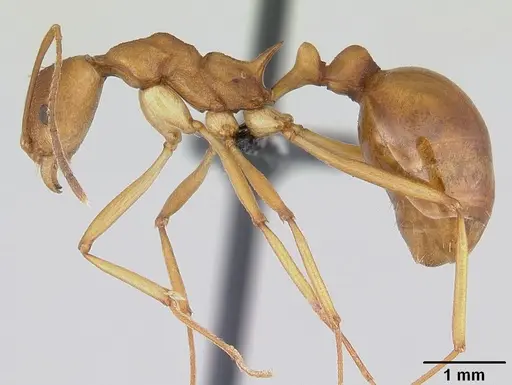
CASENT0427840
View on AntWeb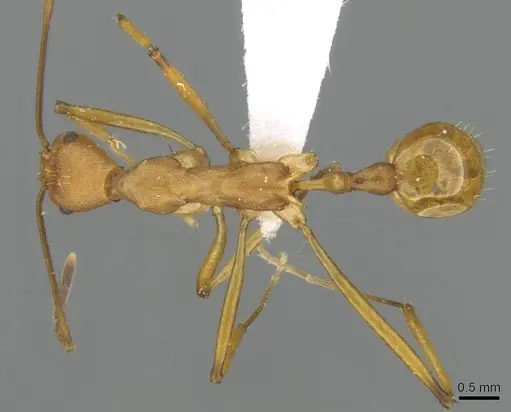
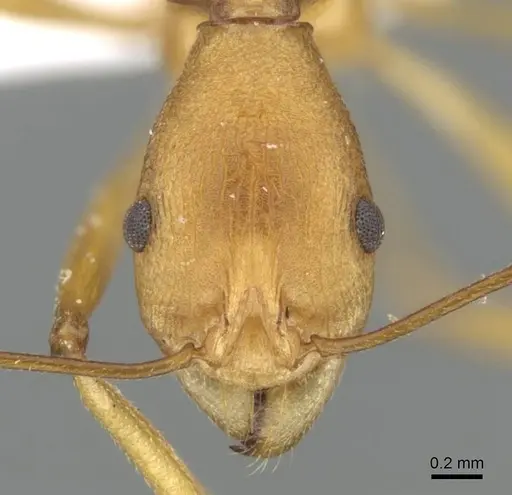
CASENT0427880
View on AntWeb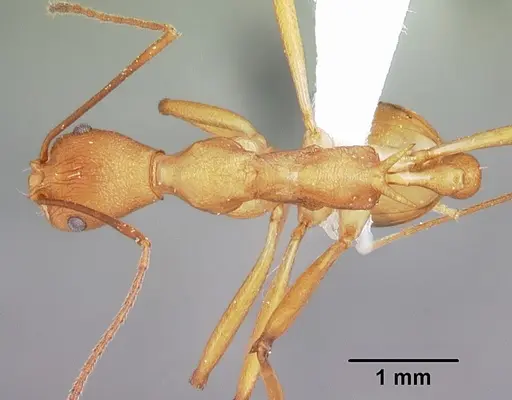
CASENT0427881
View on AntWeb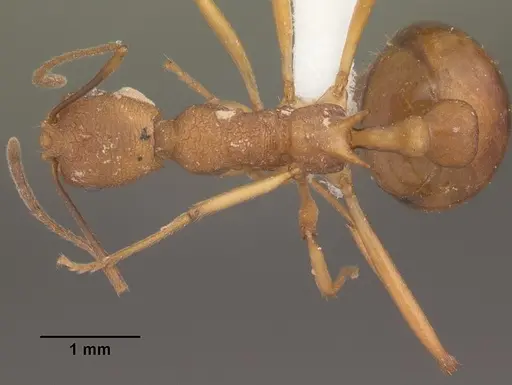
CASENT0906626
View on AntWeb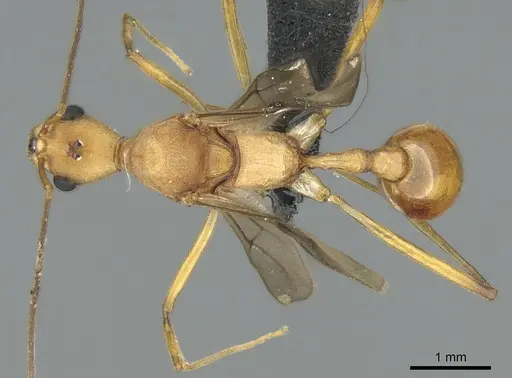
CASENT0906627
View on AntWeb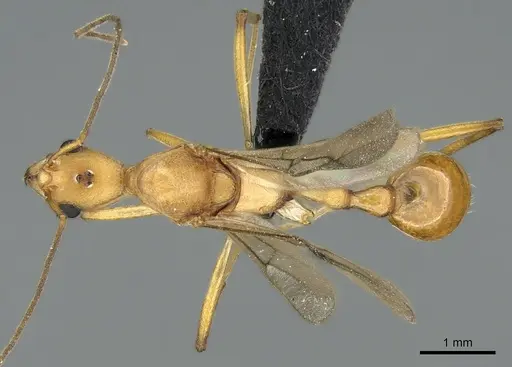
Literature
Loading...Loading products...