

Lordomyrma vuda
- Scientific Name
- Lordomyrma vuda
- Tribe
- Crematogastrini
- Subfamily
- Myrmicinae
- Author
- Sarnat, 2006
- Distribution
- Found in 1 countries
Lordomyrma vuda Overview
Lordomyrma vuda is an ant species of the genus Lordomyrma. It is primarily documented in 1 countries , including Fiji. Detailed taxonomic data and occurrence records can be further explored via authoritative databases such as AntWeb or the Global Biodiversity Information Facility (GBIF).
Lordomyrma vuda
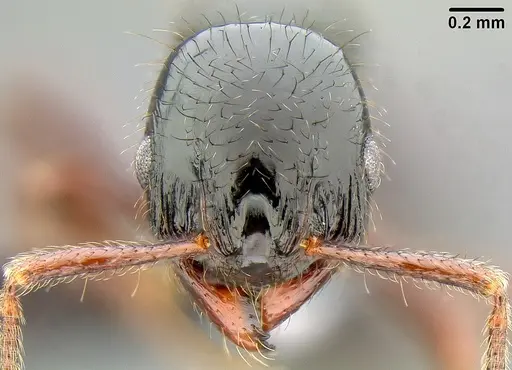
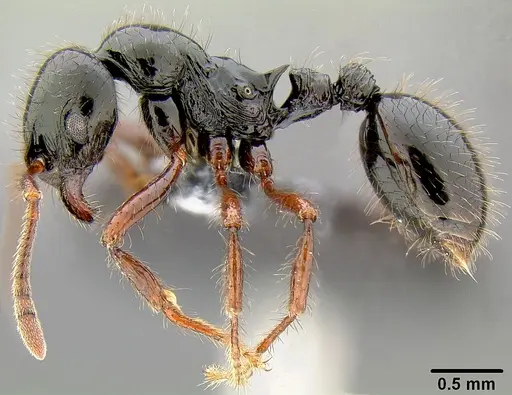
Lordomyrma vuda is a medium-sized ant species endemic to the islands of Fiji, where it represents the largest known member of its genus. Workers measure 4.65-4.84mm in total length and display a distinctive dark brown to reddish-brown coloration with notably lighter appendages. The species is easily recognized by its robust build, long legs and antennae, and most notably its strongly developed, downcurved propodeal spines that extend beyond the width of the procoxae. The head and mesosoma feature sparse sculptural elements, and the dorsal surfaces bear numerous upright hairs that can match or exceed the length of the eye. This species has only been documented from two nearby localities in western Viti Levu's Vuda Province, making it one of the rarest Lordomyrma species in Fiji. It is also the only member of the genus appears to be restricted to the drier, leeward mountain ranges of western Viti Levu, rather than the wetter rainforest areas typical of most congeneric species [1][2][3].
Quick Summary
- Difficulty: Unknown, Insufficient data for difficulty rating
- Origin & Habitat: Endemic to Fiji, specifically western Viti Levu's Vuda Province. This species is restricted to the drier, leeward mountain ranges of western Viti Levu, which distinguishes it from most other Lordomyrma species that inhabit wetter rainforest environments. Collections have been made from workers foraging on stones, with one locality adjacent to a river at approximately 650m elevation in Koroyanitu National Park [1][2][3].
- Colony Type: Colony structure is unconfirmed. No queen or colony founding data exists in the scientific literature for this species.
- Size & Growth:
- Antkeeping:
- Temperature: Based on its tropical Fiji origin, likely prefers warm conditions in the range of 24-28°C. The drier mountain habitat suggests it may tolerate slightly lower humidity than typical rainforest species.
- Humidity: Likely moderate, the drier leeward habitat suggests they prefer conditions less humid than full rainforest. Aim for substrate that dries between waterings rather than constant moisture.
- Diapause: Unlikely, being a tropical species from Fiji, diapause is probably not required. Maintain warm temperatures year-round.
- Nesting: No specific nesting data exists. Workers were collected while foraging on stones, suggesting surface-active behavior. Based on genus patterns, they likely nest in soil or small cavities under rocks. A naturalistic setup with some dry areas and a moist nesting chamber would be appropriate.
- Behavior: Behavior is not well documented. Workers have been observed foraging on stones, suggesting they are surface-active and may forage in open areas. The strong propodeal spines suggest a defensive capability, though sting potency is unknown for this species. Escape prevention should be moderate, workers at nearly 5mm are not extremely small but can still fit through small gaps.
- Common Issues: no captive husbandry data exists, this species has never been kept in captivity to our knowledge, queen and colony founding behavior is completely unknown, diet preferences have not been documented, wild-caught colonies may be extremely difficult to obtain due to restricted range
Natural History and Distribution
Lordomyrma vuda is one of the rarest and most geographically restricted ant species in Fiji. It has only been documented from two nearby localities in western Viti Levu's Vuda Province, making it a true endemic with an extremely limited range. What makes this species particularly interesting is its habitat preference: unlike most other Lordomyrma species in Fiji which inhabit wet rainforest environments, L. vuda appears to be restricted to the drier, leeward mountain ranges of western Viti Levu. This ecological distinction suggests it has adapted to conditions that are less humid than typical for the genus. The type locality is Savione Falls in Koroyanitu National Park, at approximately 650m elevation, where workers have been collected foraging on stones near a river [1][2][3].
Identification and Morphology
This is the largest Lordomyrma species documented from Fiji, with workers measuring 4.65-4.84mm in total length. The most distinctive morphological features include the strongly developed, triangular propodeal spines that are downcurved and divergent, actually surpassing the width of the procoxae when viewed in profile. The body is a dark brown to reddish-brown coloration with notably lighter appendages. The promesonotum is massive and strongly convex, particularly in larger workers where it visibly bulges above the head and propodeum. All dorsal surfaces bear an abundance of suberect to erect acuminate hairs, with the longest hairs equaling or exceeding the length of the eye. The species lacks the transverse carina posterior to the metanotal groove that some related species possess, and the facial sculpture is relatively sparse compared to congeners [1][2][3].
Housing and Nesting
No captive husbandry data exists for Lordomyrma vuda, as this species has never been documented in the antkeeping hobby. Based on the collection data showing workers foraging on stones near a river, they appear to be surface-active foragers that may nest in soil or under rocks in areas with some moisture access but not full rainforest conditions. For keepers attempting this species, a naturalistic setup would be most appropriate, a nest chamber with access to a moist area and a drier foraging area would likely suit their preferences. The species' origin in drier mountain habitats suggests they may be more tolerant of variable humidity than typical tropical rainforest ants. Given the lack of captive data, keepers should be prepared to experiment and document their findings carefully.
Feeding and Diet
The diet of Lordomyrma vuda has not been documented in the scientific literature. As a member of the Myrmicinae subfamily within the Crematogastrini tribe, they likely have omnivorous habits typical of many tropical ants, potentially including nectar consumption, honeydew harvesting, and predation on small invertebrates. Without specific data, keepers should offer a varied diet including sugar sources (honey water or sugar water) and protein sources (small insects like fruit flies or pinhead crickets). The foraging behavior on stones suggests they may be active hunters or scavengers on the ground surface. Due to the complete lack of dietary data for this species, any feeding observations should be carefully documented and shared with the antkeeping community.
Temperature and Seasonal Care
Lordomyrma vuda originates from tropical Fiji, where temperatures remain warm year-round. Based on its origin, maintain temperatures in the range of 24-28°C. The species' presence in the drier leeward mountain ranges suggests it may prefer slightly warmer and drier conditions than typical rainforest ants. No diapause requirement is expected given the tropical climate of its native range. Maintain consistent warm temperatures throughout the year without seasonal cooling. The elevation of approximately 650m at the type locality suggests they may be accustomed to slightly cooler conditions than sea-level Fiji locations, but still well within the tropical warm range. [1]
Challenges and Considerations
Lordomyrma vuda presents significant challenges for antkeepers. First, the species has never been documented in captive husbandry, meaning there is no established care protocol. Second, the extremely restricted natural range in western Viti Levu means wild-caught colonies would be very difficult to obtain. Third, even basic biological information like queen appearance, colony size, founding behavior, and diet preferences remain completely unknown. This species would be suitable only for experienced antkeepers who are prepared to document novel observations and potentially develop husbandry protocols from scratch. The lack of any captive data means keepers would essentially be pioneering the husbandry of this species. [1][2]
Frequently Asked Questions
Is Lordomyrma vuda available in the antkeeping hobby?
No, Lordomyrma vuda is not currently available in the antkeeping hobby. This species has never been documented in captivity and has an extremely restricted range in western Viti Levu, Fiji, making it nearly impossible to obtain for hobbyist keeping.
How big do Lordomyrma vuda workers get?
Workers measure 4.65-4.84mm in total length, making this the largest Lordomyrma species documented from Fiji.
Is Lordomyrma vuda good for beginners?
No, this species is not recommended for beginners. There is absolutely no captive husbandry data available, and even basic biological information like colony structure, founding behavior, and diet preferences remain completely unknown. Keeping this species would require developing care protocols from scratch.
Where is Lordomyrma vuda found in the wild?
Lordomyrma vuda is endemic to Fiji, specifically found only in western Viti Levu's Vuda Province. It is the only species in the genus that appears restricted to the drier, leeward mountain ranges rather than wet rainforest areas. The type locality is Koroyanitu National Park at approximately 650m elevation.
Do Lordomyrma vuda ants sting?
The sting capability of Lordomyrma vuda has not been documented. As a member of Myrmicinae, they do possess a stinger, but its potency and whether it can penetrate human skin is unknown. The strong propodeal spines suggest they have defensive capabilities.
What do Lordomyrma vuda eat?
The diet of this species has not been documented. Based on genus typical behavior, they likely are omnivorous, potentially consuming nectar, honeydew, and small invertebrates. Keepers would need to experiment with various food sources and document acceptance.
How do I house Lordomyrma vuda?
No captive housing data exists for this species. Based on collection data showing workers foraging on stones near a river, a naturalistic setup with both moist nesting areas and drier foraging areas would be appropriate. The species' preference for drier mountain habitats suggests moderate rather than high humidity.
Does Lordomyrma vuda need hibernation or diapause?
No, hibernation or diapause is not expected. Being a tropical species from Fiji, they require warm temperatures year-round. Maintain temperatures in the range of 24-28°C consistently.
What temperature does Lordomyrma vuda need?
Based on its tropical Fiji origin, likely prefers warm conditions around 24-28°C. The drier mountain habitat suggests it may tolerate slightly warmer conditions than typical rainforest ants.
Can I keep multiple Lordomyrma vuda queens together?
The colony structure of this species is completely unknown. No queen specimens have been documented, and the colony type (single queen or multi-queen) has not been determined. Combining unrelated queens is not recommended given the complete lack of data.
References

This caresheet is licensed under CC BY-SA 4.0 .
CASENT0171018
View on AntWeb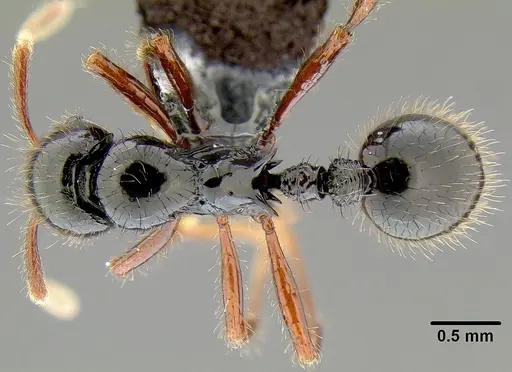
Literature
Loading...Loading products...