

Lordomyrma vanua
- Scientific Name
- Lordomyrma vanua
- Tribe
- Crematogastrini
- Subfamily
- Myrmicinae
- Author
- Lucky & Sarnat, 2008
- Distribution
- Found in 1 countries
Lordomyrma vanua Overview
Lordomyrma vanua is an ant species of the genus Lordomyrma. It is primarily documented in 1 countries , including Fiji. Detailed taxonomic data and occurrence records can be further explored via authoritative databases such as AntWeb or the Global Biodiversity Information Facility (GBIF).
Lordomyrma vanua
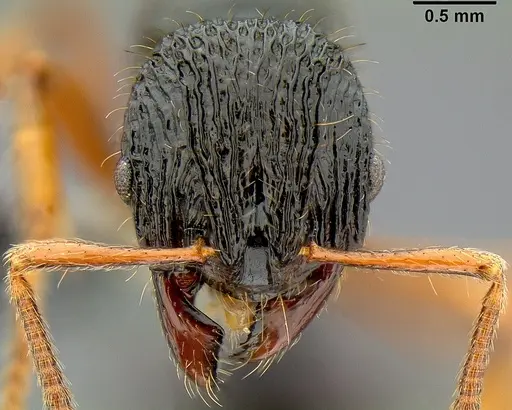
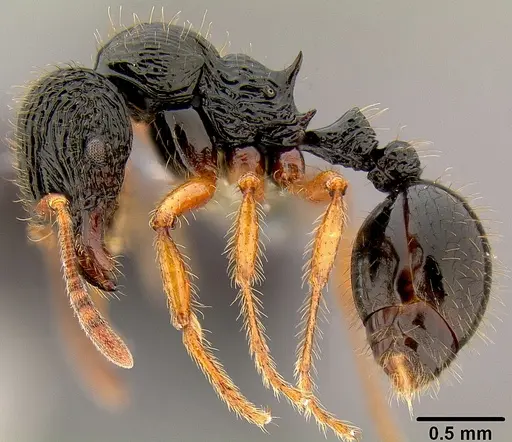
Lordomyrma vanua is a large, striking ant species native only to Vanua Levu, Fiji. Workers measure 4.78-5.27mm in total length and feature a distinctive appearance: a shiny black body covered with deep, widely spaced longitudinal furrows (rugae) running along the head and mesosoma [1][2]. The head, mesosoma, and gaster are black, with lighter-colored appendages. Long yellowish hairs stand up from their dorsal surfaces, giving them a somewhat fuzzy appearance [1]. This species was only discovered in 2008 and remains one of the rarest Pacific ants, collected just twice ever, both times from the same mountain [1][2]. The species name 'vanua' comes from the Fijian word for land, honoring the only island where this ant is known to occur [1].
Quick Summary
- Difficulty: Unknown, likely Medium to Hard
- Origin & Habitat: Endemic to Vanua Levu, Fiji Islands. Found only in leaf litter at elevations around 500-700m on Mt. Delaikoro [1][2]. The island of Vanua Levu emerged roughly 3-4 million years ago, and this species diverged from its closest relatives around 1.2 million years ago [3].
- Colony Type: Colony structure is unconfirmed. No data exists on queen number or colony size for this species [1][2].
- Size & Growth:
- Queen: Unknown, queen has not been described
- Worker: 4.78-5.27mm total length, with head length 1.03-1.19mm and head width 0.92-1.08mm [1]
- Colony: Unknown, only three workers have ever been collected [1]
- Growth: Unknown
- Development: Unknown, no development data exists for this species (Based on typical Lordomyrma genus patterns and tropical location, development likely takes 4-8 weeks at optimal temperature, but this is an estimate only)
- Antkeeping:
- Temperature: Likely 22-28°C based on tropical Fijian habitat. Start in the mid-20s and observe colony activity
- Humidity: Likely 70-85% based on leaf litter forest floor habitat. Keep substrate consistently moist but not waterlogged
- Diapause: Unlikely, being from tropical Fiji, they probably do not require a hibernation period
- Nesting: In nature they live in leaf litter and rotting wood on the forest floor. A naturalistic setup with moist substrate, or a Y-tong/plaster nest with good humidity retention would likely work well. Avoid overly dry conditions
- Behavior: Behavior is unstudied. Based on genus typical patterns, they are likely predatory or omnivorous forest floor ants. Their large size and strong propodeal spines suggest they can defend themselves. Escape risk is moderate, use standard mesh barriers
- Common Issues: extremely rare in the hobby, this species is virtually unavailable to collectors, no captive breeding data exists, making successful keeping uncertain, wild-caught colonies may have parasites or stress-related issues from collection, humidity control is critical, being litter dwellers, they likely suffer in dry conditions, temperature must be stable, tropical ants don't handle cold well
Discovery and Rarity
Lordomyrma vanua is one of the rarest ant species in the world, described as recently as 2008 by Andrea Lucky and Eli Sarnat. The entire known population consists of just three workers collected from two locations on Mt. Delaikoro in northern Vanua Levu [1]. The first collection was made in 2006 at 699m elevation by entomologist E.P. Economo, who sifted through leaf litter to find these tiny ants. A second collection from 1977 at 500m elevation was later identified as the same species [1]. This ant has never been found anywhere else on Earth, it is truly endemic to a single mountain on a single island. The species name 'vanua' was chosen as a noun in apposition, referring to both the Fijian word for land and the island of Vanua Levu where it lives [1].
Identification and Appearance
This species stands out among Lordomyrma for its distinctive appearance. Workers are large and entirely shiny black, with deep longitudinal furrows (rugae) running across the head and mesosoma. These rugae are notably wide-spaced compared to related species [1][2]. The head has a evenly convex posterior margin with rounded corners, and the promesonotum is large and dome-shaped when viewed from the side. Strong propodeal spines project backward, these are straight to slightly upcurved and divergent [1]. Long yellowish hairs stand erect on all dorsal surfaces, giving the ant a somewhat fuzzy or bristly appearance. The appendages (legs and antennae) are lighter in color than the dark body [1]. It resembles L. rugosa but can be distinguished by smooth forecoxae, smooth propodeal declivity, and larger overall size [1][2].
Habitat and Distribution
Lordomyrma vanua is known only from Mt. Delaikoro on Vanua Levu, the second-largest island in Fiji. This mountain rises in the north of the island and reaches elevations around 700m. The ant has been collected exclusively from leaf litter, the decomposing vegetation on the forest floor [1][2]. Molecular analysis shows this species diverged from its closest relatives (L. tortuosa, L. striatella, and L. vuda) approximately 1.2 million years ago, which coincides roughly with when Vanua Levu first emerged above sea level [3]. This makes L. vanua a living relic, an ancient lineage that has persisted on this isolated Pacific island for millions of years, surviving in the cool, moist leaf litter of highland forests [1][3].
Keeping Considerations
Keeping Lordomyrma vanua in captivity presents significant challenges. First and foremost, this species is essentially unavailable, only three workers have ever been collected, and no live colonies exist in the ant-keeping hobby. The species has never been exported and no queen or colony has been described scientifically [1]. If specimens were to become available, care would need to be based on inference from related Lordomyrma species and the known habitat. Expect needs similar to other tropical litter-dwelling ants: high humidity (70-85%), stable warm temperatures (22-28°C), and a naturalistic setup with moist substrate. These ants would likely accept small live prey like springtails or fruit flies, following typical Myrmicinae predatory patterns. However, without any direct observation of captive colonies, all care recommendations remain speculative. This species is best appreciated as a fascinating example of Pacific island endemism, a rare treasure that exists only in the leaf litter of a single Fijian mountain.
Frequently Asked Questions
Can I keep Lordomyrma vanua as a pet ant?
No, this species is virtually unavailable to antkeepers. Only three workers have ever been collected, all from a single mountain in Fiji, and no live colonies exist in captivity. The species was only described in 2008 and has never been exported or established in the hobby.
How big do Lordomyrma vanua workers get?
Workers are relatively large for a Myrmicine ant, measuring 4.78-5.27mm in total length with head lengths of 1.03-1.19mm [1].
Where does Lordomyrma vanua live in the wild?
This species is endemic only to Vanua Levu, Fiji. It has been found exclusively in leaf litter at elevations of 500-700m on Mt. Delaikoro [1][2].
Do Lordomyrma vanua ants need hibernation?
Unlikely. Being from tropical Fiji, they probably do not require a diapause or hibernation period. Maintain warm temperatures year-round.
What do Lordomyrma vanua ants eat?
Direct data is unavailable, but based on genus typical behavior, they are likely predatory or omnivorous, accepting small live prey like springtails, fruit flies, and other micro-arthropods found in forest floor litter.
Are Lordomyrma vanua ants aggressive?
Their behavior is unstudied, but their large size and strong propodeal spines suggest they can defend themselves. Related Lordomyrma species are not typically aggressive toward keepers.
How many queens does Lordomyrma vanua have?
Unknown, the colony structure (monogyne/polygyne) has not been documented. No queen has ever been scientifically described for this species [1].
What temperature should I keep Lordomyrma vanua at?
No specific data exists, but based on their tropical Fijian habitat, aim for 22-28°C. Start in the mid-20s and adjust based on colony activity.
Why is Lordomyrma vanua so rare?
This species has an extremely limited range, found only on a single mountain on a single island. It was only discovered in 2008 and has been collected just twice in history. Island endemics with tiny ranges are inherently rare because they exist in very specific habitats [1][3].
Is Lordomyrma vanua endangered?
While no formal conservation status exists, its extremely limited distribution (a single mountain) makes it potentially vulnerable to habitat loss or climate change. Any threat to Mt. Delaikoro's forest could threaten this species.
References

This caresheet is licensed under CC BY-SA 4.0 .
CASENT0171051
View on AntWeb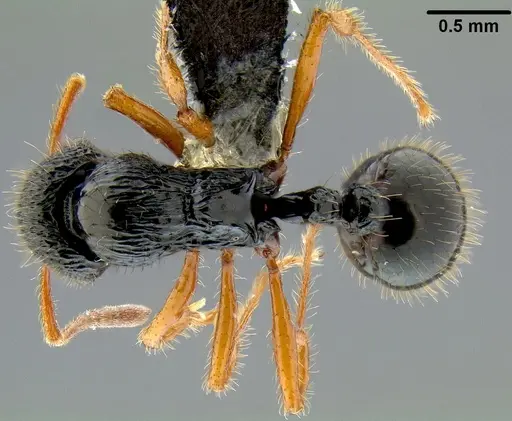
Literature
Loading...Loading products...