

Lordomyrma sarasini
- Scientific Name
- Lordomyrma sarasini
- Tribe
- Crematogastrini
- Subfamily
- Myrmicinae
- Author
- Emery, 1914
- Distribution
- Found in 1 countries
Lordomyrma sarasini Overview
Lordomyrma sarasini is an ant species of the genus Lordomyrma. It is primarily documented in 1 countries , including New Caledonia. Detailed taxonomic data and occurrence records can be further explored via authoritative databases such as AntWeb or the Global Biodiversity Information Facility (GBIF).
Lordomyrma sarasini
Lordomyrma sarasini is a small myrmicine ant native to New Caledonia, a French territory in the South Pacific. Workers are tiny, measuring around 1mm in head width with a body length of approximately 1.4mm [1]. The species was originally described as Lordomyrma sarasini by Emery in 1914 before being reclassified into the genus Lordomyrma [1][2]. These ants are found only on Mt. Ignambi in New Caledonia, making them a geographically restricted species [1].
Like other Lordomyrma species, these ants have a functional stinger capable of piercing, though the sting is likely too small to affect humans [3]. This is a rarely kept species in captivity with limited available care information.
Quick Summary
- Difficulty: Unknown, likely Expert
- Origin & Habitat: New Caledonia (Mt. Ignambi). This is a tropical island environment with humid, forested habitats.
- Colony Type: Colony structure is unconfirmed. The genus Lordomyrma typically forms small colonies.
- Size & Growth:
- Queen: Estimated 3-4mm based on genus patterns (not directly measured)
- Worker: Approximately 1.4mm body length (WL 1.42mm) [1]
- Colony: Unknown, likely small colonies typical of the genus
- Growth: Unknown
- Development: Unconfirmed, likely 6-10 weeks based on related Myrmicinae patterns (No direct development data available for this species)
- Antkeeping:
- Temperature: Estimated 22-26°C, aim for warm tropical conditions. Provide a gentle temperature gradient.
- Humidity: High humidity preferred, New Caledonia is a humid tropical environment. Keep nest substrate consistently moist but not waterlogged.
- Diapause: Unknown for this species, tropical ants may not require formal hibernation but may slow during cooler months.
- Nesting: No specific nesting data available. Likely prefers moist, shaded areas. Y-tong or plaster nests with good humidity retention would be appropriate starting points.
- Behavior: Behavior is poorly documented. They likely have typical Myrmicinae foraging patterns, searching for small prey and sugar sources. Their small size makes escape prevention important, use fine mesh barriers. They possess a functional stinger but it is too small to penetrate human skin effectively [3].
- Common Issues: limited availability makes this an advanced species to acquire, no established captive breeding protocols exist, humidity control is critical, too dry causes colony failure, small size creates escape risk despite being slow-moving, tropical requirements mean they may not tolerate temperature drops
Natural History and Distribution
Lordomyrma sarasini is endemic to New Caledonia, specifically known only from Mt. Ignambi [1]. This mountain is located in the northern part of the main island and features humid forest environments. The species was originally described by Emery in 1914 under the name Lordomyrma sarasini, with the genus later being synonymized with Lordomyrma by Bolton in 1994 [2]. New Caledonia is a biodiversity hotspot in the South Pacific, known for its unique endemic flora and fauna, including numerous endemic ant species. The ant fauna of this region has been studied by several researchers, with Lordomyrma being one of the more distinctive genera present [4].
Identification and Morphology
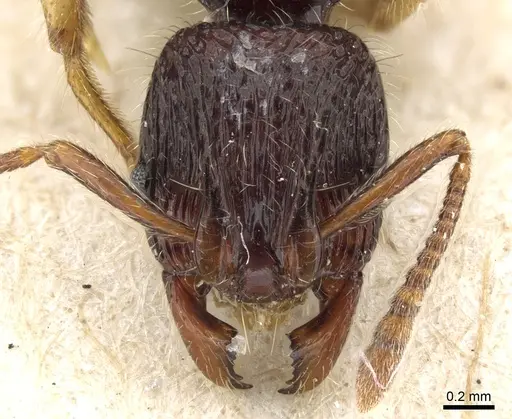
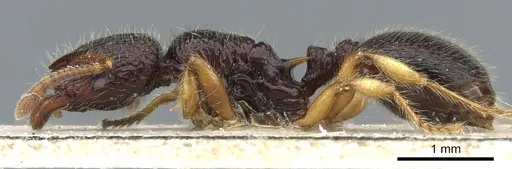
Workers of L. sarasini are very small, with a head width (HW) of 1.01mm and a Weber's length (WL) of 1.42mm [1]. The palpal formula is 3:3,meaning they have three maxillary palps and three labial palps [1]. The sting apparatus has been studied in detail, revealing a functional stinger with a strong apex and slightly reduced sides. The sting shaft comprises about 56% of total sting length, and the sting bulb is 22-24% of sting length [3]. The lancets are sclerotized and cuneiform, suggesting they may be capable of piercing [3]. However, given the tiny size of these ants, any sting would be imperceptible to humans.
Housing and Nesting
No specific captive husbandry protocols exist for this species. Based on the natural habitat in New Caledonia, these ants would likely thrive in humid, tropical conditions. A Y-tong (acrylic) nest or plaster nest with good humidity retention would be appropriate. The nest should be kept consistently moist but never waterlogged. Provide a water reservoir for humidity maintenance. Since this is a very small species, escape prevention using fine mesh is essential even though they are not particularly active or aggressive. The outworld should be simple with minimal space to prevent workers from becoming scattered.
Feeding and Diet
Diet is unconfirmed for this specific species. Like other Myrmicinae, they likely accept small protein sources such as fruit flies, pinhead crickets, and other tiny arthropods. Sugar sources such as honey water or sugar water may also be accepted. Given their small size, prey items should be appropriately sized. Start with offering small live prey and sugar water, then adjust based on colony acceptance. Uneaten prey should be removed promptly to prevent mold.
Temperature and Seasonal Care
As a tropical species from New Caledonia, these ants likely prefer temperatures in the 22-26°C range. A heating cable on one side of the nest can create a temperature gradient, allowing the colony to self-regulate. Monitor colony activity, if workers cluster near the heat source, increase temperature slightly, if they avoid heated areas, reduce temperature. Whether they require a winter rest period is unknown. Tropical ants often do not enter full diapause but may reduce activity during cooler months. If colony activity decreases in winter, reduce feeding and slightly lower temperatures rather than attempting full hibernation.
Colony Structure and Reproduction
Colony structure is not well documented for this species. The genus Lordomyrma typically forms small colonies, likely with a single queen. Nuptial flight timing is unknown. If you maintain a colony, watch for winged reproductives developing, which would indicate the colony is mature and ready to reproduce. Winged queens and males would be produced prior to mating flights. Given the rarity of this species in captivity, successful captive reproduction would be a significant achievement and valuable for conservation of this endemic New Caledonian species.
Frequently Asked Questions
How long does it take for Lordomyrma sarasini to produce first workers?
The egg-to-worker timeline is unconfirmed for this species. Based on related Myrmicinae patterns, expect approximately 6-10 weeks at optimal temperature. However, no specific development data exists for this rarely kept species.
What do Lordomyrma sarasini ants eat?
Diet is not specifically documented for this species. They likely accept small protein sources like fruit flies, tiny crickets, and other micro-arthropods, plus sugar sources such as honey water. Offer small, appropriately-sized prey given their tiny worker size of approximately 1.4mm.
Do Lordomyrma sarasini ants sting?
Yes, they possess a functional stinger capable of piercing [3]. However, given their very small size, the sting is unlikely to penetrate human skin or cause any noticeable pain to keepers.
Are Lordomyrma sarasini good for beginners?
This species is not recommended for beginners. It is rarely kept in captivity, with no established care protocols. Limited availability and specific tropical humidity requirements make it an advanced species best suited for experienced antkeepers interested in rare species.
How big do Lordomyrma sarasini colonies get?
Colony size is not documented, but based on typical Lordomyrma genus behavior, colonies likely remain small, probably under 100 workers. This is not a species known for large colony development.
What temperature should I keep Lordomyrma sarasini at?
Estimate 22-26°C based on their tropical New Caledonia habitat. Provide a temperature gradient so the colony can self-regulate. Start in the middle of this range and adjust based on observed colony activity.
Do Lordomyrma sarasini need hibernation?
Hibernation requirements are unknown. As a tropical species, they likely do not require formal hibernation but may naturally slow activity during cooler months. If colony activity decreases in winter, reduce feeding and slightly lower temperatures rather than attempting full diapause.
Can I keep multiple Lordomyrma sarasini queens together?
Colony structure is unconfirmed for this species. The genus typically forms single-queen colonies. Combining unrelated queens is not recommended without documented evidence of polygynous behavior in this specific species.
What humidity level do Lordomyrma sarasini need?
High humidity is likely required, New Caledonia is a humid tropical environment. Keep nest substrate consistently moist but not waterlogged. A water reservoir in the nest setup helps maintain humidity. Avoid dry conditions which can cause colony failure.
References

This caresheet is licensed under CC BY-SA 4.0 .
CASENT0904675
View on AntWeb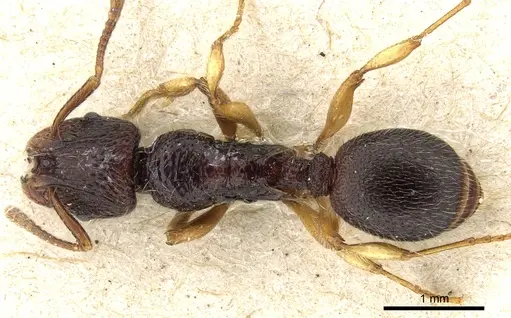
Literature
Loading...Loading products...