

Lordomyrma rouxi
- Scientific Name
- Lordomyrma rouxi
- Tribe
- Crematogastrini
- Subfamily
- Myrmicinae
- Author
- Emery, 1914
- Distribution
- Found in 1 countries
Lordomyrma rouxi Overview
Lordomyrma rouxi is an ant species of the genus Lordomyrma. It is primarily documented in 1 countries , including New Caledonia. Detailed taxonomic data and occurrence records can be further explored via authoritative databases such as AntWeb or the Global Biodiversity Information Facility (GBIF).
Lordomyrma rouxi
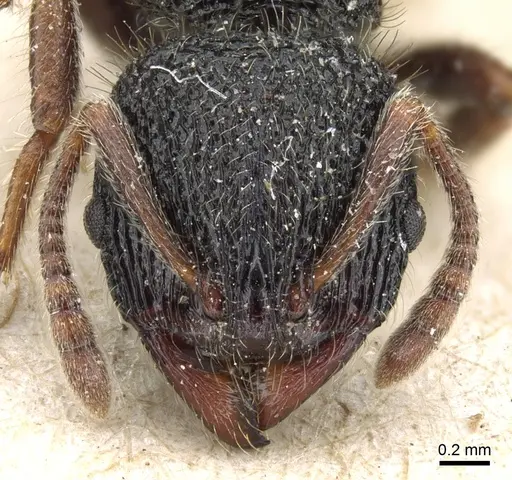
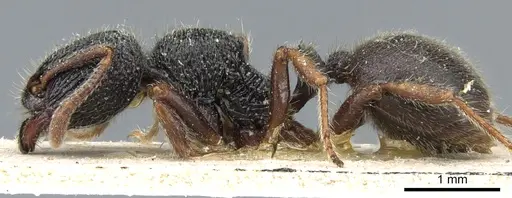
Lordomyrma rouxi is a medium-sized Myrmicinae ant native to New Caledonia, an island in the southwestern Pacific Ocean. Workers measure around 2mm in body length (WL 2.01mm), making them one of the larger species in the genus, in fact, this is the largest known Lordomyrma species [1]. They have distinctive bilateral petiolar spines on the rear of their thorax, a trait they share with some related genera [1].
This species is known only from New Caledonia, where it inhabits the island's tropical forest environments. Like most Myrmicinae ants, they have a functional sting capable of piercing skin [2]. The genus Lordomyrma remains poorly studied in terms of captive care, so much of what we know comes from general antkeeping experience with related species.
Quick Summary
- Difficulty: Medium
- Origin & Habitat: New Caledonia, a tropical island in the southwestern Pacific with warm, humid forest environments [3][1]
- Colony Type: Unconfirmed, colony structure (single queen vs multiple queens) has not been documented for this species
- Size & Growth:
- Queen: Undescribed, no documented queen measurements exist
- Worker: WL 2.01mm, HW 1.68mm [1]
- Colony: Unknown, no colony size data available
- Growth: Unknown, likely moderate based on tropical Myrmicinae patterns
- Development: Estimated 6-8 weeks at tropical temperatures (25-28°C) based on related Myrmicinae species (Development time is estimated from genus patterns, no direct observations for this species)
- Antkeeping:
- Temperature: Keep at 24-28°C (warm tropical conditions). New Caledonia is warm year-round, so these ants do best with stable heat. A heating cable on one side of the nest creates a suitable gradient.
- Humidity: Moderate to high, aim for 60-80% humidity. These are forest-dwelling ants from a humid tropical island. Keep the nest substrate consistently moist but not waterlogged.
- Diapause: No, being a tropical species from New Caledonia, they do not require hibernation. Keep them warm year-round.
- Nesting: In the wild, they likely nest in rotting wood or soil in forest habitats. In captivity, a Y-tong (AAC) nest or plaster formicarium works well. Keep nesting material moist but allow some drier areas for the ants to regulate their own humidity.
- Behavior: Lordomyrma rouxi is a relatively calm, non-aggressive species typical of the Myrmicinae. Workers are active foragers that search for food throughout the nest area. They have a functional sting [2], so they can defend themselves if threatened, but they are not particularly aggressive toward keepers. Their small size (about 2mm workers) means escape prevention is important, they can squeeze through small gaps. Watch for them climbing on the test tube walls, which indicates they need more space or better escape barriers.
- Common Issues: tropical species needs constant warmth, cold drafts can stress or kill the colony, small size makes escape likely without fine mesh barriers and tight-fitting lids, humidity must be maintained, dry conditions cause colony decline, no species-specific care data exists, keepers must adapt from related species, slow colony growth can frustrate beginners who expect fast development
Housing and Nest Setup
Lordomyrma rouxi does well in standard test tube setups for founding colonies. For established colonies, a Y-tong (AAC) nest or plaster formicarium works well, these materials hold moisture well, which is important for maintaining humidity. The nest should have chambers scaled to their 2mm worker size, not too large or open. Because they come from a humid tropical island, keep the nesting material consistently moist. A water reservoir connected to the nest helps maintain humidity over time. Place the nest in a darkened area, these ants prefer dim conditions like their forest floor habitat. [1][3]
Feeding and Diet
Like most Myrmicinae ants, Lordomyrma rouxi is likely a generalist feeder. Offer protein sources such as small insects (fruit flies, small mealworms, crickets), and provide sugar water or honey as an energy source. In the wild, they probably forage for small arthropods and tend aphids for honeydew. Feed protein prey 2-3 times per week, and keep sugar water available at all times. Remove uneaten prey after 24-48 hours to prevent mold. Since this species has a functional sting [2], they are capable predators on small live prey.
Temperature and Heating
Being from tropical New Caledonia, these ants need warm conditions year-round. Keep the nest area at 24-28°C. Room temperature may be sufficient if your home stays in this range, but a heating cable on one side of the nest creates a temperature gradient that lets ants regulate their own conditions. Place the heating cable on top of the nest, not underneath, to avoid evaporating moisture too quickly. Avoid temperature fluctuations and cold drafts, tropical ants are sensitive to cold. Do not hibernate this species. [3][1]
Humidity Management
Lordomyrma rouxi needs moderate to high humidity, reflecting their origin on a humid tropical island. Keep the nest substrate consistently moist but not sitting in water. The substrate should feel damp to the touch. A water reservoir connected to the nest helps maintain stable humidity over days or weeks. However, allow some areas to dry slightly so the ants can choose their preferred microclimate. Good ventilation prevents mold while still maintaining humidity, avoid completely sealed nests. [3]
Behavior and Handling
Workers are active foragers that will search out food throughout their enclosure. They are not particularly aggressive but have a functional sting that can pierce skin [2], so handle with care if necessary. They are not known for biting or excessive aggression toward keepers. Their small size (about 2mm) means they are quick and can easily escape through tiny gaps. Always use excellent escape prevention: tight-fitting lids, fine mesh on any ventilation, and barrier tape (fluon) on container edges. They are not aggressive colony defenders but will use their sting if directly threatened.
Colony Development
Little is known about the specific development timeline of Lordomyrma rouxi. Based on typical Myrmicinae patterns and their tropical origin, expect 6-8 weeks from egg to first worker at optimal temperatures (25-28°C). The first workers (nanitics) will likely be smaller than mature workers. Colony growth is likely moderate, not as fast as some tropical species but faster than temperate ants. Be patient during the founding phase, queens may take several weeks to lay their first eggs and several more for those eggs to develop into workers. Do not disturb the queen during founding, she needs quiet, stable conditions to succeed.
Frequently Asked Questions
How long does it take for Lordomyrma rouxi to produce first workers?
Based on related Myrmicinae species, expect 6-8 weeks from egg to first worker at warm tropical temperatures (25-28°C). This is an estimate since no specific development data exists for this species.
Do Lordomyrma rouxi ants sting?
Yes, they have a functional sting capable of piercing skin. The sting is described as strong and evenly tapered [2]. While not dangerously painful, you may feel a mild sting if bitten or handled roughly.
What temperature do Lordomyrma rouxi ants need?
Keep them at 24-28°C (warm tropical conditions). They come from New Caledonia, a tropical island, so they need year-round warmth. A heating cable on the nest helps maintain stable temperatures.
Are Lordomyrma rouxi good for beginners?
They are rated Medium difficulty. The main challenges are maintaining humidity and warmth, and preventing escape due to their small size. If you have experience with other Myrmicinae species, this is a manageable species.
How big do Lordomyrma rouxi colonies get?
Colony size is unknown, no wild colony data exists for this species. Based on being the largest Lordomyrma species [1], colonies likely reach several hundred workers over time.
Can I keep multiple Lordomyrma rouxi queens together?
Colony structure is unconfirmed for this species. The safe approach is to house each queen separately for founding. Do not combine unrelated queens unless you are prepared for aggression.
What do Lordomyrma rouxi eat?
They likely accept standard ant foods: small insects (fruit flies, small mealworms) for protein, and sugar water or honey for carbohydrates. Feed protein 2-3 times per week with sugar water always available.
Do Lordomyrma rouxi need hibernation?
No, they are tropical ants from New Caledonia and do not require hibernation. Keep them warm year-round at 24-28°C.
How do I prevent Lordomyrma rouxi from escaping?
Use excellent escape prevention because of their small size (about 2mm). Use tight-fitting lids, fine mesh on all ventilation, and apply fluon or similar barriers to container edges. Check for gaps regularly.
What humidity level do Lordomyrma rouxi need?
Aim for 60-80% humidity. Keep the nest substrate consistently moist but not waterlogged. A water reservoir connected to the nest helps maintain stable humidity over time.
References

This caresheet is licensed under CC BY-SA 4.0 .
CASENT0904676
View on AntWeb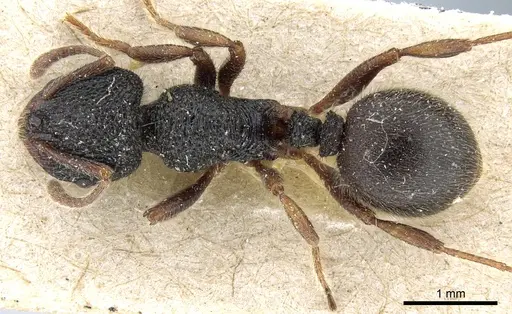
Literature
Loading...Loading products...