

Lordomyrma infundibuli
- Scientific Name
- Lordomyrma infundibuli
- Tribe
- Crematogastrini
- Subfamily
- Myrmicinae
- Author
- Donisthorpe, 1940
- Distribution
- Found in 1 countries
Lordomyrma infundibuli Overview
Lordomyrma infundibuli is an ant species of the genus Lordomyrma. It is primarily documented in 1 countries , including Papua New Guinea. Detailed taxonomic data and occurrence records can be further explored via authoritative databases such as AntWeb or the Global Biodiversity Information Facility (GBIF).
Lordomyrma infundibuli
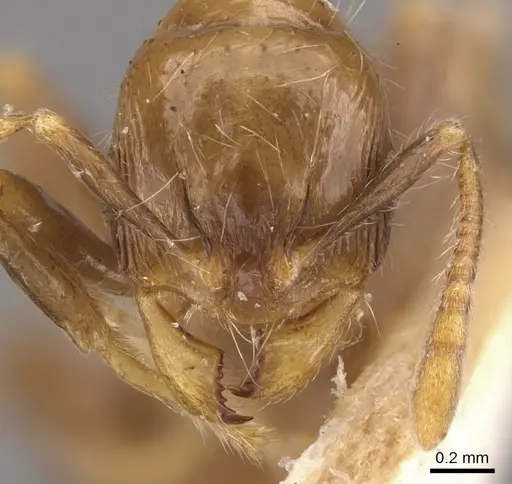
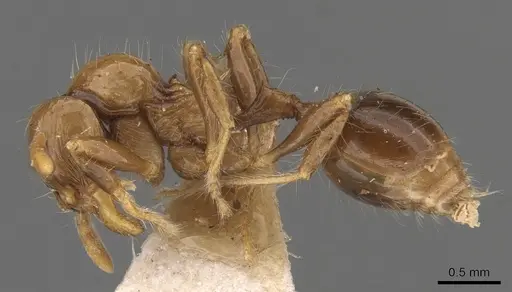
Lordomyrma infundibuli is a tiny ant species native to New Guinea, specifically described from Jutefa Bay in West Papua. Workers are very small, measuring around 1.36mm in body length with a head width of approximately 0.99mm [1]. The genus Lordomyrma belongs to the Myrmicinae subfamily and is part of the Crematogastrini tribe. These ants are found exclusively in the Australasian region, with New Guinea being their known range [2]. Little is known about their specific biology in the wild, but like other Lordomyrma species, they likely inhabit moist forest environments where they nest in rotting wood or leaf litter.
Quick Summary
- Difficulty: Unknown, insufficient data for reliable assessment
- Origin & Habitat: New Guinea, specifically Jutefa Bay in West Papua. Likely inhabits tropical forest floor microhabitats with high humidity [1][2].
- Colony Type: Colony structure is unconfirmed. The genus Lordomyrma is poorly studied and no data exists on whether colonies are single-queen (monogyne) or multi-queen (polygyne).
- Size & Growth:
- Queen: Unknown, not measured in original description [1].
- Worker: Approximately 1.36mm in Weber's length (WL), with head width (HW) of 0.99mm [1].
- Colony: Unknown, no colony size data available.
- Growth: Unknown, no development data exists for this species.
- Development: Unknown, no direct measurements exist. Estimates based on related Myrmicinae suggest 6-10 weeks at optimal temperature, but this is highly speculative. (No development data exists for this species. Related Lordomyrma species in tropical environments may develop faster than temperate species, but this remains unconfirmed.)
- Antkeeping:
- Temperature: Likely requires warm, stable conditions typical of tropical New Guinea species. Based on habitat inference, aim for roughly 24-28°C with a gentle gradient. Adjust based on colony activity and observe behavior.
- Humidity: Requires high humidity, think damp forest floor conditions. Keep nest substrate consistently moist but not waterlogged. Provide a gradient from damp to slightly drier areas so ants can self-regulate.
- Diapause: Unknown, no research on seasonal behavior. As a tropical species from New Guinea, diapause may not be required, but this is unconfirmed.
- Nesting: No direct data on natural nesting preferences. Based on genus patterns, likely nests in rotting wood, under bark, or in leaf litter. In captivity, a Y-tong nest or moist plaster nest works well for these tiny ants. Avoid dry environments.
- Behavior: Behavior is unstudied. Based on related species, they are likely docile and non-aggressive. Their tiny size means escape prevention must be excellent, they can squeeze through the smallest gaps. Foraging style is unknown but likely involves searching for small prey and honeydew.
- Common Issues: escape prevention is critical due to their very small size, use fine mesh and tight-fitting barriers, lack of published care information means no established husbandry guidelines exist, wild-caught colonies may have unknown parasites or diseases that can cause captive failures, humidity requirements are poorly understood, too dry may be fatal, but specific needs are unknown, feeding requirements are unconfirmed, diet preferences for this species have not been studied
Species Overview and Identification
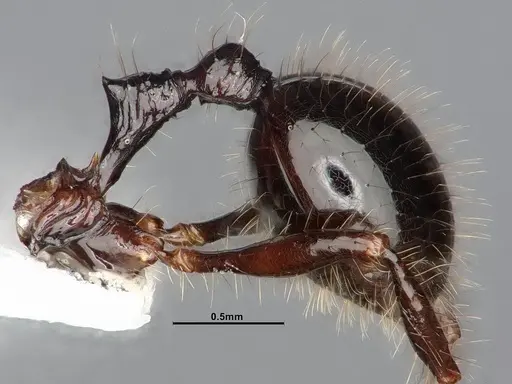
Lordomyrma infundibuli is a rarely encountered ant species described by Donisthorpe in 1940 from specimens collected at Jutefa Bay in West Papua, New Guinea [1]. Workers are among the smallest ants in the Myrmicinae subfamily, measuring approximately 1.36mm in body length with a head width of just 0.99mm [1]. The genus Lordomyrma contains several species distributed across the Australasian region, with New Guinea being a significant center of diversity. This species is considered distinctive within the genus, though specific identifying features were not detailed in the original description. The queen (gyne) was also characterized in the original description but measurements have not been widely reported [1].
Natural History and Distribution
This species is known only from New Guinea, specifically the Jutefa Bay area in West Papua, Indonesia [1]. The natural history of Lordomyrma infundibuli remains essentially undocumented in the scientific literature. No observations on foraging behavior, colony structure, nuptial flight timing, or nesting preferences have been published. The broader genus Lordomyrma is known to contain forest-dwelling species that typically nest in rotting wood, under bark, or in leaf litter on the forest floor. Given the humid tropical environment of New Guinea, these ants almost certainly require consistently moist conditions. The lack of published biological data makes it impossible to provide confident care recommendations based on direct evidence.
Housing and Nesting
No specific nesting data exists for this species, but captive housing should reflect what is known about related Lordomyrma species. A Y-tong (acrylic) nest or moist plaster nest provides the humidity control these ants likely need. Test tubes can work for founding colonies if humidity is maintained in the surrounding outworld. Because workers are only about 1.4mm long, escape prevention must be excellent, use fine mesh barriers and ensure all connections are sealed. The nest should have small chambers scaled to their tiny size. Provide a water tube or moisture reservoir to maintain humidity over time. Avoid dry environments entirely.
Feeding and Diet
The diet of Lordomyrma infundibuli has not been documented. Like other Myrmicinae ants, they likely consume small insects, honeydew, and possibly nectar. For captive care, offer small live prey such as springtails, fruit flies, or other tiny arthropods. Sugar water or honey water may be accepted, though this is speculative. Start with small prey items and observe acceptance. Do not overfeed, excess food can mold and create health problems in small colonies. Remove uneaten prey after 24-48 hours.
Temperature and Humidity Requirements
As a tropical species from New Guinea, Lordomyrma infundibuli almost certainly requires warm, humid conditions. Based on habitat inference, maintain temperatures in the range of 24-28°C. A heating cable on one side of the nest can create a gentle gradient if room temperature is lower. Humidity should be high, the nest substrate should feel consistently moist but not waterlogged. A humidity gradient from damp to slightly drier allows ants to self-regulate. Avoid both drying out and stagnant, mold-prone conditions. Adequate ventilation is important while maintaining humidity.
Challenges in Keeping This Species
Lordomyrma infundibuli represents a significant challenge for antkeepers because virtually no published husbandry information exists. This is one of the least-studied ant species in the hobby. Keepers must be prepared to experiment and document their own observations. The tiny size of workers (only about 1.4mm) makes escape prevention critical and can complicate feeding. Wild-caught colonies may carry parasites or diseases not yet characterized. There is no information on diapause requirements, as a tropical species, they may not need a winter rest period, but this remains unconfirmed. Starting with a small colony and carefully documenting conditions that work (or don't) is essential for building husbandry knowledge for this species.
Frequently Asked Questions
How long does it take for Lordomyrma infundibuli to go from egg to worker?
The egg-to-worker development time is unknown, no research exists on development for this species. Based on related Myrmicinae in tropical environments, estimates suggest 6-10 weeks at optimal temperature, but this is highly speculative and may not be accurate.
What do Lordomyrma infundibuli ants eat?
Their diet is unconfirmed. Based on related species, they likely accept small live prey (springtails, fruit flies) and may consume sugar sources. Offer small live prey and sugar water, then observe what they accept.
Are Lordomyrma infundibuli good for beginners?
No, this species cannot be recommended for beginners. There is no published care information, making it extremely challenging to keep successfully. Only experienced antkeepers willing to experiment and document their observations should attempt this species.
Do Lordomyrma infundibuli ants sting?
Stinging behavior is unconfirmed. Given their tiny size (only about 1.4mm), any sting would likely be negligible to humans even if present. Most Myrmicinae have stingers but many are too small to penetrate human skin effectively.
What temperature should I keep Lordomyrma infundibuli at?
Temperature requirements are unconfirmed, but as a tropical New Guinea species, aim for 24-28°C. Use a heating cable on one side of the nest to create a gradient if needed. Observe colony activity to fine-tune.
Do Lordomyrma infundibuli need hibernation or diapause?
Diapause requirements are unknown. As a tropical species from New Guinea, they likely do not require a winter rest period, but this has not been studied. Do not assume hibernation is needed without evidence.
How big do Lordomyrma infundibuli colonies get?
Maximum colony size is unknown, no colony size data exists for this species. Related Lordomyrma species typically form small to moderate colonies.
Can I keep multiple Lordomyrma infundibuli queens together?
Colony structure (monogyne vs polygyne) is unconfirmed. No research exists on whether multiple queens can be kept together or how they establish colonies. This is unknown territory.
What size nest should I use for Lordomyrma infundibuli?
Use a nest with small chambers scaled to their tiny 1.4mm worker size. A Y-tong nest or moist plaster nest works well. Ensure excellent escape prevention with fine mesh barriers.
Why is so little known about keeping Lordomyrma infundibuli?
This species is rarely collected and poorly studied in the scientific literature. The original description from 1940 remains one of the few sources of information. Few antkeepers have kept this species, so no husbandry knowledge has accumulated in the hobby community.
References

This caresheet is licensed under CC BY-SA 4.0 .
CASENT0885527
View on AntWeb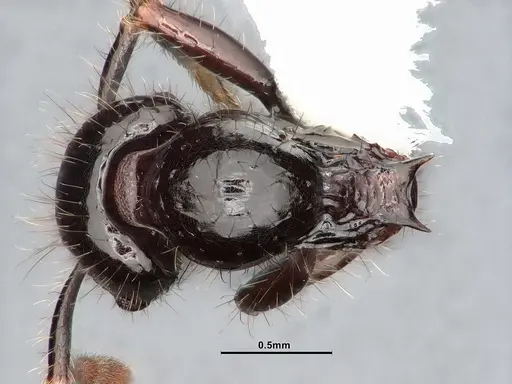
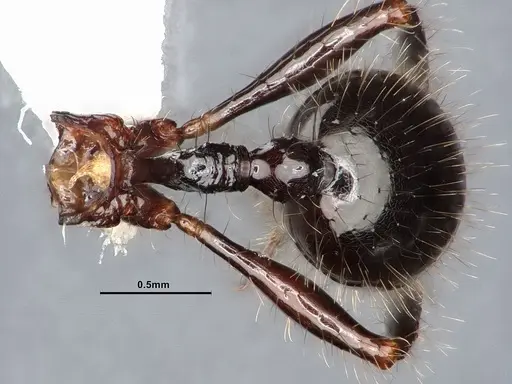
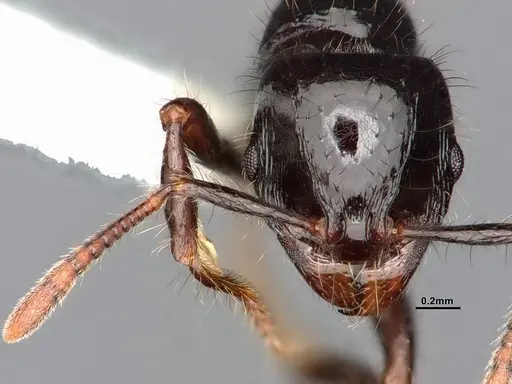
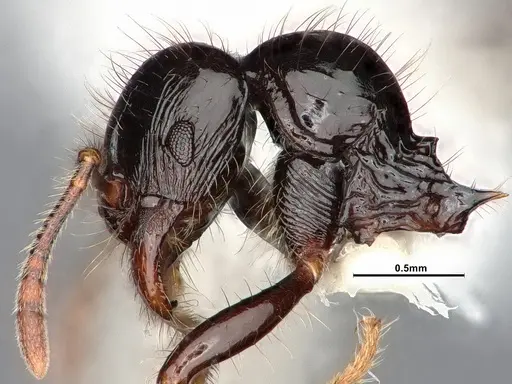
CASENT0900966
View on AntWeb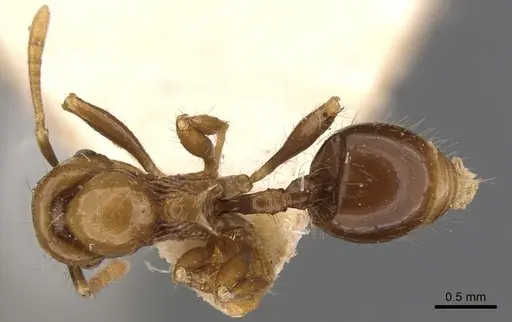
Literature
Loading...Loading products...