

Lordomyrma curvata
- Scientific Name
- Lordomyrma curvata
- Tribe
- Crematogastrini
- Subfamily
- Myrmicinae
- Author
- Sarnat, 2006
- Distribution
- Found in 1 countries
Lordomyrma curvata Overview
Lordomyrma curvata is an ant species of the genus Lordomyrma. It is primarily documented in 1 countries , including Fiji. Detailed taxonomic data and occurrence records can be further explored via authoritative databases such as AntWeb or the Global Biodiversity Information Facility (GBIF).
Lordomyrma curvata
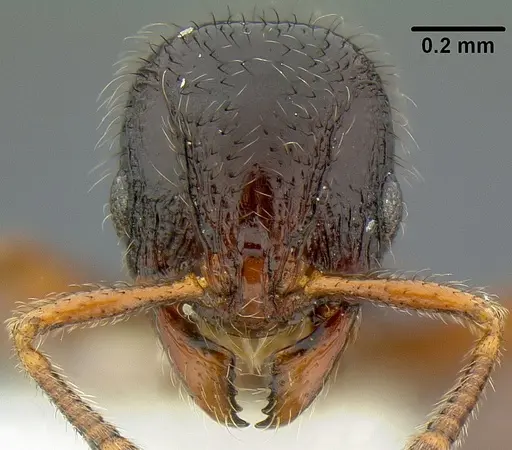
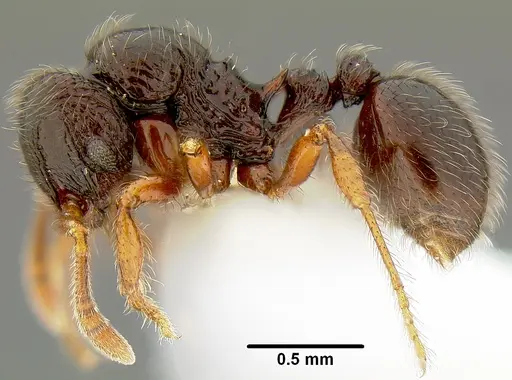
Lordomyrma curvata is one of the smallest species of Fijian Lordomyrma, measuring just 3.32-3.86 mm in total length [1][2]. Workers are a reddish-brown color with notably long, upturned propodeal spines and strong propodeal lobes. The species has a broad, well-defined antennal scrobe and distinctive rugoreticulum (a network-like texture) behind and around the eyes [1][3]. Long yellowish hairs cover the dorsal surfaces, with the longest hairs exceeding the length of the eye [1]. This species is endemic only to Vanua Levu island in Fiji, making it a truly rare find in the antkeeping hobby [4][1]. It represents the only Lordomyrma species known to be endemic to Vanua Levu, having diverged from its nearest relatives approximately 2.3 million years ago [4].
Quick Summary
- Difficulty: Unknown, limited data available
- Origin & Habitat: Endemic to Vanua Levu, Fiji Islands. Found at 300m elevation in litter samples [1][5]. The island features tropical humid forest habitats.
- Colony Type: Unconfirmed, colony structure has not been documented in scientific literature
- Size & Growth:
- Queen: Unknown, queen caste has not been described
- Worker: 3.32-3.86 mm [1][2]
- Colony: Unknown, only three collections known, all workers
- Growth: Unknown
- Development: Unknown, no development data available for this species (Development timeline must be estimated from related Lordomyrma species or typical Myrmicinae patterns. Expect 6-10 weeks at optimal temperature based on genus-level inference.)
- Antkeeping:
- Temperature: Unknown, no thermal studies exist. Based on Fijian origin (tropical), aim for warm conditions around 24-28°C. Monitor colony activity and adjust accordingly.
- Humidity: Unknown, no humidity data available. Based on collection from litter in humid tropical forest, likely requires moderate to high humidity (60-80%). Keep substrate consistently moist but not waterlogged.
- Diapause: Unknown, no seasonal data available. As a tropical species from Fiji, diapause is likely not required, though a slight cool period during winter months may be beneficial.
- Nesting: No specific nesting data. Based on collection method (litter sifting), they likely prefer humid, naturalistic setups with soil or decaying organic material. A Y-tong or plaster nest with moisture provision would likely work well.
- Behavior: Behavior in captivity has not been documented. Based on related Fijian Lordomyrma species, they are likely relatively docile and not aggressive. Their very small size (under 4mm) means escape prevention is critical, they can squeeze through standard mesh barriers. Foraging style is unknown but likely involves ground foraging in litter layer.
- Common Issues: very small size makes escape likely without fine mesh barriers, no captive husbandry data exists, keepers must experiment with conditions, limited distribution means wild colonies are rarely available, humidity requirements are unknown and must be determined through observation, growth rate is unknown making colony establishment timing unpredictable
Appearance and Identification
Lordomyrma curvata workers are tiny ants, measuring just 3.32-3.86 mm in total length [1]. Their most distinctive features are the long, upturned propodeal spines that point upward and outward from the rear of the body, and the network-like rugoreticulum texture found behind and around the eyes [1][3]. The head, mesosoma, and gaster are reddish brown, while the legs and antennae are lighter in color [1]. They have relatively large eyes and a broad, well-defined antennal scrobe (the groove where the antenna fits into the head). Long yellowish hairs cover the dorsal surfaces, with the longest hairs exceeding the length of the eye [1]. This combination of features helps distinguish L. curvata from other Fijian Lordomyrma species, particularly L. stoneri, which also has upturned spines but lacks the rugoreticulate posterior corners of the head and is substantially larger [3].
Distribution and Rarity
Lordomyrma curvata is one of the rarest ant species in the antkeeping hobby due to its extremely limited distribution. It is endemic only to Vanua Levu, one of the main islands of the Fiji archipelago [4][1][3][2]. This makes it the only Lordomyrma species known to be endemic to Vanua Levu [1][2]. The species has only been collected three times in scientific history, with two of those collections made by sifting through leaf litter in the forest [1][2]. The type locality is Kasavu Village on Vanua Levu, at approximately 300 meters elevation [5]. Molecular dating suggests this species diverged from its nearest living relatives around 2.3 million years ago, which corresponds roughly to when Vanua Levu first emerged above sea level [4]. This extreme endemism makes wild-collected colonies exceptionally rare.
Housing and Nesting
No specific captive husbandry data exists for this species, so keepers must make informed inferences from related species and the limited natural history information available. The fact that specimens were collected by litter sifting suggests they live in the humid forest floor layer, among decaying leaves and organic matter [1][2]. A naturalistic setup with a moist substrate (such as a mix of soil and rotting wood or leaf litter) would likely be appropriate. Alternatively, a Y-tong or plaster nest with a water reservoir to maintain humidity could work well. Given their tiny size (under 4mm), excellent escape prevention is essential, use fine mesh barriers and ensure all openings are sealed. The nest should have small chambers scaled to their minute size.
Temperature and Humidity
As a tropical species from Fiji, Lordomyrma curvata likely requires warm and humid conditions. No specific thermal or humidity data exists in the scientific literature, so aim for temperatures in the range of 24-28°C and humidity around 60-80%. These conditions align with the tropical forest habitat of Vanua Levu. Monitor your colony closely, if workers appear sluggish or cluster together, they may be too cool, if they avoid the nest area or seem distressed, conditions may be too dry or hot. A heating cable on one side of the nest can create a temperature gradient, allowing the ants to self-regulate. Always ensure adequate ventilation while maintaining humidity to prevent mold issues.
Feeding and Diet
The diet of Lordomyrma curvata has not been documented in scientific literature. Based on typical Lordomyrma behavior and their position in the Myrmicinae subfamily, they likely are omnivorous, feeding on small insects, honeydew, and other carbohydrate sources. Given their tiny size, any prey offered should be very small, small fruit flies, pinhead crickets, or other minute arthropods would be appropriate. They may also accept sugar water or honey. Start with small live prey items and observe acceptance. As with all ants, provide a constant source of clean water. Due to their small size and the lack of specific dietary data, keepers should experiment cautiously and remove any uneaten food promptly to prevent mold.
Colony Development and Growth
No specific development data exists for Lordomyrma curvata. The queen caste has not been described in scientific literature, and only three worker specimens have ever been collected [1][2]. This means the typical colony size, growth rate, and development timeline are entirely unknown. Based on typical Myrmicinae patterns and related Lordomyrma species, expect the founding queen to be claustral (sealed inside a chamber, living on stored fat reserves until the first workers emerge). The egg-to-worker timeline is likely in the range of 6-10 weeks at optimal temperature, but this is a rough estimate based on genus-level inference rather than species-specific data. Colonies probably remain small to moderate in size given the species' rarity and limited distribution.
Frequently Asked Questions
How long does it take for Lordomyrma curvata to produce first workers?
The development timeline is unknown for this species as it has never been studied in captivity. Based on typical Myrmicinae patterns and related Lordomyrma species, expect approximately 6-10 weeks from egg to first worker at optimal temperature (around 24-28°C). This is an estimate, actual timing may vary.
What do Lordomyrma curvata ants eat?
Their diet has not been documented. Based on related species, they likely accept small live prey (fruit flies, tiny crickets, springtails), and may also take sugar water or honey. Start with small prey items and observe acceptance. Remove uneaten food promptly to prevent mold.
Are Lordomyrma curvata good for beginners?
This species is not recommended for beginners due to the complete lack of captive husbandry data. Their exact temperature, humidity, and dietary requirements are unknown. They are also extremely rare in the antkeeping hobby. Experienced keepers interested in a challenge may want to try establishing this species, but should be prepared for experimentation.
Do Lordomyrma curvata ants sting?
Stinging behavior has not been documented for this species. As Myrmicinae ants, they possess a stinger, but given their tiny size (under 4mm), it is unlikely to penetrate human skin effectively. Related Lordomyrma species are generally docile.
How big do Lordomyrma curvata colonies get?
Maximum colony size is unknown. Only three worker specimens have ever been collected, and the queen caste has not been described. Based on related species and their rarity, colonies likely remain small to moderate in size.
What temperature should I keep Lordomyrma curvata at?
No specific temperature data exists. Based on their Fijian origin (tropical), aim for warm conditions around 24-28°C. Use a heating cable on one side of the nest to create a gradient, allowing ants to self-regulate. Monitor colony activity for signs of stress.
Do Lordomyrma curvata need hibernation or diapause?
Diapause requirements are unknown. As a tropical species from Fiji, they likely do not require a true hibernation period. A slight reduction in temperature during winter months may be natural but is probably not essential.
Can I keep multiple Lordomyrma curvata queens together?
Colony structure (monogyne vs polygyne) has not been documented for this species. Until more is known, it is not recommended to combine unrelated queens. Multiple-queen founding (pleometrosis) has not been observed or studied.
Why is Lordomyrma curvata so rare in the antkeeping hobby?
This species is endemic only to Vanua Levu, Fiji, one of the most restricted distributions of any Lordomyrma species. Only three collections have ever been documented in scientific literature [1]. The limited natural range and the difficulty of accessing suitable habitat make wild collection extremely rare.
What makes Lordomyrma curvata different from other Lordomyrma?
Lordomyrma curvata has two distinctive features that set it apart: the long upturned propodeal spines and the well-developed rugoreticulum (network-like texture) present posterior to the eyes [1][3]. It is also the only Lordomyrma species endemic to Vanua Levu island specifically [1][2].
References

This caresheet is licensed under CC BY-SA 4.0 .
CASENT0171008
View on AntWeb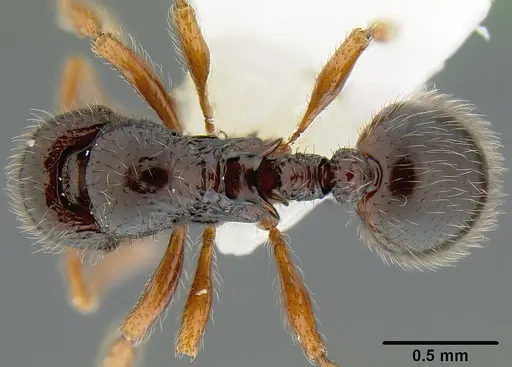
Literature
Loading...Loading products...