

Lordomyrma caledonica
- Scientific Name
- Lordomyrma caledonica
- Tribe
- Crematogastrini
- Subfamily
- Myrmicinae
- Author
- André, 1889
- Distribution
- Found in 1 countries
Lordomyrma caledonica Overview
Lordomyrma caledonica is an ant species of the genus Lordomyrma. It is primarily documented in 1 countries , including New Caledonia. Detailed taxonomic data and occurrence records can be further explored via authoritative databases such as AntWeb or the Global Biodiversity Information Facility (GBIF).
Lordomyrma caledonica
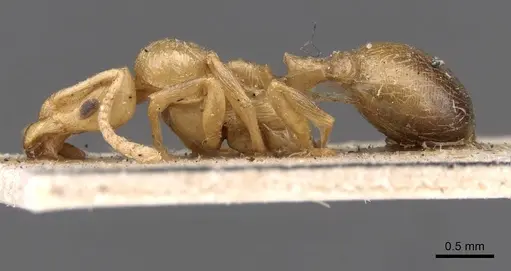
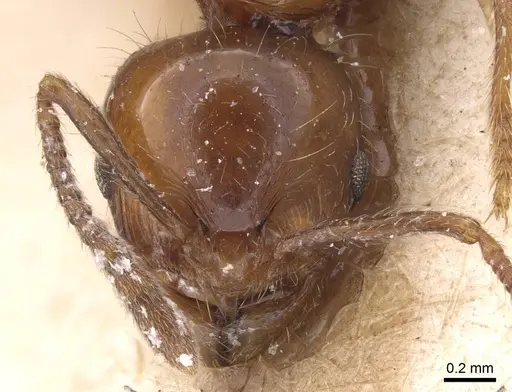
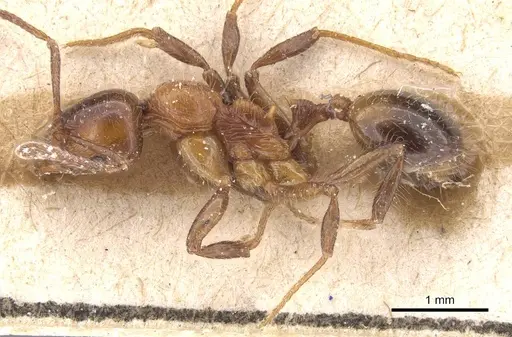
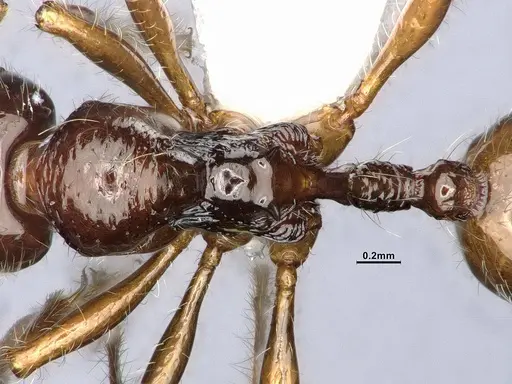
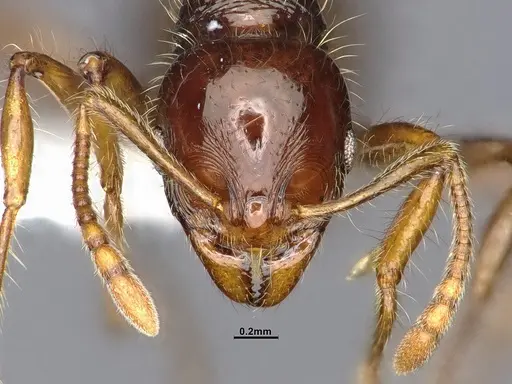
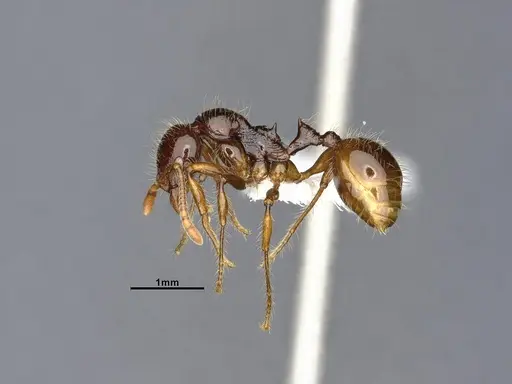
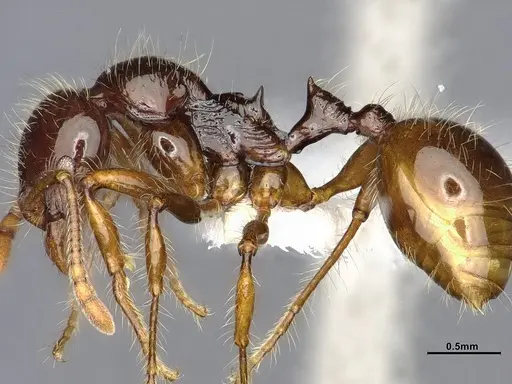
Lordomyrma caledonica is a small, rust-colored ant native to New Caledonia, an island in the South Pacific. Workers measure 4.5-5mm and have a distinctive appearance with a smooth, shiny head except for longitudinal rugae on the cheeks and areas between the eyes. Their thorax has coarse transverse and longitudinal rugae, and they possess short, nearly straight epinotal spines. The petiolar node is angular and pointed, and the gaster is smooth and very shining. This species was originally described as Lordomyrma caledonica by André in 1889 before being transferred to the genus Lordomyrma by Emery in 1897 [1][2].
Queens and males remain unknown for this species, making captive breeding challenging since we cannot reliably identify mated queens. The genus Lordomyrma belongs to the tribe Crematogastrini and contains several species distributed across the Australasian region. While they possess a stinger, it is reduced compared to other Myrmicinae, with an index of reduction of 0.24,and the lancets are described as possibly able to pierce [3]. This makes them less concerning for keepers worried about stings.
Quick Summary
- Difficulty: Expert
- Origin & Habitat: Lordomyrma caledonica is found exclusively in New Caledonia, a French territory in the South Pacific. The type locality is Nouméa, the capital city [1]. The natural habitat consists of tropical rainforest environments typical of the island, though specific microhabitat preferences are not documented. New Caledonia has a warm, subtropical to tropical climate with high humidity year-round.
- Colony Type: Unknown, queens and males have never been documented, so colony structure (single-queen or multi-queen) is completely unconfirmed. This represents a significant knowledge gap for antkeepers.
- Size & Growth:
- Queen: Unknown, queens have never been described in the scientific literature [4]
- Worker: 4.5-5mm [4]
- Colony: Unknown, no colony size data exists for this species
- Growth: Unknown
- Development: Unknown, no development data exists for this species (No data on egg-to-worker timeline exists. Related Lordomyrma species from similar Pacific island habitats may suggest 6-10 weeks at tropical temperatures, but this is entirely speculative.)
- Antkeeping:
- Temperature: Likely 22-28°C based on New Caledonia's tropical climate, start in the mid-range and observe colony activity. Provide a temperature gradient allowing workers to self-regulate.
- Humidity: Likely requires high humidity (60-80%) given the moist rainforest environment of New Caledonia. Keep nest substrate consistently moist but not waterlogged.
- Diapause: Unknown, no data on overwintering requirements exists. New Caledonia has mild winters without prolonged cold, so this species likely does not require a true diapause. Consider a slight reduction in temperature during winter months rather than hibernation.
- Nesting: No specific nesting data exists. Based on related Crematogastrini ants and New Caledonian forest habitats, they likely nest in rotting wood, under stones, or in leaf litter. A naturalistic setup with moist substrate (soil/peat mix) or a Y-tong/plaster nest works as a starting point.
- Behavior: Behavior is unstudied in captivity. Based on genus-level observations of related species, they are likely relatively docile and not aggressive. Workers are moderate foragers. Their small size (4.5-5mm) means escape prevention is important, use tight-fitting lids and fine mesh barriers. They possess a reduced stinger that may be able to pierce human skin, though the sting is likely mild [3].
- Common Issues: queen unavailability, queens have never been documented, making colony founding from wild-caught queens impossible, complete lack of biological data, no information on founding, development, diet, or behavior means keepers are essentially pioneering captive care, unknown colony structure, cannot determine if single-queen or multi-queen colonies occur, no established captive protocols, no hobbyist experience exists for this species, risk of overfeeding or incorrect humidity due to guesswork rather than species-specific data
Species Background and Identification
Lordomyrma caledonica is one of the more obscure ant species in the hobby, known primarily from scientific descriptions rather than captive observation. Originally described by Ernest André in 1889 as Lordomyrma caledonica, it was later transferred to the genus Lordomyrma by Carlo Emery in 1897 [1]. The species is known only from worker specimens, with queens and males remaining undescribed to this day.
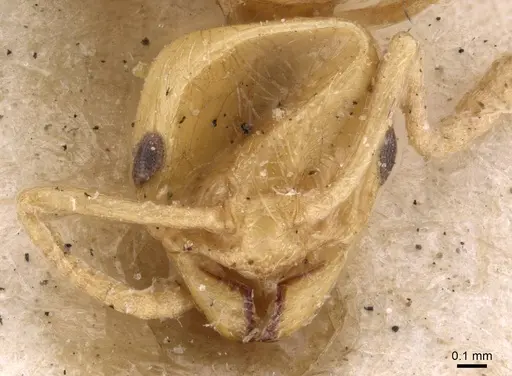
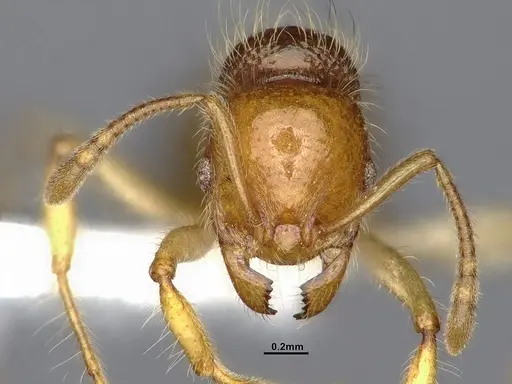
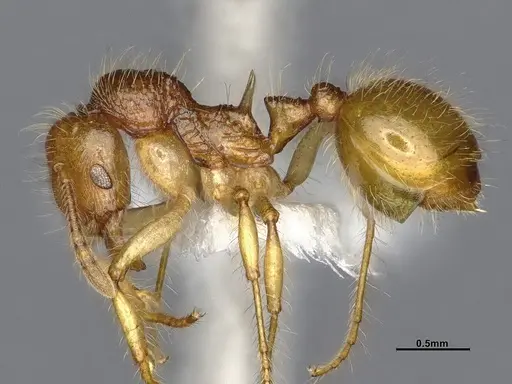
Workers are 4.5-5mm in length with a distinctive rusty (ferruginous) coloration. The head is smooth and shining except for longitudinal rugae on the cheeks and areas between the eyes and frontal carinae. The thorax has coarse, transverse rugae on top and longitudinal rugae on the sides. They possess short, nearly straight epinotal spines and an angular, pointed petiolar node. The gaster is smooth and very shining. The mandibles, anterior head border, femora, tibiae, and often the posterior two-thirds of the gaster are more or less brown [4].
This species is endemic to New Caledonia, with the type locality recorded as Nouméa [1]. The genus Lordomyrma contains multiple species distributed across the Australasian region, with at least 9 species documented from New Caledonia alone [1].
Sting and Defense
Lordomyrma caledonica possesses a stinger, though it is considered reduced compared to other Myrmicinae ants. Research on sting morphology found an index of reduction of 0.24,indicating the sting apparatus is simplified [3]. The sting is wedge-shaped in lateral and ventral views, with a strong apex and flared sides. The lancets (stinging apparatus) are sclerotized and cuneiform in shape, described as possibly able to pierce human skin [3].
For antkeepers, this means the species likely has a mild sting at most. Given the reduced nature of the sting apparatus, it probably poses minimal danger to humans. However, individual sensitivity varies, and any ant capable of stinging should be treated with appropriate caution. The palpal formula of 3:3 is noted, which is consistent with other Lordomyrma species studied [1].
Challenges in Captive Care
Lordomyrma caledonica presents extreme challenges for antkeepers, primarily because queens have never been documented in the scientific literature. This means wild-caught colony founding is essentially impossible, no one has ever observed or collected a mated queen. Without described queens, we also lack information on colony structure (single-queen vs multi-queen), founding behavior, and development timelines.
The species is best considered an expert-only target for antkeepers who are specifically interested in pioneering the captive husbandry of poorly studied species. Success would require either locating an established colony (which may already be in captivity somewhere) or potentially importing mated queens if they are ever discovered and identified. There are no established protocols, no feeding guides, no development data, and no hobbyist experience to draw upon.
Before attempting to keep this species, consider whether your goals align with the reality of the challenge. If you want a species with established care protocols and reliable queen availability, choose a different species. If you are interested in contributing to the knowledge base for a completely unstudied ant, this species represents a genuine opportunity, but go in with eyes open about the uncertainties.
Inferred Care Recommendations
Based on New Caledonia's climate and habitat, we can make educated guesses about care requirements, though these remain speculative. New Caledonia has a tropical climate with temperatures typically ranging from 20-30°C year-round and high humidity (often 70-80%). Expect this species to prefer warm, humid conditions.
For temperature, start around 24-26°C with a gradient allowing workers to move between warmer and cooler areas. Observe colony behavior, if workers cluster near heat sources, increase slightly, if they avoid heated areas, reduce temperature. For humidity, aim for 60-80% relative humidity. Keep the nest substrate consistently moist but not waterlogged, the substrate should feel damp to the touch.
For nesting, a naturalistic setup with moist substrate (a soil/peat mix) or a Y-tong/plaster nest with good moisture retention would be appropriate starting points. Given their small size (4.5-5mm), ensure escape prevention is adequate, use tight-fitting lids and fine mesh barriers. For feeding, offer sugar water or honey as an energy source and small protein sources like fruit flies or small mealworms, though actual dietary preferences are completely unconfirmed for this species.
Frequently Asked Questions
Can I find Lordomyrma caledonica queens for sale?
No, queens have never been documented in the scientific literature, so they are not available from any supplier. This is one of the most poorly known ant species in existence, and no one has ever described or collected a mated queen.
How long does it take for Lordomyrma caledonica to develop from egg to worker?
Unknown, no development data exists for this species. There are no studies on egg-to-worker timelines, and no hobbyist experience to draw upon. This is one of the fundamental gaps in our knowledge.
Are Lordomyrma caledonica ants dangerous?
They possess a stinger, but it is considered reduced with an index of reduction of 0.24. The sting is likely mild compared to other Myrmicinae. However, since queens have never been documented, captive colonies are essentially nonexistent, so sting incidents are extremely unlikely.
What do Lordomyrma caledonica ants eat?
Unknown, no dietary studies exist for this species. Based on related Crematogastrini ants, they likely consume nectar/honeydew and small insects. In captivity, you could offer sugar water/honey and small live prey like fruit flies, but acceptance is completely unconfirmed.
Do Lordomyrma caledonica ants need hibernation?
Unknown, no data on overwintering requirements exists. New Caledonia has mild winters without prolonged cold, so this species likely does not require a true diapause. A slight temperature reduction during winter months may be appropriate, but this is speculative.
Can beginners keep Lordomyrma caledonica?
No, this species is expert-only due to complete lack of biological data. Queens have never been documented, no captive protocols exist, and there is no established husbandry experience. If you want a rewarding antkeeping experience with documented care requirements, choose a different species.
What is the colony size of Lordomyrma caledonica?
Unknown, no colony size data exists for this species. Even maximum colony sizes in the wild remain undocumented.
Where is Lordomyrma caledonica found?
This species is endemic to New Caledonia, a French island in the South Pacific. The type locality is Nouméa, the capital city. It has not been recorded from any other location.
What temperature should I keep Lordomyrma caledonica at?
No specific data exists. Based on New Caledonia's tropical climate, likely 22-28°C. Start around 24-26°C with a gradient and adjust based on observed colony activity. This is an educated guess, not confirmed requirements.
Are Lordomyrma caledonica aggressive?
Unknown, no behavioral studies exist for this species. Based on related Lordomyrma species, they are likely relatively docile, but this is speculative. With no established colonies in captivity, no one has observed their temperament.
When do Lordomyrma caledonica have nuptial flights?
Unknown, nuptial flight timing has never been documented. Queens have never been observed or described, so we have no information about mating behavior or flight seasons.
Is Lordomyrma caledonica a good species for ant farms?
No, this species is not recommended for ant farms or casual keeping. Queens are unavailable, no care protocols exist, and the species remains essentially unknown to science. Consider better-documented species like Lasius, Camponotus, or Messor for ant farm setups.
References

This caresheet is licensed under CC BY-SA 4.0 .
CASENT0908980
View on AntWeb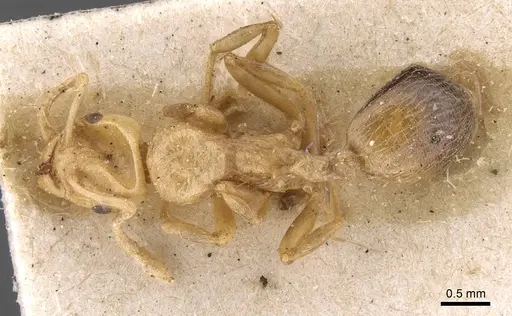
CASENT0915402
View on AntWeb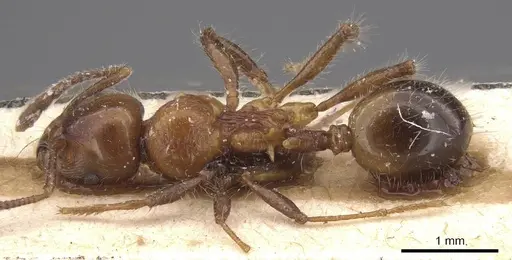
CASENT4032453
View on AntWeb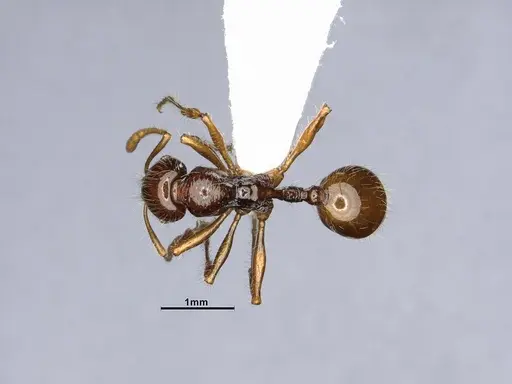
CASENT4032454
View on AntWeb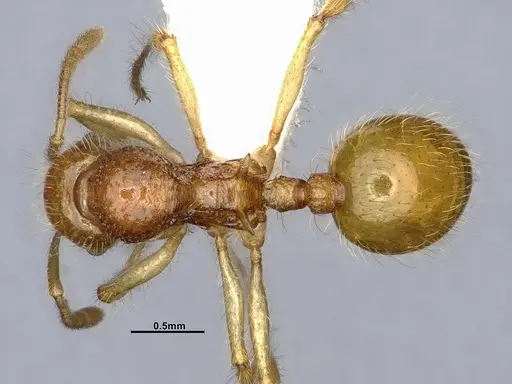
Literature
Loading...Loading products...