

Lophomyrmex quadrispinosus
- Scientific Name
- Lophomyrmex quadrispinosus
- Tribe
- Crematogastrini
- Subfamily
- Myrmicinae
- Author
- Jerdon, 1851
- Distribution
- Found in 4 countries
Lophomyrmex quadrispinosus Overview
Lophomyrmex quadrispinosus is an ant species of the genus Lophomyrmex. It is primarily documented in 4 countries , including China, India, Lao People's Democratic Republic. Detailed taxonomic data and occurrence records can be further explored via authoritative databases such as AntWeb or the Global Biodiversity Information Facility (GBIF).
Lophomyrmex quadrispinosus
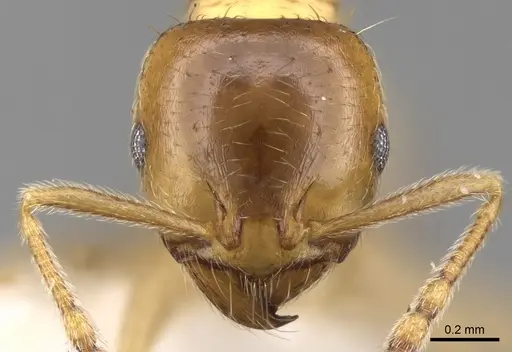
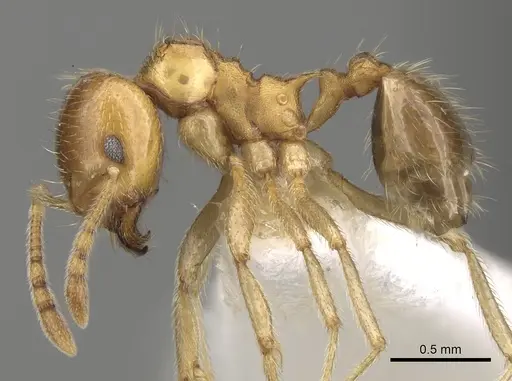
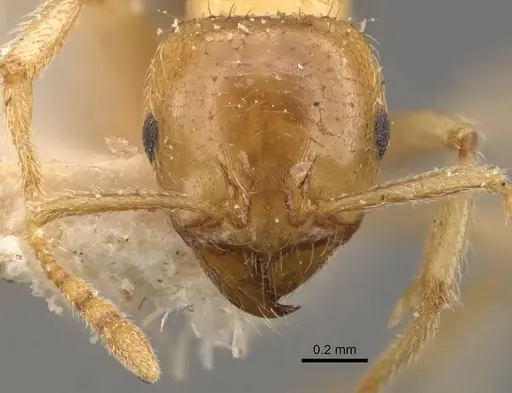
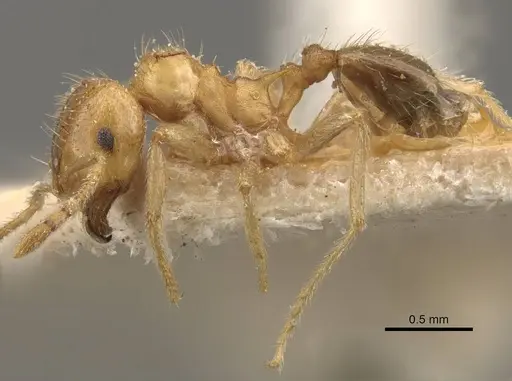
Lophomyrmex quadrispinosus is a small myrmicine ant native to South and Southeast Asia. Workers measure 2.5-3.5mm and have a distinctive appearance with reddish-brown coloration, a smooth and shining head and thorax, and notably long metanotal spines that curve slightly downward [1]. The species is characterized by two anterodorsal pronotal teeth and belongs to the quadrispinosus group [2]. Queens are significantly larger at approximately 9.5mm with dark brown coloration and short, blunt propodeal spines [3]. This ant is a ground-nesting species that constructs nests in warm, dry, exposed areas using pure dry sand, often in hard-crusted habitats like cracks in concrete [4]. It is a tropical-climate specialist found at elevations from 500-1000m across India, Sri Lanka, and parts of China [5].
Quick Summary
- Difficulty: Easy
- Origin & Habitat: Native to the Oriental region including India, Sri Lanka, and southern China. Found in diverse habitats from coconut plantations to agricultural lands, preferring warm, dry, exposed nesting sites in sandy soil [4][6].
- Colony Type: Colony structure is unconfirmed. Multiple queens have not been documented in scientific literature.
- Size & Growth:
- Queen: Approximately 9.5mm [3]
- Worker: 2.5-3.5mm [1]
- Colony: Unknown, no colony size data available in research literature
- Growth: Unknown, no development timing data available
- Development: Unconfirmed, no direct development data exists for this species (Based on typical Myrmicinae patterns, expect 4-8 weeks at warm temperatures, but this is an estimate)
- Antkeeping:
- Temperature: Tropical-climate specialist, keep at 24-28°C. Being a species from warm regions, they need consistently warm conditions. A heating cable on one side of the nest can help maintain warmth [5].
- Humidity: Prefers dry to moderate conditions. In the wild, they nest in warm, dry, exposed spots with pure dry sand. Keep substrate lightly moist but allow drying periods between waterings. Avoid overly damp conditions [4].
- Diapause: Unknown for this tropical species. Most tropical ants do not require hibernation, but a slight cool-down period during winter months may be beneficial if kept in temperate climates.
- Nesting: Ground-nesting species that works well in test tube setups or acrylic nests. Provide a sandy substrate area for nesting if using a naturalistic setup. They prefer tight chambers and narrow passages scaled to their small size. Nest entrance holes are very small (1-2mm) [4].
- Behavior: This is a generalist forager that readily accepts sugar baits and protein sources. Workers are active foragers and can be observed searching for food on the ground. They are known to tend aphids for honeydew [7]. The species is common in coconut plantations and agricultural areas, indicating adaptability to human-modified landscapes [6]. Escape prevention should be moderate, while small at 2.5-3.5mm, they are not as tiny as some myrmicines and standard barrier methods typically work well.
- Common Issues: tropical species may struggle in cool rooms below 20°C, monitor temperature closely, ground-nesting behavior means they need access to appropriate substrate for nest construction, small nest entrance size (1-2mm) requires fine mesh for escape prevention, limited data on captive breeding means colony establishment may require experimentation, dry nesting preference means overwatering can be fatal, err on the dry side
Natural History and Distribution
Lophomyrmex quadrispinosus is widely distributed across the Oriental region, with confirmed records from India, Sri Lanka, China (Yunnan), and Taiwan [8][9]. In India, it has been recorded across numerous states including Karnataka, Kerala, West Bengal, Sikkim, Meghalaya, and others [1][10]. The species is particularly common in Sri Lanka, where it dominates in coconut plantations and is considered a resident ant community member in agricultural areas [6][11]. It has also been found in Bhutan at elevations around 1400-1600m in agricultural land [12]. This ant is classified as a tropical-climate specialist, found primarily at lower elevations around 500-1000m in regions like the Himalayas [5]. Its presence in diverse habitats from primary forests to rubber plantations indicates good adaptability [13].
Nesting Behavior
This species is a ground-nesting ant that shows distinct preferences for nesting sites. In Sri Lankan studies, nests were found both below and above ground, with lithocolous (rock-dwelling) nesting behavior observed [4]. They construct nests using pure dry sand and choose warm, dry, exposed spots in hard-crusted habitats, notably in cracks in concrete objects and similar urban environments [4]. Nest entrance holes are remarkably small, measuring just 1-2mm in diameter, with large numbers of minute entrance holes being a distinctive feature of this species [4]. The crater areas around nest entrances can range from 314 to over 11,000 cm², making them some of the largest among ant species in the same habitat [4]. For captive care, provide a sandy substrate area and ensure nesting chambers are appropriately scaled to their small worker size.
Feeding and Diet
Lophomyrmex quadrispinosus is a generalist forager with a diverse diet. The species is known to tend aphids, with documented mutualistic associations with Aphis gossypii [7]. In field studies, they are effectively attracted to sugar baits including honey bait and canned-fish bait [14][15]. They are considered a dominant species in coconut plantations where they forage for honeydew and other sugar sources [6]. For captive colonies, offer a varied diet including sugar water or honey as a constant energy source, and protein sources such as small insects or commercial ant feeds. Their generalist nature means they should accept most standard ant foods.
Temperature and Care
As a tropical-climate specialist, this species requires warm conditions to thrive. Keep nest temperatures in the range of 24-28°C, which aligns with their natural distribution in warm Asian climates [5]. A heating cable placed on one side of the nest can help maintain appropriate temperatures, but avoid direct heat that could dry out the nest too quickly. Unlike temperate species, they do not require a true hibernation period, though a slight reduction in temperature during winter months may be appropriate if your room temperature drops significantly. Monitor colony activity, if workers become sluggish or cluster together, consider warming them slightly. The species prefers dry to moderately moist conditions, reflecting their natural nesting in warm, exposed sandy areas.
Behavior and Foraging
Workers are active foragers that search for food on the ground surface. The species has been successfully collected using multiple sampling methods including soil sifting, hand collecting, honey baiting, and pitfall trapping, indicating active ground-foraging behavior [11]. They show high frequency of occurrence in agricultural habitats, present in 83.3% of sampled coconut plantations in Sri Lanka [11]. Workers are not particularly aggressive but will defend their nest if threatened. Their small size (2.5-3.5mm) means they can slip through small gaps, so use appropriate barrier methods. The species is known for its adaptability to human-modified landscapes, making it a relatively hardy choice for antkeepers.
Frequently Asked Questions
How long does it take for Lophomyrmex quadrispinosus to produce first workers?
The egg-to-worker development timeline is unconfirmed for this species as no direct research exists. Based on typical Myrmicinae patterns, expect approximately 4-8 weeks at optimal warm temperatures (24-28°C). However, this is an estimate, actual timing may vary.
What temperature do Lophomyrmex quadrispinosus ants need?
Keep them at 24-28°C. As a tropical-climate specialist from South and Southeast Asia, they need consistently warm conditions. A heating cable on part of the nest can help maintain warmth, especially in cooler climates.
Can I keep Lophomyrmex quadrispinosus in a test tube setup?
Yes, test tube setups work well for this species. They are small ground-nesting ants that adapt to various nest types. Ensure the test tube has appropriate moisture levels and provide a foraging area. Their small size means use fine mesh for escape prevention.
What do Lophomyrmex quadrispinosus ants eat?
They are generalists that accept sugar sources (honey, sugar water) and protein (small insects). In the wild, they tend aphids for honeydew and forage for insects. Offer sugar water constantly and protein prey 2-3 times per week.
Do Lophomyrmex quadrispinosus ants need hibernation?
Unknown, as a tropical species, they likely do not require true hibernation. However, if kept in a temperate climate with significant seasonal temperature drops, a slight cool-down period in winter may be appropriate. Monitor colony activity.
How big do Lophomyrmex quadrispinosus colonies get?
Colony size is not documented in scientific literature. Based on related Myrmicinae and their small worker size, colonies likely reach several hundred workers. More research is needed for specific numbers.
Are Lophomyrmex quadrispinosus good for beginners?
Yes, this species is considered easy to keep. They are generalist foragers, adaptable to various habitats, and tolerate a range of captive conditions. Their main requirements are warm temperatures and appropriate humidity. Escape prevention is important due to their small size.
Do Lophomyrmex quadrispinosus ants sting?
This species is not known for having a painful sting. As Myrmicinae, they have stingers but are generally not aggressive toward keepers. Standard antkeeping precautions are sufficient.
Where is Lophomyrmex quadrispinosus found in the wild?
They are native to the Oriental region, India, Sri Lanka, and southern China (Yunnan). They are common in coconut plantations and agricultural lands, nesting in warm, dry, exposed sandy areas at elevations around 500-1600m.
When will Lophomyrmex quadrispinosus queens have nuptial flights?
Nuptial flight timing is unconfirmed for this species. Based on tropical ant patterns in South Asia, flights likely occur during warm monsoon seasons when conditions are favorable. No specific research documents flight timing.
References

This caresheet is licensed under CC BY-SA 4.0 .
CASENT0281611
View on AntWeb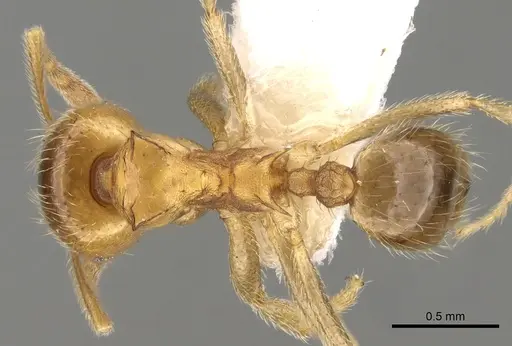
CASENT0908880
View on AntWeb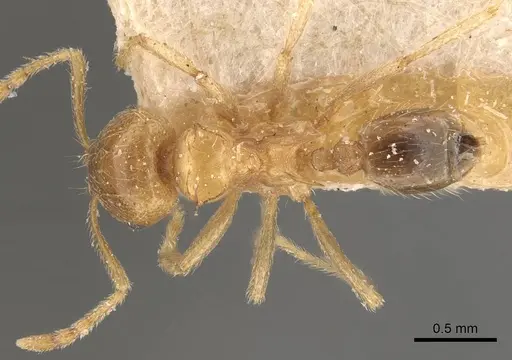
Literature
Loading...Loading products...