

Loboponera subatra
- Scientific Name
- Loboponera subatra
- Tribe
- Ponerini
- Subfamily
- Ponerinae
- Author
- Bolton & Brown, 2002
- Distribution
- Found in 1 countries
Loboponera subatra Overview
Loboponera subatra is an ant species of the genus Loboponera. It is primarily documented in 1 countries , including Central African Republic. Detailed taxonomic data and occurrence records can be further explored via authoritative databases such as AntWeb or the Global Biodiversity Information Facility (GBIF).
Loboponera subatra
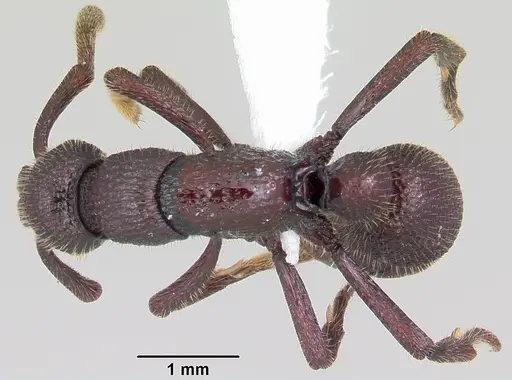
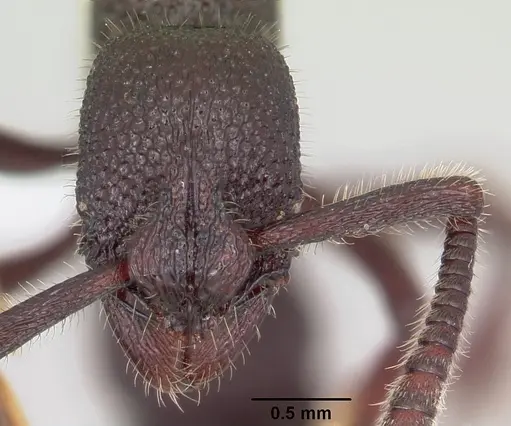
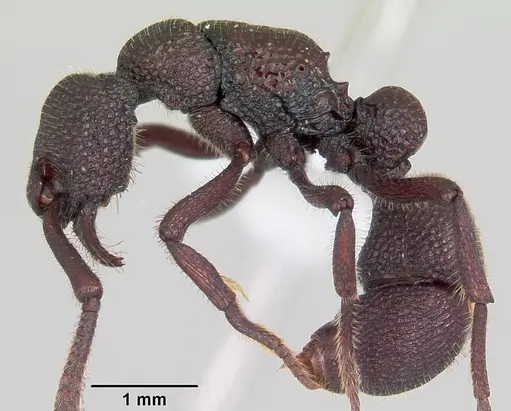
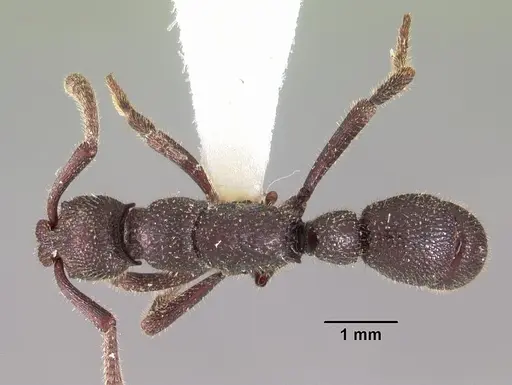
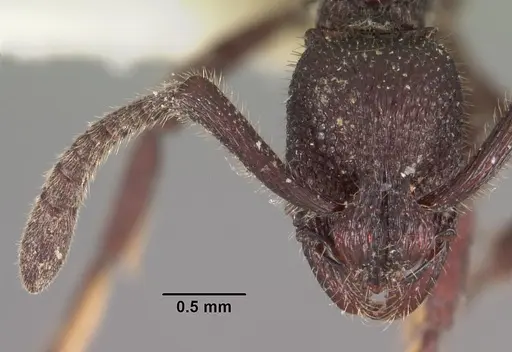
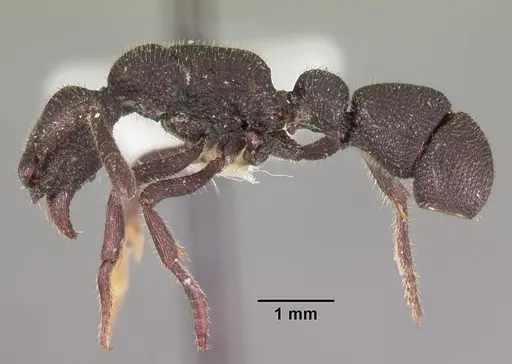
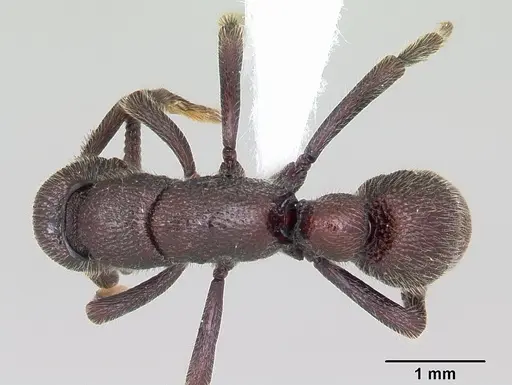
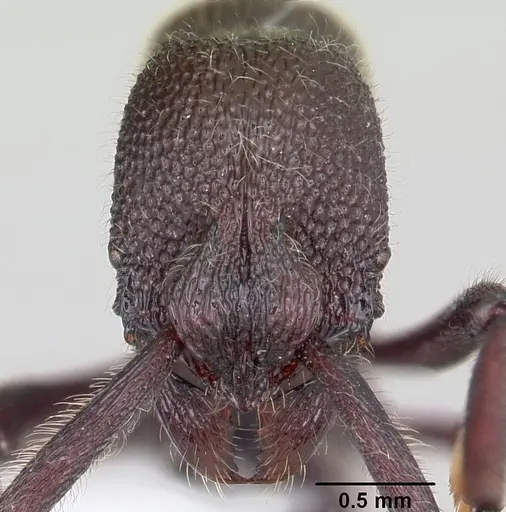
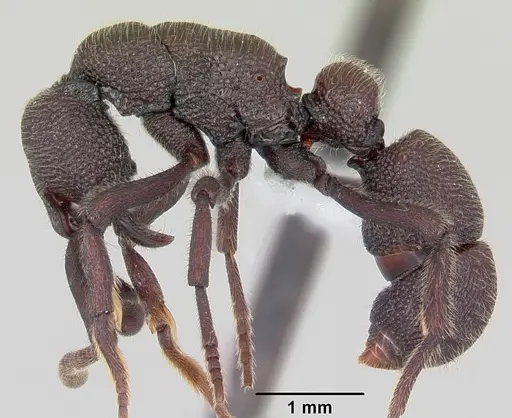
Loboponera subatra is a relatively large Ponerine ant native to the rainforests of Central Africa. Workers measure around 7.3mm, making them substantial for their subfamily. They have a distinctive appearance with dense short pilosity covering their body, longitudinally costaterugose sculpture on the head and alitrunk, and a unique feature of having a blunt tooth on each side of the first gastral sternite. This species belongs to the vigilans species group and can be distinguished from related species like L. vigilans by the complete absence of a median carina on the first gastral sternite. They are found in rainforest litter in Cameroon and the Central African Republic[1].
As a Ponerine ant, L. subatra represents a more primitive ant lineage. These ants are typically predatory and possess a functional sting, which they use to subdue prey. The very small eyes (maximum diameter just 0.10mm) suggest they rely more on chemical and tactile senses than vision for hunting and navigation. This is a rarely-encountered species in both the wild and in antkeeping, with limited documented information available about their captive care.
Quick Summary
- Difficulty: Expert
- Origin & Habitat: Rainforests of Cameroon and Central African Republic, found in rainforest litter at elevations of 180-510m [1][2]
- Colony Type: Colony structure is unconfirmed. Based on typical Ponerine patterns, likely single-queen (monogyne) colonies.
- Size & Growth:
- Queen: Unknown, queen has not been described in scientific literature
- Worker: 7.3mm total length (holotype worker)
- Colony: Unknown, no colony size data available
- Growth: Unknown, no development data available
- Development: Unknown, no direct development data available. Based on typical Ponerine patterns at tropical temperatures, estimate 6-10 weeks at 24-28°C, but this is a rough guess. (No specific studies on development. Ponerine ants typically have slower development than many Myrmicines.)
- Antkeeping:
- Temperature: Keep warm, around 24-28°C. This aligns with their rainforest origin in Central Africa. A slight gradient allowing cooler areas (22-24°C) is beneficial.
- Humidity: High humidity is essential, rainforest species. Keep nest substrate consistently moist but not waterlogged. Aim for 70-85% humidity. Provide a water source.
- Diapause: Unknown, as a tropical rainforest species, they likely do not require a true diapause. However, slight temperature reduction during what would be the dry season may be beneficial.
- Nesting: In the wild, they nest in rainforest litter and likely in rotting wood or soil. In captivity, a naturalistic setup with moist substrate (like a terrarium-style formicarium) or a well-hydrated Y-tong/plaster nest works well. They prefer tight, dark chambers.
- Behavior: Ponerine ants are typically predatory and possess a functional sting. Workers are likely to be active hunters, using their sting to subdue small prey. They are probably more aggressive in defense of the colony compared to many common kept ants. Escape prevention should be good, while not tiny, they will explore and may attempt to escape. They are likely nocturnal or crepuscular given their small eyes, so provide darkness during rest periods. Workers probably forage individually rather than in groups.
- Common Issues: lack of documented captive care information makes proper husbandry challenging, predatory nature requires live prey, may not accept commercial ant foods, tropical humidity requirements can be difficult to maintain consistently, sting may cause irritation, handle with care, slow colony growth may lead to keeper impatience and overfeeding
Natural History and Distribution
Loboponera subatra is known from two countries in Central Africa: Cameroon and the Central African Republic. In Cameroon, specimens have been collected from the Reserve de Faune de Campo in the Sud province, at the Massif des Mamelles about 15km east of Ébodjé, at an elevation of 180m. In the Central African Republic, they have been found in the Parc National Dzanga-Ndoki in the Sangha-Mbaéré prefecture, specifically at Mabéa Bai about 21km northeast of Bayanga, at 510m elevation. Both locations are lowland rainforest environments. The species was described in 2002 by Bolton & Brown from a specimen collected in Nkoemvon, Cameroon in 1980. It belongs to the vigilans species group within the genus Loboponera, characterized by their relatively large, slender build and specific gastral sternite morphology[1][2].
Identification and Morphology
Workers of L. subatra measure approximately 7.3mm in total length, making them relatively large for a Ponerine ant. The head is slightly longer than wide (HL 1.32mm, HW 1.11mm, CI 84). The eyes are very small, with a maximum diameter of only 0.10mm, suggesting limited visual capability. The scapes are relatively long (SL 1.27mm, SI 114). The body is covered in very dense short pilosity on all dorsal surfaces, including the scapes, femora, and tibiae. The sculpture is distinctive: the dorsum of the head and alitrunk is predominantly longitudinally costaterugose (ridged), with foveolae (small pits) that are most clearly defined on the propodeum. The first gastral sternite lacks any median longitudinal carina and has a blunt tooth on each side of the anteroventral median process, this is a key distinguishing feature from the related L. vigilans, which typically has an angular development in the same location. The propodeal declivity has a broad triangular tooth near the base.
Housing and Nesting
As a rainforest litter species, L. subatra requires high humidity and dark, tight nesting spaces. In captivity, a naturalistic terrarium setup with moist substrate works well, use a mixture of soil and rotting wood pieces to mimic their natural litter environment. Alternatively, a well-hydrated Y-tong (acrylic) or plaster nest with small chambers can work, provided humidity is maintained high. The nest should have multiple tight chambers rather than large open spaces. Keep the nest area dark, these ants likely prefer dark, secluded spaces. The outworld can be decorated with live moss, leaf litter, and small pieces of wood to create a naturalistic rainforest feel. Ensure excellent escape prevention, though they are not among the smallest ants.
Feeding and Diet
Like most Ponerine ants, L. subatra is likely primarily predatory. They probably hunt small invertebrates in the leaf litter. In captivity, offer small live prey such as fruit flies, small crickets, mealworms, and other small insects. The small eye size suggests they rely on chemical and tactile cues rather than vision to locate prey. It is unknown whether they will accept sugar sources, some Ponerines do, but many are strictly predatory. If they accept sugar water or honey, it can be offered as a supplement, but protein-rich live prey should be the primary food. Feed every few days, removing uneaten prey to prevent mold.
Temperature and Humidity Requirements
Being a Central African rainforest species, L. subatra requires warm and humid conditions. Maintain temperatures in the range of 24-28°C, with a slight gradient allowing workers to self-regulate. Room temperature in most homes may be too cool, use a heating cable or mat on one side of the nest to achieve optimal temperatures. Humidity should be high, around 70-85%. The substrate should remain consistently moist but never waterlogged. Using a water reservoir in the nest (like in test tube setups) or regular misting helps maintain humidity. A water source should always be available. As a tropical species, they likely do not require true hibernation, but a slight temperature reduction during the dry season months may simulate natural conditions.
Behavior and Temperament
Ponerine ants are generally more primitive in their social structure and behavior compared to more advanced ants like Formicinae or Myrmicinae. L. subatra likely has an individual foraging strategy rather than mass recruitment. Workers possess a functional sting and can use it defensively. When threatened, they may raise their gaster in a defensive posture, ready to sting. The very small eyes suggest they are not strong visual hunters, they probably use pheromone trails and tactile sensing to navigate. They are likely more active during cooler parts of the day or at night, consistent with their rainforest litter floor occupation. Colony size is unknown but is probably modest compared to many ant species.
Frequently Asked Questions
How long does it take for Loboponera subatra to develop from egg to worker?
The exact development timeline has not been documented. Based on typical Ponerine ant development at tropical temperatures (24-28°C), a reasonable estimate would be 6-10 weeks from egg to first worker. However, this is an educated guess rather than confirmed data.
What do Loboponera subatra ants eat?
As a Ponerine ant, they are likely primarily predatory on small invertebrates. In captivity, offer small live prey such as fruit flies, small crickets, mealworms, and other tiny insects. It is unknown whether they accept sugar sources, some Ponerines do, but many are strictly predatory.
Are Loboponera subatra good for beginners?
No, this species is not recommended for beginners. They are rarely kept in captivity, and there is limited documented information about their care. They have specific humidity and temperature requirements that can be challenging to maintain. They are best suited for experienced antkeepers interested in keeping rare Ponerine species.
What temperature do Loboponera subatra ants need?
Keep them warm, around 24-28°C. This matches their natural rainforest habitat in Central Africa. A slight temperature gradient allowing cooler areas around 22-24°C is beneficial for self-regulation.
How big do Loboponera subatra colonies get?
The maximum colony size is unknown. Based on typical Ponerine colony sizes, they likely reach a few hundred workers at most, rather than the thousands seen in some Myrmicine species.
Can I keep multiple Loboponera subatra queens together?
The colony structure is not confirmed. Based on typical Ponerine patterns, they likely have single-queen colonies. Combining unrelated queens is not recommended as it has not been studied and could result in aggression.
Do Loboponera subatra need hibernation?
As a tropical rainforest species from Central Africa, they likely do not require true hibernation. However, a slight temperature reduction during the dry season months may be beneficial to simulate natural seasonal changes.
Why is my Loboponera subatra colony dying?
Common causes include: low humidity (they need 70-85%), temperatures that are too cool (below 24°C), lack of appropriate live prey, or stress from excessive disturbance. Ensure proper humidity, warmth, and offer small live prey regularly.
References

This caresheet is licensed under CC BY-SA 4.0 .
Literature
Loading...Loading products...