

Lioponera neocaledonica
- Scientific Name
- Lioponera neocaledonica
- Subfamily
- Dorylinae
- Author
- Jouault <i>et al.</i>, 2019
- Distribution
- Found in 1 countries
Lioponera neocaledonica Overview
Lioponera neocaledonica is an ant species of the genus Lioponera. It is primarily documented in 1 countries , including New Caledonia. Detailed taxonomic data and occurrence records can be further explored via authoritative databases such as AntWeb or the Global Biodiversity Information Facility (GBIF).
Lioponera neocaledonica
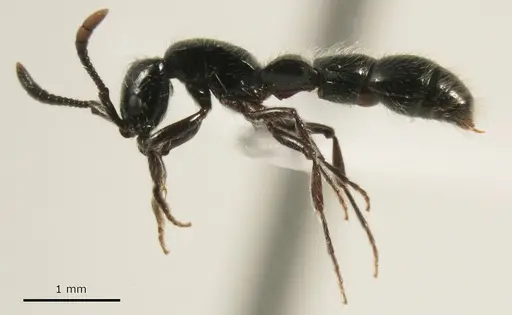
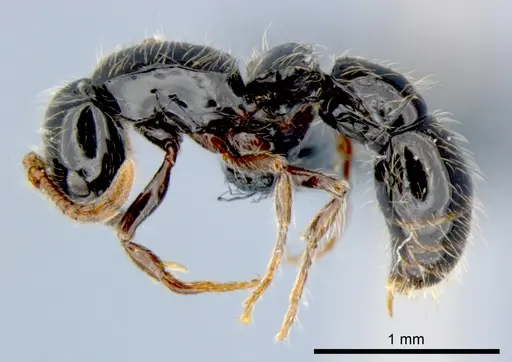
Lioponera neocaledonica is a small predatory ant native to New Caledonia, measuring around 4mm in total length [1]. It belongs to the Dorylinae subfamily, commonly known as army ants or legionary ants. The species has a distinctive black body with brown markings on the antennae, legs, and abdominal tip, and features a visible stinger that curves upward [1]. This ant was discovered in the humid mountain forests of Grande Terre at elevations around 400m, where it forages on the forest floor among endemic vegetation like Amborella trichopoda [1]. The species is characterized by its ergatoid (wingless) queens, which distinguishes it from many other ant species that have fully winged queens [1].
Quick Summary
- Difficulty: Expert
- Origin & Habitat: New Caledonia (Grande Terre, Province Sud), mixed mountain humid forest at 441m elevation [1]. The habitat features ultramafic ground with endemic basal angiosperm Amborella trichopoda and ferns of Marattiaceae [1].
- Colony Type: Colony structure is not fully documented. The species has ergatoid (wingless) queens, and potential ergatogynes (reproductive workers) have been noted, though specimens collected foraging were likely workers rather than reproductives [1]. Further research needed to confirm queen number and colony organization.
- Size & Growth:
- Queen: Ergatoid queens are wingless, size measurements from workers: 4.12-4.15mm total length [1]. Queens likely similar in size to workers due to ergatoid morphology.
- Worker: 4.12-4.15mm total length [1]. Workers measure: HL 0.8-0.85mm, HW 0.7-0.77mm, MSL 1.025-1.12mm [1].
- Colony: Unknown, no colony size data available for this newly described species [1].
- Growth: Unknown, no development data available for this species [1].
- Development: Unknown, no development studies exist for this species. Based on related Dorylinae patterns, expect 4-8 weeks at tropical temperatures, but this is an estimate. (Development timeline has not been studied. Related Dorylinae species suggest several months to reach moderate colony sizes.)
- Antkeeping:
- Temperature: Keep at 22-26°C as a starting point. This species comes from humid tropical forest in New Caledonia, so moderate warmth with high humidity is essential. Use a heating cable on one side of the nest to create a gradient if room temperature is below 22°C.
- Humidity: Requires high humidity, think damp forest floor. Keep nest substrate consistently moist but not waterlogged. The natural habitat is humid mountain forest with consistent moisture [1]. Provide a water tube for drinking access.
- Diapause: Unknown, no seasonal data available. New Caledonia has a mild tropical climate without harsh winters. Likely no true diapause required, but colony activity may slow during cooler periods.
- Nesting: No captive nesting observations exist. In nature, they were collected on forest ground, suggesting they nest in soil or under ground cover. A naturalistic setup with moist substrate or a well-humidified acrylic/plaster nest would be appropriate starting point.
- Behavior: This is a predatory Dorylinae ant, so expect active hunting behavior. The stinger is exerted and upcurved, indicating they can defend themselves [1]. Foraging workers were collected by hand on the ground, suggesting they actively hunt on the forest floor [1]. Escape risk is moderate due to their small 4mm size, use standard barrier precautions. Temperament is likely defensive given the stinger and predatory nature. No specific aggression or colony behavior data exists for this species.
- Common Issues: no captive husbandry data exists, this is a newly described species with no established care protocols, predatory diet may be difficult to replicate, Dorylinae typically hunt live prey, high humidity requirements can lead to mold problems if ventilation is poor, small size means escapes are possible without proper barriers, ergatoid queen system is unusual and may affect colony founding dynamics
Discovery and Taxonomy
Lioponera neocaledonica was only described in 2019 by Jouault, Ramage, and Perrichot, making it one of the newest ant species to science [1]. It belongs to the subfamily Dorylinae, which includes army ants and other predatory species. The species was discovered during field research in New Caledonia, specifically at two locations: Plateau de Dogny trail at 441m elevation and Montagne des Sources at 394m elevation [1]. The specific epithet 'neocaledonica' directly refers to New Caledonia where the species was found. The type specimens were collected between 2010-2011,and the species remains poorly known with no captive colonies documented [1].
Identification and Morphology
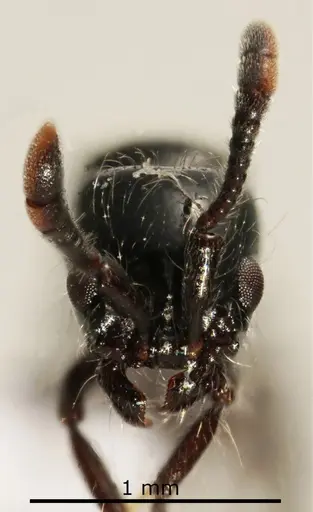
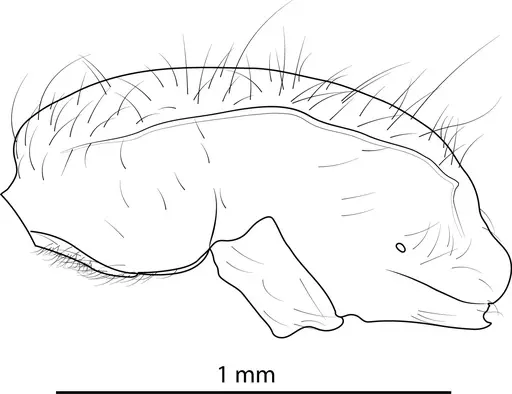
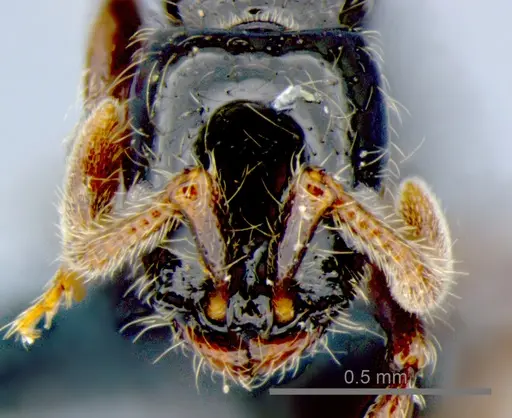
Lioponera neocaledonica can be identified by several key features: the mesosoma has conspicuous dorsolateral margins, the propodeal declivity lacks a dorsal margin, and the posterolateral corners of the petiole are not projected into spines [1]. Workers are small at approximately 4mm total length, with a black body and brown markings on the antennae tips, tarsi, and abdominal segments [1]. The antennae have a short, clavate scape that reaches about two-fifths of the head's posterior margin. The species has medium-sized eyes positioned below the midline of the head, and notably possesses an exerted stinger that curves upward, a defensive adaptation [1]. The gaster features a distinct girdling constriction (cinctus) between abdominal segments III and IV [1].
Natural Habitat
This species inhabits the humid mountain forests of New Caledonia's Grande Terre island at elevations around 400m [1]. The collection sites correspond to mixed humid forest on ultramafic ground, soils derived from ultramafic rocks that are typically nutrient-poor and metal-rich [1]. The vegetation includes the remarkable endemic plant Amborella trichopoda, considered one of the most primitive flowering plants, as well as ferns of the Marattiaceae family [1]. These ants were collected by hand-picking from the forest floor, indicating they are ground-foraging predators [1]. The combination of high elevation, humid conditions, and dense forest cover suggests this species prefers stable, moist microenvironments.
Housing and Care Considerations
Since no captive husbandry information exists for this species, care recommendations must be based on related Dorylinae behavior and the natural habitat data. Provide a well-humidified nest, either a naturalistic setup with moist soil or a plaster/acrylic formicarium with high humidity chambers. Maintain temperatures in the 22-26°C range, which aligns with their tropical mountain forest origin. As predatory Dorylinae, they will require live prey, small insects like fruit flies, pinhead crickets, or other micro-arthropods. The small 4mm size means escape prevention should be taken seriously, though they are not as tiny as some other species. Provide a water source via a test tube with water and cotton. Given the ergatoid queen morphology, colony founding may differ from typical claustral species, monitor for any semi-claustral behavior where the queen may need to forage. [1]
Predatory Behavior and Feeding
As a member of the Dorylinae subfamily, Lioponera neocaledonica is expected to be a predatory ant that hunts small invertebrates. The elongate mandibles with 10 small teeth suggest they are adapted for capturing and processing prey [1]. In captivity, offer small live prey items such as fruit flies (Drosophila), small crickets, springtails, or other micro-arthropods. The stinger indicates they can subdue prey and defend against threats [1]. Unlike some ants that readily accept sugar sources, Dorylinae are typically protein-focused predators. Do not rely on honey or sugar water as primary food, protein prey should form the bulk of their diet. Feed every 2-3 days with prey items, removing uneaten prey after 24 hours.
Frequently Asked Questions
How do I keep Lioponera neocaledonica ants?
This is an expert-level species with no established captive care protocols. Based on related Dorylinae and their natural habitat, provide high humidity (70-80%), temperatures around 22-26°C, and a diet of small live prey. Use a well-humidified nest setup and ensure escape prevention due to their small 4mm size.
What do Lioponera neocaledonica ants eat?
As predatory Dorylinae, they need live prey. Offer small insects like fruit flies, pinhead crickets, springtails, or other micro-arthropods. They are likely strict predators that do not rely on sugar sources. Feed protein prey every 2-3 days.
How long does it take for Lioponera neocaledonica to develop from egg to worker?
Unknown, no development studies exist for this newly described species. Based on related Dorylinae patterns, expect 4-8 weeks at tropical temperatures, but this is purely an estimate.
What is the colony size of Lioponera neocaledonica?
Unknown, no colony size data exists for this species. It was only described in 2019 and no wild colonies have been documented.
Do Lioponera neocaledonica need hibernation?
Likely no. This species comes from tropical New Caledonia without harsh winters. Colony activity may slow during cooler periods, but a true diapause is probably not required.
Are Lioponera neocaledonica good for beginners?
No, this species is rated Expert difficulty. No captive husbandry protocols exist, it was only described in 2019,and requires specific humidity and predatory feeding that make it unsuitable for beginners.
Can I keep multiple Lioponera neocaledonica queens together?
Unknown, colony structure has not been documented. The species has ergatoid (wingless) queens, but whether colonies are single-queen or multi-queen is unconfirmed. Do not attempt combining unrelated queens without data.
What temperature do Lioponera neocaledonica need?
Keep at 22-26°C as a starting point. This species comes from humid tropical mountain forest in New Caledonia. Use a heating cable on one side of the nest to create a gradient if room temperature is below 22°C.
Where is Lioponera neocaledonica found?
This species is endemic to New Caledonia, specifically Grande Terre island in the Province Sud region. It is known from two mountain forest locations at elevations around 400m [1].
References

This caresheet is licensed under CC BY-SA 4.0 .
ANTWEB1041393
View on AntWeb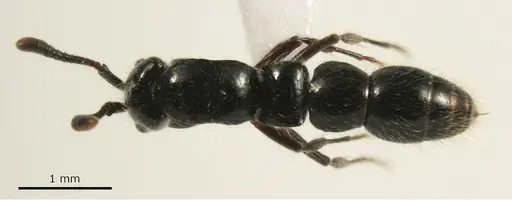
CSIRONC0055
View on AntWeb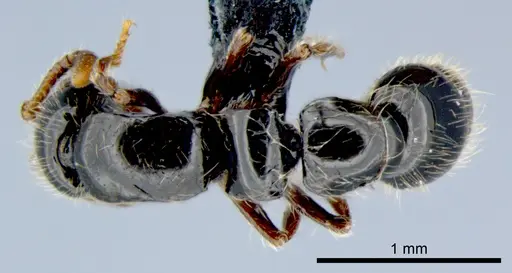
Literature
Loading...Loading products...