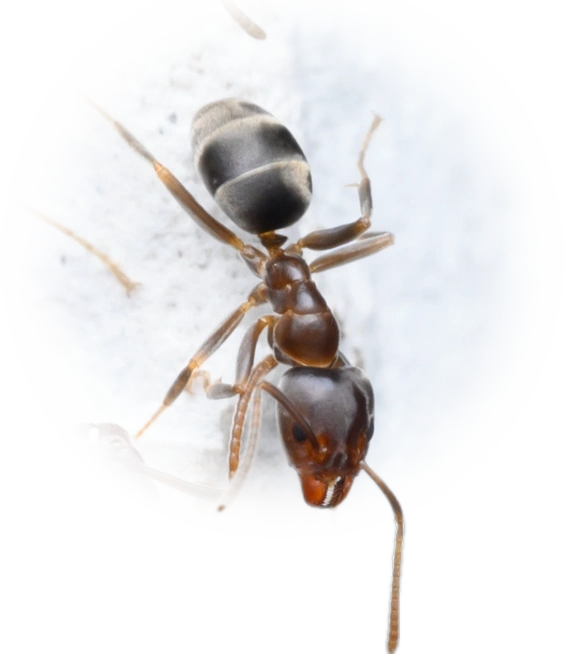

Liometopum sinense
- Scientific Name
- Liometopum sinense
- Tribe
- Tapinomini
- Subfamily
- Dolichoderinae
- Author
- Wheeler, 1921
- Distribution
- Found in 1 countries
Liometopum sinense Overview
Liometopum sinense is an ant species of the genus Liometopum. It is primarily documented in 1 countries , including China. Detailed taxonomic data and occurrence records can be further explored via authoritative databases such as AntWeb or the Global Biodiversity Information Facility (GBIF).
Liometopum sinense
Liometopum sinense is a medium-sized Dolichoderinae ant native to central and southern China. Workers measure 3.25-5.75mm with a distinctive dark brown to copper coloration and dense appressed pubescence covering their body [1]. The head is broad, the mesosoma forms a continuous arch, and the petiole has a sharp apex. These ants are relatively slow-moving and form moderate colonies of several hundred workers in shallow, moist soil nests [2]. As a primary forest specialist, L. sinense is restricted to well-preserved forest habitats and does not colonize disturbed areas or rubber plantations [3].
Quick Summary
- Difficulty: Medium
- Origin & Habitat: Central to southern China (105°E to 120°E, 20°N to 42°N), primarily in deciduous broadleaf forests and montane rain forests at elevations up to 1980m [1][2][3]. They inhabit soft moist soil with a humus layer, building shallow nests only a few centimeters deep [2]. This species is a habitat specialist restricted to primary forest, it is not found in secondary forest or rubber plantations [3].
- Colony Type: Single-queen colonies (monogyne). Colonies reach approximately hundreds of individuals, making them a moderately-sized species [2]. Gyne (queen) and male castes remain undescribed in scientific literature [1].
- Colony: Monogyne
- Size & Growth:
- Queen: Unknown, queen caste has not been described in scientific literature [1]
- Worker: 3.25-5.75mm (average 4.71mm) [1]. Some sources report 3.3-4.5mm [4][5].
- Colony: Approximately hundreds of individuals (estimated 100-500 workers) [2]
- Growth: Moderate, based on colony size and behavior patterns
- Development: Unknown, development timeline has not been directly studied. Based on typical Dolichoderinae patterns, expect 6-10 weeks at optimal temperature. (Development timeline is unconfirmed for this species. Related Liometopum species suggest a moderate development rate.)
- Antkeeping:
- Temperature: Keep at room temperature, roughly 20-25°C. This species tolerates a range given its broad distribution across central and southern China. A gentle gradient allowing them to choose their preferred temperature is ideal.
- Humidity: High humidity is essential. They naturally nest in soft moist soil with a humus layer in forest environments [2]. Keep the nest substrate consistently damp but not waterlogged. Provide a water tube for drinking access.
- Diapause: Likely required. As a species from temperate to subtropical China, they probably need a winter rest period. Reduce temperature to 10-15°C for 2-3 months during winter.
- Nesting: Y-tong (AAC) nests work well for this species. They prefer narrow chambers and a humid environment. A naturalistic setup with moist soil/humus mixture can also work, but escape prevention must be excellent given their small size. Avoid dry, airy setups.
- Behavior: These ants are relatively slow-moving and docile [2]. They are not aggressive and lack a functional stinger. They primarily feed on plant nectar and insect honeydew [2]. Their small size (under 6mm) means escape prevention is critical, they can squeeze through tiny gaps. They are not known to be escape artists but their minute size makes fine mesh barriers essential. Foraging activity is moderate, they will readily accept sugar water and honeydew substitutes.
- Common Issues: escape prevention is critical due to their very small size, use fine mesh and tight-fitting lids, colonies may struggle in dry conditions, their natural habitat has high humidity, they are slow-growing and form relatively small colonies, patience is required, not found in disturbed areas meaning captive colonies may be sensitive to environmental changes, shallow nests mean they are vulnerable to flooding, use appropriate water reservoir sizes in test tubes
Housing and Nest Preferences
Liometopum sinense naturally nests in soft moist soil with a humus layer at very shallow depths, just a few centimeters below the surface [2]. They prefer forest floor conditions with consistent moisture. In captivity, Y-tong (acrylic) nests work well because they allow you to control humidity easily. You can also use a naturalistic setup with a soil/humus mixture, but this makes escape prevention harder. Keep the nest chamber humid, these ants come from moist forest environments and will struggle in dry conditions. A water tube attached to the formicarium helps maintain humidity and provides drinking water.
Feeding and Diet
In the wild, Liometopum sinense feeds primarily on plant nectar and insect honeydew [2]. This makes them similar to other Dolichoderinae ants in their dietary preferences. In captivity, offer sugar water or honey water as a constant energy source. They will also accept small insects like fruit flies or small mealworms as protein. Because they are slow-moving, they may have difficulty capturing fast-moving prey, offer pre-killed or slow-moving prey items. Their preference for honeydew means they may not aggressively pursue live prey. Feed sugar sources constantly and protein 1-2 times per week.
Temperature and Seasonal Care
This species tolerates a range of temperatures given its broad distribution across central and southern China. Room temperature around 20-25°C is suitable. A heating cable on one side of the nest can create a gentle gradient if your room runs cool. As a species from a region with distinct seasons, they likely need a winter rest period. Reduce temperature to 10-15°C for 2-3 months during winter to simulate natural conditions. Do not feed during diapause and keep the nest slightly cooler but not cold. Monitor colony activity, if they become sluggish, the temperature is likely too low. [1][2]
Behavior and Temperament
Liometopum sinense is a docile, slow-moving species that is not aggressive [2]. Workers are relatively weak compared to many ant species and move at a moderate pace. They lack a functional stinger, making them completely harmless to keepers. Their small size and slow movement make them easy to work with, but their tiny stature means they can escape through remarkably small gaps. Always use fine mesh on any ventilation holes and ensure all connections are sealed. They are not colony aggressive and can be kept in standard setups. Their primary defense is staying hidden rather than attacking.
Colony Development
Colonies grow to several hundred workers at maximum, making this a moderately-sized species [2]. The queen caste has not been scientifically described, which means founding behavior is not well documented. Based on related Liometopum species and typical Dolichoderinae patterns, the queen likely seals herself in during founding (claustrally) and raises the first workers alone. Growth rate is moderate, expect several months to a year to reach 50 workers, and 1-2 years to reach full colony size. Be patient with this species as they do not grow as quickly as some tropical ants. The gyne (queen) and male castes remain unknown to science, so wild mating flights have not been documented.
Frequently Asked Questions
How long does it take for Liometopum sinense to produce first workers?
The exact egg-to-worker timeline is unconfirmed for this species. Based on typical Dolichoderinae development, expect 6-10 weeks at optimal temperature (around 24°C). Patience is required as they are moderate growers compared to faster species like Camponotus.
Can I keep Liometopum sinense in a test tube?
Yes, test tubes work well for founding colonies. Use a small water reservoir and keep the tube humid. However, be prepared to move them to a formicarium as the colony grows, since they need more space than a single test tube can provide once they reach 30-50 workers.
What do Liometopum sinense eat?
They primarily feed on plant nectar and honeydew in the wild. In captivity, offer sugar water or honey water constantly as an energy source. For protein, they accept small insects like fruit flies, pinhead crickets, or small mealworms. They are not aggressive hunters due to their slow movement.
Are Liometopum sinense good for beginners?
They are moderate difficulty, not the easiest but not challenging. Their docile nature and harmless status make them approachable, but their humidity requirements and slow growth require some patience. They are more sensitive to dry conditions than hardy species like Lasius.
Do Liometopum sinense need hibernation?
Likely yes. As a species from temperate to subtropical China with distinct seasons, they probably need a winter rest period. Reduce temperature to 10-15°C for 2-3 months during winter. Do not feed during this period.
How big do Liometopum sinense colonies get?
Colonies reach approximately hundreds of workers, estimates suggest 100-500 workers at maximum [2]. This is moderate compared to some species that can reach thousands. Their small colony size means they remain manageable in captivity.
Why are my Liometopum sinense dying?
The most common causes are dry conditions (they need high humidity), escape through tiny gaps (use fine mesh), and cold temperatures (keep above 18°C). They are sensitive to environmental changes since they are a primary forest specialist. Check humidity levels first if problems occur.
When should I move Liometopum sinense to a formicarium?
Move them when the test tube becomes crowded or the water reservoir is depleted. For this species, consider moving once the colony reaches 20-30 workers. They prefer humid environments, so ensure the formicarium maintains moisture well.
Can I keep multiple Liometopum sinense queens together?
This is not recommended. While colony structure is monogyne (single queen), combining unrelated foundresses has not been documented for this species. It is best to start with one queen per setup.
References

This caresheet is licensed under CC BY-SA 4.0 .
No specimens available
We couldn't find any AntWeb specimens for Liometopum sinense in our database.
Literature
Loading...Loading products...