

Linepithema aztecoides
- Scientific Name
- Linepithema aztecoides
- Tribe
- Leptomyrmecini
- Subfamily
- Dolichoderinae
- Author
- Wild, 2007
- Distribution
- Found in 3 countries
Linepithema aztecoides Overview
Linepithema aztecoides is an ant species of the genus Linepithema. It is primarily documented in 3 countries , including Brazil, Colombia, Paraguay. Detailed taxonomic data and occurrence records can be further explored via authoritative databases such as AntWeb or the Global Biodiversity Information Facility (GBIF).
Linepithema aztecoides
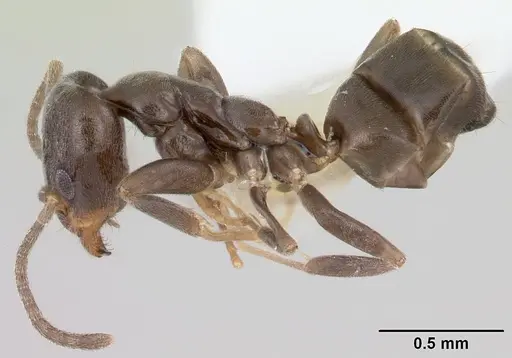
Linepithema aztecoides is a small, distinctive ant species native to South America, found in central and southeastern Brazil and eastern Paraguay. Workers measure just 0.61-0.69mm in head length, with a unique flattened body shape that sets them apart from other Linepithema species [1]. Their most striking feature is their behavior of running with their abdomens held high above their heads, giving them the appearance of tiny Azteca ants. They are reddish brown to dark brown in color and have long antennae relative to their head size [1]. This species inhabits low, open forests like cerrados and riparian gallery forests, where they forage in humid subtropical conditions [2].
What makes L. aztecoides particularly interesting is how rarely it is encountered despite being described in 2007, queen and male castes remain unknown, and no nests have ever been documented [2]. They are attracted to protein baits like honey and sardine, suggesting an omnivorous diet. Their flattened body shape is an unusual adaptation that likely helps them navigate through tight spaces in their forest floor habitat. This species remains one of the more mysterious ants in the Linepithema genus, making it a challenging but intriguing species for experienced antkeepers who can obtain a colony.
Quick Summary
- Difficulty: Expert
- Origin & Habitat: Central and southeastern Brazil (Mato Grosso to São Paulo) and eastern Paraguay, in low open forests such as cerrados and riparian gallery forests at elevations around 220m [1][2]
- Colony Type: Unknown, queen and male castes have not been documented, no nests have ever been found in the wild [2]
- Size & Growth:
- Queen: Unknown, queen caste has not been described [1]
- Worker: 0.61-0.69mm head length (HL),0.52-0.60mm head width (HW) [1]
- Colony: Unknown, no colony size data available
- Growth: Unknown, no development data available
- Development: Unknown, development has not been studied (No data exists on egg-to-worker development time. Related Linepithema species typically develop in 4-8 weeks at warm temperatures, but this is a rough estimate only.)
- Antkeeping:
- Temperature: Inferred warm conditions (subtropical), aim for 22-26°C based on habitat. Provide a gentle temperature gradient so ants can self-regulate.
- Humidity: High humidity preferred, these ants come from humid subtropical forest edges. Keep nest substrate consistently moist but not waterlogged. Provide a humidity gradient with a moist area and a slightly drier area.
- Diapause: Unknown, no data on overwintering requirements. Given their subtropical origin from Brazil/Paraguay, they likely do not require a true hibernation but may slow down during cooler months.
- Nesting: No documented nesting preferences exist since no wild nests have been found. Based on habitat (forest floor of cerrados and gallery forests), they likely nest in soil or under stones. In captivity, a test tube setup or small acrylic nest with moist substrate would be a reasonable starting point.
- Behavior: These ants are active foragers that recruit to protein baits, they were collected at honey and sardine baits in the wild [1]. Their most distinctive behavior is running with their gaster held above their head, which is unusual and may help them navigate through dense vegetation or detect chemical trails more effectively. Workers are small (under 1mm) so escape prevention is critical, they can squeeze through tiny gaps. Temperament is unknown since no live colonies have been studied, but related Linepithema species are generally not aggressive. Their small size and cryptic habits suggest they are non-confrontational foragers.
- Common Issues: no documented queen or colony structure makes captive care extremely speculative, no known nesting preferences, trial and error required to determine what setup they accept, escape prevention is critical due to their tiny size, use fine mesh and tight-fitting lids, extremely rare in the antkeeping hobby, finding a colony may be impossible, no development data means you cannot track whether your colony is growing normally, related to invasive Argentine ant (L. humile), never release in North America
Discovery and Rarity
Linepithema aztecoides was only described in 2007 by Alexander Wild, making it one of the newer additions to the antkeeping world [1]. The type series was collected in Paraguay at a honey bait, and another specimen was found in Brazil at a sardine bait, both protein-rich attractants. What makes this species remarkable is that despite targeted collecting efforts, no one has ever documented a nest or found the queen or male castes. This means we know almost nothing about their natural colony structure, how they reproduce, or what their nests look like. The species appears to be genuinely rare in the wild, which adds to the challenge of understanding its biology. For antkeepers, this rarity also means finding a colony of L. aztecoides is extremely difficult, they simply are not available in the hobby trade [1].
Unique Physical Characteristics
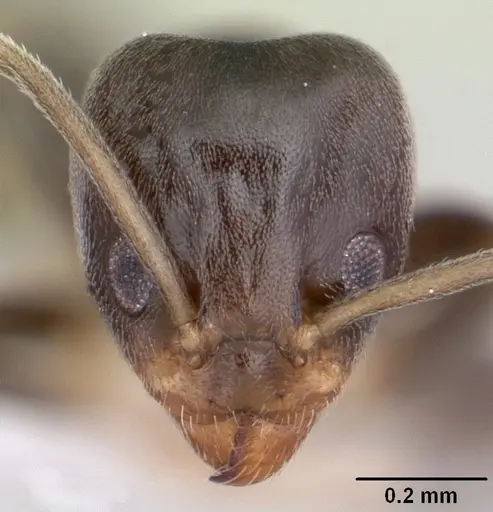
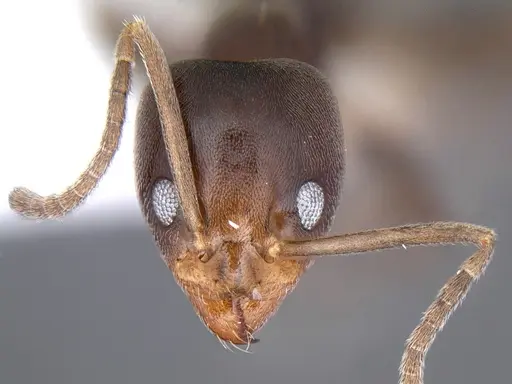
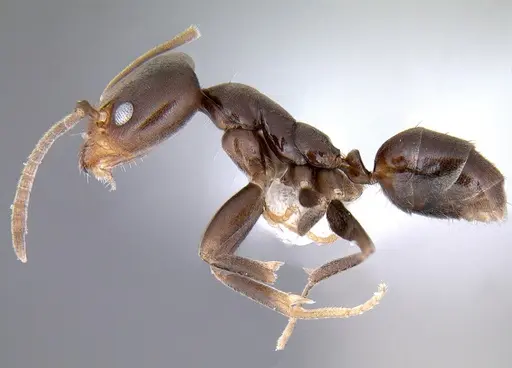
The most distinctive feature of Linepithema aztecoides is its dorso-ventrally flattened body, the head, mesosoma, and petiole are all compressed vertically [1]. This is unusual among Linepithema species and gives them a very different silhouette than their relatives. Their head is chord-shaped (wider at or behind the eyes, narrowed toward the front), and they have relatively large compound eyes with 65-80 ommatidia. The antennae are long, with the scape exceeding head length in some populations (particularly those from Mato Grosso). The propodeum (the section behind the mesosoma) has distinctive spiracles at the posterolateral corners. Workers are medium reddish brown to dark brown, with lighter-colored trochanters and tarsi that can be nearly white [1]. The gaster (abdomen) is also flattened and triangular when viewed from behind.
Field Behavior and Foraging
In the field, Linepithema aztecoides shows a behavior that immediately catches the eye of anyone who observes them, they run with their gaster held dramatically above their head [2]. This gives them a striking resemblance to ants in the genus Azteca, which is how they got their species name 'aztecoides' (meaning 'Azteca-like'). This unusual posture likely helps them navigate through dense understory vegetation in their forest floor habitat, or perhaps it helps them deploy chemical defenses more effectively. They are confirmed to recruit to baits, with the type series collected at honey and another specimen collected at sardine [2]. This suggests they are omnivorous and will accept both sugar and protein sources. Their small size (workers under 1mm) means they likely target tiny prey and liquid carbohydrates in the wild.
Habitat and Distribution
This species is known from a relatively limited range in South America, central and southeastern Brazil (from Mato Grosso to São Paulo) and eastern Paraguay [1]. They inhabit low, open forests including cerrados (tropical savanna) and riparian gallery forests (forests along rivers). The type locality was in humid subtropical low forest along the edge of a small cerrado at about 220 meters elevation [2]. This habitat type suggests they prefer warm, somewhat humid conditions with moderate ground cover. The variation in body proportions across their range is notable, specimens from Mato Grosso consistently have longer appendages than those from Goiás, São Paulo and Paraguay [2]. This geographic variation suggests some local adaptation to different conditions within their range.
Keeping an Undescribed Species
Keeping Linepithema aztecoides presents unique challenges that most antkeepers will never face. Since no one has ever documented a wild colony, we have no information about their queen, colony size, or basic biology. This makes L. aztecoides truly an 'expert only' species, you would essentially be pioneering captive husbandry for a species that exists almost entirely in scientific literature. If you somehow obtain workers, you would need to experiment with nest setups, temperatures, humidity levels, and foods with no guidance whatsoever. The lack of a known queen also means you cannot start a colony from scratch. For these reasons, L. aztecoides is more of a scientific curiosity than a realistic keeping project. Most antkeepers interested in Linepithema species would be better served by keeping the well-documented Argentine ant (L. humile) or other more common species in the genus. [1][2]
Frequently Asked Questions
Can I keep Linepithema aztecoides as a pet ant?
It is extremely unlikely you will ever find Linepithema aztecoides for sale. This species was only described in 2007,no wild colonies have ever been documented, and the queen caste remains unknown. They are not available in the antkeeping hobby and may not exist in captivity anywhere in the world.
What do Linepithema aztecoides eat?
Based on collection data, they are attracted to protein baits, honey and sardine were used to collect specimens in the wild [2]. This suggests they accept both sugar and protein sources, similar to other Linepithema species. However, without a documented colony, no one has confirmed what they actually feed on in captivity.
How big do Linepithema aztecoides colonies get?
Unknown, no colony size data exists. No wild nests have ever been found, so we have no information about typical colony sizes. Related Linepithema species can form large colonies, but L. aztecoides may have completely different biology.
Do Linepithema aztecoides queens need to hibernate?
Unknown, no data exists on overwintering requirements. Given their origin in subtropical Brazil and Paraguay, they likely do not require a true hibernation period. They may slow activity during cooler months but probably do not need temperatures below 15°C.
What is the best nest setup for Linepithema aztecoides?
No one knows, no wild nests have ever been documented. Based on their habitat (forest floor of cerrados and gallery forests), they likely prefer moist soil environments. A test tube setup or small acrylic nest with moist substrate would be a reasonable starting point for any future attempts.
Can I keep multiple Linepithema aztecoides queens together?
Unknown, we do not know if this species is monogyne (single queen) or polygyne (multiple queens). The queen caste has never been documented, so colony structure is completely unknown.
How long does it take for Linepithema aztecoides to develop from egg to worker?
Unknown, no development data exists for this species. Related Linepithema species typically develop in 4-8 weeks at warm temperatures, but this is just an educated guess for L. aztecoides.
Are Linepithema aztecoides good for beginners?
No. This species is not just difficult, it is essentially undocumented in captivity. No one has ever kept a colony successfully, and basic biology like queen identity, colony structure, and development remain unknown. This is an expert-only species that is more of a scientific curiosity than a realistic keeping project.
Where does Linepithema aztecoides live in the wild?
Central and southeastern Brazil (Mato Grosso to São Paulo) and eastern Paraguay, in low open forests like cerrados and riparian gallery forests at elevations around 220m [1]. They prefer humid subtropical conditions in forest edges.
Why do Linepithema aztecoides hold their abdomen above their head?
This distinctive behavior likely helps them navigate through dense vegetation in their forest floor habitat. The raised gaster may also help them deploy chemical defenses or detect chemical trails more effectively while foraging. This behavior gives them their 'Azteca-like' appearance that inspired their species name.
References

This caresheet is licensed under CC BY-SA 4.0 .
CASENT0104900
View on AntWeb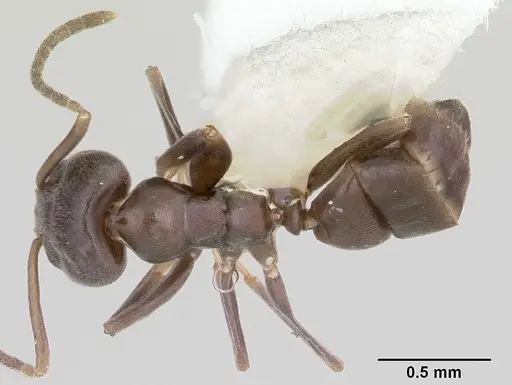
CASENT0106970
View on AntWeb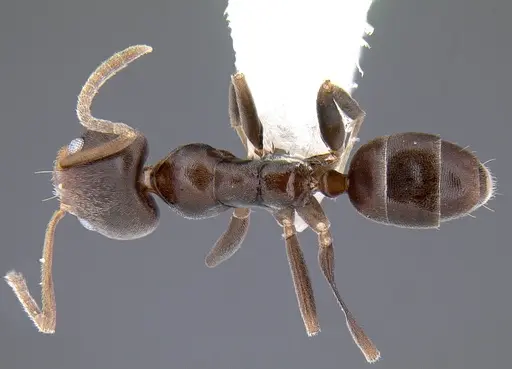
Literature
Loading...Loading products...