

Leptomyrmex unicolor
- Scientific Name
- Leptomyrmex unicolor
- Tribe
- Leptomyrmecini
- Subfamily
- Dolichoderinae
- Author
- Emery, 1895
- Distribution
- Found in 1 countries
Leptomyrmex unicolor Overview
Leptomyrmex unicolor is an ant species of the genus Leptomyrmex. It is primarily documented in 1 countries , including Australia. Detailed taxonomic data and occurrence records can be further explored via authoritative databases such as AntWeb or the Global Biodiversity Information Facility (GBIF).
Leptomyrmex unicolor
Leptomyrmex unicolor is a large, striking ant species native to the Australian Wet Tropics in north Queensland. Workers are impressively sized with a broad head (1.37-1.51mm width) and extremely long legs reaching nearly 5mm. The body is uniformly black with a bluish-green sheen, but the most distinctive feature is the bright white metatarsi (foot segments) that create a bold contrast against the dark coloration. Their eyes are uniquely hairy among Leptomyrmex species, and the long antennae extend well beyond the head. This species belongs to the 'macro clade' of spider ants, characterized by their large, elongated bodies and leg-first appearance that gives them their common name. They inhabit rainforests and wet sclerophyll forests, nesting in soil, under logs, or in leaf litter at the base of trees.
Quick Summary
- Difficulty: Expert
- Origin & Habitat: Australian Wet Tropics (north Queensland). Found in rainforest and wet sclerophyll forests. Nests occur in soil, in or under logs, and in leaf litter at base of live trees [1].
- Colony Type: Unknown colony structure. Queens have never been collected, so colony type (single-queen or multi-queen) is unconfirmed [1].
- Size & Growth:
- Queen: Unknown, queens have never been collected [1]
- Worker: Head length 1.79-1.99mm, head width 1.37-1.51mm [1]
- Colony: Unknown, no colony size data available
- Growth: Unknown, no development data available
- Development: Unknown, no direct measurements exist. Based on typical Dolichoderinae development patterns, expect 6-10 weeks at optimal temperature, but this is an estimate only. (No species-specific development data exists. Queens have never been collected, so founding behavior and development timeline are unconfirmed.)
- Antkeeping:
- Temperature: Keep warm, around 24-28°C. Based on their Australian Wet Tropics origin (a warm, humid region), they need temperatures in the low-to-mid 20s°C minimum. A heating cable on one side of the nest creates a gradient for them to regulate their temperature.
- Humidity: High humidity required. They naturally live in rainforest and wet sclerophyll habitats with constant moisture. Keep the nest substrate consistently damp but not waterlogged. Provide a water tube for drinking access.
- Diapause: Likely requires a mild winter reduction. As a tropical Australian species, they probably experience reduced activity during cooler months rather than true hibernation. Consider reducing temperatures to around 18-20°C for 2-3 months in winter.
- Nesting: Natural nesting sites include soil, under logs, and in leaf litter at tree bases. In captivity, a naturalistic setup with moist substrate (like a soil-filled formicarium or Y-tong with damp plaster) works well. They likely prefer dark, humid nest chambers similar to their natural log-dwelling habits.
- Behavior: These ants are relatively calm and not aggressive. They forage individually rather than in large raiding parties. Their long legs make them fast runners, and they may be skittish when disturbed. Escape prevention is important, while workers are large, they can still squeeze through small gaps. They are known to harvest food bodies from plants (specifically Ryparosa kurrangii seedlings), suggesting they may have unusual dietary preferences beyond typical ant foods [2]. The hairy eyes are a unique identifying feature.
- Common Issues: queen unavailability, queens have never been collected, making captive breeding essentially impossible from wild-caught colonies, unknown colony structure, without queens, colony founding and social structure cannot be studied, humidity management, rainforest species prone to desiccation if kept too dry, slow colony growth, without documented development times, keepers may struggle with appropriate care, limited availability, this species is rarely available in the antkeeping hobby due to the absence of collected queens
Appearance and Identification
Leptomyrmex unicolor is one of the larger Australian Leptomyrmex species. Workers have a head length of 1.79-1.99mm and head width of 1.37-1.51mm, making them substantially larger than many common ant species. The most distinctive features are the uniformly black body with bluish-green reflections and the bright white metatarsi (the foot segments closest to the body). Their eyes are distinctly hairy, which is a unique characteristic among their congeners. The antennae are extremely long, extending well beyond the back of the head, nearly 3/5 of their length extends past the posterior margin. The legs are slender and very long, giving them their 'spider ant' common name. Males are smaller (head length 1.67-1.68mm) but share the general elongated morphology. [1]
Distribution and Habitat
This species is restricted to the Australian Wet Tropics region in north Queensland, Australia. It has been recorded in both rainforest and wet sclerophyll (Australian eucalyptus forest with dense understory) habitats. Their nesting preferences include soil, nesting in or under logs, and accumulating in leaf litter at the base of live trees. This suggests they prefer humid, shaded microhabitats with access to decaying organic material. The Australian Wet Tropics is a biodiversity hotspot with consistently warm temperatures year-round and high rainfall, so captive conditions should mimic these humid, tropical parameters. [1]
Feeding and Diet
While specific dietary studies are limited, Leptomyrmex unicolor has been observed harvesting food bodies from Ryparosa kurrangii seedlings in field trials [2]. Food bodies are specialized structures produced by some plants that ants harvest as a protein-rich food source. This suggests L. unicolor may have more specialized dietary habits than typical generalist ants. In captivity, they likely accept standard ant foods including sugar water or honey, small insects, and possibly plant-based foods. Given their large size and active foraging, protein-rich foods like small crickets or mealworms should be offered regularly. Always provide a constant sugar source and fresh water.
Temperature and Care
As a tropical Australian species from the Wet Tropics, Leptomyrmex unicolor requires warm, humid conditions. Keep the nest area at 24-28°C, with a slight gradient allowing workers to choose their preferred temperature. A heating cable placed on one side of the nest (on top of the nest material, not underneath to avoid excessive drying) works well. Humidity should be high, think damp forest floor conditions. The nest substrate should remain consistently moist but never waterlogged. Provide a water tube for drinking access since they will drink directly. During winter, reduce temperatures to around 18-20°C for 2-3 months to simulate their natural seasonal cycle, but avoid true cold hibernation. [1]
Colony Status and Availability
A critical limitation for antkeepers is that Leptomyrmex unicolor queens have never been scientifically collected [1]. This means the species cannot be established in captivity through traditional founding queen methods. Only worker-collected colonies (if any exist in the wild) could potentially be kept, but without a queen, the colony would eventually die out. This makes L. unicolor essentially unavailable to the antkeeping hobby despite its interesting appearance. The lack of queen specimens also means fundamental biology including colony structure (monogyne vs polygyne), founding behavior, and development timeline remain unknown. This species represents a gap in antkeeping knowledge rather than a species suitable for captive breeding.
Frequently Asked Questions
Can I keep Leptomyrmex unicolor ants?
In practice, no, this species is essentially unavailable to antkeepers because queens have never been collected. Without queens, colonies cannot be founded or maintained long-term. Only worker specimens exist in scientific collections.
How big do Leptomyrmex unicolor workers get?
They are large ants. Workers have a head length of 1.79-1.99mm and head width of 1.37-1.51mm. Their legs are extremely long, reaching nearly 5mm, giving them their 'spider ant' appearance.
What temperature do Leptomyrmex unicolor ants need?
Keep them warm at 24-28°C. As a tropical Australian Wet Tropics species, they need consistently warm conditions similar to their natural rainforest habitat.
Do Leptomyrmex unicolor ants need hibernation?
Probably not true hibernation, but a winter reduction period is beneficial. Reduce temperatures to around 18-20°C for 2-3 months during winter months to simulate their natural seasonal cycle.
What do Leptomyrmex unicolor ants eat?
They likely accept standard ant foods including sugar water, honey, and small insects. They have been observed harvesting food bodies from plants, suggesting they may accept plant-based protein sources as well.
Are Leptomyrmex unicolor ants aggressive?
They are generally calm and not particularly aggressive. They forage individually rather than in aggressive groups. However, they can move quickly due to their long legs.
How long do Leptomyrmex unicolor colonies live?
Unknown, no colony size or lifespan data exists for this species. The fundamental biology has not been studied because queens have never been collected.
What makes Leptomyrmex unicolor unique?
Several things: they have distinctly hairy eyes (unique among congeners), bright white foot segments (metatarsi) contrasting with their black body, and extremely long legs. They are also one of the few ant species whose queens have never been scientifically described.
Can I find Leptomyrmex unicolor in the wild?
They are restricted to the Australian Wet Tropics in north Queensland. They nest in soil, under logs, or in leaf litter at the base of trees in rainforest and wet sclerophyll habitats.
Are Leptomyrmex unicolor good for beginners?
No. This is an expert-level species primarily because queens have never been collected, making captive establishment impossible. Even if workers were available, the lack of biological data makes proper care extremely challenging.
References

This caresheet is licensed under CC BY-SA 4.0 .
CASENT0012007
View on AntWeb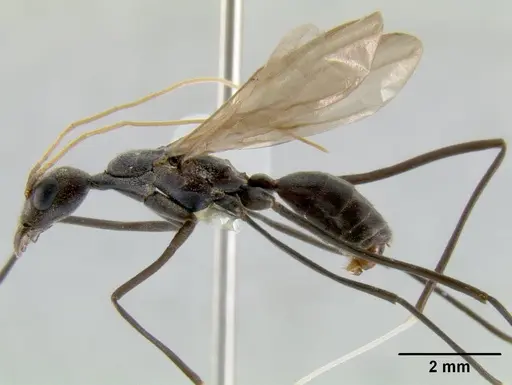
CASENT0069956
View on AntWeb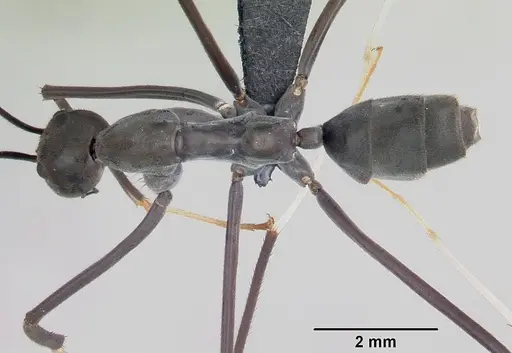


CASENT0127081
View on AntWeb

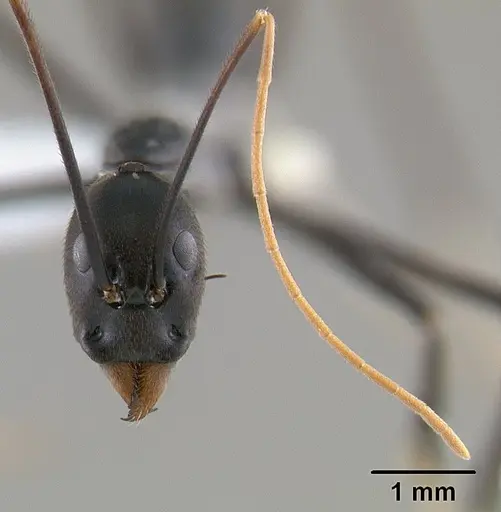
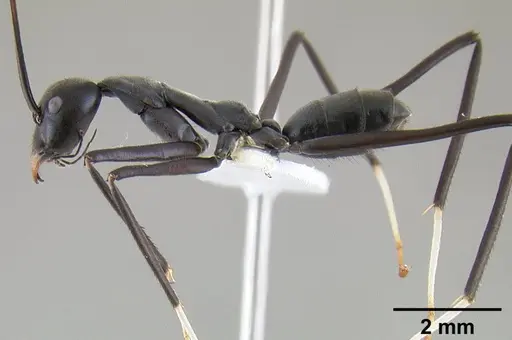

CASENT0127387
View on AntWeb
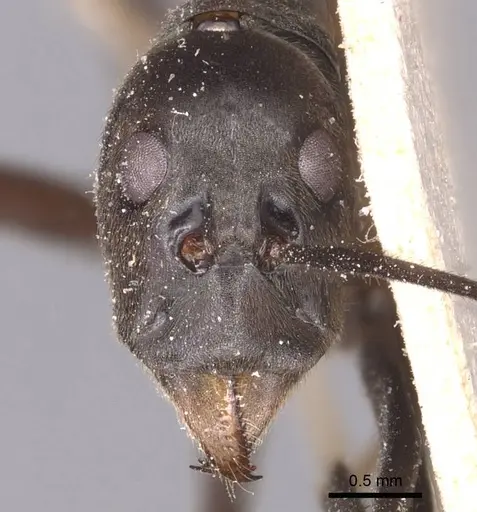

CASENT0841228
View on AntWeb
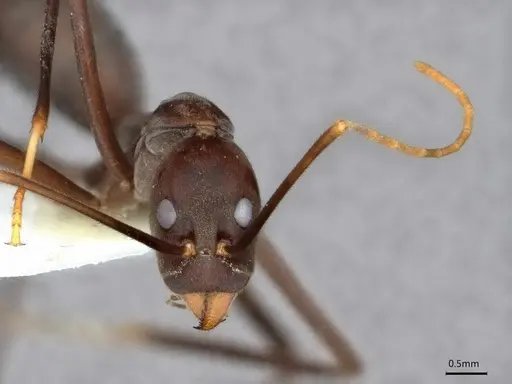


Literature
Loading...Loading products...