

Leptomyrmex rothneyi
- Scientific Name
- Leptomyrmex rothneyi
- Tribe
- Leptomyrmecini
- Subfamily
- Dolichoderinae
- Author
- Forel, 1902
- Distribution
- Found in 1 countries
Leptomyrmex rothneyi Overview
Leptomyrmex rothneyi is an ant species of the genus Leptomyrmex. It is primarily documented in 1 countries , including Australia. Detailed taxonomic data and occurrence records can be further explored via authoritative databases such as AntWeb or the Global Biodiversity Information Facility (GBIF).
Leptomyrmex rothneyi
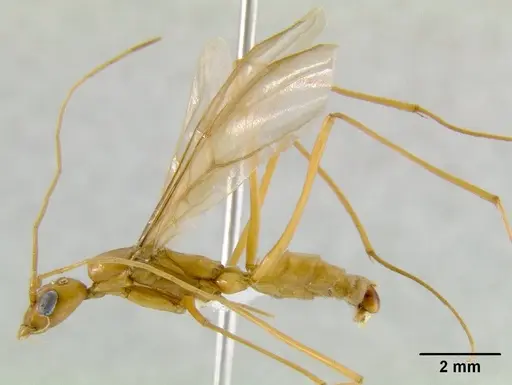
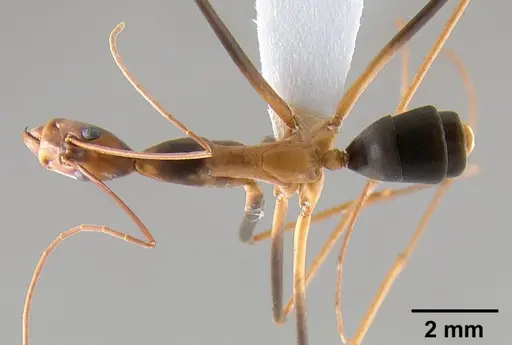
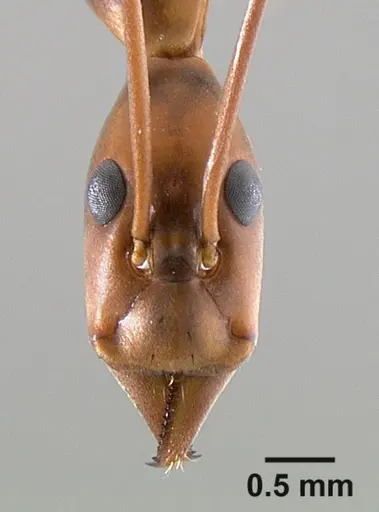
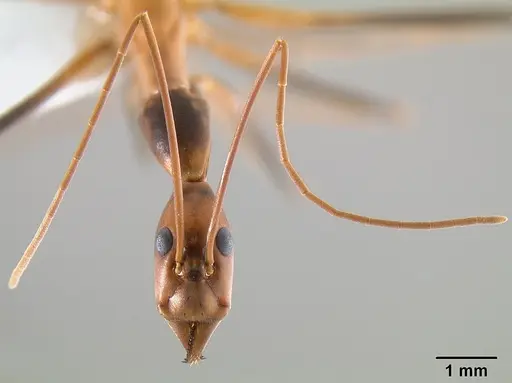
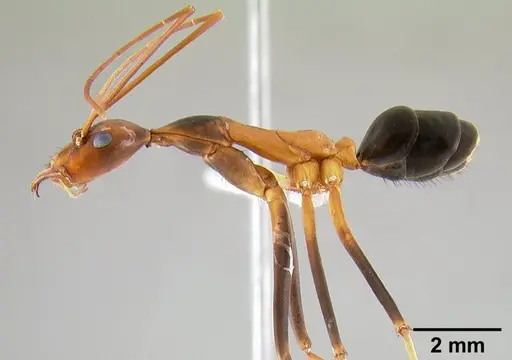
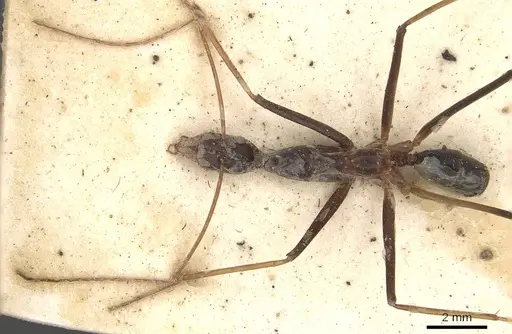
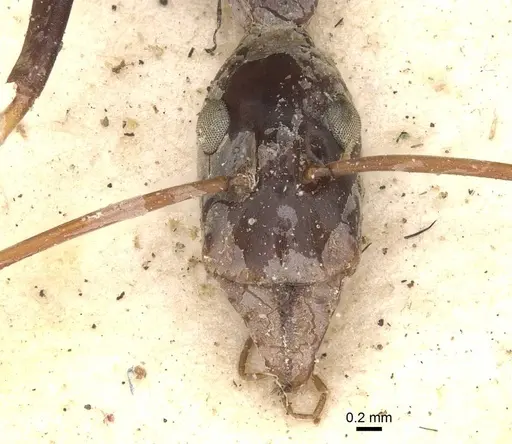
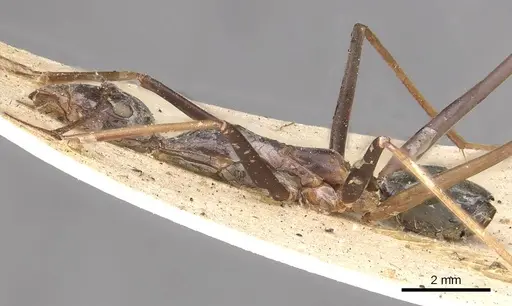
Leptomyrmex rothneyi is a medium-sized Australian ant known for its extraordinarily long, slender legs that give it a distinctive spider-like appearance. Workers measure 2.32-2.45mm in head length but have leg lengths (HTL) of 5.23-5.67mm, making them appear much larger than they actually are [1]. The species has a unique head structure with a narrowed, dorsoventrally flattened neck-like constriction at the posterior margin of the head, a feature shared with close relatives L. ruficeps and L. rufipes but more exaggerated in this species. Coloration is distinctive: a solid black gaster, pale orange mesosoma, and a dark mottled brown head, with pale yellow tibiae and tarsi [1]. This species occurs only in the southeast corner of Queensland, Australia, where it nests in soil and under or within logs in various forest types including rainforest, wet and dry sclerophyll, and coastal sclerophyll [1]. Queens have never been collected, making captive breeding challenging as the colony structure and founding behavior remain completely unknown [2].
Quick Summary
- Difficulty: Expert
- Origin & Habitat: Southeast Queensland, Australia, found in rainforest, open rainforest, wet sclerophyll, dry sclerophyll, and coastal sclerophyll forests. Nests in soil and under or within logs [1][2].
- Colony Type: Unknown, queens have never been collected, so colony structure (single-queen or multi-queen) is unconfirmed. Based on typical Leptomyrmex patterns, likely single-queen but this is an inference.
- Size & Growth:
- Queen: Unknown, queens have never been collected [2]
- Worker: 2.32-2.45mm head length, workers appear larger due to extremely long legs (5.23-5.67mm) [1]
- Colony: Unknown, no colony size data available
- Growth: Unknown, no development data available
- Development: Unknown, queens have never been collected, so founding and development are unstudied (This species has never been successfully bred in captivity due to the lack of collected queens. Development timeline cannot be estimated from related species with confidence.)
- Antkeeping:
- Temperature: Based on its southeast Queensland habitat, likely prefers warm conditions in the low-to-mid 20s°C range. Provide a temperature gradient allowing the colony to self-regulate. No direct thermal studies exist for this species.
- Humidity: Nests in soil and rotting wood suggest moderate to high humidity needs (60-80%). Keep the nest substrate moist but not waterlogged, with some drier areas available.
- Diapause: Unknown, no specific studies on overwintering behavior. Southeast Queensland has mild winters, so a reduced activity period may occur but is unconfirmed.
- Nesting: In captivity, a naturalistic setup with soil and rotting wood pieces works well, or a Y-tong/plaster nest with moisture provision. They prefer enclosed spaces with access to foraging areas. Given their natural nesting in soil and logs, provide a nest chamber with moist substrate.
- Behavior: Leptomyrmex ants are generally not aggressive and are fast-moving foragers. Their extremely long legs make them agile runners. They likely forage for honeydew and small insects like other Dolichoderines. Escape prevention should be moderate, while not tiny, they are active and may escape through standard barriers. No sting data available for this specific species, but Dolichoderines have reduced stingers that rarely penetrate human skin.
- Common Issues: queen unavailability, queens have never been collected, making captive establishment essentially impossible, lack of biological data, no information on founding, development, or colony structure, escape risk, extremely long legs may help them navigate obstacles and barriers, humidity management, nesting in rotting wood suggests they need stable moisture conditions, unknown diapause requirements, may die if subjected to incorrect seasonal conditions
Why This Species Is So Difficult to Keep
Leptomyrmex rothneyi presents an extraordinary challenge for antkeepers: queens have never been scientifically collected or described [2]. This means no one has ever observed a founding queen, witnessed nuptial flights, or documented the colony structure of this species. Without queens, captive colonies cannot be established. The entire Leptomyrmex genus is poorly represented in the antkeeping hobby specifically because of this knowledge gap. Even if you find a wild colony, you cannot capture a queen to start a new colony. This makes L. rothneyi essentially impossible to keep unless someone in Australia successfully locates and collects a founding queen. For these reasons, this species is rated Expert difficulty, not because of complex care requirements, but because the fundamental biological information needed to establish a colony simply does not exist.
Natural History and Distribution
Leptomyrmex rothneyi is endemic to the southeast corner of Queensland, Australia, making it one of the more restricted Leptomyrmex species [1]. It has been recorded in multiple habitat types including rainforest, open rainforest, wet sclerophyll, dry sclerophyll, and coastal sclerophyll forests [1]. This habitat flexibility suggests the species can adapt to varying conditions but consistently requires forested environments. Nests occur in soil and in or under logs [1], indicating they prefer enclosed, humid nest sites with some wood material. The species is part of a complex with two close relatives, L. ruficeps (black with red head) and L. rufipes (pale with black gaster), and can be distinguished by its mottled brown head, black gaster, and pale orange mesosoma [2]. The extremely long, slender legs are characteristic of the entire genus, giving them the common name 'spider ants'.
What We Know About Related Species
While L. rothneyi specifically has never been studied in detail, the genus Leptomyrmex as a whole provides some context. These ants are in the subfamily Dolichoderinae, which typically have single-queen colonies and claustral founding (queen seals herself in and lives off stored fat). However, since no queens of this species have ever been collected, we cannot confirm these traits apply [1]. The genus is known for its extremely long legs and fast-running foraging behavior. Molecular studies place L. rothneyi in the 'macro clade' with other large, elongate species [3][4]. If you are determined to keep this species, your best hope would be to find a related species with more available biological data, or to locate and document a wild colony in Queensland yourself, you would be making a genuine scientific contribution.
Housing and Nesting (If Queens Ever Become Available)
When (or if) queens ever become available, housing should mimic their natural preferences. In the wild, L. rothneyi nests in soil and under or within logs [1], suggesting a naturalistic setup with moist soil and wood pieces would be appropriate. A Y-tong or plaster nest with a water reservoir could maintain the necessary humidity. The nest chamber should be enclosed but with access to a foraging area. Given their extremely long legs, they may appreciate deeper chambers that allow full leg extension. Temperature should be in the low-to-mid 20s°C range based on their Queensland habitat. Humidity should be moderate to high (60-80%) to prevent desiccation. These would be starting recommendations only, actual care requirements would need to be discovered through successful captive breeding.
Legal and Ethical Considerations
Leptomyrmex rothneyi is native to Australia and should not be released outside its native range. If you were to obtain this species legally, it must remain contained, antkeeping requires responsible ownership. Additionally, since this species has never been kept in captivity and queens have never been collected, any attempt to establish a colony would be a pioneering effort that could contribute valuable scientific knowledge. If you are in Australia and interested in this species, consider connecting with local entomologists or researchers studying Leptomyrmex, they may be able to assist with queen collection permits and identification.
Frequently Asked Questions
Can I keep Leptomyrmex rothneyi ants?
No, queens have never been collected, so it is essentially impossible to obtain a colony. This species remains unknown to science in terms of its founding biology. You cannot establish a colony without a queen, and no one has ever documented a queen of this species.
Where does Leptomyrmex rothneyi live?
This species is found only in the southeast corner of Queensland, Australia. It lives in various forest types including rainforest, wet sclerophyll, dry sclerophyll, and coastal sclerophyll, nesting in soil and under or within logs.
What does Leptomyrmex rothneyi look like?
Workers are medium-sized (2.32-2.45mm head length) but appear much larger due to their extraordinarily long, slender legs. They have a distinctive narrowed neck-like constriction at the back of the head. Coloration includes a solid black gaster, pale orange mesosoma, dark mottled brown head, and pale yellow tibiae and tarsi.
How long do Leptomyrmex rothneyi workers live?
This is unknown, no biological studies have been conducted on this species due to the lack of collected queens and established colonies.
What do Leptomyrmex rothneyi eat?
This is unconfirmed, but like other Dolichoderines, they likely feed on honeydew from aphids and scale insects, plus small insects and arthropods. Sugar sources and protein prey would likely be accepted if a colony were ever established.
Are Leptomyrmex rothneyi good for beginners?
No, this species is rated Expert difficulty not because of complex care, but because queens have never been collected, making captive establishment impossible. Even experienced antkeepers cannot keep this species.
How big do Leptomyrmex rothneyi colonies get?
Unknown, no colony size data exists for this species. No one has ever documented a mature colony in the wild or captivity.
Do Leptomyrmex rothneyi need hibernation?
Unknown, no studies exist on their overwintering behavior. Southeast Queensland has mild winters, so they may not require a true hibernation period like temperate species do.
Can I find Leptomyrmex rothneyi queens in the wild?
Scientifically, no one has ever documented a queen of this species. If you are in southeast Queensland, you could potentially find one, but it would require significant effort and would represent a new scientific discovery. Contacting local researchers would be the best approach.
What is the closest alternative to Leptomyrmex rothneyi?
Related species in the same complex include Leptomyrmex ruficeps (black with red head) and Leptomyrmex rufipes (pale with black gaster). Other Leptomyrmex species may have more documented biology. Check if any Leptomyrmex species have established captive populations.
Why haven't queens ever been collected?
This is unknown but could be due to their colony structure (perhaps they have underground founding that is rarely observed), their specific nuptial flight timing and location, or simply insufficient research effort in their limited range. The southeast corner of Queensland has had less ant collection effort compared to other areas.
References

This caresheet is licensed under CC BY-SA 4.0 .
Literature
Loading...Loading products...