

Leptomyrmex relictus
- Scientific Name
- Leptomyrmex relictus
- Tribe
- Leptomyrmecini
- Subfamily
- Dolichoderinae
- Author
- Boudinot <i>et al.</i>, 2016
- Common Name
- Relict Spider Ant
- Distribution
- Found in 1 countries
Leptomyrmex relictus Overview
Leptomyrmex relictus (commonly known as the Relict Spider Ant) is an ant species of the genus Leptomyrmex. It is primarily documented in 1 countries , including Brazil. Detailed taxonomic data and occurrence records can be further explored via authoritative databases such as AntWeb or the Global Biodiversity Information Facility (GBIF).
Leptomyrmex relictus - "Relict Spider Ant"
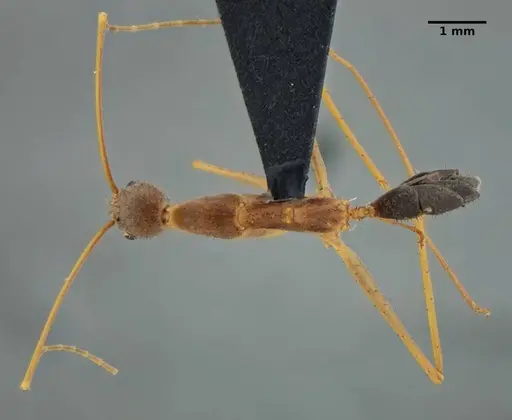
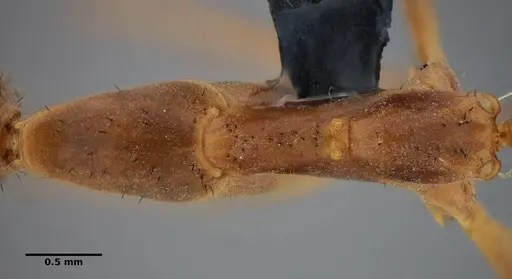
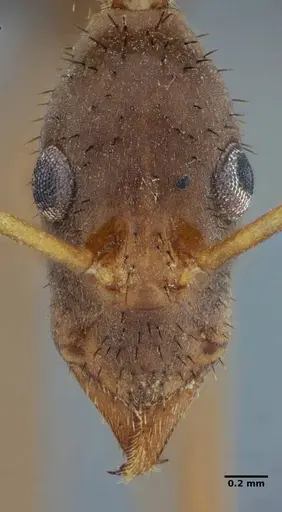
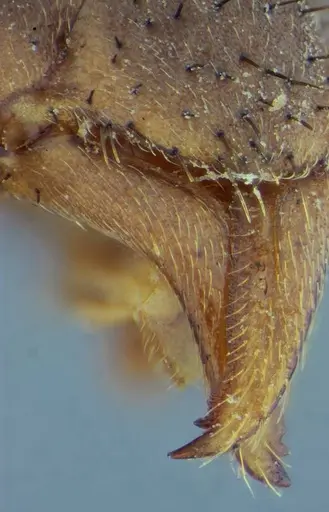
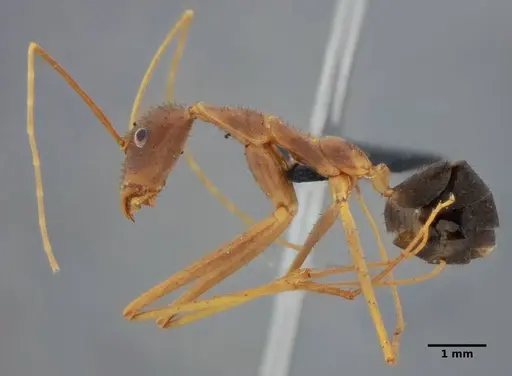
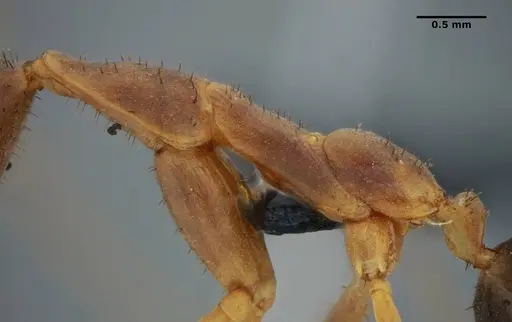
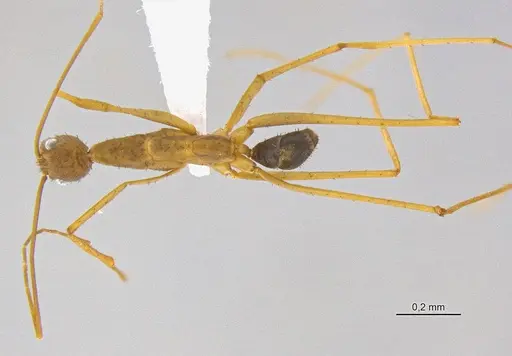
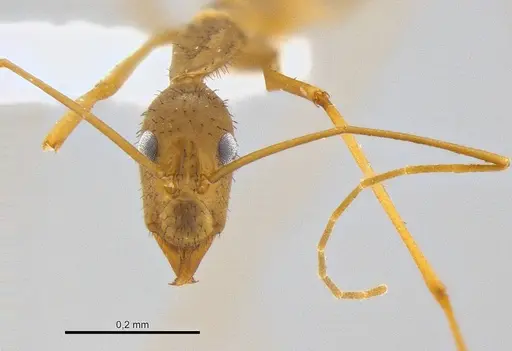
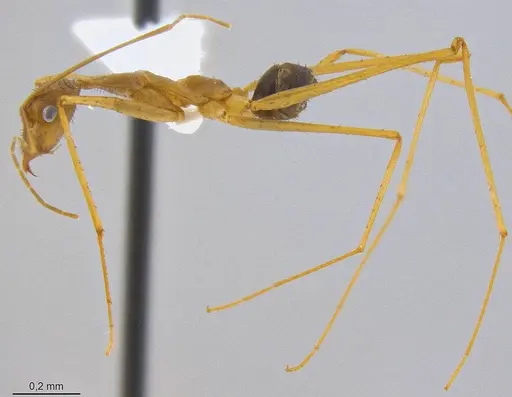
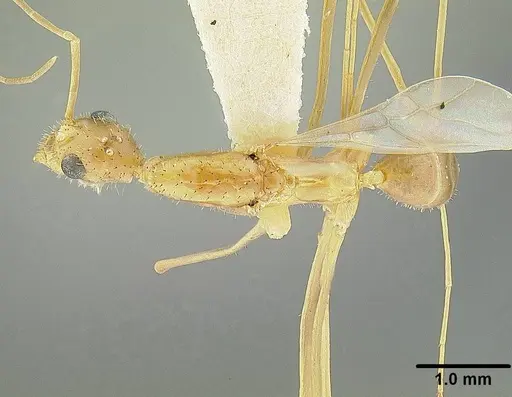
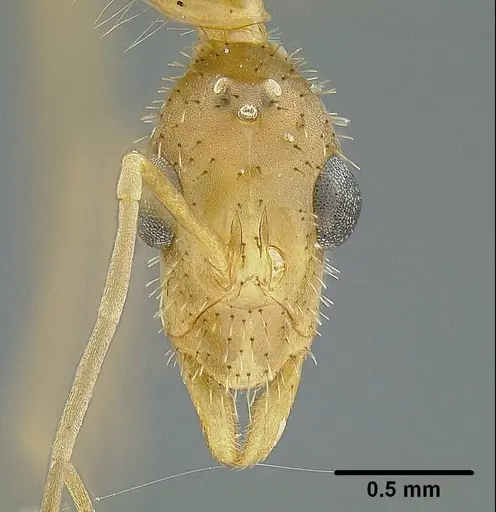
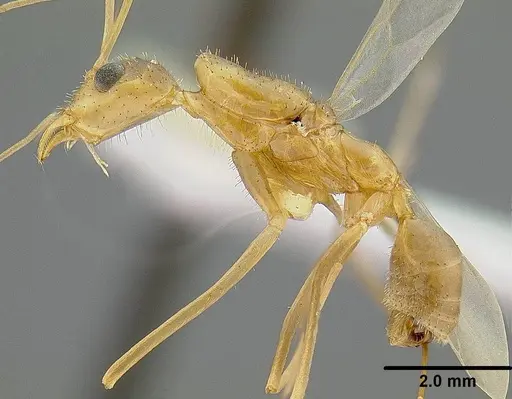
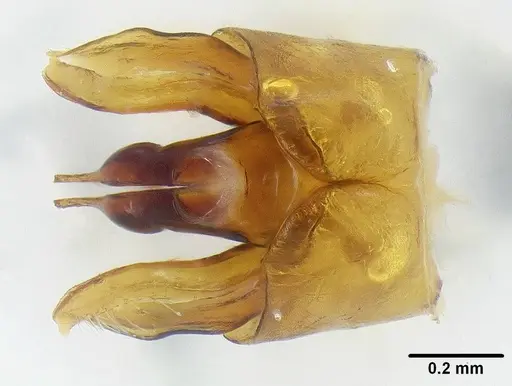
Leptomyrmex relictus is one of the most remarkable ant discoveries in recent years, a living fossil and the only extant member of its genus in the entire New World. All other ~40 Leptomyrmex species live in Australia and New Guinea, making this Brazilian species a biogeographical mystery. Workers are medium-sized for the genus at 7-7.8mm, with the elongated legs and slender body characteristic of 'spider ants.' They are yellowish-brown with a darker brown gaster (abdomen) and have short, thick erect setae covering their body. The species was only formally described in 2016,with workers first discovered in 2012-2013 inside termite mounds (Cornitermes silvestrii) in the Brazilian cerrado savannah. Males were collected as early as 1956 but remained unidentified for over half a century. This species represents an extraordinary opportunity to study a relict lineage, but it also presents unique challenges, queens have never been found or described, meaning captive breeding remains impossible [1][2].
Quick Summary
- Difficulty: Expert
- Origin & Habitat: Central Brazil (Goiás and Tocantins states) in cerrado habitat, dry savannah with seasonal fires. Workers and brood were found inside large termite mounds (Cornitermes silvestrii), which provide environmentally-stable clay shelters that protect against fire and provide stable microclimates [1][2].
- Colony Type: Unknown, queens have never been described or collected. The species is known only from workers, males, larvae, and pupae found in termite nests. Colony structure (single-queen or multi-queen) is completely unstudied [1][2].
- Size & Growth:
- Queen: Unknown, queens have never been described or collected [2].
- Worker: 7.04-7.77mm total length, with workers measuring 1.53-1.66mm head length and 2.85-3.01mm mesosoma length [1].
- Colony: Unknown, only small numbers of workers have been collected from a few nests. The largest documented nest was 1.3 meters wide and 40-50cm tall [1].
- Growth: Unknown, development timeline has not been studied [1].
- Development: Unknown, no data available on development time [1]. (Queens have never been found, so founding and development are completely unstudied)
- Antkeeping:
- Temperature: Unknown, inferred from cerrado habitat to be warm, roughly 22-28°C based on similar Neotropical ants. The cerrado experiences hot dry seasons, so they likely tolerate higher temperatures [1].
- Humidity: Unknown, the termite mounds they inhabit provide stable humidity. Given the dry cerrado environment, they likely prefer moderate humidity with dry outer surfaces and moister inner galleries [1].
- Diapause: Unknown, no data on overwintering requirements. The Brazilian cerrado has mild winters with temperatures rarely dropping below 15°C, so they may have reduced activity rather than true hibernation [1].
- Nesting: Only found inside termite mounds (Cornitermes silvestrii). These are large clay structures that provide fire protection and stable conditions. In captivity, replicating this would require large naturalistic setups with clay or soil structures, standard test tube setups are likely completely unsuitable [1].
- Behavior: Behavior is poorly known. Workers may be nocturnal given their Camponotus-like appearance and low encounter rates. They forage both on the ground and in vegetation (arboreal), as specimens have been caught in both ground-level and arboreal pitfall traps. The species appears to live inside termite mounds, though it's unclear whether they share galleries with the termites or occupy separate chambers. Escape risk cannot be assessed since no colonies have been maintained in captivity [1].
- Common Issues: queens have never been found or described, captive breeding is currently impossible, no established husbandry protocols exist, this species has never been kept in captivity, specific termite-associate requirements may make captive housing extremely difficult, the few known specimens come from protected areas, collection may be legally restricted, no information on diet, what to feed them is completely unknown
The Living Fossil Ant
Leptomyrmex relictus is what scientists call a 'Lazarus taxon', a lineage thought to be extinct that was rediscovered alive. For over 50 years, only males were known, collected since 1956 but never identified. Then in 2012-2013,workers were finally discovered inside termite mounds in the Brazilian cerrado, and the species was formally described in 2016. This makes it the only extant Leptomyrmex in the entire New World, all other ~40 species live in Australia, New Guinea, and surrounding regions. Phylogenetic analysis shows it diverged from its Australian relatives roughly 35 million years ago, making it an incredibly ancient lineage that somehow survived in isolation in Brazil [1][2].
The Termite Association
The most striking aspect of L. relictus biology is its apparent association with Cornitermes silvestrii termite nests. Workers and brood have been found inside these large clay mounds, though it's unclear whether the ants share galleries with the termites or occupy separate chambers. The termite nests can reach 1.3 meters wide and 40-50cm tall, providing stable environmental conditions and protection from the frequent fires that sweep through the cerrado. These clay mounds act as biodiversity hotspots, housing multiple ant and termite species. It's possible L. relictus is a facultative inquiline, using the termite structure for shelter without directly depending on the termites. However, this association may be essential for the ant's survival, making captive husbandry extremely challenging [1][2].
Why This Species Cannot Be Kept (Yet)
Before considering keeping this species, understand this critical fact: NO ONE has ever collected or described a queen of Leptomyrmex relictus. Not a single queen has been found in the wild, neither in modern collections nor in the 50-million-year-old Dominican amber fossils. This means no one knows how they found colonies, what their founding behavior is, or how to start a colony. Without queens, captive breeding is impossible. The few workers that exist were collected from natural nests in protected Brazilian cerrado, taking them would likely be illegal and would harm conservation of this extremely rare species. Even if workers could be collected, no one knows what to feed them, what temperature they need, or how to house them appropriately. This is a species for observation in scientific literature, not for antkeeping [1][2].
Related Species: What We Might Expect
While L. relictus itself is unknown in captivity, studying its relatives provides hints. The closely related Leptomyrmex neotropicus (also from South America, now extinct or extremely rare) shows that the genus can have remarkable traits. In 2020,researchers observed replete workers (workers that store food in their distended abdomens) in a related species at Parque Cesamar in Tocantins, Brazil, these were the first living repletes ever documented in the genus. This suggests L. relictus might share similar behaviors. Other Leptomyrmex species are known for their long legs (spider-like appearance), nocturnal habits, and preference for preformed cavities. However, these are inferences from other species, L. relictus may have completely unique behaviors given its long isolation [3][1].
Frequently Asked Questions
Can I keep Leptomyrmex relictus in my ant farm?
No. This species cannot be kept because queens have never been found or described. Without queens, captive breeding is impossible, and no husbandry protocols exist. The few known specimens come from protected Brazilian cerrado and cannot be ethically or legally collected [1][2].
Why are there no queens of Leptomyrmex relictus?
Queens have simply never been collected or observed. Males have been known since 1956,but workers weren't discovered until 2012-2013,and queens remain unknown. This is one of the great mysteries of ant biology, perhaps queens are extremely rare, live deep within termite nests, or have unique behaviors that make them nearly impossible to find [1][2].
What do Leptomyrmex relictus eat?
Unknown. No feeding observations have been documented. Related Leptomyrmex species are generalist foragers that likely eat nectar, honeydew, and small insects, but without studying live colonies, we cannot confirm what this species accepts [1].
How were Leptomyrmex relictus discovered?
Males were collected as early as 1956 but remained unidentified. Workers were finally discovered in 2012-2013 when researchers collected nest samples from Cornitermes silvestrii termite mounds in the Brazilian cerrado. The species was formally described in 2016 [1].
Is Leptomyrmex relictus endangered?
We don't know its conservation status, it was only described in 2016 and has a very limited range in central Brazil. The cerrado is threatened by agriculture and deforestation, so any rare species there is a concern. Taking this species from the wild would likely be illegal and harmful to conservation [1].
What makes Leptomyrmex relictus so special?
It's the only living Leptomyrmex in the entire New World, a relict species that survived for millions of years in Brazil while all its relatives are in Australia. It's a 'living fossil', a glimpse into an ancient ant lineage thought to be extinct. The discovery of workers in 2012-2013 was one of the most exciting ant finds in recent decades [1][2].
Do Leptomyrmex relictus live with termites?
Yes, workers and brood have been found inside Cornitermes silvestrii termite mounds. It's unclear whether they're true inquiline parasites or simply use the termite structures for shelter. The large clay mounds provide fire protection and stable conditions in the fire-prone cerrado [1].
Can I find Leptomyrmex relictus in the wild?
Only in central Brazil (Goiás and Tocantins states) in cerrado habitat, and only inside specific termite mounds. The species is extremely rare, with workers only found in a handful of nests. Even if you could find them, collecting would likely require permits and may be legally restricted in protected areas [1].
References

This caresheet is licensed under CC BY-SA 4.0 .
Literature
Loading...Loading products...