

Leptomyrmex pallens
- Scientific Name
- Leptomyrmex pallens
- Tribe
- Leptomyrmecini
- Subfamily
- Dolichoderinae
- Author
- Emery, 1883
- Distribution
- Found in 1 countries
Leptomyrmex pallens Overview
Leptomyrmex pallens is an ant species of the genus Leptomyrmex. It is primarily documented in 1 countries , including New Caledonia. Detailed taxonomic data and occurrence records can be further explored via authoritative databases such as AntWeb or the Global Biodiversity Information Facility (GBIF).
Leptomyrmex pallens
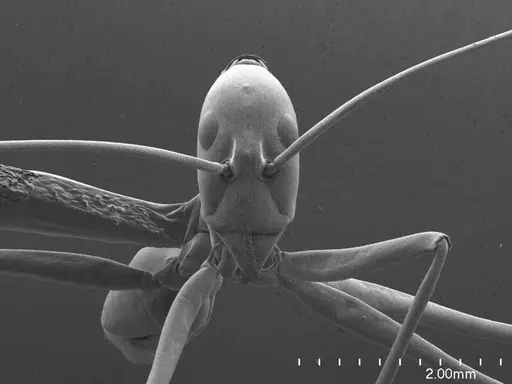
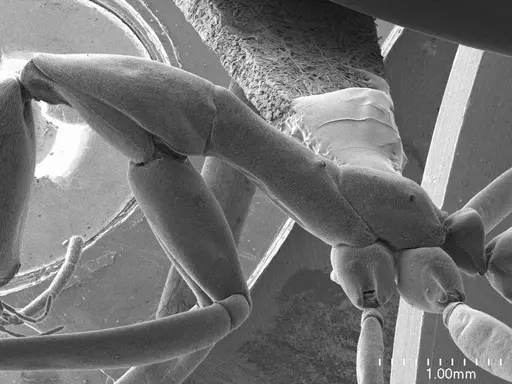
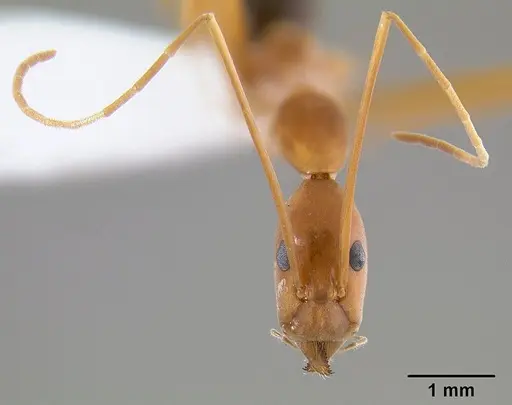
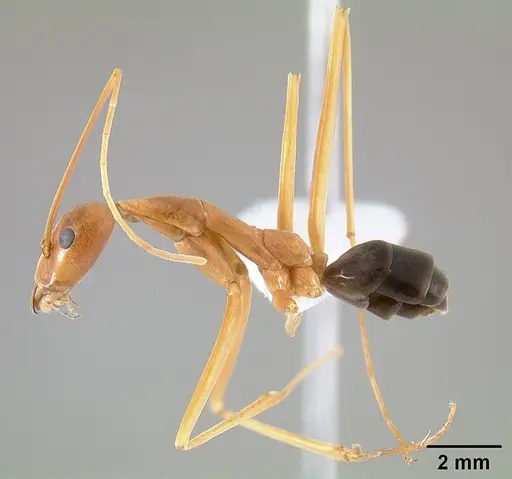
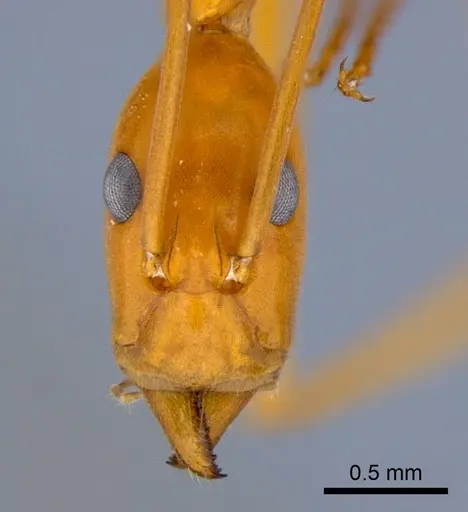
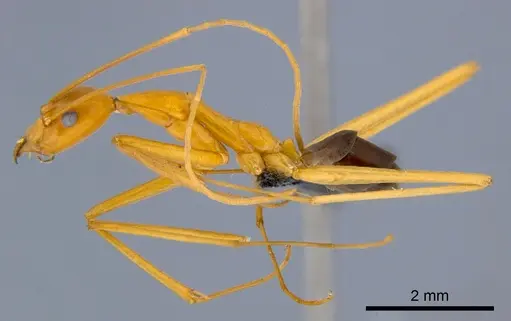
Leptomyrmex pallens is a small, distinctive ant species native only to New Caledonia, where it is the most commonly encountered of the three Leptomyrmex species on the island. Workers have a reddish-orange body with a striking black abdomen that contrasts sharply with the otherwise uniform coloring. They have remarkably long antennae, measuring 3.1-3.6mm, nearly twice their head length, giving them a characteristic spider-like appearance that inspired their common name. Workers measure 1.6-1.9mm in head length, making them relatively small ants with an unusually elongate body plan [1]. This species inhabits rainforest environments throughout the main island of New Caledonia and also occurs on Ile des Pins, nesting in soil, under tree roots, and under rocks [1][2].
What makes L. pallens particularly interesting is how little we know about its colony structure. Queens have never been collected, meaning the fundamental aspects of colony founding, queen size, and colony development remain undocumented. This represents a genuine gap in antkeeping knowledge, you'll be working with fewer resources than for more commonly studied species. The genus Leptomyrmex is known for its Dolichoderinae lineage, and this species belongs to the macro clade characterized by large, elongate body proportions [3].
Quick Summary
- Difficulty: Medium
- Origin & Habitat: New Caledonia rainforest, found throughout the main island and on Ile des Pins, nesting in soil, under tree roots, and under rocks [1][2]
- Colony Type: Unknown, queens have never been collected, so colony structure (single-queen vs multi-queen) is unconfirmed
- Size & Growth:
- Queen: Unknown, queens have never been collected [1]
- Worker: 1.6-1.9mm head length,2.9-3.6mm mesosoma length [1]
- Colony: Unknown, no colony size data available
- Growth: Unknown
- Development: Unconfirmed, no development data exists for this species (This is one of the least-studied Leptomyrmex species. Development must be inferred from related species or observed empirically.)
- Antkeeping:
- Temperature: Based on New Caledonia rainforest habitat, aim for warm conditions around 22-26°C. Provide a gentle temperature gradient so ants can self-regulate.
- Humidity: Rainforest species require high humidity. Keep nest substrate consistently moist but not waterlogged, with some drier areas available.
- Diapause: Unknown for this species. New Caledonia has a mild tropical climate with minimal temperature variation, observe your colony for seasonal activity changes.
- Nesting: In nature they nest in soil, under tree roots, and under rocks. In captivity, a naturalistic setup with moist substrate or a Y-tong/plaster nest works well. They likely prefer dark, humid nest chambers.
- Behavior: Dolichoderine ants are typically less aggressive and lack stingers. They may emit a defensive chemical spray when threatened. Workers are active foragers but their exact foraging behavior is undocumented. Their small size (under 2mm) means escape prevention should be a priority, use fine mesh barriers and tight-fitting lids.
- Common Issues: queen unavailability, wild queens have never been collected, making captive establishment difficult, lack of species-specific care information, most advice must be inferred from related species, small size increases escape risk, tiny ants can squeeze through standard barriers, humidity management is critical, rainforest species suffer in dry conditions, unknown development timeline makes colony management challenging
Appearance and Identification
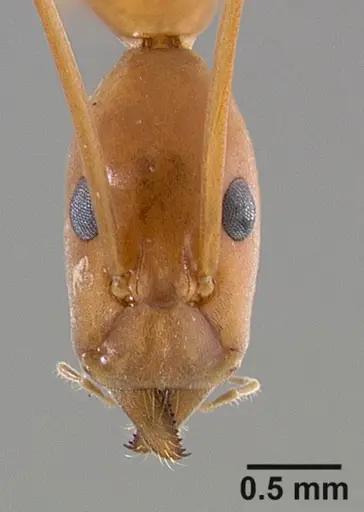
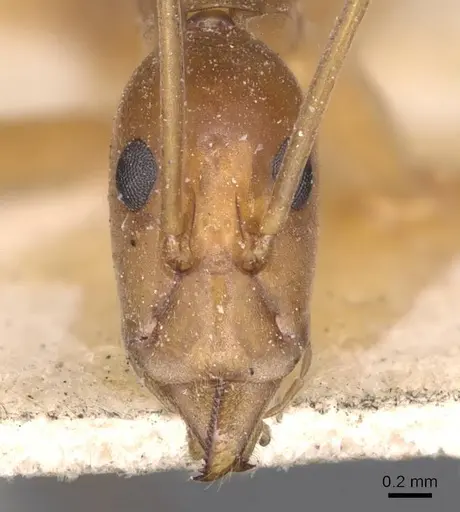
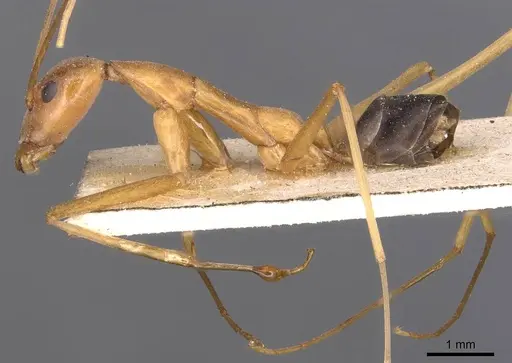
Leptomyrmex pallens workers are distinctive among New Caledonian Leptomyrmex species due to their coloration. The entire body is a reddish-orange (rufotestaceous) color, but the gaster (abdomen) is black, creating a sharp contrast. The head and sometimes the pronotum are slightly darker yellow than the rest of the body. The terminal abdominal segment is pale, further emphasizing the black gaster contrast [1]. Their most striking feature is the extremely long antennae, measuring 3.1-3.6mm, they are nearly double the head length and contribute to their 'spider ant' common name. The body is elongate and slender, fitting the macro clade classification within the genus [3]. Workers measure 1.64-1.92mm in head length, making them relatively small but easily identified by their coloration pattern.
Natural History and Distribution
This species is endemic to New Caledonia, found throughout the main island and on Ile des Pins. It is the most commonly encountered of the three Leptomyrmex species that occur in New Caledonia, the other two being L. nigriceps and L. geniculatus [1]. They inhabit rainforest environments and construct nests in soil, under tree roots, and under rocks. This is a ground-nesting species that prefers humid, shaded microhabitats typical of New Caledonian rainforests. The species was originally described by Emery in 1883,and males were later described by André in 1887 [1]. Phylogenetically, L. pallens belongs to the New Caledonian clade, which is sister to the central-eastern Australian clade [4].
Housing and Nesting
In captivity, replicate their natural nesting preferences by providing moist, humid conditions. They nest in soil and under rocks in the wild, so a naturalistic setup with a deep substrate layer works well. Alternatively, a Y-tong (acrylic) nest or plaster nest with moisture chambers maintains the humidity they need. The nest should be dark, these are not surface-active ants that need light. Provide a water tube or moisture source to maintain humidity, and consider misting the outworld occasionally. Because they are small (workers under 2mm), ensure your setup has excellent escape prevention with fine mesh barriers. The outworld can be simple, a foraging area where you offer food. Given their rainforest origin, avoid dry conditions entirely.
Feeding and Diet
As Dolichoderine ants, Leptomyrmex species typically feed on honeydew from aphids and scale insects, plus small insects for protein. Offer sugar water or honey as an energy source, and provide small protein sources like fruit flies, small crickets, or other tiny insects. Since workers are small, prey items should be appropriately sized. The long antennae suggest they may be active foragers, so placing food in the outworld allows natural foraging behavior. Feed sugar sources constantly and protein 2-3 times per week. Remove uneaten prey to prevent mold. If your colony establishes, observe their preferences and adjust accordingly.
Temperature and Seasonal Care
New Caledonia has a warm, humid tropical climate. Aim for temperatures in the 22-26°C range, warm but not hot. Provide a temperature gradient so ants can move between warmer and cooler areas. A heating cable on one side of the nest can create this gradient. Since queens have never been collected, their exact temperature requirements for founding and development are unknown. Monitor colony activity: if workers cluster near heat, increase temperature slightly, if they avoid heated areas, reduce it. Regarding diapause, New Caledonia experiences minimal seasonal temperature variation, so a true hibernation is unlikely. However, observe your colony for any seasonal changes in activity and adjust care accordingly.
Challenges and Limitations
The biggest challenge with Leptomyrmex pallens is the complete lack of information on queens and colony founding. Queens have never been collected, meaning we don't know their size, whether they seal themselves in during founding (claustral), or how many workers to expect in mature colonies [1]. If you acquire workers, you may be working with the only documented captive colony of this species. This makes the species more suitable for experienced antkeepers who can adapt to unknown requirements. The small worker size (under 2mm) also means escape prevention must be excellent, these tiny ants can squeeze through gaps that larger species cannot. Document your observations carefully, as any captive data would be genuinely valuable for this poorly known species.
Frequently Asked Questions
Can I keep Leptomyrmex pallens in a test tube?
A test tube setup can work for founding colonies or small groups, but rainforest species need high humidity. Monitor moisture levels closely and consider switching to a more humid nest type (Y-tong or plaster) if the colony grows. Test tubes dry out quickly, so check water levels frequently.
How long until first workers in Leptomyrmex pallens?
This is unknown, no development data exists for this species. Related Leptomyrmex species may take 6-10 weeks from egg to worker at warm temperatures, but this is an estimate. You'll need to observe and document your colony's development.
Are Leptomyrmex pallens good for beginners?
No, this species is not recommended for beginners. Queens have never been collected, meaning no established captive colonies exist. All care must be inferred from related species, and you'll be essentially pioneering husbandry for this species. Experienced antkeepers have a better chance of success.
What do Leptomyrmex pallens eat?
Based on genus behavior, they likely feed on honeydew and small insects. Offer sugar water or honey constantly for energy, and provide small protein sources like fruit flies, pinhead crickets, or other tiny insects twice weekly. Size prey appropriately for their small workers.
Can I keep multiple queens together?
This is unknown, queens have never been collected, so we don't know if this species is single-queen (monogyne) or multi-queen (polygyne). Do not attempt combining unrelated queens without evidence they can coexist.
What temperature do Leptomyrmex pallens need?
Based on their New Caledonia rainforest habitat, aim for 22-26°C. Provide a temperature gradient so ants can self-regulate. Avoid temperatures below 18°C or above 30°C.
Do Leptomyrmex pallens need hibernation?
Probably not. New Caledonia has a mild tropical climate with minimal seasonal temperature variation. Observe your colony for any natural slowdowns, but a formal diapause period is likely unnecessary.
Why are my Leptomyrmex pallens dying?
Common causes include: too dry conditions (rainforest species need humidity), poor escape prevention (they're tiny), temperature stress (too cold or hot), or simply that this species has unknown requirements that make captive survival difficult. Document everything and adjust conditions systematically.
Where can I get a Leptomyrmex pallens queen?
This is likely very difficult, queens have never been scientifically collected from the wild. The species is only known from workers and males. You would need to locate a colony in New Caledonia during nuptial flights, which are completely undocumented. Established captive colonies may not exist outside museums.
References

This caresheet is licensed under CC BY-SA 4.0 .
ANTWEB1008544
View on AntWeb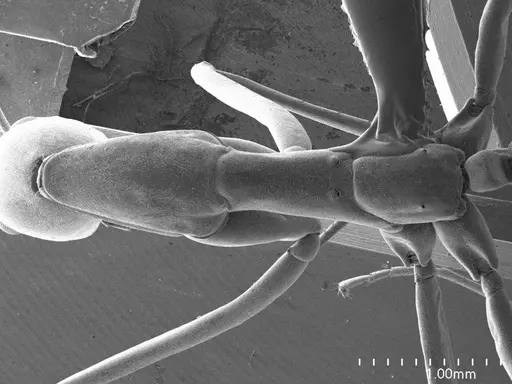
CASENT0012112
View on AntWeb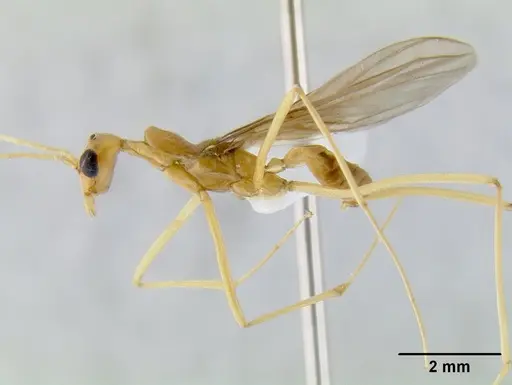
CASENT0127342
View on AntWeb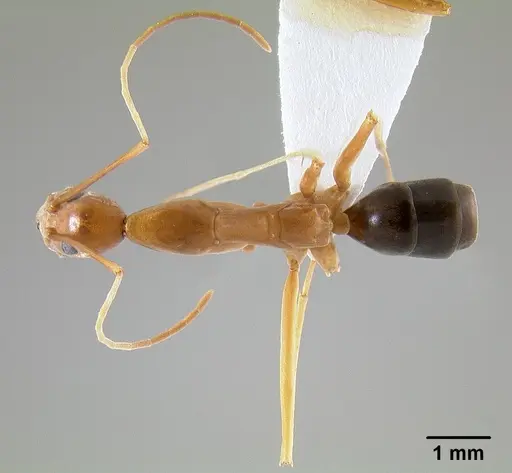
CASENT0127389
View on AntWeb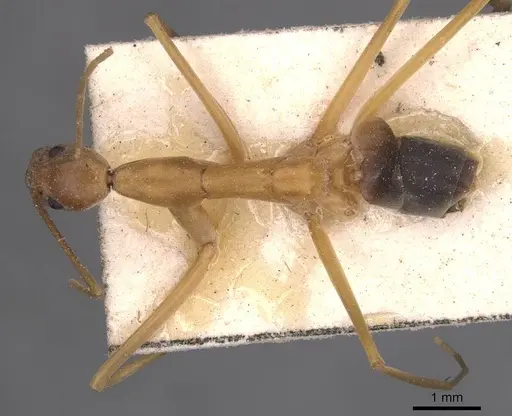
CSIRONC0196
View on AntWeb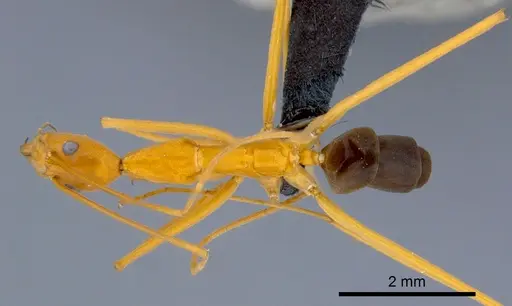
Literature
Loading...Loading products...