

Leptomyrmex nigriventris
- Scientific Name
- Leptomyrmex nigriventris
- Tribe
- Leptomyrmecini
- Subfamily
- Dolichoderinae
- Author
- Guérin-Méneville, 1831
- Distribution
- Found in 1 countries
Leptomyrmex nigriventris Overview
Leptomyrmex nigriventris is an ant species of the genus Leptomyrmex. It is primarily documented in 1 countries , including Australia. Detailed taxonomic data and occurrence records can be further explored via authoritative databases such as AntWeb or the Global Biodiversity Information Facility (GBIF).
Leptomyrmex nigriventris
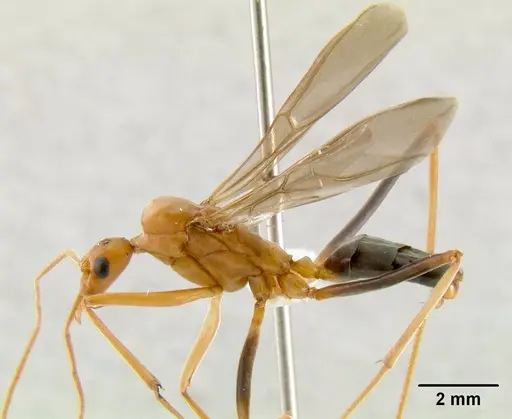
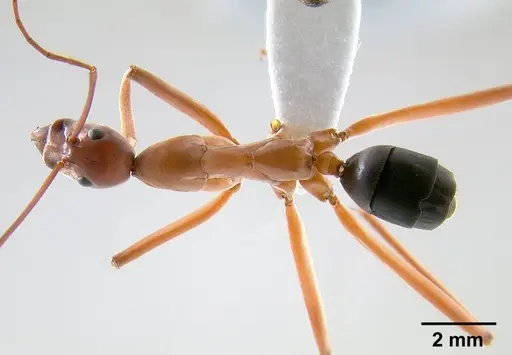
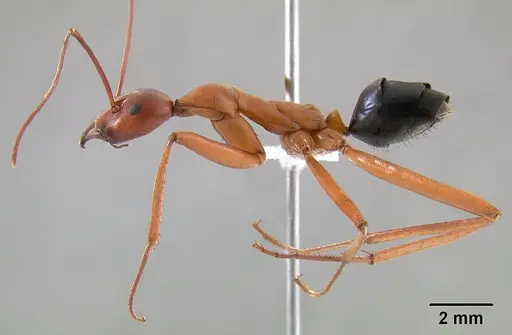
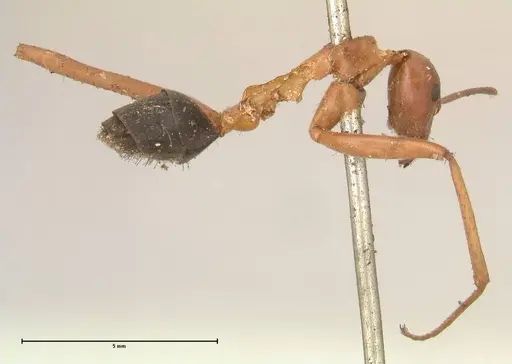
Leptomyrmex nigriventris is one of the largest species in its genus, native to eastern Australia. Workers are striking ants with an orange to reddish-purple head and body contrasting sharply with a black gaster (abdomen). They have a very broad head and extremely long legs, giving them their 'spider ant' common name. This species is found throughout New South Wales in habitats ranging from rainforest to wet and dry sclerophyll forest, where they nest under rocks, at tree bases, and in soil [1]. Queens are ergatoid, meaning they are wingless and only slightly larger than workers, a rare trait in ants that allows replacement reproductives to exist within established colonies [2].
Quick Summary
- Difficulty: Medium
- Origin & Habitat: New South Wales, Australia. Found in rainforest, wet sclerophyll, and dry sclerophyll forest. Nests occur under rocks, at tree bases, and in soil [1].
- Colony Type: Colony structure is not fully documented in scientific literature. Queens are ergatoid (wingless), which typically indicates the presence of replacement reproductives within established colonies. This is a macro clade species with large, elongate morphology [3][4].
- Size & Growth:
- Queen: Ergatoid queens are only slightly larger than workers [2]. Estimated 6-8mm based on worker size.
- Worker: Workers are large: 4.32-4.98mm in body length (WL), with head width 1.49-1.76mm [1].
- Colony: Maximum colony size is unconfirmed. Based on related large Leptomyrmex species, colonies likely reach several hundred workers.
- Growth: Growth rate is unconfirmed. Large species typically develop more slowly than smaller ants.
- Development: Development timeline is unconfirmed for this species. Based on typical Leptomyrmex patterns and similar-sized Dolichoderinae, expect 8-12 weeks from egg to first worker at optimal temperature. (Estimated based on genus-level data, no direct species-specific measurements available.)
- Antkeeping:
- Temperature: Keep at 22-26°C. As a species from temperate NSW, they prefer moderate temperatures. A heating cable on one side of the nest creates a suitable gradient [1].
- Humidity: Maintain moderate to high humidity (60-80%). Their natural habitat includes rainforest and wet sclerophyll areas. Keep the nest substrate consistently moist but not waterlogged.
- Diapause: Likely required. As a temperate Australian species, they probably need a winter rest period of 2-3 months at 10-15°C. This aligns with their seasonal activity patterns in NSW [1].
- Nesting: Provide a naturalistic setup with soil or a Y-tong/plaster nest. They naturally nest under rocks and in soil, so a setup with a soil chamber works well. Ensure adequate moisture retention in the nesting area.
- Behavior: These ants are diurnal foragers, active during daylight hours like most Leptomyrmex species. They are not particularly aggressive but will defend their nest if threatened. Their long legs make them fast runners. Escape prevention is important given their large size and ability to climb, use fluon on container edges. They are likely to accept sugar sources and protein prey, similar to related species.
- Common Issues: escape prevention is important, their large size and long legs make them good climbers, humidity control can be tricky, too wet causes mold, too dry causes brood death, winter dormancy is often mishandled by keepers, research proper diapause conditions, ergatoid queen systems mean colony reproduction may differ from typical ants, don't disturb once established, large size means they need more space than smaller ants as colonies grow
Appearance and Identification
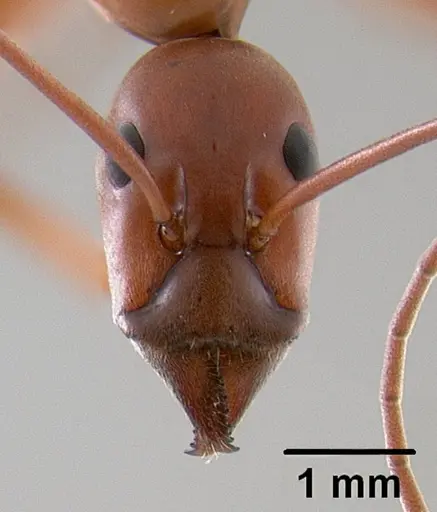
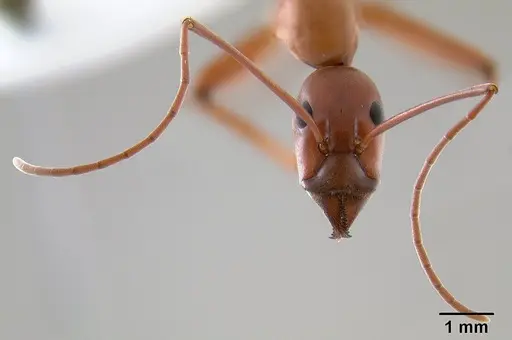
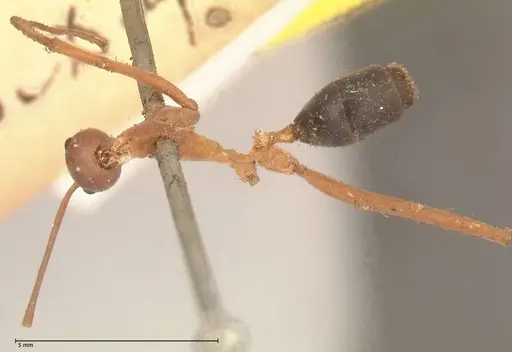
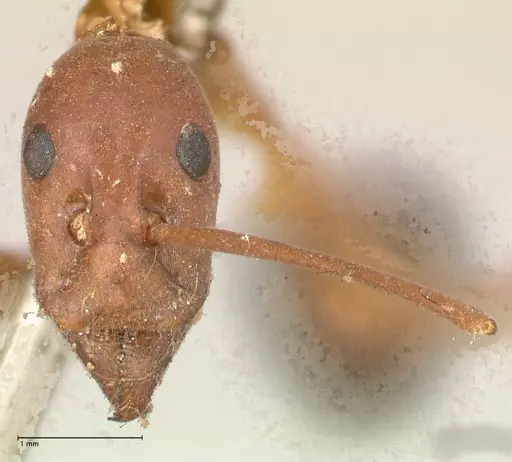
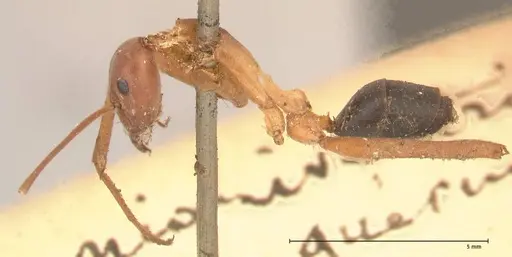
Leptomyrmex nigriventris is one of the largest spider ants, with workers measuring 4.32-4.98mm in body length. They have a very distinctive appearance: an orange to purplish-red head and body contrasting with a jet-black gaster. Their head is unusually broad, nearly three-quarters as wide as its length, giving them a distinctive look among ants. The antennae are extremely long, extending well past the back of the head. The legs are notably long and slender, which is where the 'spider ant' name comes from. You can distinguish them from their close relative L. tibialis by the tibial coloration: L. nigriventris has pale tibiae while L. tibialis has dark ones [1].
Natural History and Distribution
This species is endemic to eastern Australia, specifically New South Wales. They inhabit diverse environments from rainforest to wet and dry sclerophyll forest. Their range includes the Blue Mountains region (Wentworth Falls, Blackheath, Katoomba) based on molecular studies [5]. Nests are found under rocks, at tree bases, and directly in soil. They are part of the south-eastern Australian clade, which diverged approximately 7 million years ago. As a macro clade species, they share the large, elongate body plan with their sister species L. tibialis [3][1].
Queen Biology and Colony Structure
A unique trait of Leptomyrmex nigriventris is the ergatoid queen form. Unlike typical ants that have large, winged queens for dispersal, ergatoid queens are wingless and only slightly larger than workers. This allows replacement reproductives to exist within established colonies, if the primary queen dies, an ergatoid can take over without the colony needing to produce new winged reproductives. Wheeler described the queen as 'just slightly larger than workers' [2]. This system is different from monogyne or polygyne colonies and affects how you should manage captive colonies, avoid disturbing the nest once a queen is established, as the replacement system may be fragile.
Housing and Nest Setup
In captivity, these ants do well in naturalistic setups that mimic their natural nesting preferences. A formicarium with a soil chamber or a Y-tong nest with moist plaster works well. Since they naturally nest under rocks and at tree bases, provide a setup with a dark, humid chamber. Use a water reservoir or moisture gradient to maintain humidity. Because of their large size and long legs, they need more vertical space than smaller ants. The outworld should be spacious enough for foraging. Use escape prevention like fluon on container edges, these ants are good climbers despite their size. [1]
Feeding and Diet
Like other Leptomyrmex species, these ants likely have a varied diet. In the wild, they forage for nectar and honeydew from plants, plus small insects and other protein sources. In captivity, offer sugar water or honey as a constant energy source. For protein, provide small insects like fruit flies, small crickets, or mealworms. Feed protein 2-3 times per week, removing any uneaten prey within 24 hours. Fresh water should always be available. Based on related species in the genus, they are likely daytime foragers, so offer food during daylight hours.
Temperature and Seasonal Care
Keep your colony at 22-26°C, with a slight gradient allowing ants to choose their preferred temperature. As a species from temperate NSW, they experience seasonal temperature changes in the wild. During Australian winter (our summer months), they likely become less active and may enter a dormant period. Provide a winter cooling period of 2-3 months at 10-15°C to mimic natural conditions. This diapause period is important for colony health and reproduction. Monitor colony activity, if workers cluster together and move slowly, they may be entering dormancy. Reduce feeding during this period. [1]
Growth and Development
Specific development timelines are not documented for this species. Based on typical Dolichoderinae patterns and their large body size, expect 8-12 weeks from egg to first worker at optimal temperature. The first workers (nanitics) will likely be smaller than mature workers. Growth rate is likely moderate, large ants typically develop more slowly than smaller species. Colonies may take several years to reach significant size. Be patient with founding colonies, ergatoid queen systems may have different timing than typical claustral founding. Monitor brood development and adjust temperature if growth seems stalled.
Frequently Asked Questions
How long does it take for Leptomyrmex nigriventris to produce first workers?
The exact timeline is unconfirmed, but based on similar large Leptomyrmex species, expect 8-12 weeks from egg to first worker at optimal temperature (22-26°C). Large ant species typically develop more slowly than smaller ones.
What do Leptomyrmex nigriventris ants eat?
They likely accept a varied diet similar to other Leptomyrmex species. Offer sugar water or honey as a constant energy source, plus small insects (fruit flies, small crickets, mealworms) for protein 2-3 times per week.
What temperature should I keep Leptomyrmex nigriventris at?
Maintain temperatures of 22-26°C. A heating cable on one side of the nest creates a gradient. As a temperate Australian species, they prefer moderate temperatures rather than heat.
Do Leptomyrmex nigriventris need hibernation?
Likely yes. As a species from temperate NSW, they probably need a winter rest period of 2-3 months at 10-15°C. This mimics their natural seasonal cycle.
How big do Leptomyrmex nigriventris colonies get?
Maximum colony size is not documented, but based on related large Leptomyrmex species, colonies likely reach several hundred workers over several years.
Can I keep multiple Leptomyrmex nigriventris queens together?
Colony structure is not well documented for this species. Ergatoid queens suggest replacement reproductives exist within colonies, but combining unrelated queens has not been studied. It is not recommended.
References

This caresheet is licensed under CC BY-SA 4.0 .
Literature
Loading...Loading products...