

Leptomyrmex nigriceps
- Scientific Name
- Leptomyrmex nigriceps
- Tribe
- Leptomyrmecini
- Subfamily
- Dolichoderinae
- Author
- Emery, 1914
- Distribution
- Found in 1 countries
Leptomyrmex nigriceps Overview
Leptomyrmex nigriceps is an ant species of the genus Leptomyrmex. It is primarily documented in 1 countries , including New Caledonia. Detailed taxonomic data and occurrence records can be further explored via authoritative databases such as AntWeb or the Global Biodiversity Information Facility (GBIF).
Leptomyrmex nigriceps
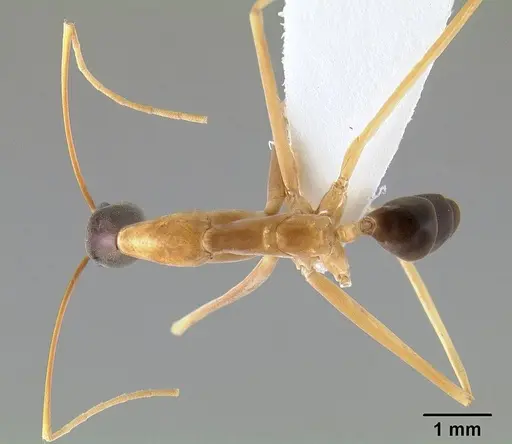
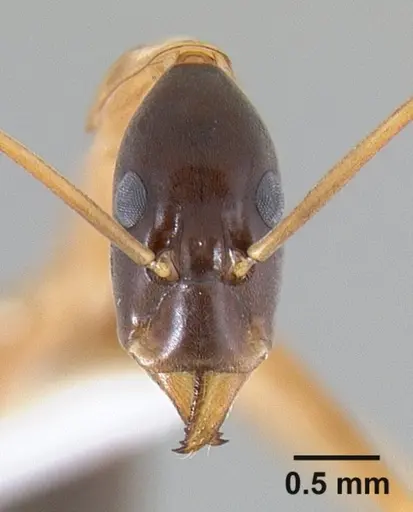
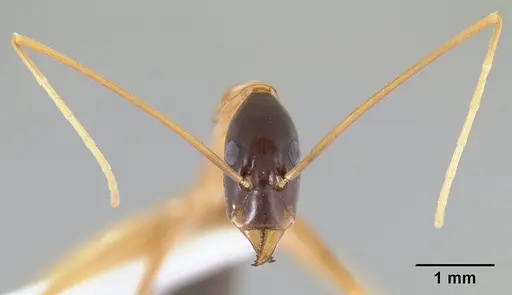
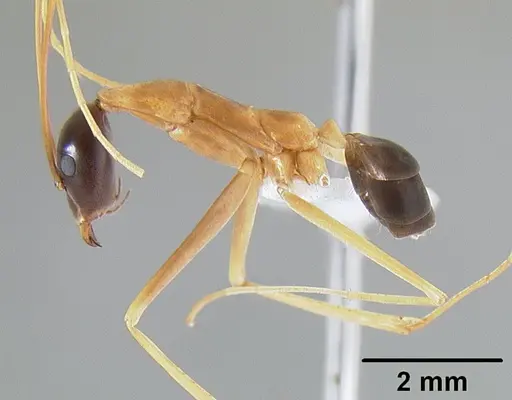
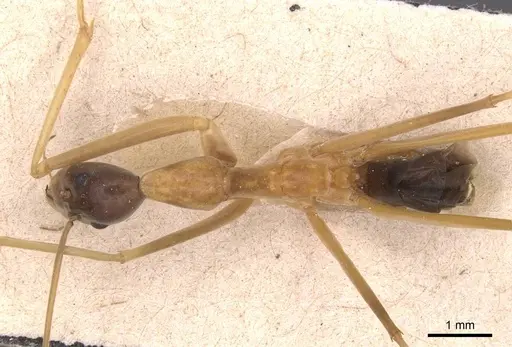
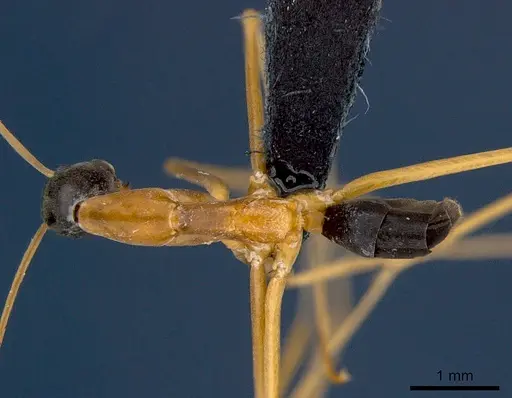
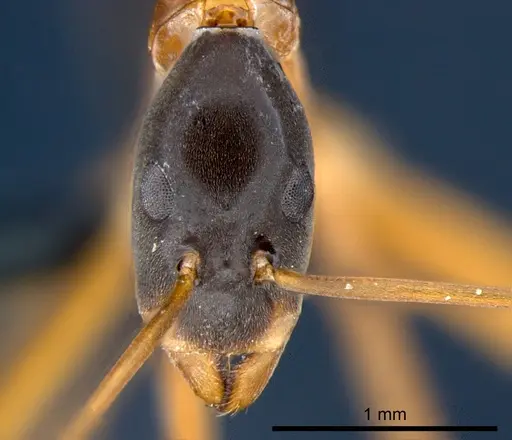
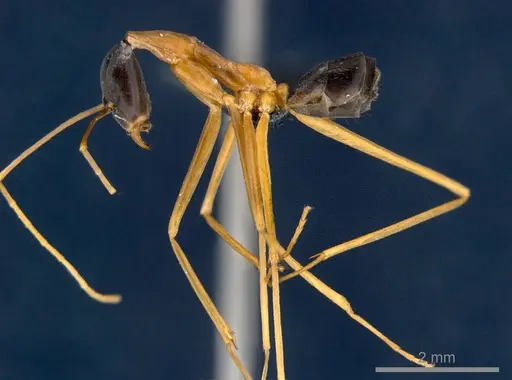
Leptomyrmex nigriceps is a distinctive ant species endemic to New Caledonia, easily recognized by its striking color pattern: a black head and gaster contrasting with an otherwise pale orange body. Workers are medium-sized with the elongated, spider-like morphology characteristic of the genus, they have notably long legs and a slender build. This species is restricted to the ultramafic southern tip of New Caledonia, where it inhabits rainforests, cloud forest, and riparian areas. Queens have never been collected, making this one of the more enigmatic Leptomyrmex species [1]. The genus is known for its unusual morphology and arboreal tendencies, though this species nests in rotting stumps on the forest floor.
Quick Summary
- Difficulty: Medium
- Origin & Habitat: Endemic to the ultramafic southern tip of New Caledonia, an island in the southwestern Pacific. Inhabits rainforest, Agathis woodland, cloud forest, and low closed riparian forest. Nests in rotting stumps on the forest floor [1].
- Colony Type: Unknown, queens have never been collected, so colony structure is unconfirmed. Based on related Leptomyrmex species, likely single-queen colonies but this is unverified.
- Size & Growth:
- Queen: Unknown, queens have never been collected [2]
- Worker: Workers 1.68-1.90mm head length, with extremely long legs (hind tibia 3.57-4.11mm) [1]
- Colony: Unknown, no colony size data available
- Growth: Unknown, no development data exists
- Development: Unconfirmed, no direct observations of colony development (No data exists on egg-to-worker development. Related Leptomyrmex species typically develop in 6-10 weeks at tropical temperatures, but this is an estimate for this species.)
- Antkeeping:
- Temperature: Keep warm, around 24-28°C. This species comes from tropical New Caledonia with year-round warm temperatures. A heating cable on one side of the nest creates a suitable gradient.
- Humidity: High humidity required, rainforest and cloud forest habitat. Keep nest substrate consistently moist but not waterlogged. Provide a water tube for drinking water.
- Diapause: Likely minimal or no diapause, New Caledonia has a tropical climate with minimal seasonal temperature variation. However, a slight cooling period during winter months may be beneficial.
- Nesting: Natural nesting occurs in rotting stumps. In captivity, a naturalistic setup with moist substrate (soil/peat mix) works well, or a Y-tong/plaster nest. They prefer tight, dark chambers close to moisture.
- Behavior: Generally calm and non-aggressive, typical of Leptomyrmex. Workers are active foragers but not particularly aggressive toward keepers. Escape risk is moderate, their small size means they can squeeze through small gaps, but they're not extreme escape artists like some tiny species. They forage individually rather than in massive raids.
- Common Issues: queen unavailability, queens have never been collected, making established colonies extremely rare in the hobby, no development data exists, keepers have no guidance on egg-to-worker timelines, humidity control is critical, rainforest species prone to desiccation in dry conditions, wild-caught colonies may carry parasites from New Caledonia, very limited hobby experience, this species is rarely kept
Appearance and Identification
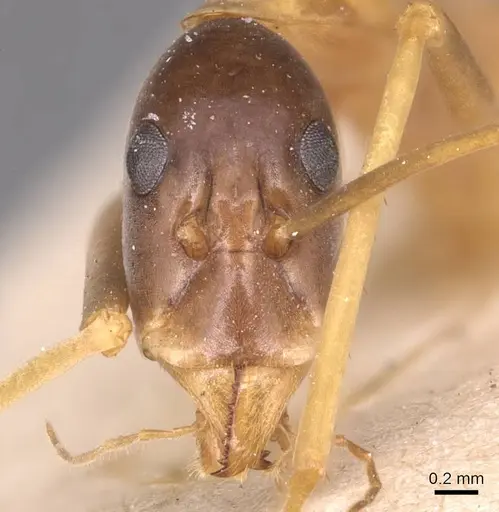
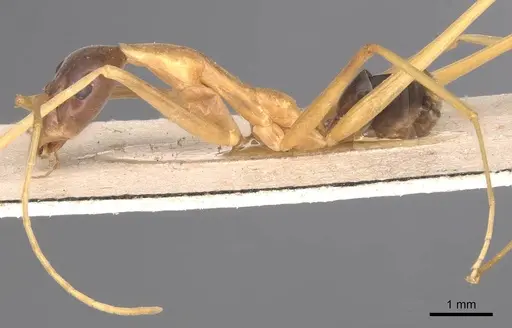
Leptomyrmex nigriceps workers are distinctive and unlikely to be confused with other ants. They have the characteristic Leptomyrmex 'spider ant' morphology, an elongated body with notably long legs that give them a spider-like appearance. The key identifying feature is the color pattern: the head and gaster (the final body segment) are black, while the rest of the body is pale orange. The legs are unicolorous pale, unlike the related L. geniculatus which has dark knees. Workers measure approximately 1.7-1.9mm in head length, with extraordinary long legs, the hind tibia alone reaches 3.5-4.1mm. Males are smaller at 1.24mm head length and have been collected [1]. The most significant knowledge gap is that queens have never been collected, so their size and appearance remain unknown.
Natural Habitat and Distribution
This species has an extremely restricted distribution, it's only found at the ultramafic southern tip of New Caledonia, a small island in the southwestern Pacific Ocean. Ultramafic soils are derived from serpentine rock and are high in heavy metals, making them a challenging environment for most organisms. Despite this, L. nigriceps thrives in the diverse habitats found in this region: primary rainforest, Agathis woodland (Agathis being a genus of coniferous trees), cloud forest at higher elevations, and low closed riparian forest along streams. The species occurs in sympatry or parapatry with the related L. pallens, meaning they overlap in range but may occupy slightly different microhabitats. Nests have been found in rotting stumps on the forest floor, indicating they nest in decaying wood rather than in arboreal cavities like some Leptomyrmex species [1].
Housing and Nesting
In captivity, Leptomyrmex nigriceps should be provided with a moist, naturalistic setup that mimics their rotting stump nesting preference. A soil/peat mixture works well as substrate, kept consistently damp but not waterlogged. They prefer tight, dark chambers close to moisture, a Y-tong nest or plaster formicarium with small chambers works better than large open spaces. Given their rainforest origin, humidity control is critical. Use a water tube for drinking water, as Leptomyrmex are known to collect water droplets. Escape prevention should be moderate, they're not tiny enough to squeeze through standard test tube cotton, but a well-fitting lid is essential. A small outworld for foraging allows them to hunt and explore naturally. [1][2]
Feeding and Diet
While no specific feeding observations exist for L. nigriceps, Leptomyrmex genus members are typically omnivorous with a preference for sugary liquids (honeydew, nectar) and small protein sources (insects). In captivity, offer sugar water or honey water as a constant carbohydrate source. For protein, small live insects like fruit flies, pinhead crickets, or mealworms work well. They are active foragers and will hunt small prey. Fresh fruit can also be offered occasionally. Feed protein 2-3 times per week and keep sugar water available at all times. Remove uneaten prey after 24-48 hours to prevent mold. [2]
Temperature and Seasonal Care
As a tropical species from New Caledonia, Leptomyrmex nigriceps requires warm temperatures year-round. Aim for 24-28°C in the nest area. A heating cable placed on one side of the nest creates a temperature gradient, allowing ants to self-regulate. New Caledonia has a tropical climate with minimal seasonal temperature variation, so a true diapause is likely unnecessary. However, a slight reduction in temperature during winter months (dropping to around 20-22°C) may simulate natural seasonal cues and promote colony health. Avoid temperatures below 18°C for extended periods. High humidity is essential, aim for 70-80% relative humidity in the nest area. [1]
Challenges and Limitations
The biggest challenge with Leptomyrmex nigriceps is simply obtaining a colony. Queens have never been collected in the scientific literature, meaning established colonies are essentially nonexistent in the antkeeping hobby [2]. This species is known only from worker and male specimens. Without queen data, we also lack information on founding behavior, colony development timelines, and colony size. What we know about care comes from general Leptomyrmex husbandry and the limited habitat information available. If you do obtain a colony, expect a learning curve given the lack of species-specific guidance. Additionally, wild-caught colonies from New Caledonia may carry exotic parasites or pathogens that could affect them or other ant colonies.
Frequently Asked Questions
How do I get a Leptomyrmex nigriceps colony?
This is extremely difficult, queens have never been collected, so established colonies essentially don't exist in the hobby. Your best option would be to find a hobbyist who already maintains this species, or to locate a wild colony (if legal to collect in New Caledonia and you have permits). This is not a species you can simply purchase.
What do Leptomyrmex nigriceps ants look like?
Workers have a distinctive black head and gaster with an otherwise pale orange body. They have the characteristic Leptomyrmex 'spider' appearance with very long legs. Workers are about 1.7-1.9mm in head length with notably long hind legs reaching 3.5-4.1mm. Queens have never been described.
What temperature do Leptomyrmex nigriceps need?
Keep them warm at 24-28°C. As a tropical species from New Caledonia, they need year-round warmth. A heating cable on part of the nest creates a gradient for self-regulation.
Do Leptomyrmex nigriceps need hibernation?
Probably not. New Caledonia has a tropical climate with minimal seasonal temperature variation. A slight cooling in winter (to around 20-22°C) may be beneficial but a true diapause is likely unnecessary.
What do I feed Leptomyrmex nigriceps?
Like other Leptomyrmex, they are omnivorous. Offer sugar water or honey water constantly, and protein (small insects like fruit flies or mealworms) 2-3 times per week. They are active foragers that will hunt small prey.
How big do Leptomyrmex nigriceps colonies get?
Unknown, no colony size data exists for this species. Related Leptomyrmex species typically reach several hundred to a few thousand workers, but this is just an estimate.
What type of nest should I use?
A naturalistic setup with moist soil/peat substrate works well, mimicking their rotting stump nesting preference. A Y-tong or plaster formicarium with small, tight chambers and good humidity retention is suitable.
Are Leptomyrmex nigriceps aggressive?
No, they are generally calm and non-aggressive, typical of the Leptomyrmex genus. They are not particularly defensive and handleable with care.
How long does it take for Leptomyrmex nigriceps to develop from egg to worker?
Unknown, no development data exists for this species. Based on related Leptomyrmex species, estimate 6-10 weeks at tropical temperatures, but this is a rough guess.
Where is Leptomyrmex nigriceps found in the wild?
Only at the ultramafic southern tip of New Caledonia, a small Pacific island. They inhabit rainforests, cloud forest, Agathis woodland, and riparian forest, nesting in rotting stumps.
References

This caresheet is licensed under CC BY-SA 4.0 .
Literature
Loading...Loading products...