

Leptomyrmex dolichoscapus
- Scientific Name
- Leptomyrmex dolichoscapus
- Tribe
- Leptomyrmecini
- Subfamily
- Dolichoderinae
- Author
- Smith & Shattuck, 2009
- Distribution
- Found in 1 countries
Leptomyrmex dolichoscapus Overview
Leptomyrmex dolichoscapus is an ant species of the genus Leptomyrmex. It is primarily documented in 1 countries , including Australia. Detailed taxonomic data and occurrence records can be further explored via authoritative databases such as AntWeb or the Global Biodiversity Information Facility (GBIF).
Leptomyrmex dolichoscapus
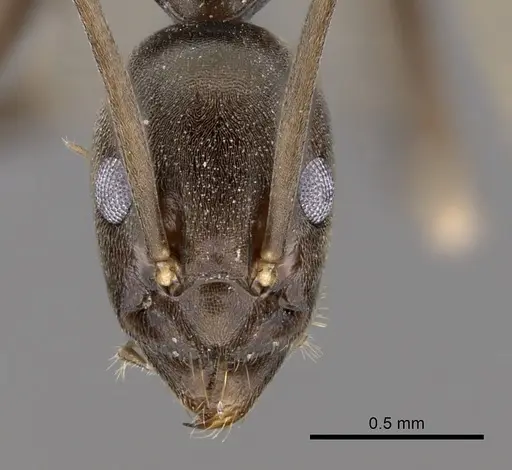
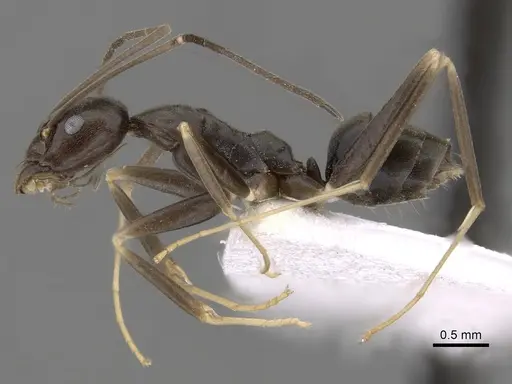
Leptomyrmex dolichoscapus is one of the smallest and most distinctive species in the spider ant genus. Workers measure just 0.92-0.95mm in head length, making them part of the 'micro-Leptomyrmex' clade, unusually small for ants that can grow quite large in this genus [1][2]. What immediately catches the eye is their extraordinarily long antennae, which extend beyond the top of their head by fully two-thirds of their scape length, the most elongated of any micro-Leptomyrmex species [2]. They are dark brown in color with an elongated head and very long palps (mouthparts) that reach toward the back of their head [1].
This species is known from only a single locality in Queensland, Australia, at Mary Creek at 1000m elevation, where it lives in rainforest [2]. It occurs alongside its relative L. garretti but can be easily distinguished by those remarkably long antennae [1]. Because it is known from so few specimens, much of its biology remains a mystery, this is a species for patient keepers who enjoy learning alongside their colonies.
Quick Summary
- Difficulty: Unknown, too little data for reliable difficulty rating
- Origin & Habitat: Known only from rainforest at Mary Creek, Queensland, Australia at 1000m elevation [2]. Part of the micro-Leptomyrmex clade restricted to rainforests and wet sclerophyll forests in eastern Australia [3].
- Colony Type: Unconfirmed. Colony structure (single queen vs multiple queens) has not been documented for this species. The genus Leptomyrmex typically forms single-queen colonies, but specific data for L. dolichoscapus is lacking.
- Size & Growth:
- Queen: Unknown, queens have not been described for this species
- Worker: 0.92-0.95mm head length,1.48-1.64mm mesosoma length [1][2]
- Colony: Unknown, no colony size data available
- Growth: Unknown, no development data exists
- Development: Unconfirmed, no direct observations. Based on typical patterns for small tropical Dolichoderinae, estimate 6-10 weeks at optimal temperature, but this is a rough guess. (No specific development data exists for this species. The estimate is based on genus-level patterns for small rainforest ants.)
- Antkeeping:
- Temperature: Unconfirmed. Based on its rainforest habitat in Queensland (tropical highlands), aim for warm conditions around 24-28°C with some variation allowed. Avoid cold temperatures.
- Humidity: Unconfirmed but likely high. Rainforest species typically need consistently moist conditions. Keep nest substrate damp but not waterlogged, with some drier areas available.
- Diapause: Unknown, no seasonal data available. Queensland rainforests have mild winters, so a true diapause may not be required. Observe colony activity patterns.
- Nesting: No specific data exists. In captivity, small test tubes or acrylic nests with tight chambers would likely work. The species is very small, so escape prevention must be excellent.
- Behavior: Not well documented. As a rainforest ant, they likely forage in the leaf litter and may tend aphids for honeydew. Their very small size means excellent escape prevention is critical, they can squeeze through tiny gaps. No documented sting or aggression level available.
- Common Issues: escape prevention is critical due to their very small size, use fine mesh and tight-fitting lids, virtually no documented care information exists, keepers must experiment and observe, single locality origin means captive populations may be rare or unavailable, no information on queen founding behavior or colony establishment, humidity requirements are uncertain, rainforest species are sensitive to drying out
Appearance and Identification
Leptomyrmex dolichoscapus workers are tiny ants, with head lengths of just 0.92-0.95mm and total body lengths around 3mm [1]. Their most striking feature is the extremely long antennae, the scapes (the long basal segment of each antenna) measure 1.37-1.44mm and extend beyond the top of the head by fully two-thirds of their length. This gives them the most elongated antennae of any micro-Leptomyrmex species [2]. They have an elongated head (cephalic index less than 79), very long palps that reach toward the back of the head, and a dark brown coloration [1]. The mesosoma (the middle body section) has a subtle raised 'bump' on the front portion. These ants are part of the 'micro-Leptomyrmex' clade, characterized by their small compact size and head width under 0.80mm [3].
Distribution and Rarity
This is one of the rarest ant species in the hobby, known from only a single locality in Queensland, Australia, Mary Creek at approximately 1000m elevation [2]. It occurs in rainforest habitat and is sympatric (lives in the same area) with another micro-Leptomyrmex species, L. garretti, though they can be readily distinguished by the extremely long scapes of L. dolichoscapus [1]. The entire micro-Leptomyrmex clade is restricted to rainforests and wet sclerophyll forests in two relatively small regions of eastern Australia [3]. This limited distribution and habitat specialization means finding or keeping this species is challenging, they are not commonly available in the antkeeping hobby.
Housing and Nesting
No specific captive husbandry data exists for this species. Given their tiny size (workers under 1mm head length), they would need very small, tight-fitting accommodations. Test tubes with small water reservoirs or acrylic nests with narrow chambers would be appropriate. Because they are rainforest dwellers from Queensland, they likely need higher humidity than typical desert or temperate species. The nest substrate should remain consistently moist but never waterlogged. Escape prevention is critical, their small size means they can squeeze through gaps that larger ants cannot. Use fine mesh (at least 0.5mm or smaller) on any ventilation holes and ensure all connections are tight.
Feeding and Diet
No specific dietary information exists for L. dolichoscapus. As a member of the subfamily Dolichoderinae, they likely have typical ant diets, consuming honeydew from aphids and scale insects, and hunting small invertebrates. In captivity, you should offer a combination of sugar sources (honey water, sugar water) and protein (small live prey like fruit flies, pinhead crickets, or similar-sized insects). Given their tiny size, prey items should be appropriately scaled down. Start with very small offerings and observe what the colony accepts. Fresh water should always be available.
Temperature and Seasonal Care
No specific temperature requirements have been documented. Based on their rainforest habitat in Queensland (tropical highlands), they likely prefer warmer conditions in the range of 24-28°C. Avoid temperatures below 20°C or sudden temperature drops. Queensland rainforests experience mild winters, so a true hibernation diapause may not be necessary, observe your colony's activity patterns. If they remain active year-round, maintain consistent warm conditions. If they slow down during winter months, a brief cool period (around 15-18°C) for a few months may be appropriate, but this is speculative.
Challenges and Considerations
This species presents significant challenges for antkeepers. First, they are extremely rare in the hobby, availability is limited because they are only known from a single locality and have rarely been collected. Second, virtually no captive husbandry information exists, so keepers must be prepared to experiment and adapt their care based on colony observations. Third, their very small size makes them prone to escape and requires careful attention to housing security. Finally, the lack of data on colony development means you may face uncertainty about what constitutes healthy growth versus problems. This is a species best suited for experienced antkeepers who enjoy the challenge of working with poorly-documented species and who can document their observations for the benefit of the hobby.
Frequently Asked Questions
How long does it take for Leptomyrmex dolichoscapus to go from egg to worker?
This is unconfirmed, no specific development data exists for this species. Based on typical patterns for small tropical Dolichoderinae ants, a rough estimate would be 6-10 weeks, but this is highly speculative.
What do Leptomyrmex dolichoscapus ants eat?
No specific dietary data exists. Based on genus patterns, they likely eat honeydew and small invertebrates. In captivity, offer honey water or sugar water as a sugar source, plus small live prey like fruit flies or tiny crickets as protein.
What temperature do Leptomyrmex dolichoscapus ants need?
Unconfirmed, but based on their Queensland rainforest habitat, aim for warm conditions around 24-28°C. Avoid temperatures below 20°C.
Do Leptomyrmex dolichoscapus ants need hibernation?
Unknown, no seasonal data exists. Queensland rainforests have mild winters, so a true diapause may not be required. Observe your colony's activity patterns.
Are Leptomyrmex dolichoscapus good for beginners?
No, this species is not recommended for beginners. It is extremely rare, virtually no captive care information exists, and their tiny size requires experienced handling. The complete lack of documented husbandry means you would be pioneering care techniques.
How big do Leptomyrmex dolichoscapus colonies get?
Unknown, no colony size data has been documented. The micro-Leptomyrmex species tend to form smaller colonies than their larger relatives, but specific numbers are not available.
Can I keep multiple Leptomyrmex dolichoscapus queens together?
Unknown, colony structure has not been documented for this species. The genus Leptomyrmex typically forms single-queen colonies, but specific data for this species is lacking.
What makes Leptomyrmex dolichoscapus different from other Leptomyrmex?
They have the most elongated antennae of any micro-Leptomyrmex species, with scapes extending beyond the head vertex by two-thirds of their length. They are also among the smallest in the genus, with workers under 1mm head length.
Where does Leptomyrmex dolichoscapus come from?
Only known from a single locality at Mary Creek, Queensland, Australia at 1000m elevation in rainforest [2].
References

This caresheet is licensed under CC BY-SA 4.0 .
CASENT0127154
View on AntWeb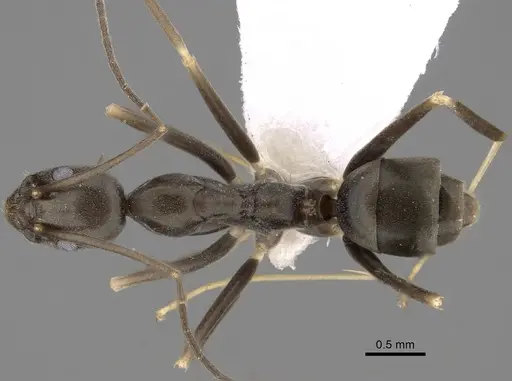
Literature
Loading...Loading products...