

Leptogenys volcanica
- Scientific Name
- Leptogenys volcanica
- Tribe
- Ponerini
- Subfamily
- Ponerinae
- Author
- Lattke, 2011
- Distribution
- Found in 2 countries
Leptogenys volcanica Overview
Leptogenys volcanica is an ant species of the genus Leptogenys. It is primarily documented in 2 countries , including Costa Rica, Panama. Detailed taxonomic data and occurrence records can be further explored via authoritative databases such as AntWeb or the Global Biodiversity Information Facility (GBIF).
Leptogenys volcanica
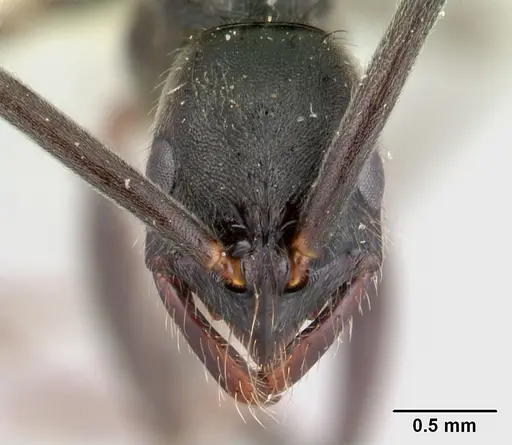
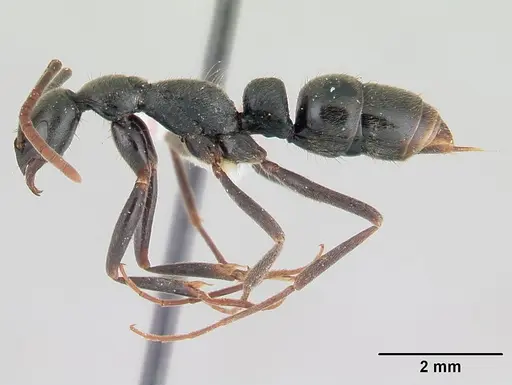
Leptogenys volcanica is a small to medium-sized predatory ant belonging to the Ponerinae subfamily. Workers measure approximately 5-7mm in total length, with a distinctive black body, dark brown antennae, mandibles, and legs. The head is sub-rectangular with densely punctate sculpture, and the eyes are relatively large, occupying about one-third of the lateral cephalic margin. This species belongs to the elongata species group and was described in 2011 from Costa Rica, with distribution extending from Costa Rica through Panama to Colombia [1][2].
These ants are specialized predators with a documented preference for hunting terrestrial isopods (crustaceans). The type series was actually collected while workers were cooperatively transporting an isopod, demonstrating their predatory behavior in the field [3]. As Ponerinae ants, they possess a functional sting and can be aggressive when defending their colony.
Quick Summary
- Difficulty: Medium
- Origin & Habitat: Found in the Neotropical region from Costa Rica to Colombia, primarily at elevations between 700-1350m. The type locality is Volcán Rincón de la Vieja in Guanacaste, Costa Rica, with additional records from Monteverde in Puntarenas province. They inhabit humid forest environments in this mountain region [1][2][3].
- Colony Type: Colony structure is unconfirmed, the queen has not been described, and colony size in the wild is unknown.
- Size & Growth:
- Queen: Unknown, queen has not been described [3]
- Worker: Workers measure approximately 5-7mm total length based on morphometric data (HL 0.94-1.08mm, WL 1.52-1.75mm) [3]
- Colony: Unknown, no colony size data available
- Growth: Unknown, no development timing data available
- Development: Unknown, development has not been studied for this species (Based on typical Ponerinae patterns, expect development to take several months at warm temperatures. Related Leptogenys species typically require 2-4 months from egg to worker.)
- Antkeeping:
- Temperature: Keep at 22-26°C. These are Neotropical mountain ants from elevations around 700-1350m, so they prefer warm but not extremely hot conditions. A gentle gradient allowing them to self-regulate is ideal.
- Humidity: High humidity is essential, think damp forest floor. Keep the nest substrate consistently moist but not waterlogged. Provide a water source in the outworld.
- Diapause: Unknown, no specific data on overwintering requirements. Given their Neotropical origin from higher elevations, they may tolerate cooler temperatures but likely do not require true hibernation.
- Nesting: In nature they likely nest in soil or rotting wood in humid forest habitats. In captivity, a naturalistic setup with moist substrate or a Y-tong/plaster nest works well. Ensure good humidity retention while avoiding stagnant air.
- Behavior: These ants are predatory and actively hunt for isopods and other small arthropods. Workers are relatively fast-moving and will readily attack prey. They possess a functional sting and can deliver a painful sting if handled roughly or when defending their colony. They are likely to be more aggressive than typical house ants. Escape prevention should be good, while not tiny, they are active and may explore for exits.
- Common Issues: no colony size or development data available makes planning difficult, queen has not been described, founding behavior unknown, predatory diet requires live prey, cannot survive on sugar alone, high humidity requirements can lead to mold issues if ventilation is poor, sting can cause irritation, handle with care
Housing and Nest Setup
Leptogenys volcanica requires a humid environment that mimics their natural forest floor habitat. A naturalistic setup with a moist soil substrate works well, use a mix of soil and organic material that holds moisture without becoming waterlogged. Alternatively, a Y-tong or plaster nest with a water reservoir can maintain humidity. The nest should have chambers scaled appropriately for 5-7mm workers. Include a shallow water dish in the outworld for drinking. Since they are predatory, provide an outworld area where you can introduce live prey. Use a test tube setup for founding colonies if you obtain a queen, transitioning to a larger setup as the colony grows. [3]
Feeding and Diet
These ants are specialized predators that primarily hunt terrestrial isopods in the wild [4]. In captivity, their diet should focus on protein-rich live prey. Offer small live insects such as fruit flies, small crickets, and isopods (roly-polys). You can also offer other small arthropods like springtails. Unlike many ants, they are unlikely to accept sugar water or honey as a primary food source, their metabolism is geared toward protein consumption. Feed every 2-3 days, removing uneaten prey after 24 hours to prevent mold. A varied diet helps ensure colony health.
Temperature and Humidity
Maintain temperatures in the 22-26°C range. These ants come from Neotropical mountain regions in Costa Rica at elevations around 700-1350m, so they prefer warm but stable conditions. Avoid temperatures below 18°C or above 30°C. Humidity should be high, aim for 70-80% relative humidity in the nest area. The substrate should feel consistently moist but never waterlogged. Use a hygrometer to monitor conditions. Poor humidity can cause colony decline, while excessive moisture leads to mold problems. A small ventilation hole helps prevent stagnant air without drying the nest too quickly. [3]
Behavior and Defense
Leptogenys volcanica workers are active predators that hunt cooperatively. They possess a functional sting and can deliver a painful sting if threatened. When keeping this species, avoid provoking them or disturbing the nest unnecessarily. They are likely more aggressive than typical Formicinae ants. Workers are relatively fast-moving and will readily pursue prey. If you are stung, wash the area with soap and water and apply a cold compress. Most reactions are mild but can vary by individual. Keep escape prevention in mind, while not among the smallest ants, they are active and may find gaps in setup seals. [3]
Colony Establishment
Since the queen has not been described and colony structure is unknown, establishing a colony may be challenging. If you obtain a founding queen, provide her with a moist test tube setup and offer small live prey items periodically if she emerges to forage. Based on typical Ponerinae patterns, she may be claustral (sealing herself in and living off stored fat) or semi-claustral (needing to hunt during founding). Observe her behavior to determine her needs. Without documented colony data, expect slow growth initially and be patient through the founding phase.
Frequently Asked Questions
How long does it take for Leptogenys volcanica to develop from egg to worker?
The development timeline has not been studied for this species. Based on typical Ponerinae patterns, expect 2-4 months from egg to worker at warm temperatures (24-26°C). Related Leptogenys species generally have slower development than many common ant species.
What do Leptogenys volcanica ants eat?
They are specialized predators that hunt terrestrial isopods in the wild. In captivity, feed them live small insects (fruit flies, small crickets), isopods, and other small arthropods. They are unlikely to accept sugar sources as a primary food. Protein-rich prey is essential for colony growth.
Can I keep Leptogenys volcanica in a test tube?
A test tube setup can work for a founding queen, but you will need to transition to a larger naturalistic or formicarium setup as the colony grows. These ants need humidity and space for hunting prey, so a simple test tube alone is not ideal for established colonies.
Are Leptogenys volcanica good for beginners?
This species is not ideal for beginners due to several challenges: limited available care information, predatory diet requiring live prey, high humidity requirements, and the queen has not been described. If you are experienced with Ponerinae ants or other predatory species, it can be a rewarding species to keep.
What temperature should I keep Leptogenys volcanica at?
Maintain temperatures between 22-26°C. These Neotropical mountain ants prefer warm but stable conditions. Avoid temperatures below 18°C or above 30°C. A heating cable on one side of the nest can create a gentle gradient if your room temperature is below this range.
Do Leptogenys volcanica need hibernation?
Diapause requirements are unknown for this species. Given their Neotropical origin from higher elevations in Costa Rica, they may tolerate cooler temperatures but likely do not require true hibernation. If anything, they may have a slight slow-down period during cooler months.
How big do Leptogenys volcanica colonies get?
Colony size in the wild is unknown. No colony size data has been documented for this species. Expect moderate colony sizes based on related Leptogenys species, likely under a few hundred workers.
Can I keep multiple Leptogenys volcanica queens together?
Colony structure is unconfirmed, the queen has not been described, and we do not know if this species is monogyne (single queen) or polygyne (multiple queens). Combining unrelated queens is not recommended without documented evidence that they can coexist.
Why are my Leptogenys volcanica dying?
Common causes include: low humidity (they need damp conditions), improper diet (they need live protein prey, not just sugar), temperatures outside their 22-26°C range, or stress from disturbance. Check your setup conditions first. Without documented care information, trial and error may be necessary.
References

This caresheet is licensed under CC BY-SA 4.0 .
CASENT0178789
View on AntWeb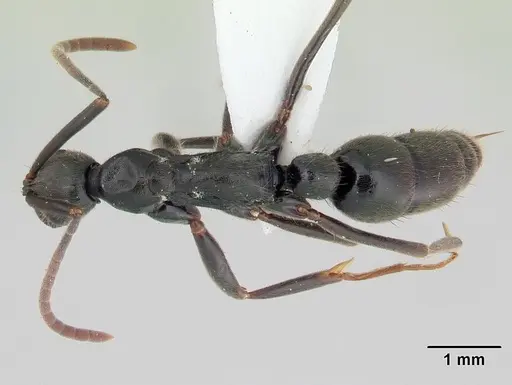
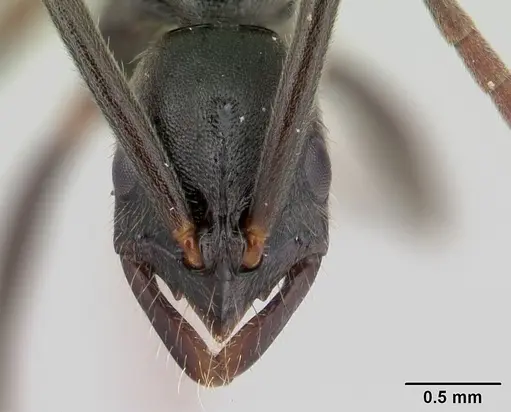
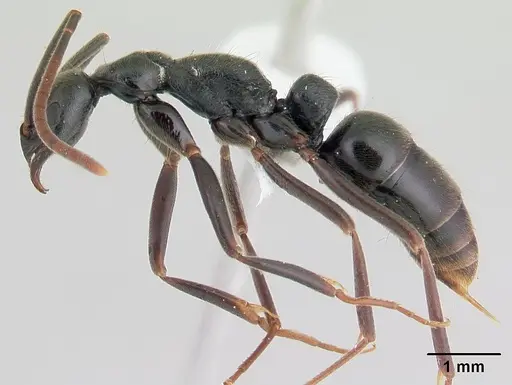
LACMENT142593
View on AntWeb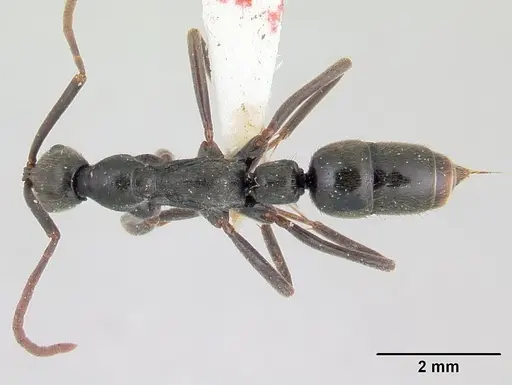
Literature
Loading...Loading products...