

Leptogenys vitsy
- Scientific Name
- Leptogenys vitsy
- Tribe
- Ponerini
- Subfamily
- Ponerinae
- Author
- Rakotonirina & Fisher, 2014
- Distribution
- Found in 1 countries
Leptogenys vitsy Overview
Leptogenys vitsy is an ant species of the genus Leptogenys. It is primarily documented in 1 countries , including Madagascar. Detailed taxonomic data and occurrence records can be further explored via authoritative databases such as AntWeb or the Global Biodiversity Information Facility (GBIF).
Leptogenys vitsy
Leptogenys vitsy is a small predatory ant native to Madagascar, belonging to the Ponerinae subfamily. Workers measure approximately 4-6mm in length and are distinctive for their black coloration with brown to light brown tips on their appendages and the tip of the gaster. They have relatively short antennal scapes and a narrowly rounded lobe on the front of the head called the clypeus. This species is known from only two distant dry forest locations in western and southwestern Madagascar, Ankoririka in Ankarafantsika National Park and the Makay Mountains. Workers have been observed foraging through leaf litter on the forest floor, which is typical behavior for predatory Ponerine ants that hunt small invertebrates. The biology of this species remains completely unstudied in the scientific literature, making captive care largely an exercise in informed guesswork based on related species.
Quick Summary
- Difficulty: Unknown, Likely Expert
- Origin & Habitat: Madagascar dry forests in Ankoririka (PN Ankarafantsika) and Makay Mountains. Workers foraged through leaf litter in tropical dry forest at 210m elevation [1].
- Colony Type: Unconfirmed, no colony structure data exists for this species
- Size & Growth:
- Queen: Unknown, not described in original species description [1]
- Worker: Workers approximately 4-6mm based on head width measurements of 1.08-1.25mm [1]
- Colony: Unknown, only single workers and small groups have been collected [1]
- Growth: Unknown
- Development: Unknown, no development data exists. Based on typical Ponerine patterns, estimate 6-10 weeks at optimal temperature. (Development timeline is entirely unstudied. Estimate based on genus-level patterns for Leptogenys species.)
- Antkeeping:
- Temperature: Infer from dry forest habitat: aim for 22-26°C with a gentle gradient. Avoid extremes.
- Humidity: Dry forest species, prefer moderate humidity with some dry areas. Keep substrate moist but not waterlogged.
- Diapause: Unknown, likely minimal or no true diapause given tropical Madagascar location. Some seasonal slow-down may occur.
- Nesting: No nesting data exists. Likely nests in soil or under stones in captivity. A naturalistic setup with soil and hiding spots or a Y-tong/plaster nest works well.
- Behavior: No behavioral studies exist for this species. Based on genus patterns, Leptogenys ants are typically predatory and active hunters that pursue prey through leaf litter. They likely have moderate aggression and will defend the colony if threatened. Escape prevention should be good, workers are not extremely small but can still fit through small gaps.
- Common Issues: completely unknown biology means trial and error is required, expect some colony losses while learning, no data on founding behavior makes claustral vs semi-claustral uncertain, queen may need to hunt during founding, no confirmed diet preferences, likely predatory on small invertebrates but specific prey unknown, no information on colony size limits, growth trajectory is unpredictable, dry forest origins mean over-moisture is likely more dangerous than dryness
Appearance and Identification
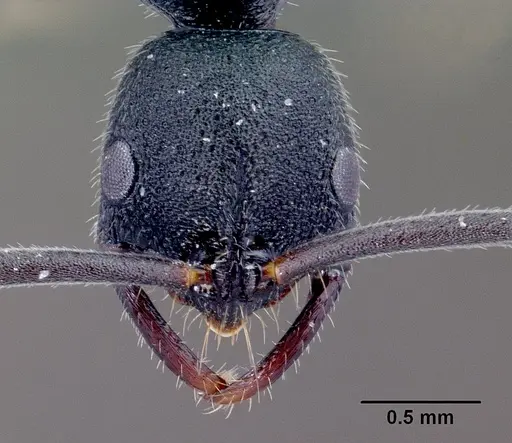
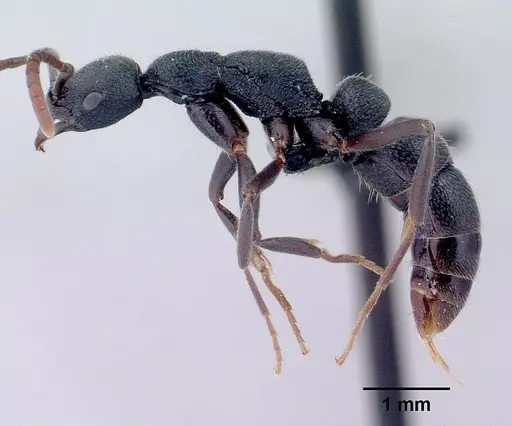
Leptogenys vitsy workers are small ants measuring approximately 4-6mm in total length. They are primarily black in color, with distinctive brown to light brown tips on their appendages (antennae and legs) and at the tip of the gaster (the rear body section). The workers have relatively short antennal scapes that don't extend far beyond the back of the head, a characteristic feature of this species complex. The front of the head has a narrowly rounded lobe, and there are small peg-like hairs near the front of the face. Their eyes are medium-sized and slightly protrude from the sides of the head. The mandibles are long and slender, nearly straight without much curve at the base. The body surface is densely textured with fine wrinkles and punctures, giving them a somewhat matte appearance. These identification features help distinguish them from other Leptogenys species in Madagascar, particularly those in the related voeltzkowi complex. [1]
Natural History and Distribution
This species is known only from two geographically separated locations in Madagascar: Ankoririka in the northwest (part of Ankarafantsika National Park) and the Makay Mountains in the southwest. Both areas are classified as tropical dry forests, which experience distinct wet and dry seasons. The type specimens were collected at an elevation of 210 meters, sifted from leaf litter. Only a handful of specimens have ever been recorded, making this one of the rarest Malagasy Leptogenys species. The complete biology remains unknown, we don't know their colony size, queen behavior, nuptial flight timing, or specific dietary preferences. What little we do know suggests they are ground-dwelling ants that forage through the leaf litter layer, hunting small invertebrates much like other Ponerine ants. The dry forest habitat provides clues about their temperature and humidity preferences, but specific requirements have not been studied. [1]
Inferring Care Requirements from Related Species
Since the biology of Leptogenys vitsy is completely unstudied, we must infer care requirements from what we know about the genus and related species. Leptogenys ants are predatory Ponerines that actively hunt prey rather than scavenging or collecting honeydew. In captivity, they likely need a protein-based diet of small live prey such as fruit flies, pinhead crickets, or similar small insects. The dry forest habitat suggests they prefer temperatures in the low-to-mid 20s Celsius with moderate humidity, not the constantly wet conditions some tropical ants require. They probably do not need a true hibernation diapause, though they may slow down during the cooler or drier seasons. For nesting, a naturalistic setup with soil substrate and hiding spots or a Y-tong style nest with narrow chambers would be appropriate. The key challenge with this species is that everything is inferred rather than confirmed, keepers should be prepared for some trial and error and should not expect the same success rates as with better-studied species. [1]
Feeding and Nutrition
Based on genus-level patterns for Leptogenys, this species is almost certainly predatory and will require live protein prey in captivity. Unlike many ants that readily accept sugar sources, Ponerine ants like Leptogenys are typically focused on protein for their nutrition. Offer small live prey such as fruit flies, small crickets, mealworms, or other appropriately-sized insects. The prey should be small enough for the workers to tackle, given their 4-6mm size, very small prey items are appropriate. How often to feed depends on colony size, but a general approach is to offer prey every 2-3 days and remove any uneaten remains. Sugar water or honey may be accepted occasionally but should not be the primary food source. Some Ponerines will also accept dead prey, so don't dismiss this entirely, but live prey is more likely to trigger hunting behavior. Start with small prey items and observe whether workers show interest.
Housing and Nest Setup
No specific nesting information exists for this species, so recommendations must be based on typical Leptogenys preferences and the dry forest habitat. A naturalistic setup with a soil or sand substrate works well, this allows the ants to create their own chambers if they choose to dig, and it maintains humidity better than some alternatives. The substrate should be kept moderately moist but never waterlogged. A Y-tong (acrylic) nest or plaster nest with narrow chambers can also work, especially once the colony is established and you want to observe them more easily. Provide a water source, a small test tube with a cotton ball works fine. Since they forage through leaf litter in the wild, adding some leaf litter or hiding spots in the outworld gives them opportunities to exhibit natural foraging behavior. Ensure escape prevention is adequate, while not extremely small, they can still fit through small gaps.
Temperature and Seasonal Care
Leptogenys vitsy comes from tropical dry forests in Madagascar, which experience warm temperatures year-round with seasonal variation in rainfall rather than temperature. Aim for temperatures in the range of 22-26°C as a starting point, with some variation across the nest allowed through a heating cable on one side. If the colony shows signs of stress (workers clustering in cool areas, reduced activity), adjust accordingly. Unlike temperate species, they likely do not require a true hibernation period, but some seasonal slowdown during what would be the dry season in Madagascar might occur. Monitor colony behavior rather than following a strict calendar. Room temperature in many homes (around 20-24°C) may be suitable, but a small heating mat can help maintain optimal conditions if your home runs cool. Avoid temperatures above 30°C or below 18°C.
Frequently Asked Questions
How long does it take for Leptogenys vitsy to develop from egg to worker?
This is completely unknown, no development data exists for this species. Based on typical Ponerine ant development, estimate 6-10 weeks at optimal temperature, but this is a rough guess. The actual timeline could be faster or slower.
What do Leptogenys vitsy ants eat?
Based on genus patterns, they are predatory and need live protein prey. Offer small insects like fruit flies, pinhead crickets, or small mealworms. Sugar sources may be accepted but are not primary food. This species has never been kept in captivity, so specific acceptance is unknown.
Are Leptogenys vitsy ants good for beginners?
No, this species is not recommended for beginners. The biology is completely unstudied, meaning no established care protocols exist. Everything must be inferred from related species, and colony failures are likely while learning what works. Choose a better-documented species first.
How big do Leptogenys vitsy colonies get?
Unknown, only single workers or very small groups have ever been collected in the wild. The maximum colony size is unstudied. Related Leptogenys species typically form colonies of dozens to a few hundred workers.
Can I keep multiple Leptogenys vitsy queens together?
Unknown, colony structure has not been documented for this species. Without data on whether they are single-queen or multi-queen colonies, combining unrelated queens is not recommended.
What temperature should I keep Leptogenys vitsy at?
Infer from dry forest habitat: aim for 22-26°C. A gentle gradient allowing the ants to choose their preferred temperature is ideal. This is a starting point based on habitat, not confirmed requirements.
Do Leptogenys vitsy ants need hibernation?
Unknown, likely no true hibernation given their tropical Madagascar origin. Some seasonal slowdown may occur during the dry season, but this is not well-documented for this species.
When do Leptogenys vitsy have nuptial flights?
Unknown, nuptial flight timing has not been documented. Madagascar's tropical climate means flights could occur year-round or during specific seasons. No data exists to guide this.
Is Leptogenys vitsy a claustral founding species?
Unknown, founding behavior has not been studied. Many Ponerine ants are semi-claustral (queen must hunt during founding), but this varies by species. Without data, assume semi-claustral and provide small prey during founding.
What is the best nest type for Leptogenys vitsy?
No specific data exists. Based on inferred preferences, a naturalistic setup with soil substrate or a Y-tong/plaster nest with narrow chambers would be appropriate. Provide moderate humidity and hiding spots.
Why is so little known about Leptogenys vitsy?
This is one of the rarest ant species in Madagascar, known from only two locations and very few specimens. The species was only described in 2014,and no biological studies have been conducted on wild or captive colonies.
References

This caresheet is licensed under CC BY-SA 4.0 .
CASENT0470280
View on AntWeb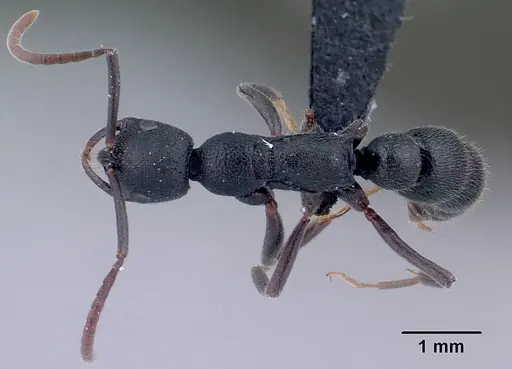
Literature
Loading...Loading products...