

Leptogenys transitionis
- Scientific Name
- Leptogenys transitionis
- Tribe
- Ponerini
- Subfamily
- Ponerinae
- Author
- Bharti & Wachkoo, 2013
- Distribution
- Found in 1 countries
Leptogenys transitionis Overview
Leptogenys transitionis is an ant species of the genus Leptogenys. It is primarily documented in 1 countries , including India. Detailed taxonomic data and occurrence records can be further explored via authoritative databases such as AntWeb or the Global Biodiversity Information Facility (GBIF).
Leptogenys transitionis
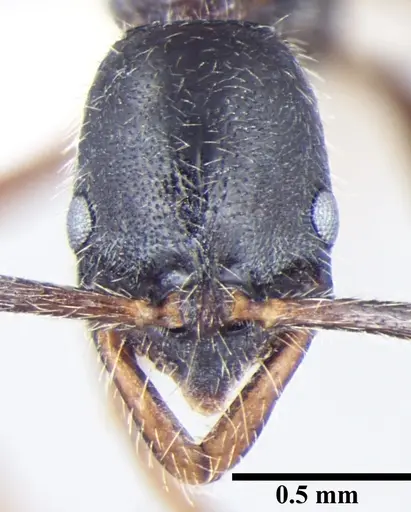
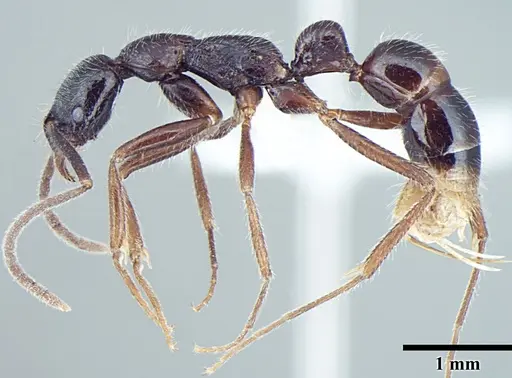
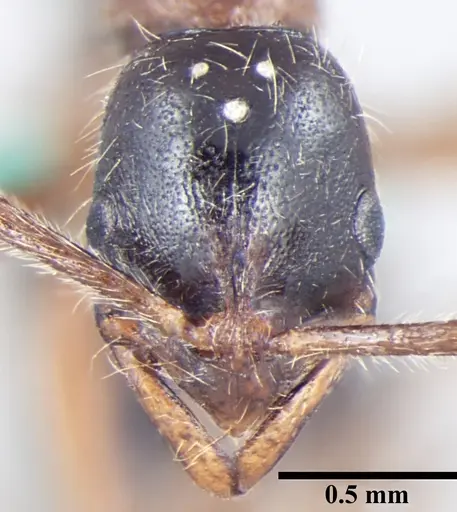
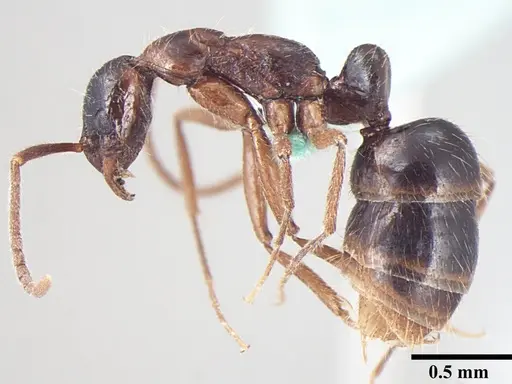
Leptogenys transitionis is a medium-sized predatory ant endemic to the Himalayan region of India. Workers measure 6.4-6.7mm with a distinctive dark brown body marked by ferruginous brown on the mandibles, antennae, legs, and tail tip. They have a smooth, shiny mesosoma and a uniquely shaped petiolar node that is longer than wide, a key identification feature that separates them from similar Indian species. The species was discovered living under stones in moist soil within an isolated pine forest patch at 1200m elevation in Himachal Pradesh. A notable trait is their ergatogyne, a wingless queen form that represents an intermediate evolutionary stage between workers and fully developed queens.
Quick Summary
- Difficulty: Medium
- Origin & Habitat: Endemic to India, specifically found in Himachal Pradesh at 1200m elevation. They nest under stones in moist, loose soil within pine forest patches with leaf litter [1][2].
- Colony Type: Colonies appear to be monogyne with documented ergatogyne (wingless) queens. The ergatogyne represents an intermediate queen phenotype, larger than workers with developed eyes and ocelli, but with a less sculptured body than typical queens [1].
- Colony: Monogyne
- Founding: Semi-claustral
- Size & Growth:
- Queen: 6.82 mm (ergatogyne) [1]
- Worker: 6.38-6.69 mm [1][3]
- Colony: Unknown, no colony size data available for this species
- Growth: Moderate, inferred from typical Leptogenys patterns
- Development: 8-12 weeks, estimated based on related Leptogenys species (Development timeline not directly studied for this species. Ponerine ants typically take 2-3 months from egg to worker at optimal temperatures.)
- Antkeeping:
- Temperature: Keep around 22-26°C. This species comes from a temperate Himalayan elevation (1200m), so they prefer moderate temperatures with some variation. Avoid extremes on either end.
- Humidity: High humidity required, they were collected from moist soil under stones in a forest patch. Keep the nest substrate consistently damp but not waterlogged. Provide a moisture gradient so ants can choose their preferred zone.
- Diapause: Yes, being from Himachal Pradesh (a temperate Himalayan region), they likely require a winter dormancy period. Reduce temperature to around 10-15°C for 2-3 months during winter.
- Nesting: They naturally nest under stones in moist soil. In captivity, a naturalistic setup with a moisture-retentive substrate (like a mix of soil and sand) works well. Y-tong or acrylic nests with damp chambers can also work, but ensure the nesting area stays consistently moist. Avoid completely dry setups.
- Behavior: Leptogenys are predatory ants with active foraging behavior. They are likely to be more aggressive compared to typical myrmicine ants and possess a functional sting, Ponerinae ants are known for their potent stings. Workers are moderately sized and can defend the colony actively. Escape prevention should be moderate, they are not tiny ants but can squeeze through small gaps if determined. They are likely nocturnal or crepuscular in activity patterns, typical of many forest-dwelling Ponerinae.
- Common Issues: high humidity maintenance, they require moist conditions and can suffer in dry setups, predatory feeding requirements, they need live prey and may not accept commercial ant foods, potential sting, Ponerinae ants can deliver painful stings, handle with care, winter dormancy requirement, failure to provide proper diapause may weaken or kill the colony, slow colony growth, Ponerine ants typically grow slower than many common species, patience is required
Nest Preferences and Housing
In the wild, Leptogenys transitionis nests under large stones buried nearly a foot deep in moist, loose soil within pine forest patches. The soil was described as damp with some leaf litter present. For captive care, replicate these conditions using a naturalistic setup with a deep layer of moisture-retentive substrate, a mix of topsoil and sand works well. The nesting area should remain consistently damp but never waterlogged. Alternatively, you can use a Y-tong or acrylic formicarium with built-in water chambers that maintain humidity. Place a flat stone or piece of bark over part of the nesting area to simulate the natural cover they use. A small water reservoir in the outworld helps maintain overall humidity. These ants do best with a gradient from moist in the nest to slightly drier in the foraging area. [1]
Feeding and Diet
Leptogenys ants are predatory by nature, so their diet should center on live protein prey. Offer small insects like fruit flies, small crickets, mealworms, and other appropriately-sized arthropods. Since workers are around 6-6.5mm, prey should be no larger than about half their body length. Feed two to three times per week, removing uneaten prey after 24-48 hours to prevent mold. While not directly tested for this species, Leptogenys typically accept some sugar sources, you can offer a drop of diluted honey or sugar water occasionally, but protein should be the primary food. Unlike some ants, they are unlikely to accept seeds or commercial granule foods as primary nutrition. Always ensure fresh water is available.
Temperature and Seasonal Care
This species comes from Himachal Pradesh in the western Himalayas at 1200m elevation, a temperate region with distinct seasons. Keep the nest at 22-26°C during the active season (spring through autumn). A heating cable on one side of the nest can create a temperature gradient, allowing ants to self-regulate. During winter (roughly November through February), they require a diapause period. Reduce temperatures to 10-15°C, this can be achieved by moving the colony to a cool basement, garage, or refrigerator (if using a small setup). Do not feed during dormancy but keep the substrate lightly moist. Return to normal temperatures gradually in spring. This winter rest is essential for colony health and likely triggers reproductive cycles. [1]
Behavior and Defense
As a Ponerinae ant, Leptogenys transitionis possesses a functional sting that can deliver a painful injection. This is a defensive adaptation, they are not aggressive toward humans but will sting if threatened or handled roughly. The sting is more potent than many common ant species, so exercise caution during colony maintenance. In terms of colony behavior, these ants are active foragers that likely hunt individually or in small groups rather than forming massive raiding columns. Workers are moderately sized and can move quickly when disturbed. They are probably nocturnal or crepuscular, being more active during cooler parts of the day, this matches their forest floor habitat in the wild. Colony defense is handled actively by workers who will respond to threats. [1][3]
Colony Structure and Reproduction
A unique feature of this species is the ergatogyne, a wingless queen form that represents an intermediate evolutionary stage. Unlike typical ants where queens are fully winged for dispersal, ergatogyne queens are born without wings and have a body form that is intermediate between workers and normal queens. They have larger eyes and three ocelli (simple eyes) like reproductive forms, but their body is less heavily sculpted and lighter colored than workers. This suggests the colony may have multiple potential reproductives that can replace each other if needed, though the primary colony structure appears to be single-queen. The queen measures 6.82mm, slightly larger than workers. This ergatogyne system is considered plesiomorphic (primitive) within the genus. [1]
Growth and Development
Direct development data does not exist for this species, but based on typical Ponerine ant patterns, expect 8-12 weeks from egg to first worker at optimal temperatures (around 24-26°C). Ponerine brood development is generally slower than many myrmicine ants like Tetramorium or Camponotus. The first workers (nanitics) will likely be smaller than normal workers but should develop normally after the colony is established. Growth rate is moderate, do not expect rapid colony expansion. A well-established colony may eventually reach several hundred workers over multiple years. Patience is essential with this species, as Ponerinae colonies typically grow more slowly than more common pet ants.
Frequently Asked Questions
How long does it take for Leptogenys transitionis to produce first workers?
Expect 8-12 weeks from egg to first worker at optimal temperatures (around 24-26°C). This is typical for Ponerine ants and may vary based on temperature and feeding.
Do Leptogenys transitionis ants sting?
Yes, they can sting. As Ponerinae ants, they have a functional sting that can deliver a painful injection. Handle gently and avoid provoking them. The sting is more potent than typical house ants.
What do Leptogenys transitionis eat?
They are predatory ants that need live protein prey. Feed small insects like fruit flies, small crickets, and mealworms. They may occasionally accept sugar water or honey, but protein should be their primary food.
Are Leptogenys transitionis good for beginners?
They are rated as Medium difficulty. They require more specific conditions than beginner species, high humidity, live prey feeding, and winter diapause. Not recommended as a first ant unless you have some experience with Ponerinae.
Do Leptogenys transitionis need hibernation?
Yes, being from Himachal Pradesh in the Himalayan region, they require a winter dormancy period. Reduce temperatures to 10-15°C for 2-3 months during winter (roughly November-February).
What humidity do Leptogenys transitionis need?
High humidity, they were found in moist soil under stones in a forest. Keep the nest substrate consistently damp but not waterlogged. A humidity gradient allows them to choose their preferred zone.
How big do Leptogenys transitionis colonies get?
Colony size is not documented for this species. Based on related Leptogenys, they likely reach several hundred workers over several years. Growth is moderate and slower than common ant species.
Can I keep multiple Leptogenys transitionis queens together?
This species appears to be monogyne (single queen colony) with ergatogyne replacement reproductives. Combining unrelated queens is not recommended as it has not been documented and would likely result in fighting.
What temperature should I keep Leptogenys transitionis at?
Keep the nest at 22-26°C during the active season. They come from a temperate Himalayan elevation and prefer moderate temperatures. A slight gradient allowing them to choose their preferred zone is ideal.
When should I move Leptogenys transitionis to a formicarium?
Wait until the colony has at least 20-30 workers before moving to a formicarium. They do well in naturalistic setups with moist soil, or Y-tong/acrylic nests with humidity control. A test tube setup works for founding colonies.
References

This caresheet is licensed under CC BY-SA 4.0 .
ANTWEB1008005
View on AntWeb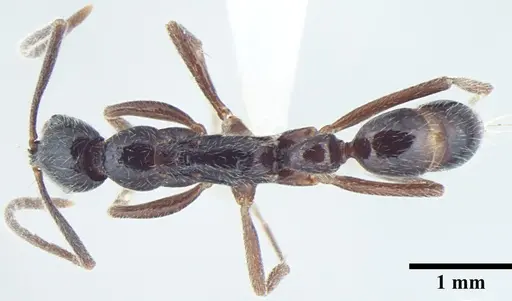
ANTWEB1008006
View on AntWeb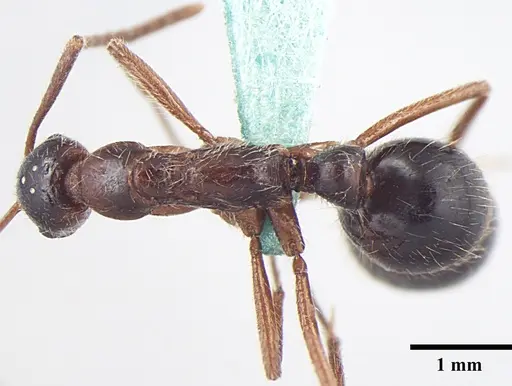
Literature
Loading...Loading products...