

Leptogenys stuhlmanni
- Scientific Name
- Leptogenys stuhlmanni
- Tribe
- Ponerini
- Subfamily
- Ponerinae
- Author
- Mayr, 1893
- Distribution
- Found in 5 countries
Leptogenys stuhlmanni Overview
Leptogenys stuhlmanni is an ant species of the genus Leptogenys. It is primarily documented in 5 countries , including Congo, Kenya, Comoros. Detailed taxonomic data and occurrence records can be further explored via authoritative databases such as AntWeb or the Global Biodiversity Information Facility (GBIF).
Leptogenys stuhlmanni
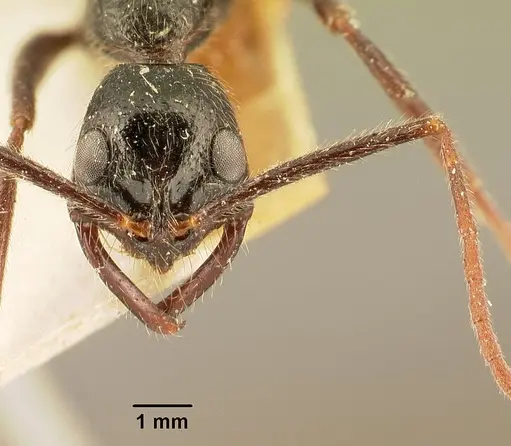
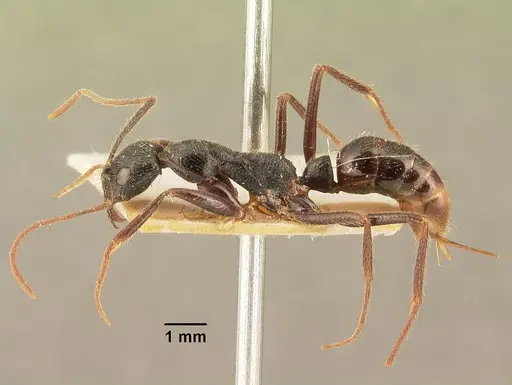
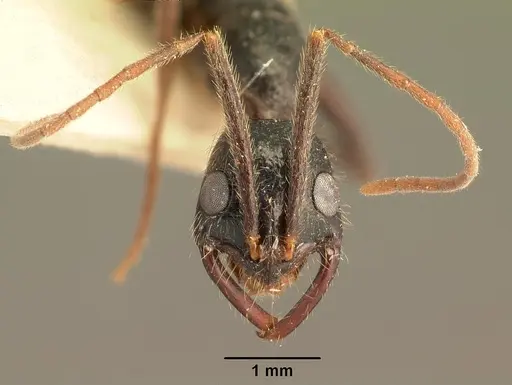
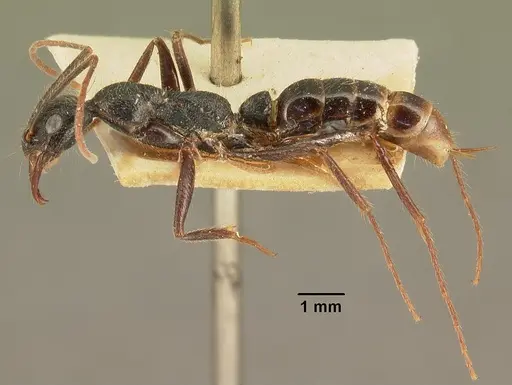
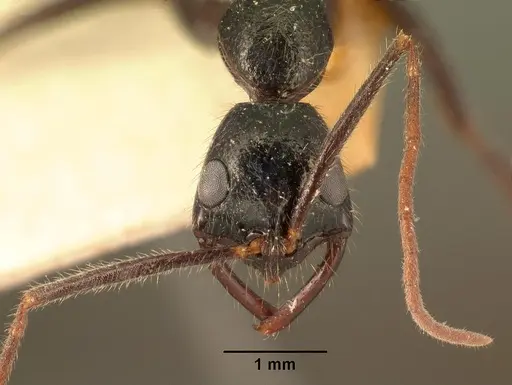
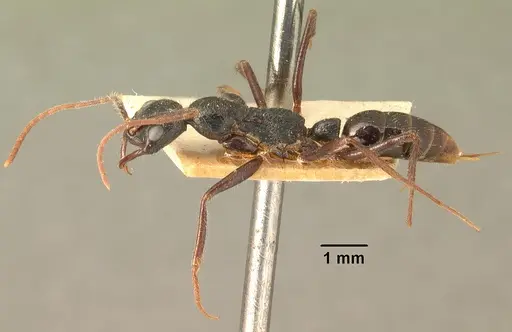
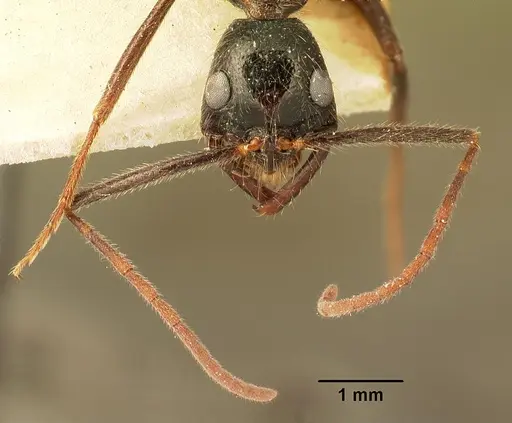
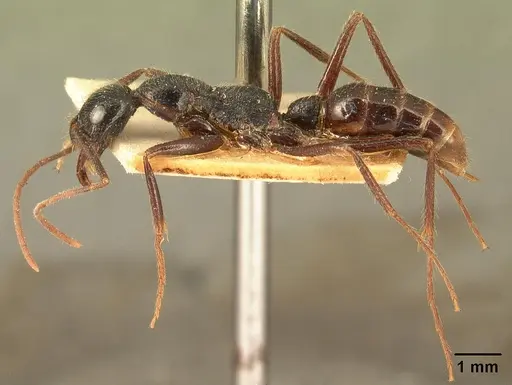
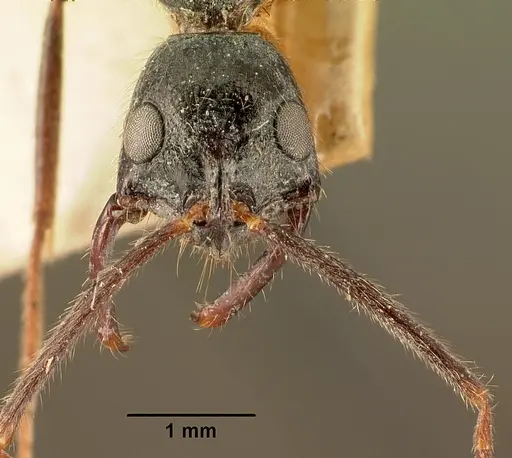
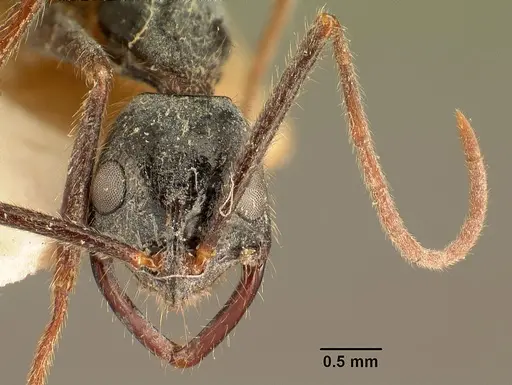
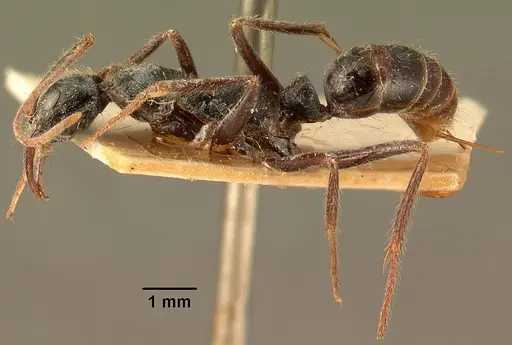
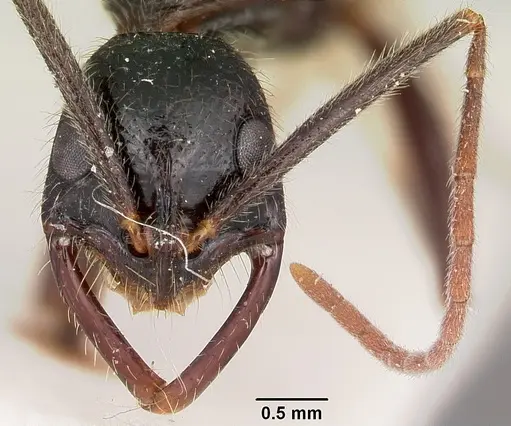
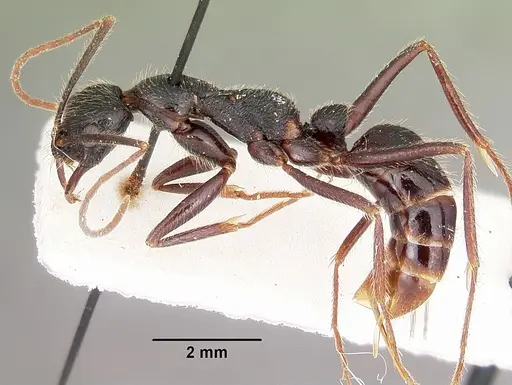
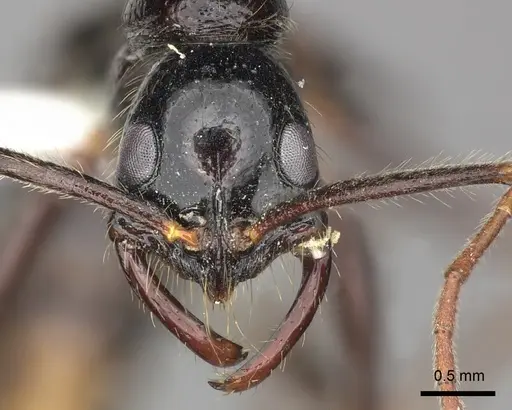
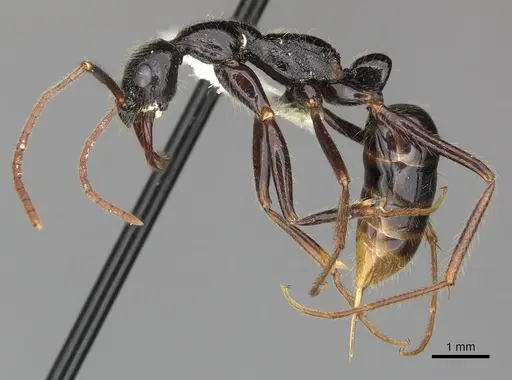
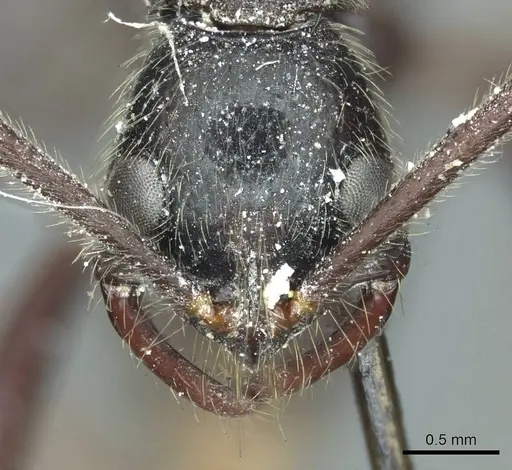
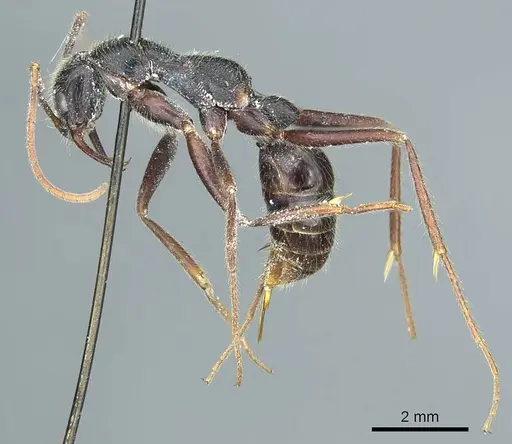
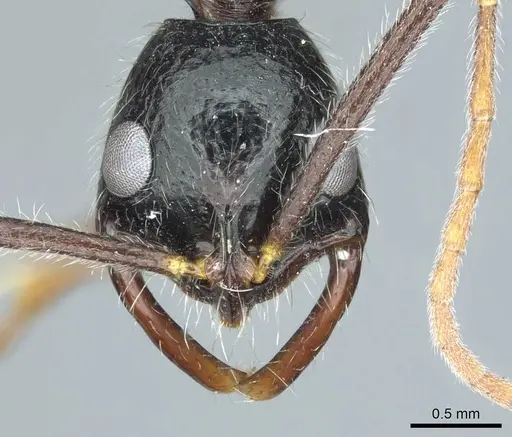
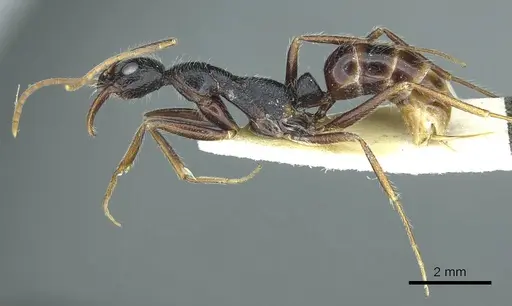
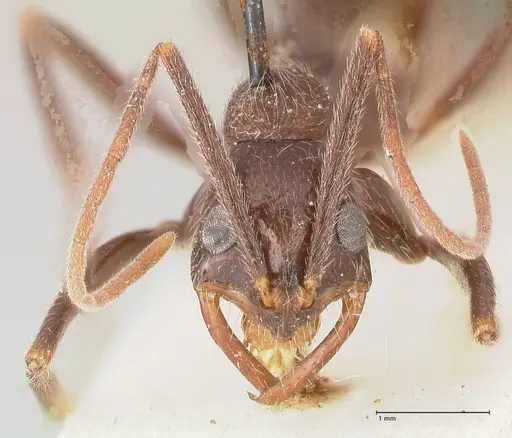
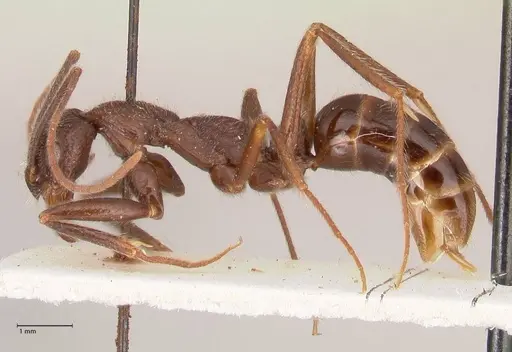
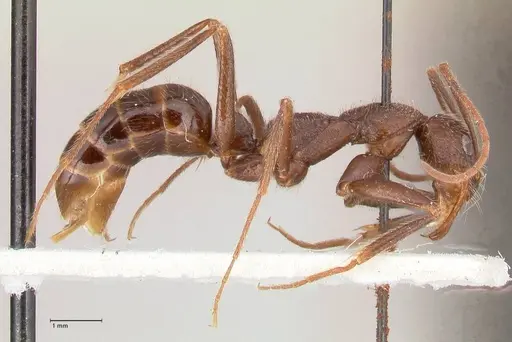
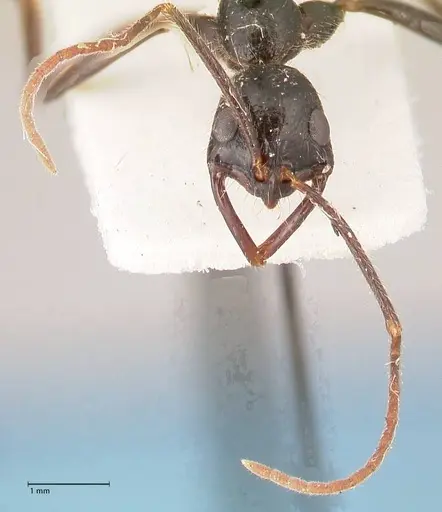
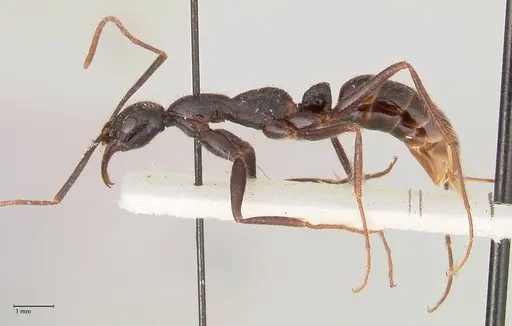
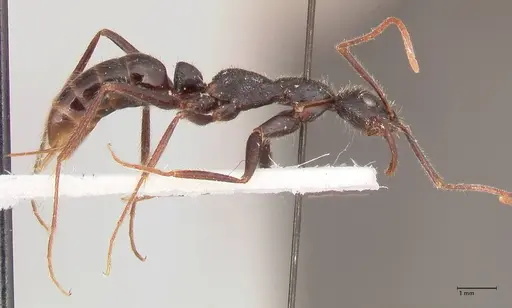
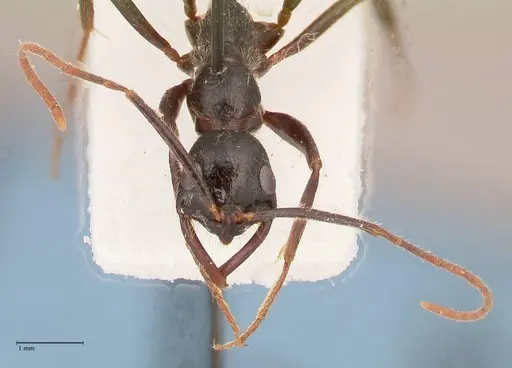
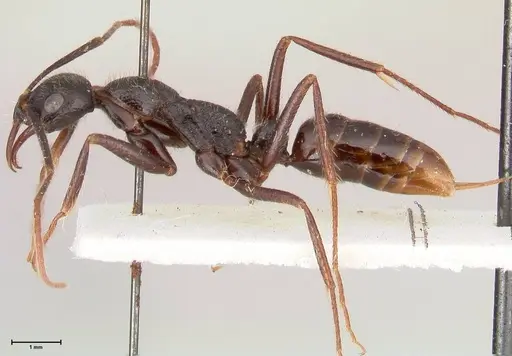
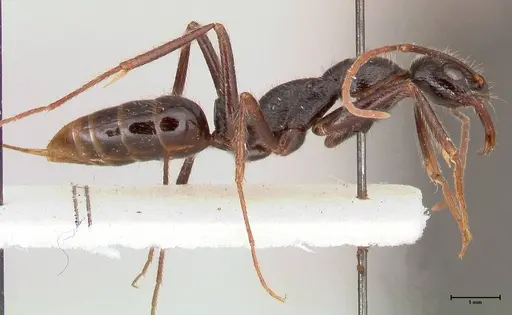
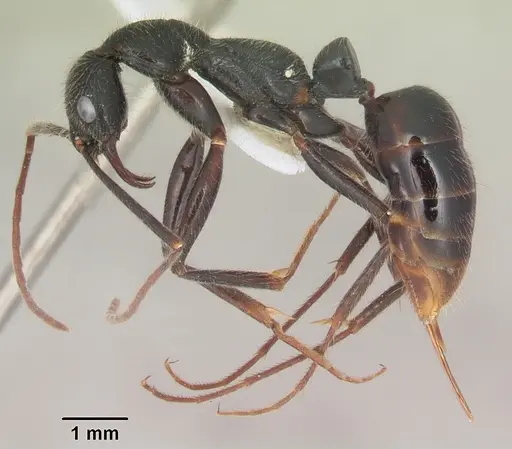
Leptogenys stuhlmanni is a large Ponerine ant species found across eastern Africa from Rwanda and Kenya down to Mozambique, with an isolated population on Mohéli Island in the Comoros [1][2]. Workers are distinctive with their very long, narrow mandibles that cannot close tightly against the clypeus, unusually large eyes, and a particularly elongated third antennal segment that is roughly twice the length of the second [1]. The body is dark brown with a light brown tip at the gaster, and the dorsum is covered with erect hairs [1]. This species is the only member of the stuhlmanni group found in the Malagasy region, though it has not been observed there since specimens were collected between 1903-1905,suggesting possible local extinction due to habitat destruction [1]. In mainland Africa, they inhabit open areas and dry forest habitats across the eastern coast and southern regions [1].
Quick Summary
- Difficulty: Medium
- Origin & Habitat: Eastern Africa including Rwanda, Kenya, Tanzania, Mozambique, and Sudan. Found in open areas and dry forest habitats [1][2]. Also known from coastal regions of Kenya (Mombasa, Shimoni, Tiwi) and the Comoros Islands [3].
- Colony Type: Colony structure is unconfirmed. No information on queen number or colony size is available in the scientific literature.
- Size & Growth:
- Queen: Undocumented, no queen measurements found in available research
- Worker: Workers measure approximately 1.58mm head width,1.76mm head length,2.30mm scape length, and 3.26mm Weber's length [1]
- Colony: Unknown, no colony size data available in research
- Growth: Unknown, development timeline has not been studied
- Development: Unknown, no direct development data available. Based on typical Ponerine patterns, estimate 6-10 weeks at optimal temperature, but this is an educated guess. (Development timeline is unconfirmed. Ponerine ants typically have longer development times than more derived ant subfamilies.)
- Antkeeping:
- Temperature: Likely prefers warm conditions based on African distribution. Start around 24-28°C and observe colony activity. Provide a temperature gradient allowing workers to select their preferred zone.
- Humidity: Moderate to high humidity likely preferred, matching dry forest and coastal forest habitats. Keep nest substrate consistently moist but not waterlogged. Provide a moisture gradient.
- Diapause: Unknown, no research on overwintering requirements. As a tropical/subtropical species, they may not require true diapause but may show reduced activity during cooler periods.
- Nesting: Natural nesting habits are undocumented. Based on related Leptogenys species, they likely nest in soil or under stones in shaded locations. In captivity, a naturalistic setup with moist substrate or a Y-tong/plaster nest with good moisture retention would be appropriate.
- Behavior: Leptogenys stuhlmanni is a predatory Ponerine ant with elongated mandibles adapted for capturing prey. They are likely active foragers that hunt individually or in small groups. As Ponerine ants, they likely have a potent sting for subdueing prey, though the exact sting potency for this species is undocumented. Their large eyes suggest they may rely more on visual hunting than some other ants. Escape prevention should be moderate, workers are a decent size (around 3mm+ body length) but Ponerines can be agile. Use standard barrier methods.
- Common Issues: very limited availability, this species is rarely collected and may be locally extinct in parts of its range, no captive breeding data exists, making successful colony establishment uncertain, predatory diet requirements mean you must commit to providing live prey regularly, potential sting, Ponerine ants can deliver painful stings, handle with caution, habitat destruction in the wild may mean wild colonies are already compromised
Species Identification and Distinction
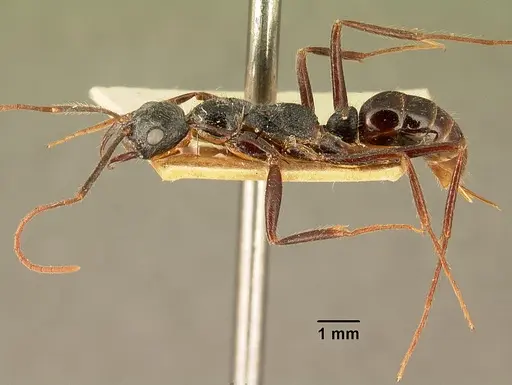
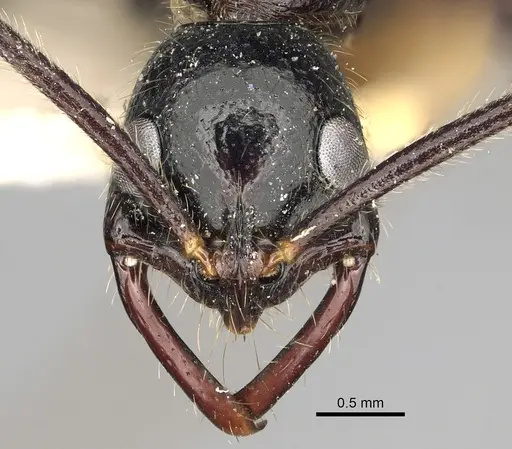
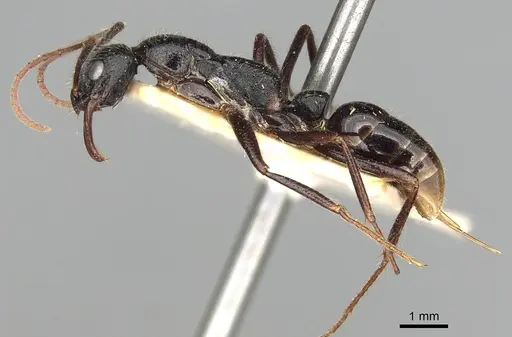
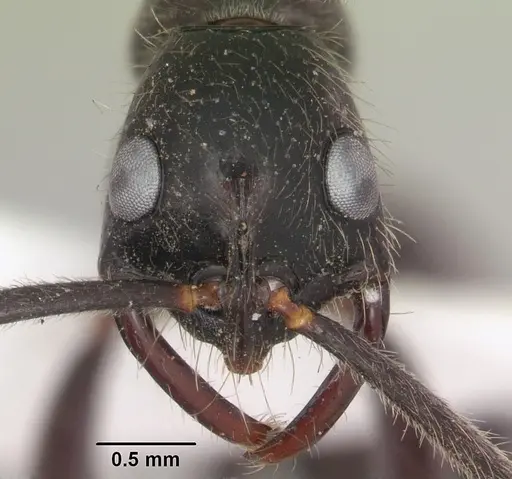
Leptogenys stuhlmanni can be identified by several distinctive morphological features. The mandibles are notably elongate and narrow, and they cannot close tightly against the clypeus, this creates a visible gap when the mandibles are shut [1]. The eyes are large, with the maximum diameter exceeding the widest portion of the antennal scape [1]. The third antennal segment is strikingly elongate, measuring approximately twice the length of the second segment, this is one of the most reliable identification characters [1]. The body is generally smooth and shining between punctures, with the dorsum covered in erect hairs [1]. The constriction between the third and fourth abdominal segments is indistinct [1]. Workers measure approximately 1.58mm in head width and 3.26mm in Weber's length, making them relatively large for the genus [1]. The body color is dark brown with a light brown tip at the gaster, and the appendages are brown fading to lighter brown toward their tips [1].
Distribution and Habitat
Leptogenys stuhlmanni has a broad but scattered distribution across eastern Africa. The species is known from Rwanda (recently recorded in Akagera National Park), Kenya (coastal regions including Mombasa, Shimoni, Tiwi, Likoni, and Chéténi), Tanzania, Mozambique, Sudan, and Eritrea [3][2][1]. An isolated population historically existed on Mohéli Island in the Comoros, but specimens were only collected once between 1903-1905 and have not been observed since, despite modern collecting efforts in 2008 [1]. This suggests the species requires very restricted environmental conditions, and habitat destruction on Mohéli may have caused local extinction [1]. In mainland Africa, the species is restricted to open areas and dry forest habitats [1]. The type locality is recorded as Akenge in Mozambique, with additional historical records from Mohéli (Comoros) [4][5].
Natural History and Predation
Very little is known about the natural history of Leptogenys stuhlmanni in the wild. As a member of the Ponerinae subfamily, they are predatory ants with specialized hunting behaviors. The elongated mandibles suggest they are adapted for capturing and holding prey items. Research from the Congo documents that these ants have been found in the stomachs of toads (Bufo funereus and Bufo polycercus), indicating they have natural predators [6]. The species appears to be rare throughout its range, with limited specimens collected despite extensive ant surveys in Madagascar and eastern Africa over the past 15 years [1]. This rarity may reflect either genuinely low population densities or very specialized habitat requirements that make them difficult to locate.
Housing and Nesting in Captivity
Since no captive breeding data exists for this species, care recommendations must be based on what is known about related Leptogenys species and general Ponerine husbandry. In the wild, they likely nest in soil or under stones in shaded, protected locations within dry forest habitats [1]. For captivity, a naturalistic setup with moist substrate (like a dirt/soil mixture) would be appropriate, or a Y-tong/plaster nest with good moisture retention. The nest should have chambers scaled to their medium-large size. Provide a water tube for humidity and ensure the substrate or nest material stays consistently moist but not waterlogged. A foraging area should be provided where you can offer prey items. Given their rarity and the uncertainty of captive establishment, only experienced antkeepers should attempt to keep this species.
Feeding and Diet
Leptogenys stuhlmanni is a predatory ant species. In the wild, they likely hunt and capture small invertebrates using their elongated mandibles. For captive care, you should offer live prey appropriate to their size, small crickets, mealworms, fruit flies, and other small insects are suitable. As Ponerine ants, they typically subdue prey with their sting and may dismember larger prey items. The frequency of feeding should be based on colony activity, offer prey every 2-3 days and remove uneaten items within 24 hours. Sugar sources like honey or sugar water may be accepted but should not be the primary food source for this predatory species. Always ensure fresh water is available.
Temperature and Seasonal Care
Based on the species' distribution across eastern Africa (Kenya, Tanzania, Mozambique, Rwanda), they likely prefer warm conditions. Aim for temperatures in the range of 24-28°C, with a slight gradient allowing workers to self-regulate. Room temperature in most homes (20-24°C) may be acceptable, but providing gentle warmth from a heating cable on one side of the nest can encourage activity and foraging. Monitor colony behavior, if workers seem sluggish, slightly increase temperature, if they avoid the heated area, reduce it. Regarding diapause or winter rest, no research exists. As a tropical/subtropical species, they likely do not require true hibernation but may show reduced activity during cooler periods. Maintain stable temperatures year-round.
Frequently Asked Questions
How long does it take for Leptogenys stuhlmanni to develop from egg to worker?
The development timeline is unconfirmed, no research has documented the egg-to-worker time for this species. Based on typical Ponerine ant development patterns, estimate 6-10 weeks at optimal warm temperatures, but this is an educated guess rather than confirmed data.
Can I keep Leptogenys stuhlmanni in a test tube setup?
A test tube setup can work for founding colonies, but you will need to transition to a more spacious formicarium or naturalistic setup as the colony grows. The key requirements are maintaining moisture and providing a hunting area for prey. Given the scarcity of this species, successful captive breeding should be the goal, which requires proper housing.
Do Leptogenys stuhlmanni ants sting?
As Ponerine ants, they likely have a functional sting for subduing prey. Ponerine stings can be painful to humans, though the exact potency for this species is undocumented. Handle with caution and avoid provoking the ants.
What do Leptogenys stuhlmanni eat?
They are predatory ants that hunt small invertebrates. In captivity, feed live prey such as small crickets, mealworms, fruit flies, and other appropriately-sized insects. Remove uneaten prey within 24 hours. They may occasionally accept sugar sources like honey water, but protein-rich prey should be the primary food.
Are Leptogenys stuhlmanni good for beginners?
No. This species is not recommended for beginners. They are rarely available, have no documented captive breeding success in the hobby, and require specific conditions that are not well understood. Additionally, their predatory diet and potential sting make them more challenging than common ant species.
How big do Leptogenys stuhlmanni colonies get?
The maximum colony size is unknown, no scientific data exists on colony size for this species. Based on related Leptogenys species, colonies likely reach several hundred workers at most, but this is an estimate.
Do Leptogenys stuhlmanni need hibernation or diapause?
Diapause requirements are unconfirmed. As a tropical/subtropical African species, they likely do not require true hibernation. However, they may reduce activity during cooler periods. Maintain stable warm temperatures year-round.
Where can I get Leptogenys stuhlmanni ants?
This species is extremely rare in the antkeeping hobby. It has rarely been collected in the wild and may be locally extinct in parts of its range. If available at all, it would only be from specialized dealers who have obtained rare African species. Do not expect to find this species at common ant suppliers.
Can I keep multiple Leptogenys stuhlmanni queens together?
The colony structure (monogyne vs polygyne) is unconfirmed for this species. Combining unrelated queens is not recommended since this has not been documented and could result in aggression.
What temperature should I keep Leptogenys stuhlmanni at?
Based on their African distribution, aim for 24-28°C. Provide a temperature gradient so workers can self-regulate. A heating cable on part of the nest can help maintain optimal temperatures. Monitor colony activity to fine-tune conditions.
References

This caresheet is licensed under CC BY-SA 4.0 .
CASENT0081182
View on AntWeb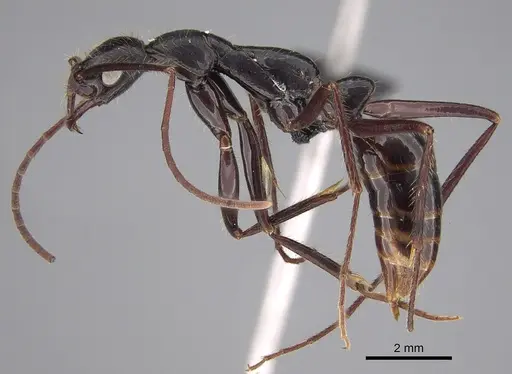
CASENT0101826
View on AntWeb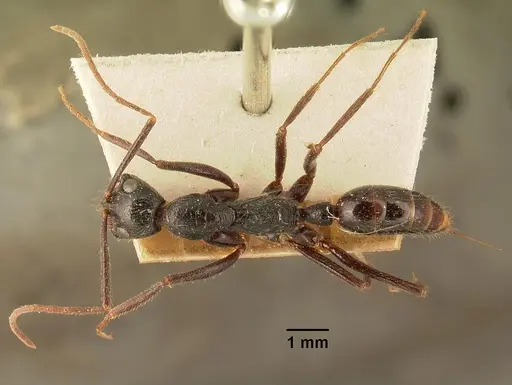
CASENT0101871
View on AntWeb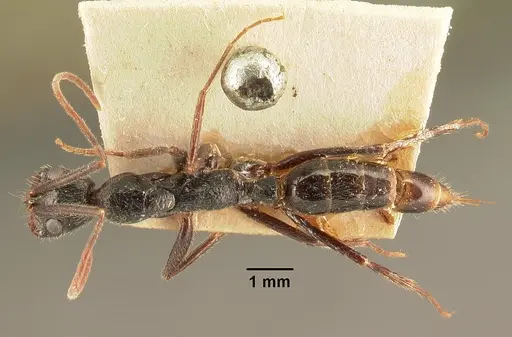
CASENT0101876
View on AntWeb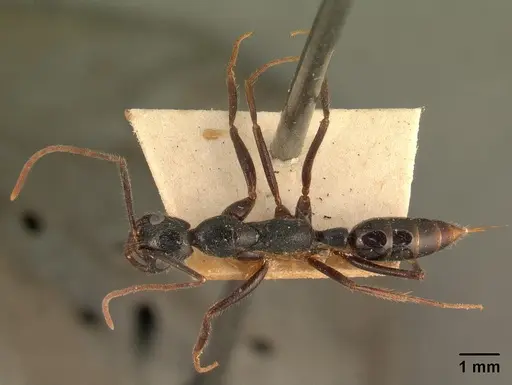
CASENT0101904
View on AntWeb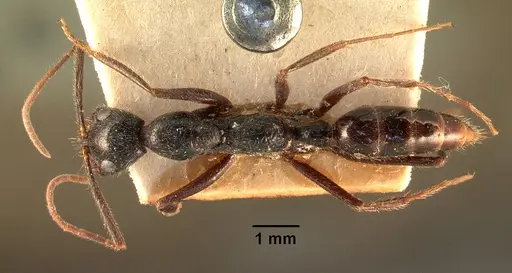
CASENT0101967
View on AntWeb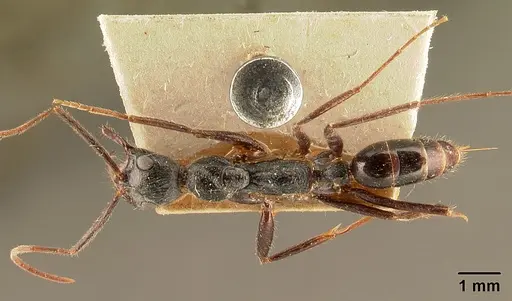
CASENT0101968
View on AntWeb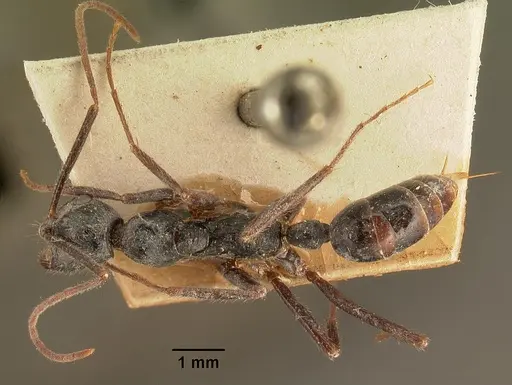
CASENT0104565
View on AntWeb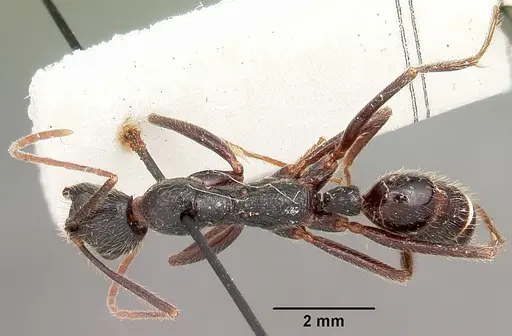
CASENT0270578
View on AntWeb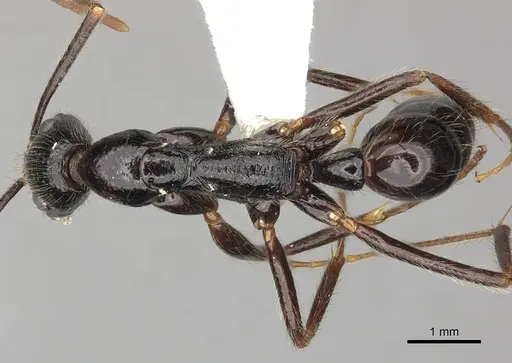
CASENT0280602
View on AntWeb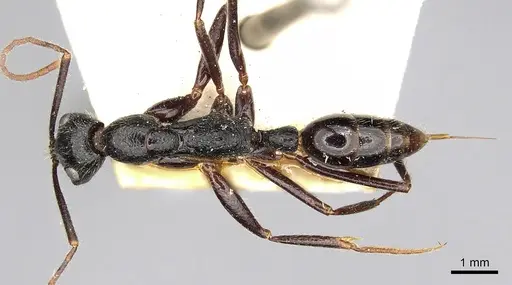
CASENT0915882
View on AntWeb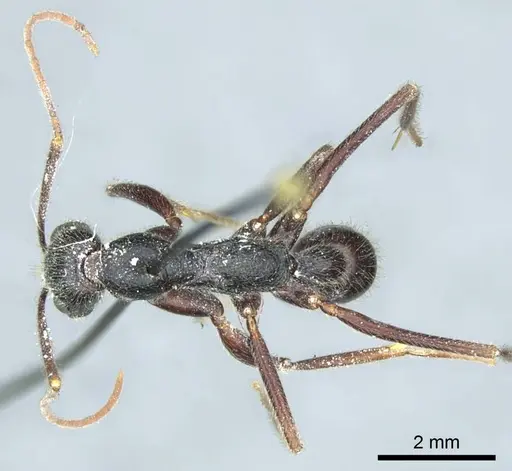
CASENT0915883
View on AntWeb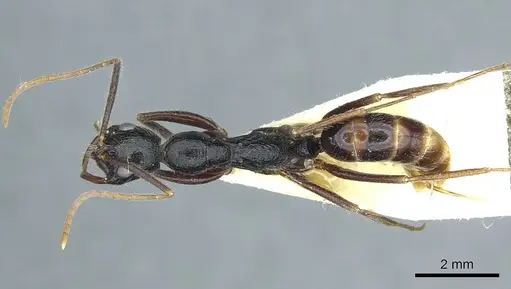
FOCOL1025
View on AntWeb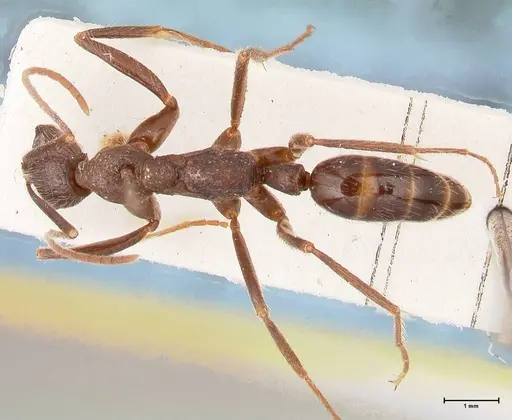
FOCOL1026
View on AntWeb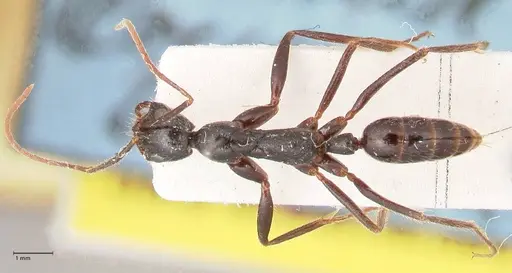
FOCOL1027
View on AntWeb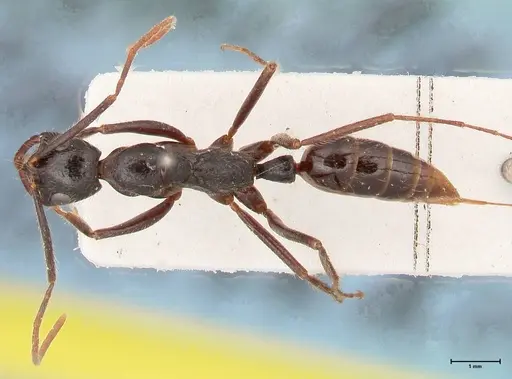
SAM-HYM-C008614
View on AntWeb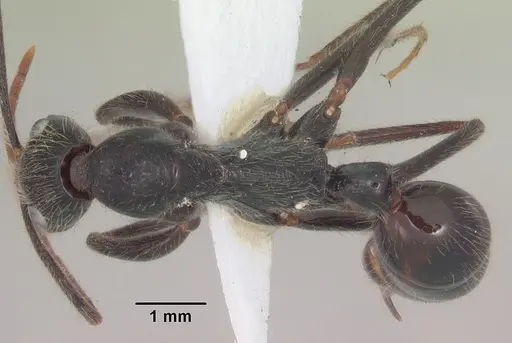
Literature
Loading...Loading products...