

Leptogenys rabebe
- Scientific Name
- Leptogenys rabebe
- Tribe
- Ponerini
- Subfamily
- Ponerinae
- Author
- Rakotonirina & Fisher, 2014
- Distribution
- Found in 1 countries
Leptogenys rabebe Overview
Leptogenys rabebe is an ant species of the genus Leptogenys. It is primarily documented in 1 countries , including Madagascar. Detailed taxonomic data and occurrence records can be further explored via authoritative databases such as AntWeb or the Global Biodiversity Information Facility (GBIF).
Leptogenys rabebe
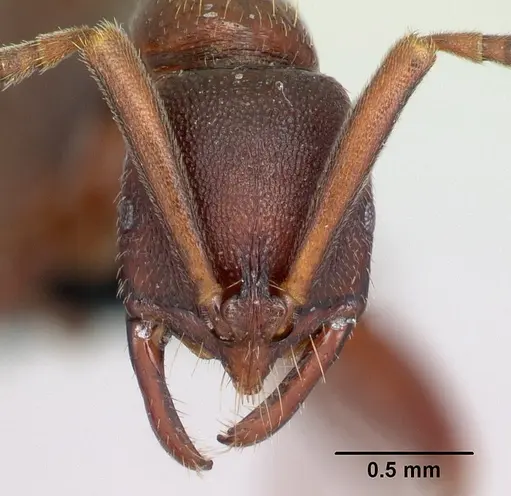
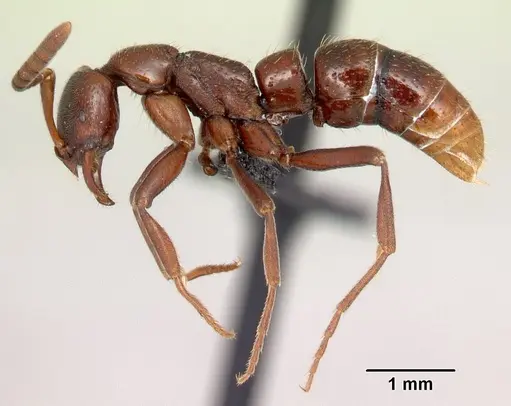
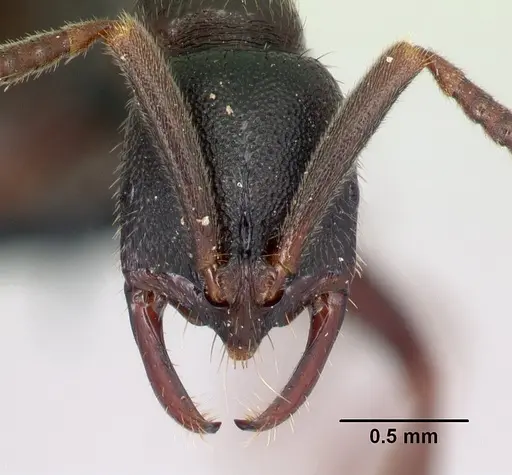
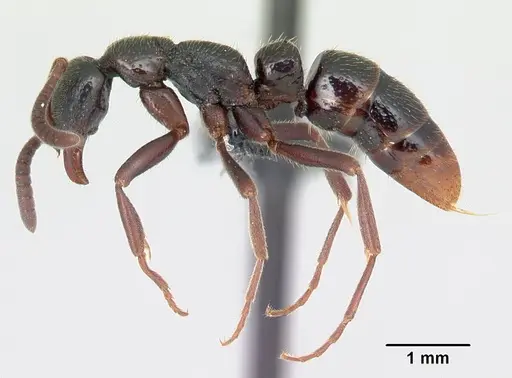
Leptogenys rabebe is a small predatory ant species native to northeastern Madagascar. Workers measure 0.95-1.00mm in head width and have a distinctive appearance with dark brown to reddish-orange coloration and lighter appendages. They are characterized by their small eyes (smaller than the width of their antennal scape), short antennal scape, and elongate mandibles that do not close tightly against the clypeus, leaving a visible gap when closed. This species nests in rotten logs and forages primarily in leaf litter, making it a leaf-litter predator in Madagascar's humid forests. It can be distinguished from similar species by the discontinuous lamellate membrane on its clypeus. The species was formally described by Rakotonirina and Fisher in 2014 [1].
Quick Summary
- Difficulty: Medium
- Origin & Habitat: Northeastern Madagascar, specifically found in the transitional humid forest of Marotandrano near Mandritsara, the lowland rainforest of Ambatovaky, and the Montagne d'Akirindro of Makira [2]. They nest in rotten logs and forage in leaf litter [2].
- Colony Type: Colony structure is unconfirmed. Based on typical Leptogenys patterns, they likely form small to moderate colonies with single queens, though this has not been directly documented for this species.
- Size & Growth:
- Queen: Undocumented, no queen measurements available for this species
- Worker: 0.95-1.00mm head width,1.22-1.24mm head length [1]
- Colony: Unknown, no colony size data available for this species
- Growth: Unknown, no development timing data available
- Development: Unconfirmed, no direct data available. Based on typical Ponerinae patterns, estimate 6-10 weeks at optimal temperature. (Development timeline has not been directly studied for this species. Ponerine ants typically have slower development than many Myrmicinae species.)
- Antkeeping:
- Temperature: Based on their Madagascar rainforest habitat, aim for warm and humid conditions roughly 22-26°C. Avoid temperatures below 20°C as this species comes from tropical humid forests.
- Humidity: High humidity is essential, they come from humid forest environments. Keep substrate consistently moist but not waterlogged. Provide a humid outworld and nest area.
- Diapause: Unlikely, as a tropical Madagascar species, they probably do not require a true diapause. However, a slight reduction in temperature during winter months may be beneficial.
- Nesting: In captivity, a naturalistic setup with moist substrate works well, they naturally nest in rotten logs. A Y-tong or plaster nest with high humidity also works. They prefer tight, enclosed spaces scaled to their tiny size.
- Behavior: Leptogenys rabebe is a predatory ant that forages in leaf litter. They are likely active hunters, using their elongate mandibles to capture small prey. Workers are small (under 1mm) so escape prevention must be excellent, they can squeeze through very small gaps. They are not known to be aggressive toward keepers but their small size makes them difficult to handle. They are primarily nocturnal or crepuscular foragers based on their small eyes.
- Common Issues: escape prevention is critical due to their very small size, use fine mesh and tight-fitting lids, high humidity requirements can lead to mold problems if ventilation is poor, predatory diet means they require live prey, failure to provide appropriate food will result in colony decline, slow growth may cause keepers to overfeed or disturb the colony unnecessarily, wild-caught colonies may carry parasites that can cause colony failure in captivity
Housing and Nest Setup
Leptogenys rabebe naturally nests in rotten logs in Madagascar's humid forests, so a naturalistic setup works well. Use a terrarium-style enclosure with moist substrate (like a mixture of soil and organic matter) that allows them to create tunnels similar to their natural rotten log nests. A Y-tong (acrylic) nest or plaster nest with high humidity also works if you prefer a more contained setup. The key is providing tight, enclosed chambers scaled to their tiny worker size (under 1mm). They do not do well in dry conditions, the nest substrate should remain consistently moist. Outworld space should be minimal but functional for feeding. [2][1]
Feeding and Diet
As a Ponerine ant, Leptogenys rabebe is predatory and needs live prey. In the wild, they hunt small invertebrates in leaf litter. In captivity, offer small live prey such as springtails, isopods, fruit fly larvae, and other tiny arthropods. They are unlikely to accept sugar water or honey as their primary diet, Ponerine ants are typically strict predators. Feed every few days, removing uneaten prey to prevent mold. The colony size will determine feeding frequency, observe how quickly prey is consumed. [2]
Temperature and Humidity
This species comes from Madagascar's humid tropical forests, so warmth and humidity are essential. Keep the nest area at 22-26°C, a heating cable on one side of the nest can create a gentle gradient if your room temperature is lower. Humidity should be high, with the substrate consistently moist but not waterlogged. Poor ventilation can cause mold problems, so ensure adequate airflow while maintaining humidity. Avoid temperatures below 20°C and dry conditions, as this species is not adapted to cool or arid environments. [2]
Behavior and Temperament
Leptogenys rabebe is a small, predatory ant that forages in leaf litter. Workers are tiny (under 1mm) and have small eyes, suggesting they may be more active during low-light periods. Their elongate mandibles are adapted for capturing small prey. They are not aggressive toward humans and unlikely to sting. However, their small size means they are expert escape artists, always use fine mesh, tight-fitting lids, and proper barrier methods (like fluon on test tube rims). They are best observed in a naturalistic setup where their hunting behaviors can be observed. [1][2]
Colony Establishment
Establishing a colony of Leptogenys rabebe can be challenging. If starting with a wild-caught queen, she is likely semi-claustral and will need to hunt for food during the founding stage, provide small live prey items in her setup. If acquiring an established colony, it will likely be small initially. Growth is typically slow for Ponerine ants. Be patient and avoid disturbing the colony frequently. Ensure consistent high humidity and appropriate prey availability for successful establishment.
Frequently Asked Questions
How long does it take for Leptogenys rabebe to produce first workers?
The exact development timeline is unconfirmed for this species. Based on typical Ponerinae development patterns, expect 6-10 weeks from egg to first worker at optimal temperature (around 24°C). Ponerine ants generally develop more slowly than many common ant species.
Can I keep Leptogenys rabebe in a test tube setup?
A test tube can work for founding colonies if you maintain high humidity, but their natural preference for rotten logs suggests a naturalistic setup with moist substrate is better long-term. If using test tubes, ensure the water reservoir doesn't flood and provide a humid outworld for feeding.
What do Leptogenys rabebe ants eat?
They are predatory ants that require live small invertebrates. Offer springtails, isopods, fruit fly larvae, and other tiny arthropods. They are unlikely to accept sugar sources as a primary food, protein-rich live prey is essential for their survival and colony growth.
Are Leptogenys rabebe good for beginners?
This species is rated as Medium difficulty. While not the easiest species, experienced antkeepers familiar with predatory ants should be able to keep them successfully. The main challenges are providing high humidity, live prey, and excellent escape prevention due to their tiny size.
How big do Leptogenys rabebe colonies get?
Colony size data is not available for this specific species. Based on typical Leptogenys patterns, colonies likely remain relatively small, probably under a few hundred workers. They are not known for reaching the massive colony sizes seen in some Myrmicinae species.
Do Leptogenys rabebe need hibernation?
As a tropical Madagascar species, they likely do not require true hibernation. A slight reduction in temperature during winter months may be natural, but do not subject them to cold temperatures below 18°C. They should be kept warm year-round.
When should I move Leptogenys rabebe to a formicarium?
Move them when the colony reaches a moderate size (perhaps 20-30 workers) and you observe they need more space. A naturalistic setup with moist substrate is ideal. If using a formicarium, ensure it maintains high humidity and has appropriately sized chambers for their tiny workers.
Why are my Leptogenys rabebe dying?
Common causes include: low humidity (they need consistently moist conditions), lack of live prey (they cannot survive on sugar alone), escape through small gaps, mold from poor ventilation, or parasites from wild-caught colonies. Review your humidity levels, food offerings, and escape prevention.
Can I keep multiple Leptogenys rabebe queens together?
Colony structure is unconfirmed for this species. Combining unrelated queens is not recommended as it has not been documented. If you acquire multiple foundresses, house them separately until you confirm colony structure.
References

This caresheet is licensed under CC BY-SA 4.0 .
CASENT0034619
View on AntWeb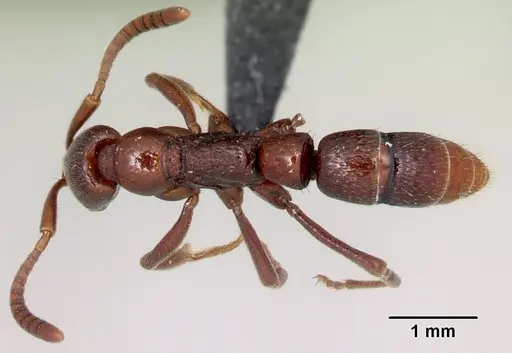
CASENT0163120
View on AntWeb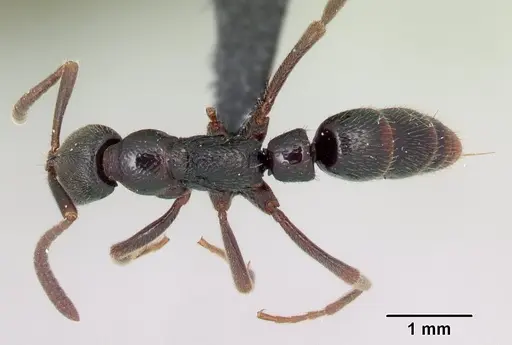
Literature
Loading...Loading products...