

Leptogenys phylloba
- Scientific Name
- Leptogenys phylloba
- Tribe
- Ponerini
- Subfamily
- Ponerinae
- Author
- Lattke, 2011
- Distribution
- Found in 1 countries
Leptogenys phylloba Overview
Leptogenys phylloba is an ant species of the genus Leptogenys. It is primarily documented in 1 countries , including Colombia. Detailed taxonomic data and occurrence records can be further explored via authoritative databases such as AntWeb or the Global Biodiversity Information Facility (GBIF).
Leptogenys phylloba
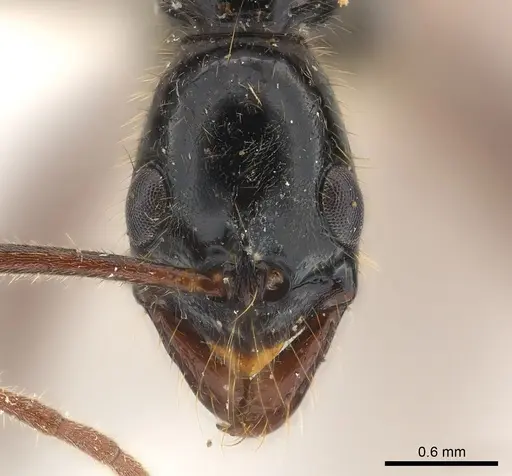
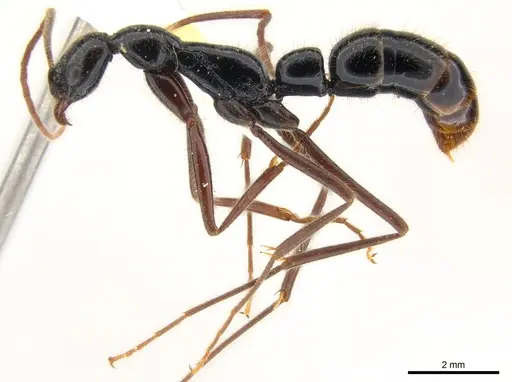
Leptogenys phylloba is a medium-sized predatory ant native to the tropical forests of southeastern Colombia and eastern Ecuador. Workers measure approximately 1.69mm in head length with a body length around 3.1-3.2mm, making them smaller than many other Ponerine ants. The species has a distinctive appearance with a mostly black body, brown antennae, mandibles, legs, and gaster tip. The name 'phylloba' comes from the Greek word for leaf, referring to the unique leaf-like median clypeal lobe that gives this species its characteristic look. The body is smooth and shining with sparse punctae, and the eyes are notably large and convex. This species belongs to the famelica species group and is the second largest in that group.
As a member of the Ponerinae subfamily, these ants are predatory hunters that likely specialize in capturing small invertebrates. The biology of this specific species remains completely undocumented in scientific literature, queens, males, and colony structure have never been observed. This makes L. phylloba a species for experienced antkeepers who enjoy observing and learning from their colonies, as there is significant room for discovery in captive care.
Quick Summary
- Difficulty: Expert
- Origin & Habitat: Tropical rainforest in southeastern Colombia (Caquetá, Amazonas) and eastern Ecuador at elevations around 250m. Found in lowland Amazonian forest habitats near rivers[1][2].
- Colony Type: Unknown, colony structure has not been documented. Based on genus patterns, likely single-queen colonies, but this is unconfirmed.
- Size & Growth:
- Queen: Unknown, queens have never been described
- Worker: 1.69mm head length, approximately 3.1-3.2mm total body length
- Colony: Unknown, no colony size data exists
- Growth: Unknown, no development data exists for this species
- Development: Unknown, no direct observations exist. Based on typical Ponerinae patterns in tropical species, estimate 6-10 weeks at optimal temperature, but this is purely speculative. (No brood development data exists. Related Leptogenys species typically take 6-8 weeks from egg to worker in warm tropical conditions, but this species has never been studied in captivity.)
- Antkeeping:
- Temperature: Keep in the warm tropical range of 24-28°C. This is based on the species' natural range in lowland Amazonian rainforest where temperatures are consistently warm year-round. A gentle gradient allowing workers to self-regulate is recommended.
- Humidity: Maintain high humidity typical of tropical rainforest floor, aim for 70-85% relative humidity. Keep the nest substrate consistently moist but not waterlogged. Provide a water source and mist occasionally to maintain humidity levels.
- Diapause: Unknown, no seasonal data exists. Given the tropical distribution with minimal temperature variation, this species likely does not require a true diapause. However, a slight reduction in temperature during what would be the 'winter' months may be beneficial.
- Nesting: No specific nesting data exists. Based on related species and the natural habitat, they likely nest in rotting wood, leaf litter, or soil in damp shaded areas. A naturalistic setup with moist substrate or a Y-tong/plaster nest with good humidity retention would be appropriate.
- Behavior: Behavior is completely undocumented. Based on genus-level knowledge of Leptogenys, these ants are likely predatory hunters that forage individually or in small groups for small invertebrates. They probably have moderate to aggressive temperament when defending the colony. Escape risk is moderate, workers are small but not tiny, so standard escape prevention measures should suffice. The large eyes suggest active foraging with visual hunting or navigation. Ponerine ants can deliver a sting, though the potency varies by species.
- Common Issues: no biological data exists, this is essentially an unstudied species in captivity, queen and colony structure completely unknown, founding behavior is unconfirmed, no established feeding protocols, diet must be determined through experimentation, growth and development timeline is unknown, patience will be required, humidity requirements are inferred rather than confirmed, monitor colony response, risk of colony failure due to unknown specific needs, keep detailed notes on what works
Discovery and Taxonomy
Leptogenys phylloba was first described by J.E. Lattke in 2011 based on worker specimens collected from southeastern Colombia. The species name derives from the Greek word 'phyllon' meaning leaf, referring to the distinctive leaf-like median clypeal lobe that makes this species easily distinguishable from related ants. The type locality is in Caquetá, Colombia, within the La Serranía de Chiribiquete national park, at an elevation of approximately 250 meters. This species belongs to the famelica species group, which is characterized by workers with distinctive morphological features including smooth shining bodies and elongated petioles. The species can be distinguished from its close relative L. famelica by its more robust build and the shape of the petiolar node, L. phylloba lacks the slender triangular node that characterizes L. famelica. [1]
Distribution and Habitat
The known range of Leptogenys phylloba extends from southeastern Colombia into eastern Ecuador. In Colombia, the species has been recorded in the departments of Caquetá and Amazonas, particularly in areas near the Río Cuñaré and Río Amu rivers. The elevation of approximately 250 meters places this species in the lowland Amazonian tropical rainforest zone. The region experiences high rainfall and year-round warm temperatures typical of equatorial rainforest. The habitat features include dense forest cover, high humidity, and proximity to water bodies. These conditions should be replicated as closely as possible in captive care [1][2][3].
Morphology and Identification
Workers of Leptogenys phylloba are distinctive in their appearance. The head is elongate in full-face view, wider at the front than the back. The most notable feature is the median clypeal process, which is triangular and mostly laminate (leaf-like), giving the species its name. The eyes are greatly convex and occupy approximately one-third of the lateral cephalic margin. The mandibles are elongate and triangular with a concave masticatory margin that is mostly crenulate. The body is mostly smooth and shining with sparse piligerous punctae. The propodeal spiracle is not elevated and is oriented laterally. The petiole is elongate and subtriangular in lateral view. Coloration is predominantly black with brown antennae, mandibles, clypeus, legs, and the apex of the gaster. This is the second largest species in the famelica group, though it overlaps in size with smaller specimens of L. famelica. [1]
Unknown Biology and Care Challenges
The most important thing to understand about keeping Leptogenys phylloba is that literally nothing is known about their biology in scientific literature. Queens have never been described. Males are unknown. Colony structure, founding behavior, development timeline, diet preferences, and seasonal patterns have never been documented. This makes keeping this species both challenging and potentially rewarding, you may be making original observations. Start with conditions typical of the genus: warm temperatures around 24-28°C, high humidity around 70-85%, and a diet of small live prey. Be prepared to experiment and adjust based on colony response. Detailed record-keeping is essential to build knowledge about this species. Do not expect rapid growth or established protocols, this is truly a species for expert antkeepers who enjoy the process of discovery. [1]
Feeding and Nutrition
Since no specific dietary data exists for L. phylloba, care must be based on genus-level knowledge and experimentation. Leptogenys ants are typically predatory, hunting small invertebrates. Start with small live prey such as fruit flies, pinhead crickets, small mealworms, and other appropriately-sized insects. Given the worker size of approximately 3mm, prey should be small. Observe feeding behavior carefully, if workers ignore initial offerings, try different prey types. Some Ponerine ants accept protein jelly or other prepared foods, but live prey is the safest starting point. Feed small amounts every few days and remove uneaten prey to prevent mold. The complete lack of data means acceptance or rejection of various foods must be discovered through observation [4].
Housing and Nesting
No natural nesting data exists for this species. Based on the habitat (lowland tropical rainforest) and what is known about related Leptogenys species, provide a humid environment with moist substrate. A Y-tong (acrylic) nest with narrow chambers or a plaster nest with good moisture retention would be appropriate. The nest should have chambers scaled to the worker size of approximately 3mm. Include a water reservoir or moisture chamber to maintain humidity. An outworld with natural décor can provide foraging space. Since escape prevention is important for any small ant, use appropriate barriers. The setup should allow for easy observation while maintaining the dark, humid conditions these ants likely prefer [4].
Frequently Asked Questions
How long does it take for Leptogenys phylloba to develop from egg to worker?
This is completely unknown, no scientific data exists on development time for this species. Based on typical Ponerinae patterns for tropical species, a rough estimate would be 6-10 weeks, but this is purely speculative. You will need to be patient and document your own observations.
What do Leptogenys phylloba ants eat?
No dietary data exists for this species. Based on the genus, they are likely predatory on small invertebrates. Start with small live prey like fruit flies, small crickets, and micro-arthropods. Experiment with different prey types and observe what workers accept. Some Ponerines accept prepared protein, but live prey is the safest starting point [4].
Are Leptogenys phylloba good for beginners?
No. This is an expert-level species because absolutely no captive care information exists. Everything about their biology, founding, temperature needs, humidity preferences, diet, and development, must be discovered through observation. Only keep this species if you have experience with Ponerine ants and enjoy the process of learning from your colony.
What temperature should I keep Leptogenys phylloba at?
Based on their tropical rainforest distribution in Colombia and Ecuador, keep them warm at 24-28°C. This replicates their natural lowland Amazonian habitat. A temperature gradient allowing workers to self-regulate is recommended [1][2].
Do Leptogenys phylloba need hibernation?
Unknown, no seasonal data exists. Given their tropical distribution with minimal temperature variation year-round, they likely do not require a true diapause. A slight temperature reduction during 'winter' months may be beneficial but is not confirmed as necessary.
How big do Leptogenys phylloba colonies get?
Unknown, colony size has never been documented. Most Leptogenys species form colonies of several hundred workers at most. Expect moderate colony sizes based on genus patterns, but this is an estimate.
Can I keep multiple Leptogenys phylloba queens together?
Unknown, colony structure has never been documented for this species. The number of queens per colony is completely unstudied. Do not attempt combining unrelated queens without data to support it.
What humidity do Leptogenys phylloba need?
High humidity is recommended based on their tropical rainforest habitat, aim for 70-85% relative humidity. Keep the nest substrate consistently moist but not waterlogged. Monitor for condensation and mold as indicators of humidity balance [1][2].
When will this species be available in the antkeeping hobby?
Likely not soon, Leptogenys phylloba is rarely collected and poorly studied. The species was only described in 2011 and has limited known distribution. Finding wild colonies for sale would be difficult, and captive breeding is unlikely to be established until more is learned about their biology.
References

This caresheet is licensed under CC BY-SA 4.0 .
CASENT0217003
View on AntWeb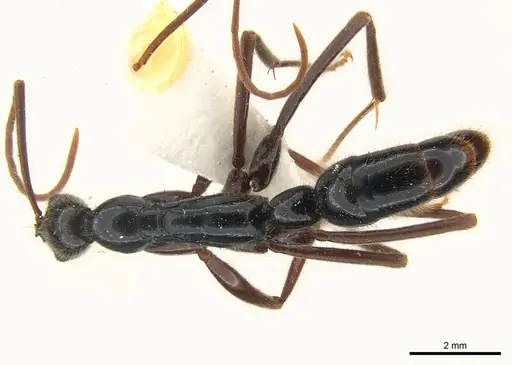
Literature
Loading...Loading products...