

Leptogenys ingens
- Scientific Name
- Leptogenys ingens
- Tribe
- Ponerini
- Subfamily
- Ponerinae
- Author
- Mayr, 1866
- Distribution
- Found in 2 countries
Leptogenys ingens Overview
Leptogenys ingens is an ant species of the genus Leptogenys. It is primarily documented in 2 countries , including Colombia, Venezuela, Bolivarian Republic of. Detailed taxonomic data and occurrence records can be further explored via authoritative databases such as AntWeb or the Global Biodiversity Information Facility (GBIF).
Leptogenys ingens
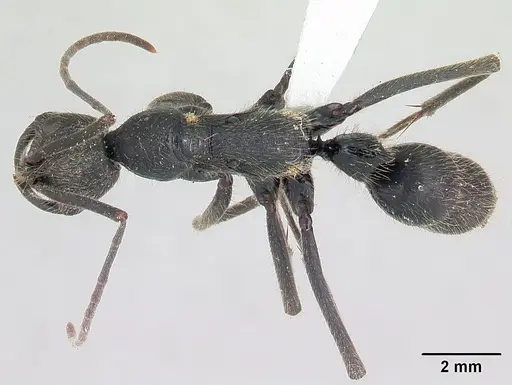
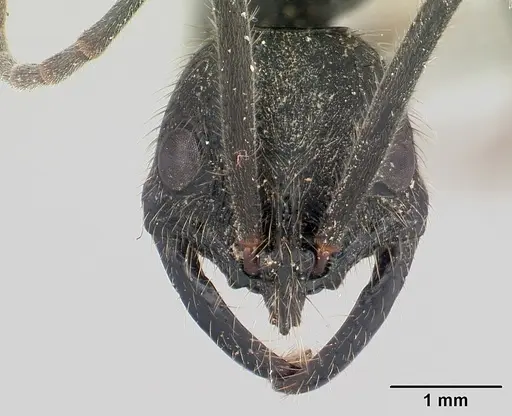
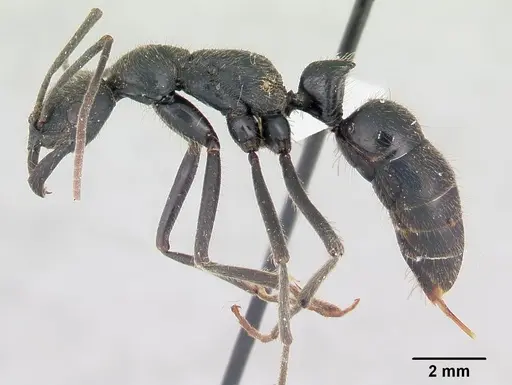
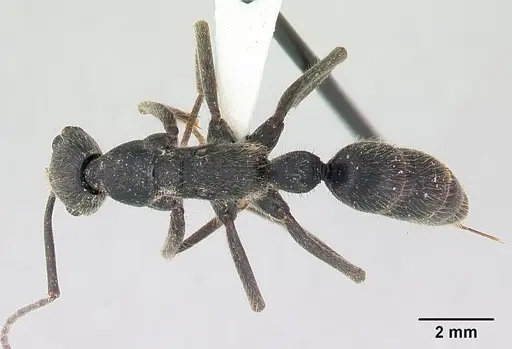
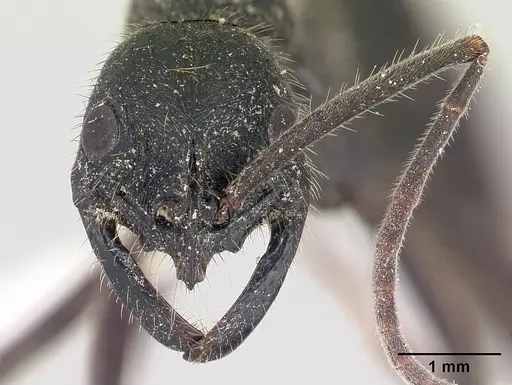
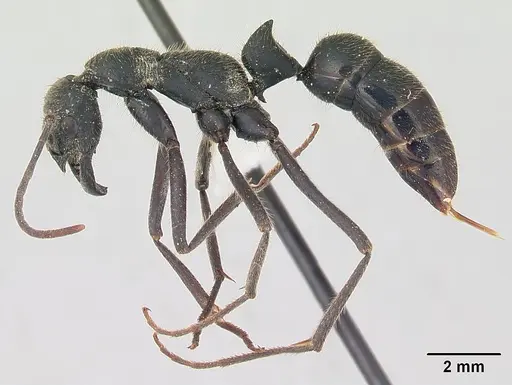
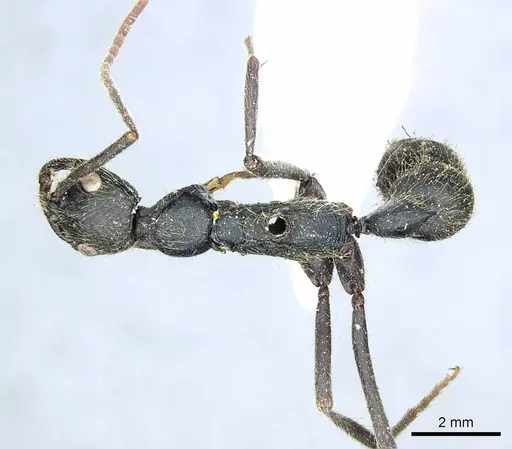
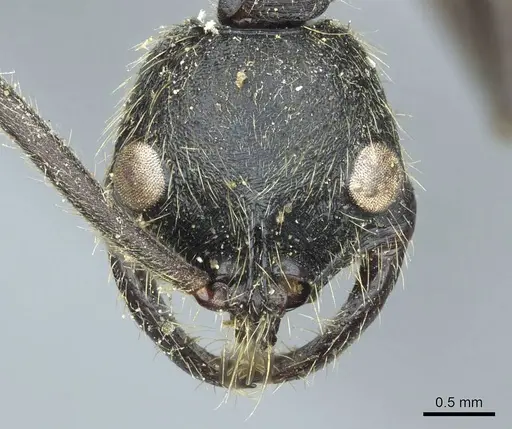
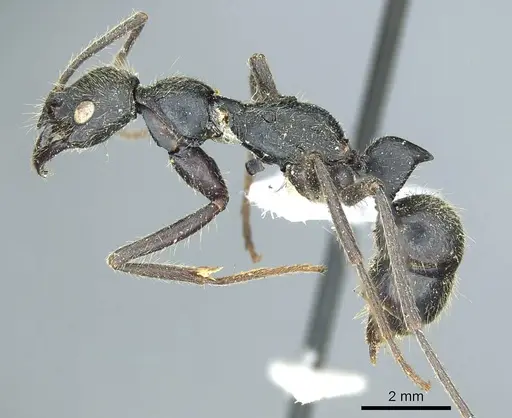
Leptogenys ingens is the largest New World species in the genus Leptogenys, with workers reaching approximately 13mm in total length [1]. These ants are striking in appearance: their body is black with a beautiful blue to purple iridescence, and they have abundant long golden hairs covering their exoskeleton [2]. The head is wider at the front than the back, with large prominent eyes positioned dorsolaterally, and their antennae extend well beyond the back of the head [2]. The petiolar node (the narrow waist segment) has a distinctive large apical tooth with a blunt point that makes them easily identifiable [2].
What makes L. ingens truly remarkable is their extremely specialized diet, they are obligate predators of terrestrial isopods (woodlice and roly-polys) [3][2]. In the wild, you can often locate their nests by the distinctive fan of bleached isopod remains scattered around the nest entrance [4]. This specialization makes them one of the most diet-specific ants in the Americas. They nest in soil, with chambers typically positioned near roots or beneath decomposing wood, and workers forage solitarily during daylight hours [2].
Quick Summary
- Difficulty: Expert
- Origin & Habitat: Northern coastal mountains of Venezuela and Colombia, from sea level to 1,100m elevation in forests ranging from cloud forest to dry forest [4][2].
- Colony Type: Colony structure is unusual, queens have not been morphologically distinguished from workers despite extensive nest sampling, suggesting they may be ergatoid (worker-like) queens [2]. This makes colony structure difficult to determine in captivity.
- Size & Growth:
- Queen: Unknown, queens have not been distinguished from workers in collected specimens [2]
- Worker: 13mm total length, mesosoma length 4.24-5.05mm [1][2]
- Colony: Unknown, no mature colonies have been documented in scientific literature
- Growth: Unknown, no development data available
- Development: Unknown, this species has not been studied in captivity and no development timeline exists (No captive breeding or development studies have been conducted. This is one of the least-studied Ponerine ants in the hobby.)
- Antkeeping:
- Temperature: Likely requires warm conditions given their tropical distribution. Based on similar Ponerines from Venezuela, aim for 24-28°C with a slight gradient.
- Humidity: Moderate to high, they inhabit forest environments. Keep the nest substrate moist but not waterlogged, with some drier areas available.
- Diapause: Unknown, no data on overwintering requirements. Their range includes both humid and seasonal forested areas at low to mid elevations [2].
- Nesting: Soil-nesting species that prefers chambers in contact with roots or beneath decomposing wood and branches. A naturalistic setup with soil, root pieces, and decaying wood works best. Test tubes are not suitable for this species.
- Behavior: Workers are solitary foragers active during the day [2]. They are specialized predators that hunt terrestrial isopods, they do not scavenge or accept standard ant foods. They are likely moderately aggressive when defending their nest but pose no threat to keepers due to their large size and typical Ponerine sting. Escape prevention is important given their moderate size, they can climb smooth surfaces but are not particularly agile escape artists.
- Common Issues: Specialized diet makes them extremely difficult to keep, they require a constant supply of live isopods, which most antkeepers cannot reliably provide, No established captive breeding protocols exist, wild colonies are the only source, Queens cannot be identified, making it impossible to establish proper colony structure in captivity, Lack of any captive care information means all husbandry is experimental, They may require very specific humidity conditions tied to their forest floor microhabitat
Housing and Nest Setup
Leptogenys ingens requires a naturalistic setup rather than artificial formicaria. In the wild, they nest in soil chambers that are typically in contact with roots or positioned beneath decomposing trunks and branches [2]. For captivity, use a deep soil setup with a mix of soil and organic material. Include pieces of decaying wood or root systems within the nest chamber to simulate their natural conditions. The outworld should be simple, these are not arboreal ants and will not use vertical spaces. Because they are specialized isopod predators, you must also culture live isopods in a separate container to provide a constant food source. Standard test tube setups are completely unsuitable for this species.
Feeding and Diet - The Critical Challenge
This is the most important and challenging aspect of keeping L. ingens. They are obligate predators of terrestrial isopods and will not accept standard ant foods like sugar water, honey, protein mixes, or dead insects [3][2]. In the wild, their diet consists almost exclusively of isopods, and their nests can be identified by the pile of bleached isopod remains near the entrance [4]. To keep this species, you must maintain a culture of live isopods (woodlice) and provide them regularly to the ants. This is far more demanding than feeding any typical ant species. Do not attempt to keep this species unless you can reliably provide live isopods as their primary food source.
Temperature and Humidity
Based on their natural range in Venezuela and Colombia at elevations up to 1,100m, they likely prefer warm tropical to subtropical conditions. Aim for temperatures in the 24-28°C range, which can be achieved with a heating cable on one side of the nest to create a gradient. For humidity, replicate their forest floor habitat by keeping the nest substrate consistently moist but not saturated. Allow the surface to dry slightly between rehydrations while keeping deeper substrate damp. The presence of decaying wood and roots in the setup helps maintain appropriate micro-humidity. Avoid both overly dry conditions and waterlogging. [2]
Behavior and Foraging
Workers are solitary foragers that hunt during daylight hours [2]. Unlike many ants that use chemical trails to recruit nestmates, L. ingens appears to hunt alone, likely using visual or tactile cues to locate isopods. They are not aggressive toward humans but have a functional sting typical of Ponerine ants. When threatened, they may sting, the pain level is unknown but likely significant given their size. They are not colony-specific in their defense and do not exhibit the mass aggression seen in some Formicines. Their large size and solitary foraging style means they are relatively easy to observe during feeding events.
Colony Structure and Reproduction
One of the most unusual aspects of L. ingens is that scientists have been unable to distinguish queens from workers despite excavating multiple complete colonies [2]. This suggests the species may have ergatoid queens, replacement reproductives that are morphologically similar to workers. This makes it impossible to determine whether colonies are monogyne (single queen), polygyne (multiple queens), or use worker reproduction. For antkeepers, this means there is no way to visually identify a queen in a wild colony. No males or reproductive castes have been described in scientific literature [4]. Captive breeding has never been documented.
Frequently Asked Questions
Can I keep Leptogenys ingens in a test tube?
No. This species requires a naturalistic soil setup with decaying wood and root material. They nest in soil chambers in contact with roots, which cannot be replicated in test tubes. A deep soil formicarium with organic material is the minimum suitable housing.
What do Leptogenys ingens eat?
They eat ONLY terrestrial isopods (woodlice). This is an obligate isopod predator, they will not accept sugar water, honey, seeds, or dead insects. You must maintain a live culture of isopods to keep this species.
How long does it take for Leptogenys ingens to develop from egg to worker?
Unknown. This species has never been studied in captivity and no development timeline exists in scientific literature. All captive husbandry information is speculative.
Are Leptogenys ingens good for beginners?
No. This species is rated Expert difficulty due to their obligate isopod diet, lack of captive breeding information, and specific nesting requirements. Do not attempt this species unless you have extensive antkeeping experience and can culture live isopods.
Do Leptogenys ingens queens exist?
Queens have not been morphologically distinguished from workers in scientific studies. It is believed they may be ergatoid (worker-like queens), but this has not been confirmed. No distinguishable queen caste has ever been documented.
Can I keep multiple Leptogenys ingens queens together?
Unknown. The colony structure of this species has not been determined. Combining unrelated queens is not recommended given the complete lack of captive breeding data.
Where does Leptogenys ingens live in the wild?
They are found in the northern coastal mountains of Venezuela and Colombia, from sea level to 1,100m elevation. Their habitat ranges from cloud forest to dry forest. Nests are in soil, typically near roots or under decomposing wood.
How big do Leptogenys ingens colonies get?
Unknown. No mature colonies have been documented in scientific literature. The largest Leptogenys colonies in related species typically reach a few hundred workers.
Do Leptogenys ingens need hibernation?
Unknown. Their tropical to subtropical distribution suggests they may not require a true diapause, but seasonal slowdowns may occur. No overwintering data exists for this species.
Why are my Leptogenys ingens dying?
Without captive data, we cannot diagnose problems. However, the most likely causes are: starvation (lack of live isopods), incorrect humidity (too dry or too wet), or temperature stress. This species should only be kept by expert antkeepers willing to experiment.
References

This caresheet is licensed under CC BY-SA 4.0 .
Literature
Loading...Loading products...