

Leptogenys famelica
- Scientific Name
- Leptogenys famelica
- Tribe
- Ponerini
- Subfamily
- Ponerinae
- Author
- Emery, 1896
- Distribution
- Found in 3 countries
Leptogenys famelica Overview
Leptogenys famelica is an ant species of the genus Leptogenys. It is primarily documented in 3 countries , including Brazil, Costa Rica, Ecuador. Detailed taxonomic data and occurrence records can be further explored via authoritative databases such as AntWeb or the Global Biodiversity Information Facility (GBIF).
Leptogenys famelica
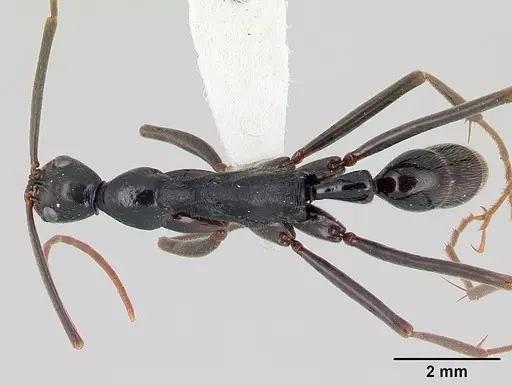
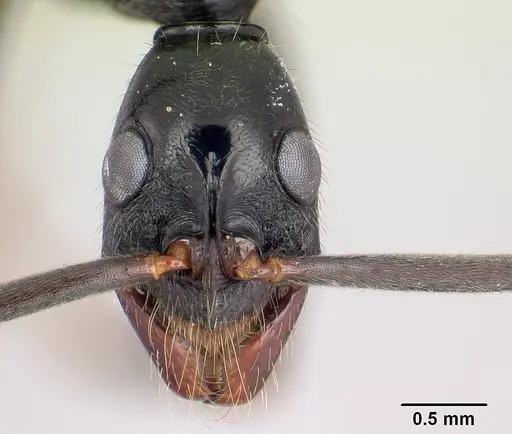
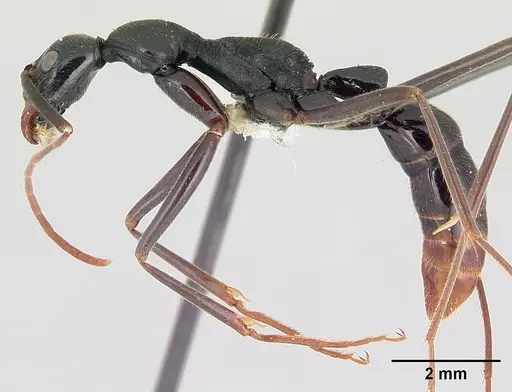
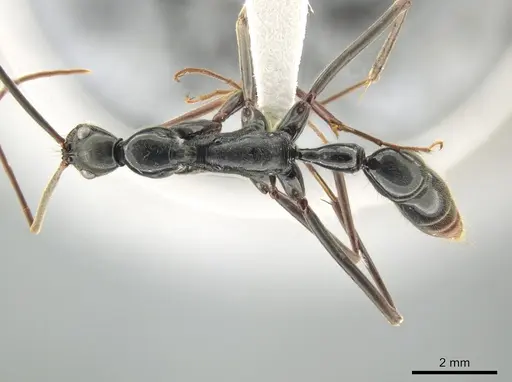
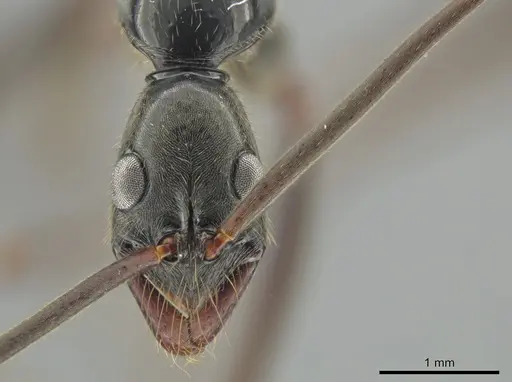
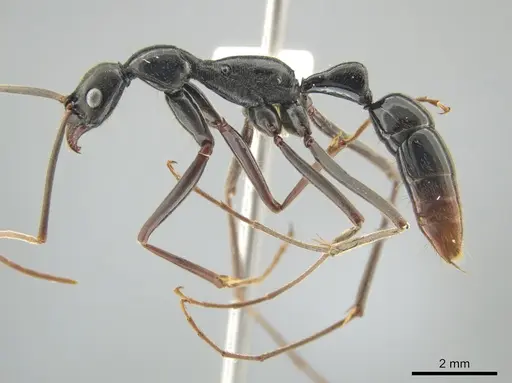
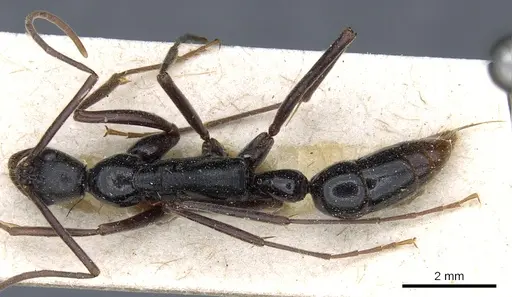
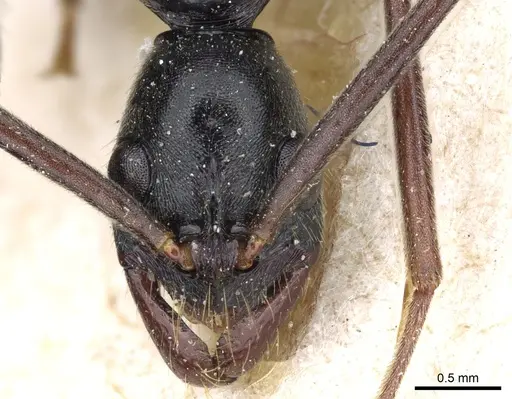
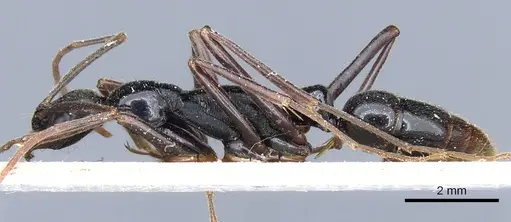
Leptogenys famelica is a large predatory ant species from the Ponerinae subfamily, found from Costa Rica to Panama in Central America. Workers are among the largest in the genus, reaching 15-20mm total length, with a distinctive elongated body that is mostly black with a blue iridescence. They have an elongated head with prominent eyes, long antennae that extend well past the back of the head, and a triangular petiolar node. Unlike most Leptogenys species that specialize in specific prey, L. famelica is a generalist predator known to take down scorpions and harvestmen. Perhaps most remarkably, this species appears to reproduce through worker reproduction (gamergates), no distinct queens have ever been found despite numerous nest excavations, making it one of the few ant species where the typical queen caste may be absent or replaced entirely by reproductive workers.
Quick Summary
- Difficulty: Medium
- Origin & Habitat: Central America (Costa Rica to Panama) in moist tropical forests. Nests are typically found in rotten logs on the forest floor, though underground nests have also been documented in Costa Rica [1][2].
- Colony Type: Colony structure is unique, no distinct queen caste has been found. Reproduction appears to occur through gamergates (reproductive workers), making this one of the few documented cases of worker-based reproduction in the Ponerinae. Colonies likely contain multiple reproductive workers rather than a single queen [2].
- Special: Gamergates
- Size & Growth:
- Queen: Unknown, queens have never been documented. Reproduction occurs through gamergates [2].
- Worker: Workers measure 15-20mm total length. Head length (HL) 2.32-2.36mm, head width (HW) 1.58-1.61mm, Weber's length (WL) 4.50-4.80mm [2].
- Colony: Unknown maximum size. Colony fragments have been excavated but full colony sizes are not documented in available literature [2].
- Growth: Moderate, based on typical Ponerine development patterns
- Development: Unconfirmed, no direct studies on development timeline exist. Based on related Ponerine species, expect 8-12 weeks at tropical temperatures [2]. (Development timeline is estimated from related species since specific data for L. famelica does not exist.)
- Antkeeping:
- Temperature: Keep at 24-28°C, this is a tropical species from Central American rainforests. A heating cable on one side of the nest creates a temperature gradient allowing workers to self-regulate [2].
- Humidity: High humidity required, similar to their moist forest floor habitat. Keep nest substrate consistently damp but not waterlogged. Provide a water source like a test tube cotton reservoir. Mist occasionally but rely on substrate moisture rather than misting schedules.
- Diapause: No, as a tropical species from lowland Central American forests, they do not require hibernation. Maintain warm temperatures year-round [2].
- Nesting: In the wild, they nest in rotten logs on the forest floor and have been found in underground chambers. In captivity, a naturalistic setup with moist substrate (like a terrarium-style formicarium) works well. Y-tong nests with chambers sized appropriately for large Ponerines are also suitable. Provide multiple chambers and cover the nest partially to create dark spaces.
- Behavior: These are active, aggressive predators. Workers are fast-moving and will readily tackle prey much larger than themselves, including scorpions. They are not aggressive toward humans but can deliver a painful sting if handled. They are escape artists due to their size and activity level, use excellent barrier protection like fluon on test tube rims. They are primarily nocturnal or crepuscular foragers. Colonies should be given time to settle after establishment before expecting normal activity patterns [2].
- Common Issues: no queen means colony establishment is different, you need an established colony with gamergates rather than a founding queen, tropical species requires constant warmth, cold temperatures can weaken and kill colonies, large size and activity make escape prevention critical, they are strong climbers, generalist diet means they need varied protein sources, don't rely on just one prey type, lack of documented captive care means keepers must be prepared to experiment with conditions
Obtaining a Colony
Obtaining Leptogenys famelica is different from most ant species. Since no distinct queen caste has ever been documented, you cannot start with a founding queen. Instead, you will need to acquire an established colony that contains gamergates (reproductive workers). These colonies reproduce through colony fission, where a group of workers with one or more gamergates leaves the parent nest to establish a new colony. When acquiring a colony, look for active colonies with multiple workers and ensure they are being sold legally. Wild-caught colonies may be stressed from collection and transport, so quarantine and careful observation during the first few weeks is essential. Due to the species' limited range (Costa Rica to Panama), captive colonies are rare in the antkeeping hobby. [2]
Housing and Nest Setup
This large Ponerine ant needs space to hunt and forage. A naturalistic terrarium-style setup works well, use a container filled with moist substrate (a mix of soil and rotting wood pieces mimics their natural log-floor habitat). Provide hiding spots like flat stones, pieces of bark, or pre-made chambers. A Y-tong (acrylic) nest with appropriately sized chambers is also suitable, but give them an outworld area large enough for hunting. Cover part of the nest to create dark spaces, these ants prefer some darkness in their nest area. Use a test tube with a cotton-stoppered water reservoir for drinking water. For escape prevention, apply fluon to all rim edges and use a secure lid, these large, active ants are excellent climbers. [1][2]
Feeding and Diet
Leptogenys famelica is a generalist predator, unlike most Leptogenys species that specialize in specific prey. In the wild, they have been observed capturing and carrying scorpions (Ananteris cf. platnicki) and harvestmen (phalangid opilionids) [2][3]. In captivity, offer a variety of live prey appropriate to their size: large crickets, roaches, mealworms, superworms, and other appropriately sized insects. They will likely accept most common feeder insects. You can also occasionally offer small pieces of raw meat or fish, though live prey is preferred. They do not need sugar water as a primary food source, as predators, they get their carbohydrates from the prey they consume. Feed every 2-3 days, removing uneaten prey after 24 hours to prevent mold.
Temperature and Humidity
As a tropical species from Central American lowland rainforests, Leptogenys famelica requires warm and humid conditions. Maintain temperatures between 24-28°C consistently. A heating cable placed on one side of the nest creates a gradient that allows workers to regulate their own temperature by moving between warmer and cooler areas. For humidity, keep the nest substrate consistently moist, it should feel damp but not have standing water. The substrate should not dry out completely between waterings. Mist the outworld occasionally, especially if you notice workers clustering near moisture. These conditions closely match their natural habitat in moist tropical forests where they nest in rotting wood on the forest floor. [2]
Unique Reproductive Biology
The most remarkable aspect of Leptogenys famelica is its reproductive biology. Despite numerous nest excavations and specimen collections, no morphologically distinct queen has ever been found [2]. This strongly suggests the species reproduces primarily or entirely through gamergates, workers that have developed reproductive capacity and can lay eggs that produce new workers (and potentially males). This is relatively rare among ants and makes L. famelica particularly interesting from a biological perspective. The colony structure differs fundamentally from typical ants: instead of one queen producing all workers, multiple gamergates contribute to reproduction. When obtaining a colony, you are getting a pre-established group of reproductive workers rather than a queen-right colony.
Behavior and Handling
Leptogenys famelica workers are active, alert predators with good vision. They are not typically aggressive toward humans but will defend their nest if threatened. Like most Ponerines, they can deliver a painful sting if handled roughly or if they feel threatened. They are primarily nocturnal or crepuscular in their foraging activity, though they may show some activity during the day. Workers are fast-moving and will readily tackle prey items much larger than themselves, the observation of six workers cooperatively carrying an adult scorpion demonstrates their bold hunting behavior [2]. When working with the colony, move slowly and avoid sudden vibrations. These ants communicate through chemical signals and vibrations, so a calm environment helps them adjust to captive conditions.
Frequently Asked Questions
How do I get a Leptogenys famelica colony since there are no queens?
You cannot start with a founding queen because none have been documented. You will need to acquire an established colony containing gamergates (reproductive workers). These colonies reproduce through fission, where a group of workers with reproductive workers leaves to form a new colony. Obtain colonies from reputable sellers who have established breeding colonies.
What do Leptogenys famelica eat?
They are generalist predators. Offer live insects like large crickets, roaches, mealworms, and superworms. They have been documented catching scorpions and harvestmen in the wild, so they will tackle a variety of prey. Remove uneaten prey after 24 hours. They do not need sugar water as they get carbohydrates from their prey.
What temperature do Leptogenys famelica need?
Keep them at 24-28°C consistently. This is a tropical species from Central American rainforests. Use a heating cable on one side of the nest to create a temperature gradient, and ensure temperatures never drop below room temperature for extended periods.
Do Leptogenys famelica need hibernation?
No. As a tropical species from lowland Central American forests, they do not require hibernation or winter cooling. Maintain warm temperatures year-round. Cold temperatures can weaken and kill this species.
How big do Leptogenys famelica workers get?
Workers are large for the genus, measuring 15-20mm total length. Head length is 2.32-2.36mm and Weber's length (a standard ant measurement of the mesosoma plus gaster) is 4.50-4.80mm. They are among the largest Leptogenys species in the Americas.
Are Leptogenys famelica good for beginners?
This species is rated as Medium difficulty. While not the most challenging species, the lack of documented captive care means keepers must be prepared to experiment. The unusual reproductive biology (gamergate-based) also means obtaining a colony is more difficult than typical species. Experienced antkeepers will have better success with this species.
What humidity level do Leptogenys famelica need?
High humidity is required. Keep the nest substrate consistently moist but not waterlogged. This mimics their natural habitat in moist tropical forests where they nest in rotting wood on the forest floor. A water test tube should provide constant access to drinking water.
How fast do Leptogenys famelica colonies grow?
Growth rate is estimated as moderate. No specific development timeline exists for this species, but based on related Ponerines, expect 8-12 weeks from egg to worker at optimal temperatures. Colonies likely grow more slowly than many common ant species.
Where is Leptogenys famelica found in the wild?
They are found from Costa Rica to Panama, north of the Andes Mountains. Their habitat is moist tropical forests where they nest in rotten logs on the forest floor. An underground nest has also been documented in Costa Rica.
Why haven't queens been found for Leptogenys famelica?
This is one of the most interesting aspects of the species. Despite numerous nest excavations and specimens in collections, no morphologically distinct queen has ever been found. The species appears to reproduce entirely through gamergates, workers that have become reproductive. This is relatively rare among ants and makes L. famelica biologically unique.
What makes Leptogenys famelica different from other Leptogenys?
Most Leptogenys species are specialized predators that focus on specific prey types. L. famelica is a generalist predator that takes a wide variety of prey, including scorpions and harvestmen. Additionally, the apparent absence of a distinct queen caste and reproduction through gamergates is unusual for the genus and for ants in general.
References

This caresheet is licensed under CC BY-SA 4.0 .
Literature
Loading...Loading products...