

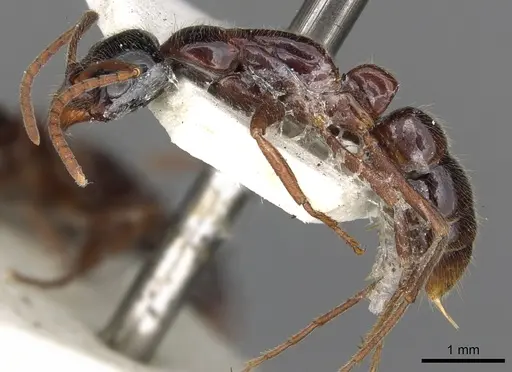
Leptogenys exigua
- Scientific Name
- Leptogenys exigua
- Tribe
- Ponerini
- Subfamily
- Ponerinae
- Author
- Crawley, 1921
- Distribution
- Found in 1 countries
Leptogenys exigua Overview
Leptogenys exigua is an ant species of the genus Leptogenys. It is primarily documented in 1 countries , including Australia. Detailed taxonomic data and occurrence records can be further explored via authoritative databases such as AntWeb or the Global Biodiversity Information Facility (GBIF).
Leptogenys exigua
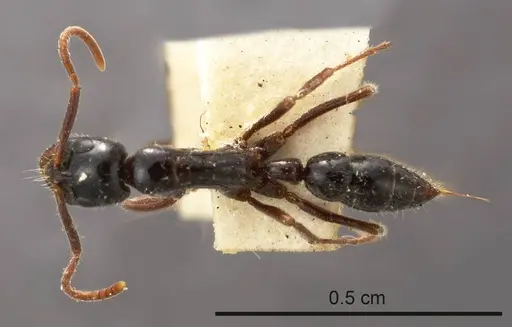
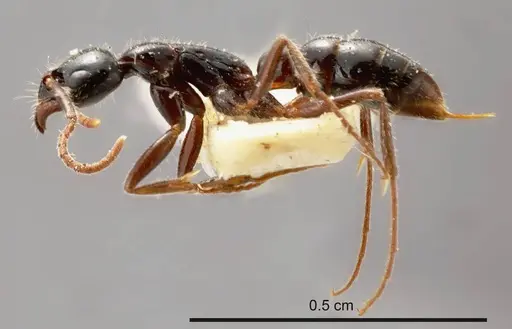
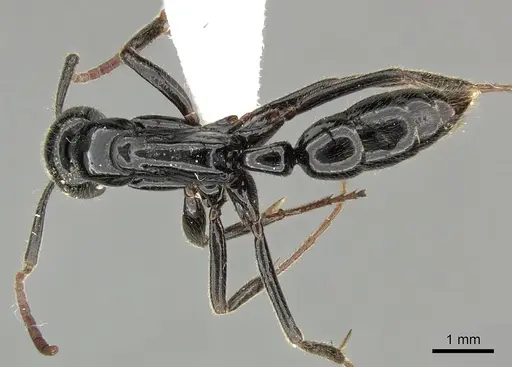
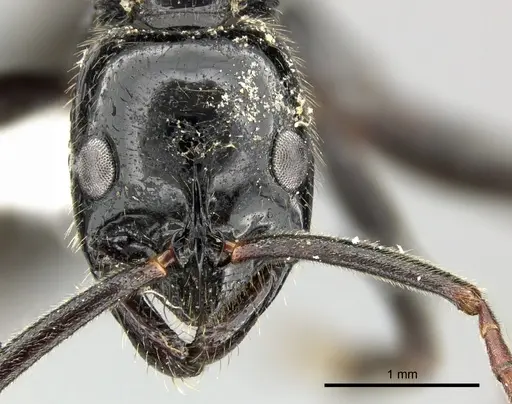
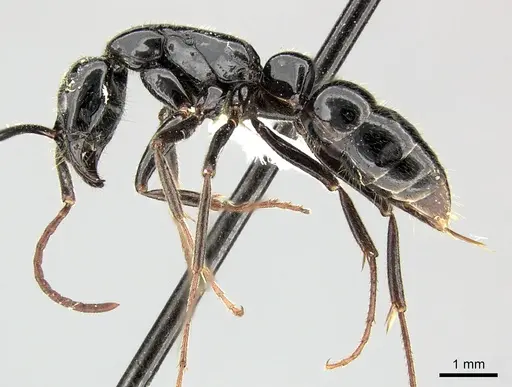
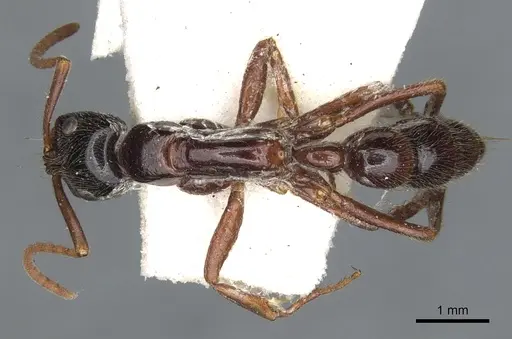
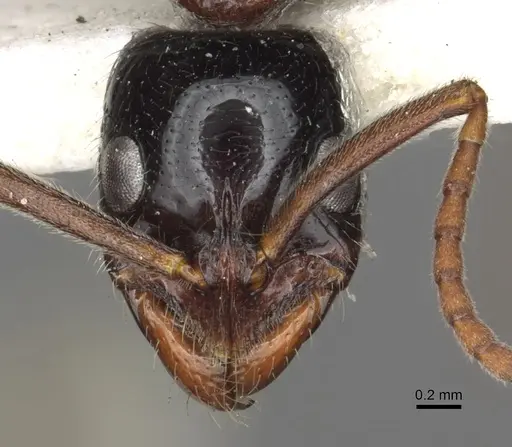
Leptogenys exigua is a small, slender ant belonging to the Ponerinae subfamily. Workers are typically around 4-5mm in length with an elongated body and distinctive elongated head. The species is native to northern Australia, specifically the tropical regions of Western Australia and the Northern Territory. As a member of the genus Leptogenys, these ants are specialist predators with characteristic trap-jaw mandibles adapted for hunting other arthropods. The species was originally described as a variety of L. conigera in 1921 and raised to full species status by Taylor in 1988 [1].
This is a rarely encountered species in the wild, researchers recorded only 6 individuals across multiple survey sites in the Mitchell Falls area of tropical northwestern Australia [2]. Leptogenys exigua falls into the Specialist Predators functional group, meaning they specialize in hunting other ants or small arthropods rather than foraging for general food sources. They are part of the Torresian biogeographic region, which encompasses the tropical northern coast of Australia.
Quick Summary
- Difficulty: Medium
- Origin & Habitat: Northern Australia (Western Australia and Northern Territory) in tropical monsoonal regions. They inhabit laterite and sandstone habitats in areas like the Mitchell Falls region [2].
- Colony Type: Likely monogyne (single queen) based on typical Leptogenys patterns, though colony structure has not been directly documented for this species.
- Colony: Monogyne
- Founding: Claustral
- Size & Growth:
- Queen: Approximately 5-6mm (estimated based on genus Leptogenys patterns)
- Worker: Approximately 4-5mm (based on genus typical sizes)
- Colony: Unknown for this specific species, likely small to moderate colonies like other Leptogenys
- Growth: Moderate, estimated based on related species
- Development: Estimated 6-8 weeks at optimal temperature based on typical Ponerinae development (Development time inferred from genus-level data, not directly studied for this species)
- Antkeeping:
- Temperature: Keep at 24-28°C, these are tropical ants from northern Australia requiring warm conditions. A heating cable on one side of the nest creates a suitable gradient.
- Humidity: High humidity preferred, aim for 70-80% relative humidity. Keep the nest substrate consistently moist but not waterlogged. Mist occasionally and ensure water availability.
- Diapause: Likely minimal or no true diapause given their tropical origin, they may show reduced activity during cooler months but probably don't require a hibernation period.
- Nesting: In nature they likely nest in soil or under stones in forested areas. In captivity, a naturalistic setup with moist substrate or a Y-tong/plaster nest works well. They prefer tight, enclosed spaces.
- Behavior: Leptogenys are specialist predators with trap-jaw mandibles. Workers are active foragers that hunt individually, using their quick mandibles to capture prey. They are not aggressive toward humans but will defend their nest. Escape prevention is important, they are small but active climbers. They are typically nocturnal or crepuscular in their foraging patterns.
- Common Issues: specialized diet requirements, they need live prey, not just sugar water, small colony sizes mean they are sensitive to disturbance, limited available information makes care more challenging, humidity control is critical, too dry and they decline, they may be escape artists despite small size, use fine mesh barriers
Housing and Nest Setup
Leptogenys exigua does best in a naturalistic setup with moist substrate or a Y-tong/plaster nest that maintains humidity well. These ants are small and prefer tight, enclosed spaces rather than large open areas. A test tube setup can work for founding colonies, but you'll need to transition them to a proper nest as the colony grows. Because they are specialist predators, the nest should have easy access to a foraging area where you can introduce live prey. Use a shallow water reservoir in the outworld to ensure they always have access to water. Escape prevention is important, use fluon on container edges and fine mesh on any ventilation holes. [2]
Feeding and Diet
As specialist predators, Leptogenys exigua requires a diet of live prey rather than sugar water or seed mixes. Offer small live arthropods such as fruit flies, pinhead crickets, small mealworms, and most importantly, other ants (especially minor workers from common feeder colonies like Monomorium or Pheidole). They are active hunters that will chase down prey, so provide a hunting area in the outworld. Some Leptogenys species will accept small amounts of honey or sugar water as a supplementary energy source, but protein from live prey is essential for brood development. Feed every 2-3 days, removing any uneaten prey after 24 hours. [2]
Temperature and Humidity
Being from tropical northern Australia, Leptogenys exigua requires warm, humid conditions. Keep the nest area at 24-28°C, use a heating cable on one side of the nest if your room temperature is below this range. Place the heating on top of the nest, not underneath, to avoid drying out the substrate. Humidity should be maintained at 70-80%, the substrate should feel consistently moist but not waterlogged. A water reservoir in the outworld helps maintain humidity through evaporation. Monitor condensation on nest walls as an indicator of proper humidity levels. [2]
Behavior and Temperament
Leptogenys are known for their distinctive trap-jaw mandibles, which they use to capture prey with remarkable speed. Workers forage individually rather than in groups, hunting through the substrate and leaf litter. They are not particularly aggressive toward keepers and rarely sting, though their mandibles can deliver a minor nip if handled roughly. These ants are most active during evening and nighttime hours. Colonies are typically small to moderate in size. They are skilled climbers, so excellent escape prevention is essential despite their small size.
Frequently Asked Questions
How long does it take for Leptogenys exigua to produce first workers?
Based on typical Ponerinae development, expect first workers (nanitics) approximately 6-8 weeks after the queen lays eggs, assuming optimal temperature around 26°C. Development may be slower if temperatures are lower.
Can I keep multiple Leptogenys exigua queens together?
Not recommended, Leptogenys are typically single-queen (monogyne) species. Combining unrelated queens has not been documented for this species and would likely result in aggression.
What do I feed Leptogenys exigua?
They require live prey, fruit flies, small crickets, mealworms, and especially other ant workers. They are specialist predators and generally do not accept sugar water as a primary food source.
Are Leptogenys exigua good for beginners?
This species is rated as medium difficulty. While not the hardest species, their specialized diet requirements and need for specific humidity/temperature conditions make them better suited for keepers with some experience.
Do Leptogenys exigua need hibernation?
Probably not, being from tropical Australia, they likely don't require a true diapause. They may show reduced activity during cooler months but should be kept warm year-round.
How big do Leptogenys exigua colonies get?
Colony size is not well documented for this specific species. Based on typical Leptogenys patterns, colonies likely reach a few hundred workers at maximum rather than large supercolonies.
When should I move Leptogenys exigua to a formicarium?
Move them once the colony reaches 15-20 workers or when the test tube becomes cramped. Make sure the new enclosure can maintain proper humidity, plaster or Y-tong nests work well for this species.
Why are my Leptogenys exigua dying?
Common causes include: too low humidity (they need moist conditions), insufficient live prey (they cannot survive on sugar alone), temperatures below 24°C, or stress from too much disturbance. Check these parameters first.
References

This caresheet is licensed under CC BY-SA 4.0 .
Literature
Loading...Loading products...