

Leptogenys donisthorpei
- Scientific Name
- Leptogenys donisthorpei
- Tribe
- Ponerini
- Subfamily
- Ponerinae
- Author
- Mann, 1922
- Distribution
- Found in 4 countries
Leptogenys donisthorpei Overview
Leptogenys donisthorpei is an ant species of the genus Leptogenys. It is primarily documented in 4 countries , including Belize, Honduras, Mexico. Detailed taxonomic data and occurrence records can be further explored via authoritative databases such as AntWeb or the Global Biodiversity Information Facility (GBIF).
Leptogenys donisthorpei
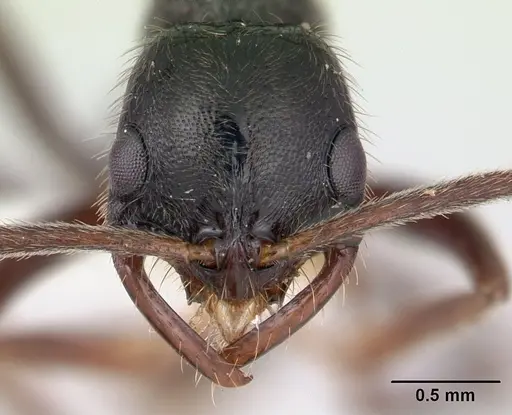
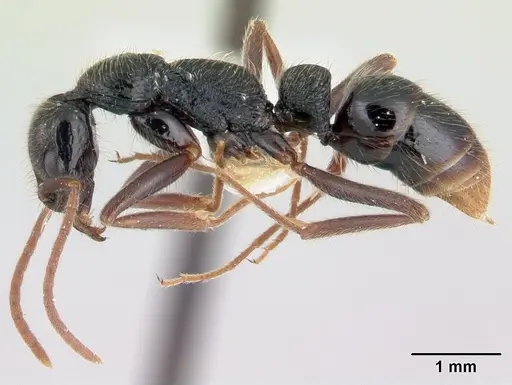
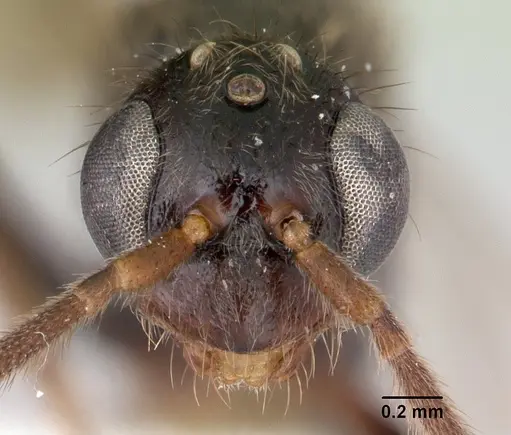
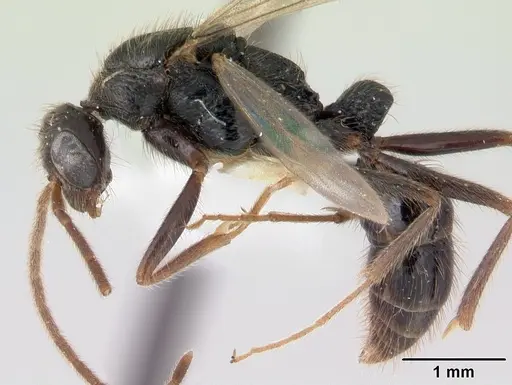
Leptogenys donisthorpei is a medium-sized ponerine ant belonging to the arcuata species group, found in Honduras and Mexico. Workers measure approximately 1.3-1.4mm in head length and 2.2-2.3mm in mesosoma length, with a robust build and mostly black coloration. The gaster is dark brown while the legs, antennae, and mandibles are brown to reddish-brown. This species is distinguished by having the most robust mandibles within the arcuata group, decumbent hairs on the scapes, and weak rugulae on the lateroventral node area rather than being smooth and polished.
These ants are predators that specialize on terrestrial isopods (woodlice) [1]. In the wild, they nest in the dry remains of bromeliad plants, particularly Aechmea bracteata, in the Yucatan Peninsula region. The queen caste remains unknown, and this species is considered rare in collections.
Quick Summary
- Difficulty: Medium
- Origin & Habitat: Honduras and Mexico (Neotropical region). In the wild, they nest in the dry remains of bromeliad plants (Aechmea bracteata) in the Yucatan Peninsula, specifically documented in Reserva Sian Ka'an.
- Colony Type: Colony structure is unconfirmed, queen caste has not been described. Based on related Leptogenys species, likely single-queen colonies.
- Size & Growth:
- Queen: Unknown, queen caste has not been described
- Worker: Workers: HL 1.31-1.38mm, HW 1.18-1.25mm, WL 2.22-2.29mm
- Colony: Unknown, no colony size data available
- Growth: Unknown
- Development: Unconfirmed, no development data available for this species (Development timeline has not been studied. Related Leptogenys species typically take 2-4 months from egg to worker at tropical temperatures.)
- Antkeeping:
- Temperature: Based on their Neotropical distribution and bromeliad nesting habitat, keep them warm around 24-28°C. A gentle temperature gradient allows them to regulate. Avoid temperatures below 20°C.
- Humidity: Moderate to high humidity around 70-80%. Their natural bromeliad habitat suggests they prefer humid conditions with good ventilation. Keep the nest substrate moist but not waterlogged, with some drier areas available.
- Diapause: Unlikely, as a Neotropical species from southern Mexico, they probably do not require a true hibernation. However, a slight cool-down period during winter months may be beneficial.
- Nesting: Based on their natural nesting in dry bromeliad remains, they prefer enclosed nest spaces with moderate humidity. Y-tong (AAC) nests or plaster nests with tight chambers work well. Avoid overly dry conditions.
- Behavior: Leptogenys donisthorpei is a specialized predator targeting terrestrial isopods [1]. They are likely active foragers that hunt individually or in small groups. Ponerine ants in this genus typically have a moderate sting, though the pain level for this specific species is unknown. They are not aggressive toward humans but will defend the nest. Escape prevention should be moderate, workers are a manageable size at around 1.3mm.
- Common Issues: queen unknown, this species is rarely kept and queen biology is not documented, specialized diet, they require isopods or similar prey, which may be difficult to source regularly, limited availability, this is not a common species in the antkeeping hobby, humidity management, bromeliad-nesting ants may be sensitive to overly dry conditions, slow growth, without documented development times, establishing colonies may take longer than expected
Nest Preferences and Housing
Leptogenys donisthorpei naturally nests in the dry remains of bromeliad plants, specifically documented nesting in Aechmea bracteata in the Yucatan Peninsula. This indicates they prefer enclosed, moderately humid nest spaces rather than open setups. In captivity, Y-tong (AAC) nests or plaster nests work well. The chambers should be appropriately sized for workers measuring around 1.3mm in head width. Keep the nest substrate consistently moist but avoid waterlogging. Good ventilation is important to prevent mold while maintaining humidity. Test tube setups can work for founding colonies if the cotton is kept appropriately moist. [1]
Feeding and Diet
This species is a specialized predator targeting terrestrial isopods (woodlice) [1]. In captivity, you should prioritize offering small live isopods as their primary food source. This can be challenging as isopods may not be readily available in all areas. As a supplement, they may accept other small arthropods like fruit flies, pinhead crickets, or small mealworms. Unlike many ants, Leptogenys species are typically not interested in sugar sources, they are obligate predators. Feed every 2-3 days, removing uneaten prey after 24 hours. A well-fed colony will have workers that appear well-nourished and active.
Temperature and Seasonal Care
As a Neotropical species from southern Mexico and Honduras, Leptogenys donisthorpei requires warm conditions. Maintain temperatures around 24-28°C with minimal fluctuations. A heating cable on one side of the nest can create a gentle gradient, allowing the ants to regulate their temperature. Room temperature in heated homes (around 22-24°C) may be acceptable, but aim for the warmer end of this range. Unlike temperate species, they likely do not require a true hibernation period. However, a slight seasonal reduction in temperature during winter months (dropping to around 20-22°C) may simulate natural conditions and promote colony health.
Behavior and Temperament
Leptogenys donisthorpei is a ponerine ant with typical defensive behaviors, they will sting if threatened, though the pain level is not well documented. Workers are active foragers that hunt individually, using their robust mandibles to capture prey. They are not known to be particularly aggressive toward humans but will defend their nest vigorously. The colony likely maintains moderate activity levels throughout the year given their tropical distribution. Workers communicate through chemical signals and may form foraging trails to reliable food sources. Escape prevention should be standard, use Fluon or similar barriers on the outworld.
Frequently Asked Questions
How long does it take for Leptogenys donisthorpei to produce first workers?
The development timeline for this species has not been documented. Based on related Leptogenys species, expect approximately 2-4 months from egg to worker at optimal temperatures (24-28°C). The queen has not been described, so founding behavior in captivity is unknown.
What do Leptogenys donisthorpei ants eat?
They are specialized predators that target terrestrial isopods (woodlice) in the wild [1]. In captivity, offer small live isopods as their primary food. They may also accept other small arthropods like fruit flies or small mealworms. They are not typically interested in sugar sources.
Can I keep Leptogenys donisthorpei in a test tube?
Yes, test tubes can work for founding colonies. Keep the water reservoir appropriately sized and maintain moderate humidity by moistening the cotton. Transfer to a proper nest (Y-tong or plaster) once the colony reaches 15-20 workers.
What temperature do Leptogenys donisthorpei need?
Keep them warm at 24-28°C. As a Neotropical species from Mexico and Honduras, they require tropical temperatures. A gentle gradient allowing them to move between warmer and cooler areas is ideal.
Do Leptogenys donisthorpei need hibernation?
Probably not. As a Neotropical species, they likely do not require a true hibernation period. A slight temperature reduction during winter months (to around 20-22°C) may be beneficial but is not mandatory.
Are Leptogenys donisthorpei good for beginners?
No, this species is not recommended for beginners. The queen has never been described, making it extremely rare in the hobby. Their specialized diet (requiring isopods) and unknown colony structure make them challenging even for experienced keepers.
How big do Leptogenys donisthorpei colonies get?
Colony size is unknown, no data exists for this species. Based on related Leptogenys species, colonies likely reach several hundred workers at maturity.
Where does Leptogenys donisthorpei live in the wild?
They are found in Honduras and Mexico. In the wild, they nest in the dry remains of bromeliad plants, particularly Aechmea bracteata, documented in the Yucatan Peninsula (Reserva Sian Ka'an).
Can I keep multiple queens together?
This is unknown. The queen caste has never been described for this species, so colony structure is unconfirmed. Do not attempt combining unrelated queens until more is known about their natural colony structure.
References

This caresheet is licensed under CC BY-SA 4.0 .
CASENT0178791
View on AntWeb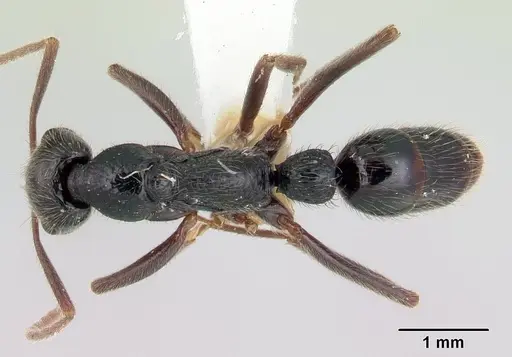
CASENT0178792
View on AntWeb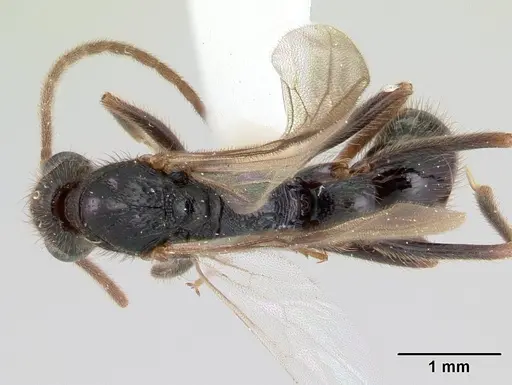
Literature
Loading...Loading products...