

Leptogenys corniculans
- Scientific Name
- Leptogenys corniculans
- Tribe
- Ponerini
- Subfamily
- Ponerinae
- Author
- Lattke, 2011
- Distribution
- Found in 1 countries
Leptogenys corniculans Overview
Leptogenys corniculans is an ant species of the genus Leptogenys. It is primarily documented in 1 countries , including Brazil. Detailed taxonomic data and occurrence records can be further explored via authoritative databases such as AntWeb or the Global Biodiversity Information Facility (GBIF).
Leptogenys corniculans
Leptogenys corniculans is a slender predatory ant species endemic to the Atlantic Forests of Bahia, Brazil. Workers are small and dark, measuring around 0.85mm in head length with a black body and brown legs. The species is easily identified by its well-developed propodeal teeth, which are almost as long as the second antennal segment, a distinctive feature that gives the species its name (from Latin 'corniculatus' meaning horn-shaped). The head appears partially flattened dorsoventrally near the eye, and the small eye straddles a blunt crest along the dorsal edge. This is one of the rarest ant species in existence, known only from a single specimen collected in 1987 in Ilhéus, making it a true mystery ant that has never been documented in captivity or studied in any detail.
Quick Summary
- Difficulty: Expert
- Origin & Habitat: Atlantic Forests of Bahia, Brazil, specifically the ESARM experimental fields of CEPLAC in Ilhéus. This is a tropical rainforest environment with high humidity and warm temperatures year-round [1][2].
- Colony Type: Unknown, queens and males have never been documented. Based on typical Leptogenys genus patterns, likely single-queen colonies, but this is unconfirmed.
- Size & Growth:
- Queen: Unknown, queens have never been described [2]
- Worker: Workers are 0.85mm head length,1.15mm mesosoma length [2]
- Colony: Unknown, only a single specimen has ever been collected [1]
- Growth: Unknown
- Development: Unconfirmed, no developmental data exists for this species (Based on related Leptogenys species, development likely takes 6-10 weeks at tropical temperatures, but this is entirely estimated)
- Antkeeping:
- Temperature: Likely needs warm conditions typical of tropical Brazil, aim for 24-28°C based on habitat inference. Provide a gentle temperature gradient.
- Humidity: Atlantic Forests are humid environments, keep nest substrate consistently moist but not waterlogged, around 70-80% humidity.
- Diapause: Unlikely, as a tropical species from Bahia, Brazil, it probably does not require hibernation. However, seasonal slowdowns may occur during cooler/drier periods.
- Nesting: No natural nesting data exists. Based on related Leptogenys species, they likely nest in soil, rotting wood, or under stones in forest floor habitats. A naturalistic setup with moist substrate or a Y-tong/plaster nest would be appropriate starting points.
- Behavior: Leptogenys ants are active, fast-moving predators. Workers likely forage individually and hunt small arthropods. They have functional stingers but are not aggressive toward humans. Escape prevention is important given their small size. Based on genus patterns, they likely exhibit typical ponerine behavior, alert, quick-moving, and capable of stinging if threatened.
- Common Issues: No captive husbandry information exists, this species has never been kept in captivity, Only one specimen has ever been collected, making wild colonies essentially unknown, Queens have never been documented, so captive breeding would be extremely challenging, Extremely rare in the wild, less than 1% of specimens in research collections [1], Potential legal concerns regarding collection and export from Brazil
Why This Species Is So Challenging
Leptogenys corniculans represents one of the most poorly known ant species in the world. It has been documented only from a single worker specimen collected in 1987 in Ilhéus, Bahia, Brazil [1]. This means we have virtually no biological data: no queens, no males, no colony structure information, no diet observations, no development timeline, and no captive husbandry records. The species represents less than 1% of all specimens in research collections and has never been found again since its original collection [1]. For antkeepers, this means starting from almost zero, everything about their care would be experimental guesswork based on related species.
What We Can Infer From Related Species
While L. corniculans itself is a mystery, we can make educated guesses based on the Leptogenys genus. Most Leptogenys species are predatory hunters that specialize on isopods and other small arthropods. They are typically fast-moving, alert ants that forage individually rather than in groups. Colony sizes are usually moderate, a few hundred workers at most. Founding is typically semi-claustral, meaning the queen must leave the nest to hunt for food during the founding stage, unlike claustral species that seal themselves in and live off stored fat. However, these are genus-level patterns, not confirmed specifics for L. corniculans.
Habitat and Distribution
This species is known only from the Atlantic Forests of Bahia, Brazil, specifically the ESARM experimental fields of CEPLAC in Ilhéus [1]. The Atlantic Forest is a tropical rainforest ecosystem with high humidity, dense vegetation, and year-round warm temperatures. Ilhéus is located on the coast of Bahia state, an area known for its rich biodiversity. The fact that only one specimen has been collected despite decades of ant research in the region suggests either extremely low population densities, very localized distribution, or highly specialized microhabitat preferences that make them difficult to find.
Identification and Distinguishing Features
Leptogenys corniculans can be identified by several unique features. The most distinctive is the well-developed propodeal teeth (the spines on the back of the metasoma), which are almost as long as the second antennal segment, longer than any related species in the region. The head is rectangular with a partially flattened appearance dorsoventrally near the eye. The small eye straddles a blunt crest along the dorsal edge of the head. The body is mostly black with brown legs, mandibles, antennae, and gastral apex. The median clypeal lobe is narrow and pointed. These features distinguish it from other Leptogenys species in the pusilla group and nearby regions. [2]
Frequently Asked Questions
Can I keep Leptogenys corniculans in captivity?
No, this species has never been kept in captivity and has only ever been documented from a single specimen collected in 1987. There is no information available on how to care for them, and they may not exist in the wild anymore. Even if you could obtain one, there would be no guidance on their care.
Where does Leptogenys corniculans live?
It is known only from the Atlantic Forests of Bahia, Brazil, specifically the municipality of Ilhéus. The single known specimen was collected in the ESARM experimental fields of CEPLAC in 1987.
What do Leptogenys corniculans ants eat?
Unknown, no feeding observations exist for this species. Based on typical Leptogenys genus behavior, they are likely predatory on small arthropods like isopods, but this is entirely inferred.
How big do Leptogenys corniculans colonies get?
Unknown, colony size has never been documented. Only a single worker specimen exists in all of scientific collections.
Do Leptogenys corniculans queens exist?
Queens and males have never been described for this species. The original description only covers workers, and no additional specimens have ever been found to document the reproductive castes.
How long does it take for Leptogenys corniculans to develop from egg to worker?
Unconfirmed, no developmental data exists for this species. Based on related Leptogenys species, development likely takes 6-10 weeks at tropical temperatures, but this is entirely an estimate with no direct evidence.
Is Leptogenys corniculans endangered?
We don't know, the species has only been documented from one specimen, making it impossible to assess population status. It may be extremely rare, locally extinct, or simply living in a very restricted habitat that hasn't been sampled.
Can I find Leptogenys corniculans in the wild?
Extremely unlikely. Despite being described in 2011 and collected in 1987,no additional specimens have ever been found despite extensive ant collecting in the Atlantic Forest region of Bahia. The species may be extinct, extremely localized, or living in microhabitats that are rarely sampled.
What makes Leptogenys corniculans different from other Leptogenys?
It has exceptionally long propodeal teeth, almost as long as the second antennal segment, which is unique among known Leptogenys species. The head shape is also distinctive, appearing partially flattened dorsoventrally near the eye. It is the only Leptogenys species known from the Atlantic Forest of Bahia.
Are Leptogenys corniculans ants aggressive?
No specific behavior data exists. However, Leptogenys ants in general are not aggressive toward humans but will defend themselves if threatened. They have functional stingers but are too small to cause significant pain.
References

This caresheet is licensed under CC BY-SA 4.0 .
CASENT0217021
View on AntWeb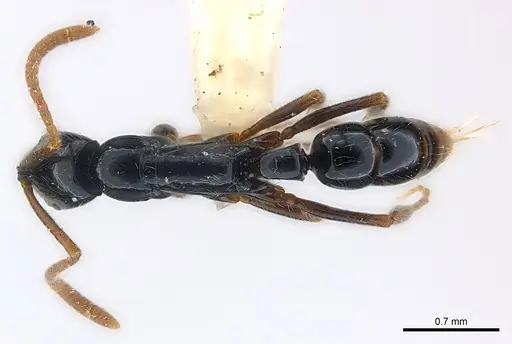
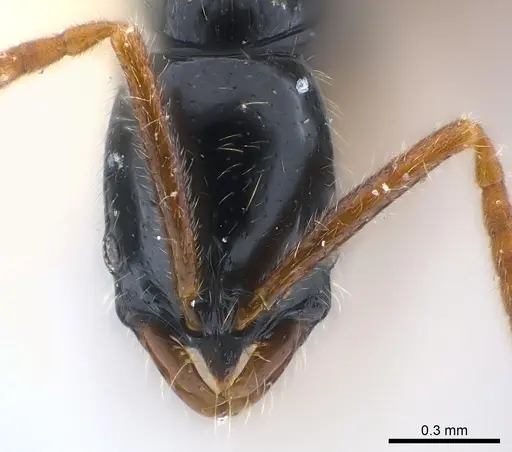
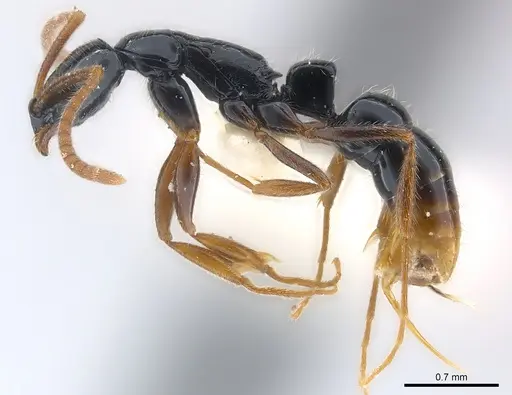
Literature
Loading...Loading products...