

Leptogenys consanguinea
- Scientific Name
- Leptogenys consanguinea
- Tribe
- Ponerini
- Subfamily
- Ponerinae
- Author
- Wheeler, 1909
- Distribution
- Found in 2 countries
Leptogenys consanguinea Overview
Leptogenys consanguinea is an ant species of the genus Leptogenys. It is primarily documented in 2 countries , including Australia, Mexico. Detailed taxonomic data and occurrence records can be further explored via authoritative databases such as AntWeb or the Global Biodiversity Information Facility (GBIF).
Leptogenys consanguinea
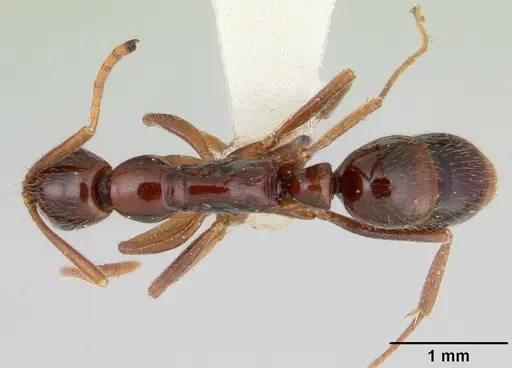
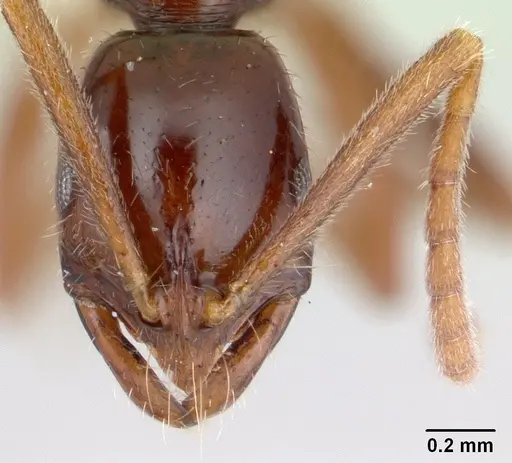
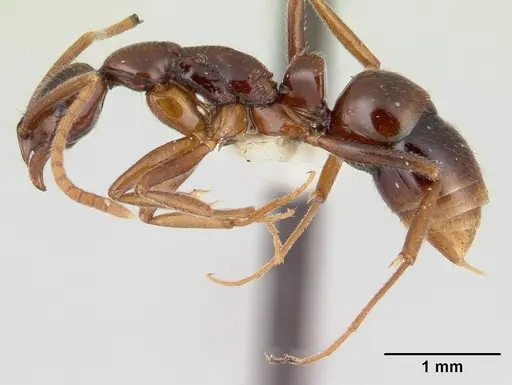
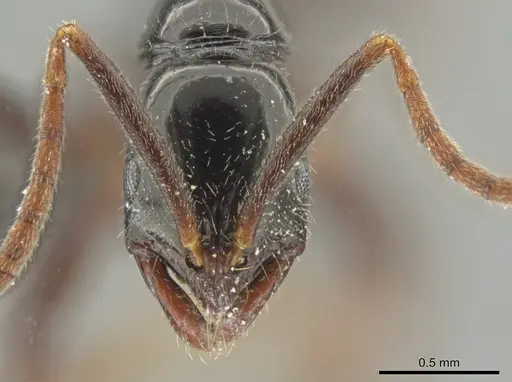
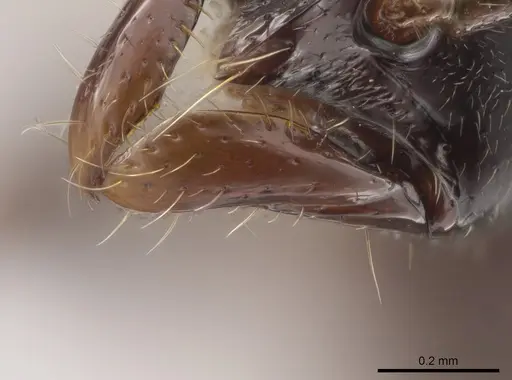
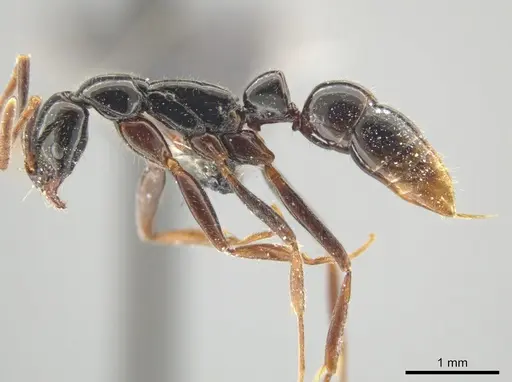
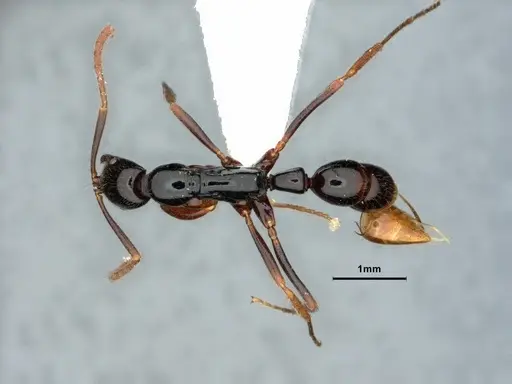
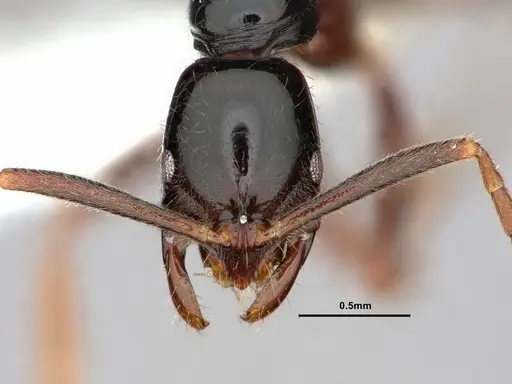
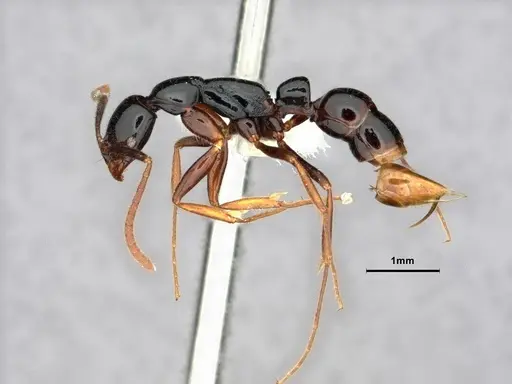
Leptogenys consanguinea is a medium-sized predatory ant belonging to the Ponerinae subfamily. Workers measure 1.06-1.16mm in head length with a distinctive appearance: the head, prothorax, petiole, and first two gastral segments are irregular dark brown, while the clypeus, mandible, antenna, and legs are ferruginous brown. The gastral apex is orange. They have weakly convex, almost flat eyes, and one mandible shuts tightly against the clypeus while the other leaves a narrow gap. This species belongs to the quirksguana species group and can be confused with the related Leptogenys yocota. They are found in evergreen forest habitats in southern Mexico and Guatemala, specifically recorded from Hidalgo and Veracruz states [1][2].
Quick Summary
- Difficulty: Medium
- Origin & Habitat: Southern Mexico to Guatemala. Found in evergreen forest habitats in Hidalgo and Veracruz states [1][2].
- Colony Type: Colony structure is unconfirmed. Based on typical Leptogenys genus patterns, likely single-queen colonies with claustral founding.
- Size & Growth:
- Queen: 1.09mm head length (queen measurements from Lattke 2011) [3]
- Worker: 1.06-1.16mm head length,1.62-1.92mm mesosoma length [3]
- Colony: Unknown, no colony size data available
- Growth: Unknown, growth rate has not been studied
- Development: 6-10 weeks (estimated based on typical Ponerinae development patterns) (Development timeline is unconfirmed for this species. Ponerine ants typically take 6-10 weeks from egg to worker at optimal temperatures, but this is an estimate based on related species.)
- Antkeeping:
- Temperature: Keep at 22-26°C. No specific thermal studies exist for this species, but evergreen forest habitats in Mexico suggest moderate warmth. Adjust based on colony activity, if workers cluster near heat, increase slightly, if they avoid it, reduce.
- Humidity: Maintain moderate to high humidity. Evergreen forest habitats suggest they prefer damp conditions. Keep nest substrate consistently moist but not waterlogged, with some slightly drier areas available.
- Diapause: Unknown, no studies on overwintering requirements. The Mexican habitat suggests they may experience cooler periods but likely not a true hibernation. Monitor colony activity for seasonal changes.
- Nesting: No specific nesting data exists for this species. Based on typical Leptogenys behavior and their evergreen forest habitat, they likely nest in soil or under stones. A naturalistic setup with moist substrate or a Y-tong/plaster nest with good humidity retention would likely work well.
- Behavior: Leptogenys ants are predatory, using their mandibles to capture prey. They are likely active foragers that hunt small invertebrates. No specific aggression or escape risk data exists for this species, but their medium size suggests standard escape prevention measures (tight-fitting lids, barriers) are advisable. Workers are likely fast-moving and alert.
- Common Issues: limited information makes care requirements uncertain, some aspects are estimated from genus patterns, predatory diet requires live prey which may be challenging to provide consistently, humidity requirements are not well-documented and may cause issues if guessed incorrectly, no documented colony founding behavior means founding colonies may be difficult, wild-caught colonies may have parasites that affect survival in captivity
Identification and Distinguishing Features
Leptogenys consanguinea workers are distinctive within their range. They have weakly convex, almost flat eyes that are less than one-fourth the lateral cephalic margin. One mandible shuts tightly against the clypeus while the other leaves a narrow gap in full-face view. The body coloration is distinctive: mesometathorax and propodeum are black, while the head, prothorax, petiole, and first two gastral segments are irregular dark brown. The clypeus, mandible, antenna, and legs are ferruginous brown, and the gastral apex is orange. They belong to the quirksguana species group and can be confused with Leptogenys yocota, separation characters are discussed in Lattke (2011). Workers measure 1.06-1.16mm in head length and 1.62-1.92mm in mesosoma length [3].
Distribution and Habitat
This species occurs from southern Mexico to Guatemala. Specifically recorded from Hidalgo and Veracruz states in Mexico [1]. The type locality is Córdoba, Mexico. They are found in evergreen forest habitats, suggesting they prefer shaded, humid environments with moderate temperatures. The distribution spans the Nearctic-Neotropical interface region.
Feeding and Diet
Leptogenys ants are predatory, using their mandibles to capture and subdue prey. No specific diet studies exist for L. consanguinea, but based on genus patterns, they likely hunt small invertebrates such as springtails, mites, and other micro-arthropods. In captivity, you should offer live small prey items. Fruit flies, pinhead crickets, and small mealworms may be accepted. Sugar sources are not typically a primary food for Leptogenys, they are carnivorous predators. Feed protein prey 2-3 times per week, removing uneaten prey after 24 hours.
Temperature and Care
No specific thermal studies exist for this species. The evergreen forest habitat in Mexico suggests they prefer moderate warmth with stable temperatures. Start around 22-26°C and observe colony behavior, if workers cluster near heat sources, increase slightly, if they avoid heated areas, reduce temperature. A heating cable on one side of the nest can create a useful gradient. Avoid temperature extremes. Humidity should be moderate to high, think damp forest floor conditions. Keep substrate consistently moist but not waterlogged.
Colony Founding
Colony founding behavior has not been directly documented for Leptogenys consanguinea. Based on typical Leptogenys genus patterns and the Ponerinae subfamily, queens likely establish colonies through claustral founding, the queen seals herself in a chamber and lives off stored fat reserves until her first workers emerge. However, this is an inference, not a confirmed behavior. If you obtain a founding queen, provide a moist test tube setup and keep her in a dark, quiet location. Do not disturb her during the founding period.
Behavior and Temperament
Leptogenys ants are known for their predatory behavior and active foraging style. Workers are likely fast-moving and alert. No specific aggression data exists for this species, but most Leptogenys are not particularly aggressive toward humans, they are more likely to flee than attack. Their medium size means standard escape prevention measures should be sufficient, but always use tight-fitting lids and barriers. They likely use chemical trails to recruit nestmates to food sources. Queens are not known to be parasitic, they establish new colonies through standard claustral founding.
Frequently Asked Questions
How long does it take for Leptogenys consanguinea to produce first workers?
The egg-to-worker timeline is unconfirmed for this species. Based on typical Ponerinae development, expect approximately 6-10 weeks from egg to first worker at optimal temperatures (around 24°C). This is an estimate, actual development time may vary.
What do Leptogenys consanguinea ants eat?
They are predatory ants that hunt small invertebrates. Offer live prey such as fruit flies, small crickets, springtails, and other micro-arthropods. Sugar sources are not typically a primary food source for this genus. Feed protein prey 2-3 times per week.
Are Leptogenys consanguinea good for beginners?
This species is rated as Medium difficulty. Limited species-specific care information exists, making it challenging for complete beginners. However, if you have experience with other predatory ants like Ponera or Hypoponera, you may succeed. Be prepared for some trial and error with humidity and temperature.
What temperature should I keep Leptogenys consanguinea at?
Keep them at 22-26°C initially. No specific thermal studies exist for this species, so observe your colony's behavior and adjust accordingly. If workers cluster near heat, increase slightly, if they avoid heated areas, reduce temperature.
Do Leptogenys consanguinea need hibernation?
Diapause requirements are unknown for this species. The Mexican habitat suggests they may experience cooler periods but likely not a true hibernation. Monitor your colony for seasonal activity changes, you may need to provide a slight cool period (15-18°C) for a few months in winter, but this is not confirmed.
How big do Leptogenys consanguinea colonies get?
Colony size is unknown, no colony size data exists for this species. Based on typical Leptogenys genus patterns, colonies likely reach several hundred workers, but this is an estimate.
Can I keep multiple Leptogenys consanguinea queens together?
Colony structure is unconfirmed. Combining unrelated queens has not been documented for this species. Based on typical Leptogenys patterns, they are likely single-queen (monogyne) colonies. Do not attempt to keep multiple foundress queens together without documented evidence they can coexist.
What humidity do Leptogenys consanguinea need?
Maintain moderate to high humidity. Their evergreen forest habitat suggests they prefer damp conditions. Keep nest substrate consistently moist but not waterlogged. Some slightly drier areas should be available for the ants to choose.
When should I move Leptogenys consanguinea to a formicarium?
Wait until the colony has at least 20-30 workers before moving to a formicarium. For founding colonies, keep them in a simple test tube setup with a water reservoir. Once established, a naturalistic setup or Y-tong nest with good humidity retention works well.
Where is Leptogenys consanguinea found?
This species occurs from southern Mexico to Guatemala. Specifically recorded from Hidalgo and Veracruz states in Mexico. They live in evergreen forest habitats.
Why is my Leptogenys consanguinea colony dying?
Common issues include: incorrect humidity (too dry or too wet), temperature stress, lack of adequate live prey, and parasites from wild-caught colonies. Ensure consistent moisture, appropriate temperature (22-26°C), and provide varied live prey. If the colony was wild-caught, parasites are a common cause of colony failure.
References

This caresheet is licensed under CC BY-SA 4.0 .
Literature
Loading...Loading products...