

Leptogenys chalybaea
- Scientific Name
- Leptogenys chalybaea
- Tribe
- Ponerini
- Subfamily
- Ponerinae
- Author
- Emery, 1887
- Distribution
- Found in 1 countries
Leptogenys chalybaea Overview
Leptogenys chalybaea is an ant species of the genus Leptogenys. It is primarily documented in 1 countries , including Malaysia. Detailed taxonomic data and occurrence records can be further explored via authoritative databases such as AntWeb or the Global Biodiversity Information Facility (GBIF).
Leptogenys chalybaea
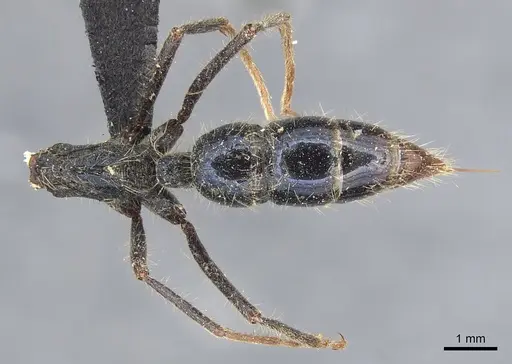
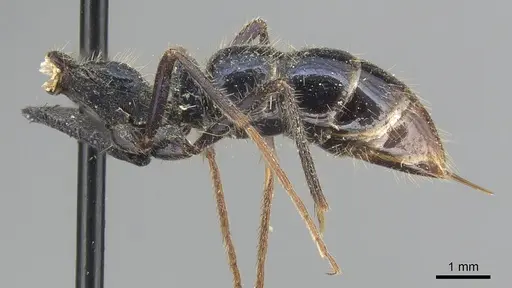
Leptogenys chalybaea is a striking Ponerine ant native to Borneo (Sarawak and Sabah). Workers measure 2.22-2.47mm in head length with a distinctive dark-blue to light-blue body featuring a metallic luster that makes them look almost like living sapphires [1]. Their most remarkable feature is their close relationship with Leptogenys cyanicatena, a species famous for its extraordinary cooperative hunting behavior where workers link their bodies in chains to drag massive millipedes back to their nest. While L. chalybaea's specific hunting behavior hasn't been observed, their nearly identical morphology suggests they likely use similar chain-based strategies for prey transport [1][2]. These ants nest in soil under rocks on the forest floor in Borneo's humid tropical environment.
Quick Summary
- Difficulty: Medium
- Origin & Habitat: Borneo (East Malaysia: Sarawak and Sabah). Found in tropical rainforest, nesting in soil under rocks and foraging on the forest floor [1][2].
- Colony Type: Colony structure is unconfirmed. Based on typical Leptogenys patterns, likely single-queen colonies. The closely related L. cyanicatena forms colonies that raid cooperatively, suggesting social cooperation is a key trait [1].
- Size & Growth:
- Queen: 2.11-2.19mm head length [1]
- Worker: 2.22-2.47mm head length [1]
- Colony: Unknown, no colony size data available for this species. Based on related L. cyanicatena behavior (swarm raiders using chains), colonies likely reach moderate to large sizes to support cooperative hunting [1].
- Growth: Unknown, no development data exists. Based on typical Ponerine development patterns, expect moderate growth rate at tropical temperatures.
- Development: Unconfirmed, no direct development data exists for this species. Based on related Leptogenys and general Ponerine patterns, estimate 6-10 weeks at 24-28°C. (Development timeline is estimated based on genus-level patterns since no species-specific data exists.)
- Antkeeping:
- Temperature: Keep at 24-28°C. This matches their tropical Bornean origin and aligns with requirements of related Leptogenys species [1]. A gentle heat gradient allows workers to regulate their temperature.
- Humidity: High humidity required, think humid tropical forest floor. Keep nest substrate consistently moist but not waterlogged. Provide a water source and mist occasionally to maintain 70-80% relative humidity [1].
- Diapause: No, as a tropical species from Borneo, they do not require hibernation. Maintain warm temperatures year-round [1].
- Nesting: Natural nesting: soil under rocks on forest floor. In captivity, a naturalistic setup with moist soil/soil-like substrate and flat stones or a Y-tong/plaster nest works well. They prefer tight, enclosed chambers that stay humid [1].
- Behavior: Likely similar to L. cyanicatena, cooperative foragers that hunt in groups. Workers are predatory and likely target millipedes and other large arthropods. They have the typical Ponerine sting (potent for their size), so handle with care. Escape prevention is important, workers are small (under 3mm) and can squeeze through small gaps. They are active foragers on the ground surface [1][2].
- Common Issues: tropical temperature requirements mean colonies can struggle in air-conditioned rooms or cool climates, escape prevention is critical due to small worker size, use fine mesh barriers, specialized diet may be challenging, they likely prefer live prey like millipedes or large arthropods, high humidity needs can lead to mold if ventilation is poor, limited available information means keepers must adapt care based on related species observations
Appearance and Identification
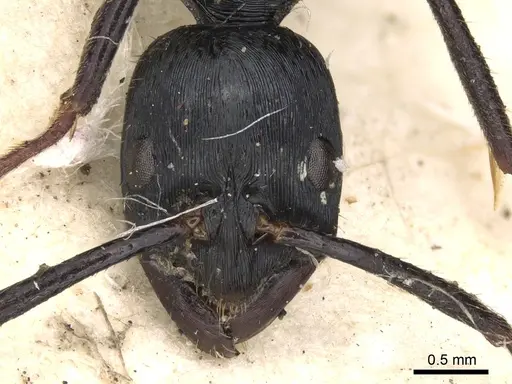
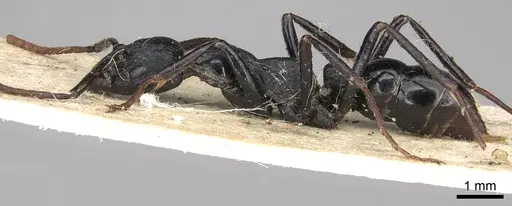
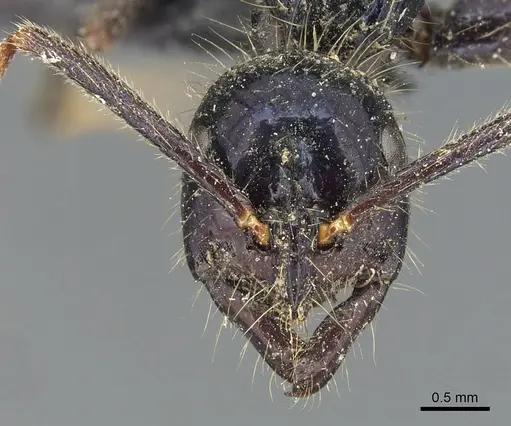
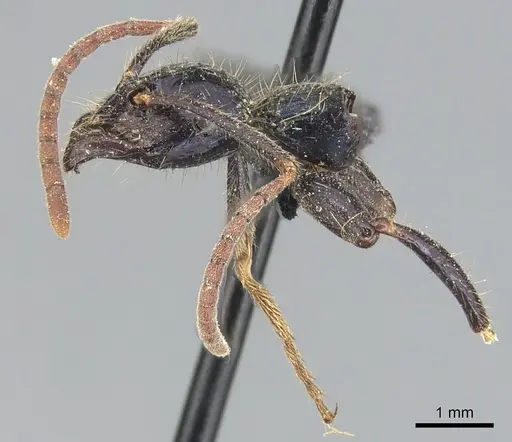
Leptogenys chalybaea workers are unmistakable due to their stunning metallic blue coloration. Their body is dark-blue to light-blue with a distinctive metallic sheen that makes them sparkle under light [1]. The head is nearly smooth with weak striations on the frons and gena. Their mandibles are dark-red, and the antennal scapes are dark-blue while the funicular segments are red-brown [1]. Workers measure 2.22-2.47mm in head length, making them relatively small Ponerine ants. Queens are similar in coloration but slightly smaller at 2.11-2.19mm head length, with a high rectangular petiolar node [1]. The species is part of the L. chalybaea species group, distinguished by their metallic blue color and specific mandible structure with a basal angle that is bluntly angular [2].
Distribution and Habitat
This species is confirmed only from Borneo, specifically the Malaysian states of Sarawak and Sabah [1][2]. Early records from Thailand and other locations have been reidentified as different, undescribed species in the same group [1]. They inhabit tropical rainforest environments where they nest in soil under rocks and forage on the forest floor [1]. The related species L. cyanicatena shows similar behavior in Cambodia and likely throughout SE Asia, suggesting L. chalybaea occupies similar ecological niches in its Bornean range. The humid, warm tropical climate of Borneo provides the high moisture and temperature conditions these ants require.
Feeding and Diet
While the specific hunting behavior of L. chalybaea has not been observed, their morphology is nearly identical to L. cyanicatena, which is a specialized millipede predator [1]. L. cyanicatena uses chain behavior where workers link their bodies together to drag large millipedes (up to 16.4g) back to the nest. They also occasionally hunt earthworms and smaller prey individually. For captive care, you should offer live prey appropriate to their size, small millipedes, crickets, mealworms, and other arthropods. As Ponerine ants, they likely have potent stings for subduing prey. Sugar water may be accepted but protein-rich live prey should form the primary diet. Feed small prey items 2-3 times per week and remove uneaten prey promptly to prevent mold.
Temperature and Care
As a tropical species from Borneo, Leptogenys chalybaea requires warm temperatures between 24-28°C. Room temperature may be insufficient in cooler climates, use a heating cable or mat on one side of the nest to create a gentle gradient. Place heating on top of the nest to avoid evaporating moisture too quickly. High humidity is essential, aim for 70-80% relative humidity. Keep the nest substrate consistently moist but not waterlogged. Provide a water source like a test tube water reservoir. Since they don't require diapause, maintain these conditions year-round. Avoid temperature drops below 22°C as this can slow activity and potentially harm the colony. [1]
Nesting Preferences
In the wild, L. chalybaea nests in soil under rocks on the forest floor [1]. For captive colonies, recreate these conditions with a naturalistic setup using moist soil or soil-like substrate. Flat stones placed on top of the substrate provide the dark, enclosed spaces these ants prefer. Alternatively, Y-tong (acrylic) nests or plaster nests with narrow chambers work well for Ponerine ants. The key is maintaining high humidity within the nest while allowing some ventilation to prevent mold. Avoid tall, open spaces, these ants prefer tight, enclosed chambers scaled to their body size.
Chain Behavior and Cooperative Hunting
The most remarkable behavior in the L. chalybaea species group is the chain-forming behavior documented in the related species L. cyanicatena. When hunting large millipedes, workers link their bodies together in linear or branched chains to collectively drag prey weighing up to 16.4g back to the nest [1]. This cooperative transport allows them to tackle prey far larger than any individual ant could handle. Chains adapt dynamically to obstacles along the path to the nest. While L. chalybaea's specific hunting behavior hasn't been observed, their nearly identical morphology strongly suggests they use similar strategies. In captivity, providing appropriately sized live prey may allow you to observe this fascinating cooperative behavior.
Frequently Asked Questions
How long does it take for Leptogenys chalybaea to raise first workers?
The exact development timeline is unconfirmed for this species. Based on typical Ponerine development patterns and related Leptogenys species, expect approximately 6-10 weeks from egg to worker at optimal temperatures of 24-28°C. Patience is key as this species may have slower development than more common ant species.
What do Leptogenys chalybaea ants eat?
Based on their relationship with L. cyanicatena, they are predatory millipede hunters. Offer live prey like small millipedes, crickets, mealworms, and other small arthropods. Remove uneaten prey promptly. They may occasionally accept sugar water but protein-rich live prey should form the bulk of their diet.
Can I keep Leptogenys chalybaea in a test tube setup?
Yes, test tubes work well for founding colonies. Keep the water reservoir filled and maintain high humidity around the tube. For established colonies, consider transitioning to a naturalistic setup with moist soil and hiding spots like flat stones to mimic their natural forest floor nesting sites.
Do Leptogenys chalybaea need hibernation?
No, they are tropical ants from Borneo and do not require hibernation. Keep them warm year-round at 24-28°C. Temperature drops below 22°C can be harmful and may slow or stop colony development.
Are Leptogenys chalybaea good for beginners?
This species is rated as Medium difficulty. While beautiful and fascinating, they have specific requirements: high humidity, warm temperatures, and a specialized predatory diet. They are not as forgiving as common species like Lasius or Tetramorium. Some experience with ant keeping is recommended before attempting this species.
How big do Leptogenys chalybaea colonies get?
Colony size is not documented for this specific species. Based on the cooperative hunting behavior of related L. cyanicatena (which uses swarm raiding), colonies likely reach moderate to large sizes to support group hunting. Expect perhaps dozens to a few hundred workers at maturity.
Why are my Leptogenys chalybaea dying?
Common causes include: temperatures below 22°C (tropical species need warmth), low humidity causing desiccation, mold from poor ventilation, escape through small gaps due to their small size, or starvation if not enough live prey is offered. Check all parameters and ensure escape prevention is adequate.
When should I move my colony to a formicarium?
Move to a larger setup when the test tube becomes crowded or when you see significant brood development. A naturalistic setup with moist soil and flat stones works well, or a Y-tong/plaster nest with narrow chambers. Ensure the new setup maintains high humidity.
References

This caresheet is licensed under CC BY-SA 4.0 .
CASENT0281931
View on AntWeb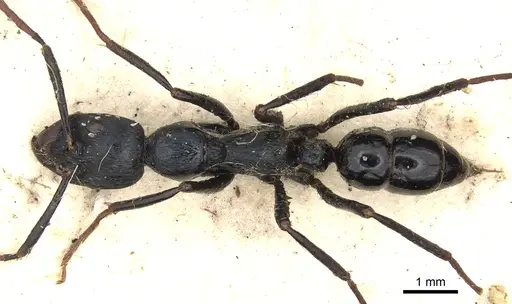
CASENT0903954
View on AntWeb
Literature
Loading...Loading products...