

Leptogenys carbonaria
- Scientific Name
- Leptogenys carbonaria
- Tribe
- Ponerini
- Subfamily
- Ponerinae
- Author
- Lattke, 2011
- Distribution
- Found in 1 countries
Leptogenys carbonaria Overview
Leptogenys carbonaria is an ant species of the genus Leptogenys. It is primarily documented in 1 countries , including Colombia. Detailed taxonomic data and occurrence records can be further explored via authoritative databases such as AntWeb or the Global Biodiversity Information Facility (GBIF).
Leptogenys carbonaria
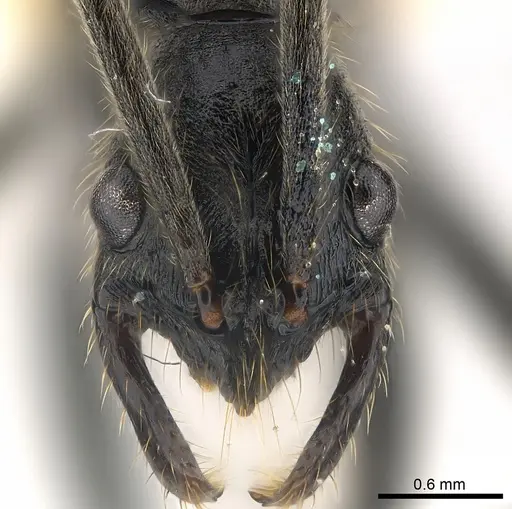
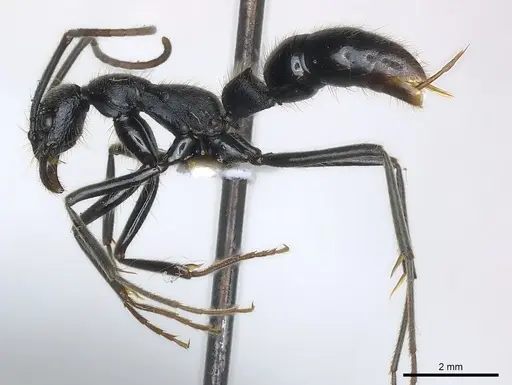
Leptogenys carbonaria is a medium-sized predatory ant from the Ponerinae subfamily, found only in the Sierra Nevada de Santa Marta mountains in Colombia. Workers measure approximately 2mm in head length with a body length around 3.5mm, making them modest-sized ants with a predominantly black coloration that inspired their species name (carbonaria means 'of coal' in Latin) [1]. They belong to the ingens species group, which contains larger predatory ants known for their active hunting behavior. The species was described in 2011 by Lattke and can be distinguished from similar species like L. socorda by the rough sculpturing on their petiolar node versus the smooth node found in related species [1]. Queens and males remain unknown, and no biological data exists for this species in the scientific literature.
Quick Summary
- Difficulty: Expert
- Origin & Habitat: Sierra Nevada de Santa Marta, Magdalena, Colombia at 695m elevation. This is a tropical mountain region with high humidity and warm temperatures year-round [2][3][1].
- Colony Type: Unknown, queens and males have never been documented. Based on genus patterns, likely single-queen colonies with potential ergatoid (wingless) replacement reproductives, which is common in the genus Leptogenys [1].
- Size & Growth:
- Queen: Unknown, queens have not been described [1]
- Worker: 1.5-2mm head length, ~3.5mm body length (mesosoma + gaster) [1]
- Colony: Unknown, no colony data exists [1]
- Growth: Unknown
- Development: Unknown, no development data exists. Based on similar Ponerine ants, estimate 6-10 weeks at optimal temperature, but this is a rough guess. (No direct data exists. Estimates based on related Leptogenys species patterns.)
- Antkeeping:
- Temperature: Keep warm at 24-28°C. This species comes from a tropical mountain environment where temperatures remain warm year-round. Use a heating cable on one side of the nest to create a gradient if room temperature is below this range.
- Humidity: High humidity required, aim for 70-80%. The Sierra Nevada de Santa Marta is a humid tropical environment. Keep the nest substrate consistently moist but not waterlogged.
- Diapause: Unknown, no data on seasonal behavior. The tropical location suggests year-round activity is likely, but related temperate Leptogenys species may require winter rest.
- Nesting: No natural nesting data exists. Based on genus patterns, they likely prefer humid soil environments or rotting wood. A naturalistic setup with moist substrate or a Y-tong/plaster nest with good humidity retention would be appropriate.
- Behavior: No behavioral observations exist in scientific literature. Based on genus membership in Ponerinae, these are likely active predators that hunt for small invertebrates. They probably have a potent sting for their size and may be aggressive when defending the colony. Escape prevention should be excellent regardless of behavior, all small ants can escape through gaps you might not expect. Watch for escape attempts and use fine mesh barriers.
- Common Issues: no biological data exists, all care recommendations are estimates based on genus patterns, queen and colony structure unknown, keepers cannot confirm founding type or social organization, slow growth is likely, Ponerine ants typically develop more slowly than many common hobby species, high humidity requirements can lead to mold problems if ventilation is inadequate, escape risk is real despite small size, use proper barriers anyway, no established husbandry guidelines, this species has never been kept in captivity to our knowledge
Species Identification and History
Leptogenys carbonaria was formally described in 2011 by J.E. Lattke as part of a comprehensive revision of New World Leptogenys species. The type specimens were collected from the Sierra Nevada de Santa Marta in Magdalena, Colombia, at an elevation of 695 meters. The species name refers to the ant's predominantly black coloration, derived from the Latin word 'carbo' meaning coal or charcoal. The type series consists of the holotype worker deposited at IAVH and paratype workers distributed between LACM and MCZC museums. This species belongs to the ingens species group within the genus Leptogenys, a group characterized by larger body size compared to other Leptogenys species and distinct morphological features including the petiolar structure [1].
Distribution and Habitat
This species is known only from its type locality in the Sierra Nevada de Santa Marta, a mountain range in northern Colombia that rises sharply from the Caribbean coast. The area is characterized by tropical humid forest at lower elevations, transitioning to cloud forest at higher elevations. The 695m collection altitude suggests a mid-elevation tropical habitat with high humidity and relatively stable warm temperatures year-round. The Sierra Nevada de Santa Marta is a biodiversity hotspot, home to many endemic species that are found nowhere else on Earth. This limited distribution makes Leptogenys carbonaria a particularly rare find, and any wild specimens would be significant for scientific study [2][3][1].
Known Biology and Knowledge Gaps
Nothing is known about the biology of Leptogenys carbonaria. This is one of the least-studied ant species in the hobby, with zero scientific publications on its behavior, colony structure, development, or captive care. Queens and males have never been documented, meaning we cannot confirm whether they form single-queen or multi-queen colonies, or what their founding behavior looks like. This represents both a challenge and an opportunity for antkeepers, there is genuinely no established path for keeping this species, and any successful husbandry would be pioneering work. All care recommendations must be inferred from what we know about related species in the genus Leptogenys and the broader Ponerinae subfamily [1].
Inferred Care Requirements
Since no species-specific data exists, care recommendations must be based on genus-level patterns. Leptogenys are Ponerine ants, a subfamily known for their predatory nature and active hunting behavior. The ingens species group specifically contains larger species that are typically active predators of soil-dwelling invertebrates. Expect this species to be a predator that needs live prey, likely small insects and other arthropods. Ponerine queens are typically semi-claustral, meaning the queen must leave the nest periodically to hunt for food during the founding stage, unlike claustral species that can survive on stored fat alone. Keep the nest warm (24-28°C) and humid (70-80%), replicating the tropical mountain environment of the Sierra Nevada de Santa Marta. Provide a moisture source and ensure good ventilation to prevent mold while maintaining humidity. [1]
Challenges and Considerations
This species is recommended only for experienced antkeepers who are comfortable with species that have no established care protocols. The complete lack of biological data means you are essentially pioneering captive husbandry for this species. Be prepared for slow progress and potential failures, this is normal when working with poorly studied species. The limited distribution in the wild also means that wild-caught colonies are extremely rare and should be approached with caution from both an ethical and legal perspective. Always verify the legal status of this species in your region before attempting to acquire specimens. Given the complete absence of captive breeding records, establishing a sustainable captive population would be a significant achievement in the antkeeping hobby. [1]
Frequently Asked Questions
How do I keep Leptogenys carbonaria ants?
No established care protocol exists because this species has never been documented in captivity. Based on genus patterns, provide a warm (24-28°C), humid (70-80%) environment with live prey. Use a naturalistic setup with moist substrate or a Y-tong nest. This is expert-level territory, expect to experiment and adapt.
What do Leptogenys carbonaria eat?
No feeding observations exist for this species. Based on genus membership in Ponerinae, they are likely predatory on small invertebrates. Offer small live prey like fruit flies, pinhead crickets, mealworms, and other small arthropods. Sugar sources may be accepted but are not the primary diet.
How long does it take for Leptogenys carbonaria to develop from egg to worker?
Unknown, no development data exists for this species. For related Ponerine ants, development typically takes 6-10 weeks at optimal temperature, but this is a rough estimate with no species-specific confirmation.
Are Leptogenys carbonaria ants aggressive?
No behavioral observations exist. However, Ponerine ants typically have potent stings and will defend their colonies aggressively when threatened. Handle with caution and use excellent escape prevention regardless of observed temperament.
Can I keep multiple Leptogenys carbonaria queens together?
Unknown, colony structure has never been documented for this species. Queens and males are unknown in scientific collections. Without this basic biological data, combining queens is not recommended.
Do Leptogenys carbonaria need hibernation?
Unknown, no data on seasonal behavior exists. The tropical mountain habitat suggests year-round activity is likely, but related temperate species may require winter rest. Observe your colony for seasonal activity patterns.
What size colony does Leptogenys carbonaria reach?
Unknown, no colony size data exists. The ingens species group contains larger Leptogenys species, but specific colony sizes for L. carbonaria have never been documented.
Is Leptogenys carbonaria suitable for beginners?
No, this species is not suitable for beginners. No biological data exists, no established care protocols exist, and queens have never been documented. This is an expert-level species requiring experience with Ponerine ants and comfort with experimental husbandry.
Where does Leptogenys carbonaria come from?
This species is known only from the Sierra Nevada de Santa Marta mountains in Magdalena, Colombia, at 695m elevation. It was described in 2011 and remains one of the least-studied ant species in the genus.
References

This caresheet is licensed under CC BY-SA 4.0 .
CASENT0217022
View on AntWeb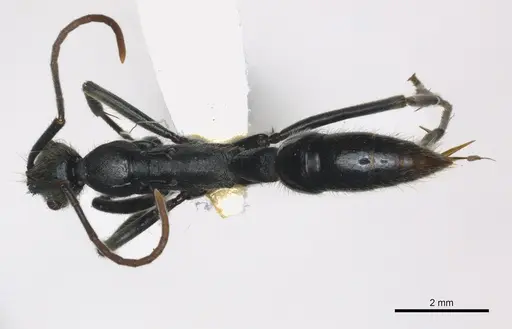
Literature
Loading...Loading products...