

Leptogenys borneensis
- Scientific Name
- Leptogenys borneensis
- Tribe
- Ponerini
- Subfamily
- Ponerinae
- Author
- Wheeler, 1919
- Distribution
- Found in 1 countries
Leptogenys borneensis Overview
Leptogenys borneensis is an ant species of the genus Leptogenys. It is primarily documented in 1 countries , including Malaysia. Detailed taxonomic data and occurrence records can be further explored via authoritative databases such as AntWeb or the Global Biodiversity Information Facility (GBIF).
Leptogenys borneensis
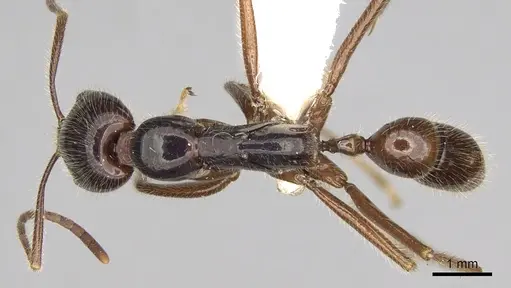
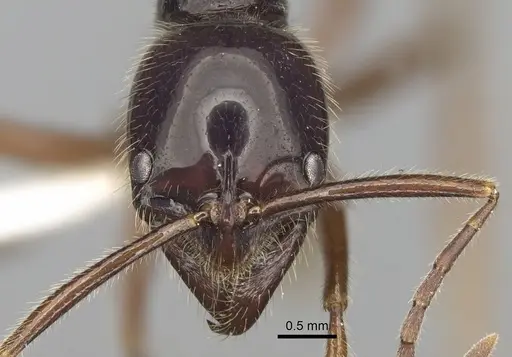
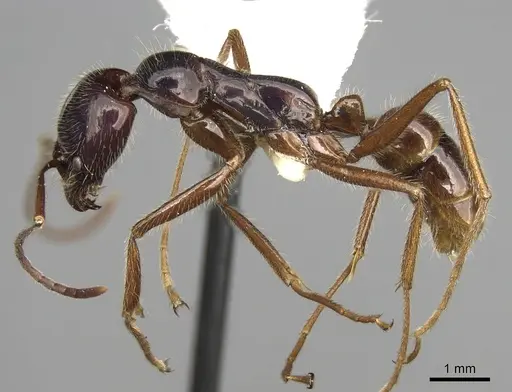
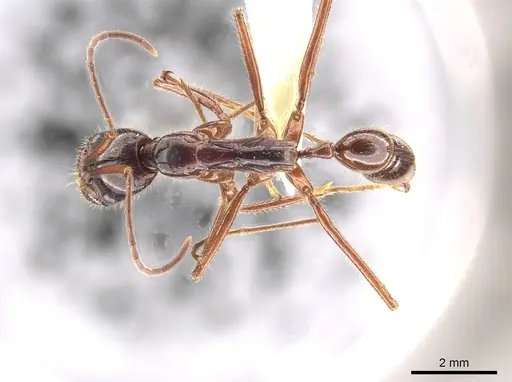
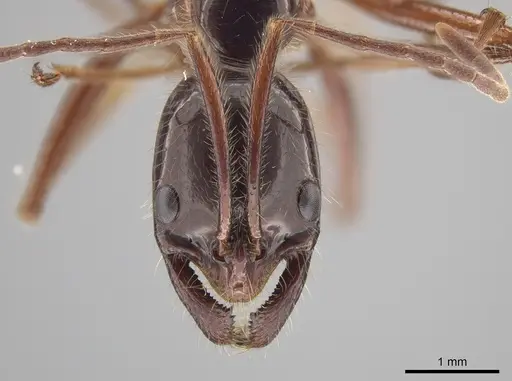
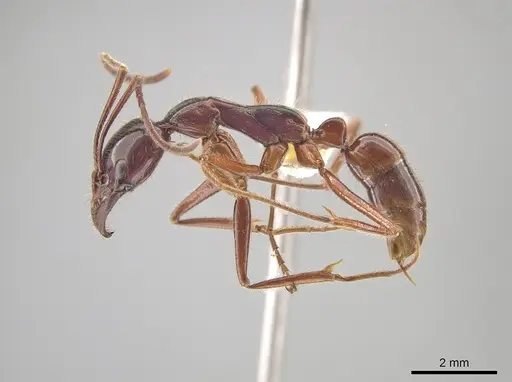
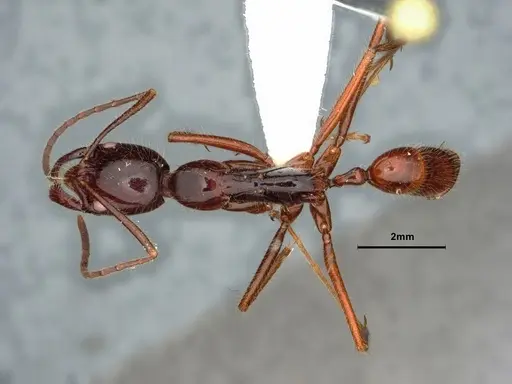
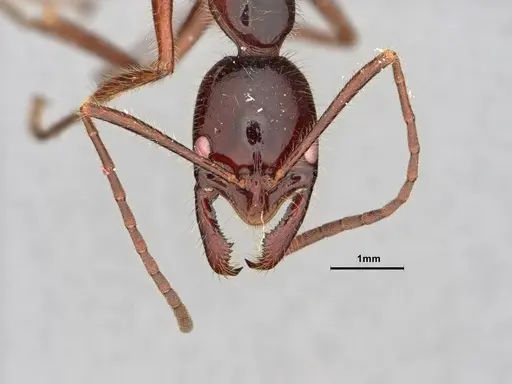
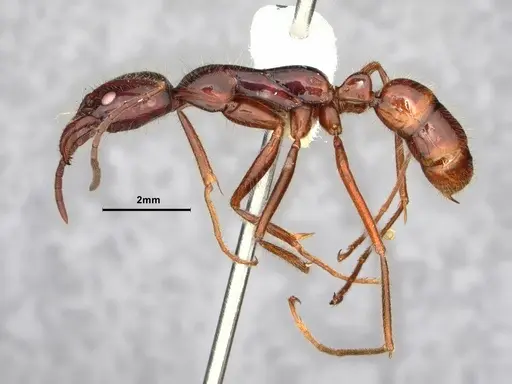
Leptogenys borneensis is a predatory ponerine ant known for its impressive army ant behavior. Workers are dark brown with paler legs and antennae, featuring a long slender mesosoma and a distinctly shaped petiolar node with a bluntly pointed apex. The head has a slightly convex posterior margin, triangular mandibles, and a strongly ridged clypeus. This species is found across Southeast Asia including Borneo, Sumatra, Thailand, Vietnam, Malaysia, and Singapore, typically at elevations from 230m to 1500m. Colonies exhibit massive nocturnal raids and frequent migrations, with colony sizes reaching 5,000-10,000 workers. They host symbiotic rove beetles (Parawroughtonilla hirsuta and Leptogenonia roslii) and at least one phorid fly species within their colonies.
Quick Summary
- Difficulty: Medium
- Origin & Habitat: Southeast Asia, found in Borneo, Sumatra, Thailand, Vietnam, Malaysia, and Singapore. Natural habitat is tropical forests, with colonies nesting in decayed wood stumps at elevations ranging from 230m to 1500m [1][2].
- Colony Type: Colony structure is not fully confirmed. No queen has been documented in collected colonies, only workers and males were found [1]. This suggests possible ergatoid (wingless) queens or queenless colony structure, which is known in some Leptogenys species. Colonies can reach 5,000-10,000 workers [3].
- Size & Growth:
- Queen: Unconfirmed, no queen has been collected and described. Based on related Leptogenys species, likely 6-8mm.
- Worker: Estimated 5-7mm based on male measurements (HW 1.54-1.56mm) and genus patterns.
- Colony: Up to 5,000-10,000 workers [3].
- Growth: Moderate, based on typical Leptogenys development patterns.
- Development: 6-10 weeks estimated based on genus-level Leptogenys data. (Direct development data unavailable. Estimates based on related Leptogenys species patterns.)
- Antkeeping:
- Temperature: Keep at 24-28°C. This species comes from tropical Southeast Asia and requires warm conditions. A heating cable on one side of the nest creates a suitable gradient [1][2].
- Humidity: High humidity required, think damp tropical forest floor. Keep nest substrate consistently moist but not waterlogged. Provide a water tube for drinking water. Mist occasionally but monitor for mold.
- Diapause: No, this is a tropical species that does not require hibernation. Maintain warm conditions year-round [3].
- Nesting: In nature, colonies nest in decayed wood stumps [1]. For captivity, Y-tong (AAC) nests or plaster nests work well. Provide damp substrate and avoid drying out. Naturalistic setups with rotting wood pieces are also suitable.
- Behavior: Leptogenys borneensis is a nocturnal predator with army ant behavior. Workers conduct massive collective raids on prey colonies and frequently migrate their nest location, typically between 8 p.m. and 3 a.m. [2][3]. They are aggressive predators but generally escape risk is moderate, use standard escape prevention. Workers are fast-moving and can be defensive when defending raids. They peacefully integrate symbiotic beetles into their colonies and treat them as nestmates [3].
- Common Issues: colonies can reach 5,000-10,000 workers, requiring large enclosures as they grow, start planning for a spacious formicarium early, no queen has been documented in wild colonies, this species may have ergatoid queens or be queenless, which affects how you start a colony, frequent colony migrations mean they may abandon nests frequently, provide multiple potential nest sites, tropical species requires constant warmth, cold temperatures can slow or stop brood development, predatory diet means you need a reliable source of live prey like crickets, mealworms, or other small insects
Housing and Nest Setup
Leptogenys borneensis nests in decayed wood in the wild, so provide similar conditions in captivity. Y-tong (AAC) nests or plaster nests with damp substrate work well. The nest should remain consistently moist but never waterlogged. Since colonies can reach 5,000-10,000 workers, plan for a spacious formicarium from the start, a small test tube setup will only work for the founding stage. Provide multiple connected chambers to accommodate large colony sizes. Add a water tube for drinking water and mist occasionally to maintain humidity. These ants are nocturnal and conduct raids at night, so provide an outworld where they can forage. [1][3][2]
Feeding and Diet
This is a predatory ant species that hunts in massive raids. Feed a variety of small live insects including crickets, mealworms, fruit flies, and other small arthropods. They are nocturnal hunters, so offer food in the evening or at night when activity peaks. Remove uneaten prey after 24-48 hours to prevent mold. While their primary diet is protein from prey, they may occasionally accept sugar water or honey, especially when colony size is large. Ensure a constant supply of fresh water. [3]
Temperature and Heating
As a tropical Southeast Asian species, Leptogenys borneensis requires warm conditions. Keep the nest at 24-28°C. A heating cable placed on one side of the nest creates a temperature gradient allowing ants to self-regulate. Room temperature may be sufficient if your home stays in this range, but monitor with a thermometer. Cold temperatures will slow or stop brood development and can stress the colony. Do not let temperatures drop below 20°C for extended periods. Maintain warmth year-round as they do not undergo diapause. [1][2]
Colony Behavior and Migrations
This species exhibits classic army ant behavior with massive nocturnal raids and frequent colony migrations. Workers hunt in coordinated swarms, typically between 8 p.m. and 3 a.m. [2]. Colonies migrate regularly, sometimes moving their entire nest to new locations. This means your ants may abandon their nest chamber periodically, this is normal behavior, not a sign of distress. Provide multiple potential nest sites in larger setups. Despite their aggressive hunting behavior, workers are generally peaceful toward keepers and rarely bite. They are fast-moving and can be exciting to watch during raid activity.
Symbiotic Relationships
Leptogenys borneensis hosts several symbiotic organisms within its colonies. Two species of rove beetles (Parawroughtonilla hirsuta and Leptogenonia roslii) live integrated into the colony and participate in migrations alongside the ants [2][3]. Workers treat these beetles peacefully and integrate them as nestmates. At least one phorid fly species is also associated with this ant [3]. In captivity, you likely won't encounter these symbionts, but their presence demonstrates this species' tolerance for other organisms in the nest.
Growth and Development
Colony development is not directly documented for this species. Based on typical Leptogenys patterns, expect 6-10 weeks from egg to first worker at optimal temperature. Colonies can grow to 5,000-10,000 workers in the wild [3], so be prepared for large colony sizes. Growth rate is moderate, faster than slow-growing ponerines but not as rapid as some Formicinae. The lack of documented queen in wild collections suggests this species may have ergatoid (wingless) queens or reproduce through other mechanisms, which could affect how colonies establish in captivity.
Frequently Asked Questions
How long does it take for Leptogenys borneensis to produce first workers?
Direct data is unavailable, but based on typical Leptogenys development, expect 6-10 weeks from egg to first worker at optimal temperature (24-28°C). This is an estimate based on genus patterns, not species-specific data.
What do Leptogenys borneensis ants eat?
They are predatory ants that hunt small insects. Feed live prey like crickets, mealworms, fruit flies, and other small arthropods. Offer food in the evening since they are nocturnal. They may also accept sugar water or honey occasionally.
Can I keep multiple Leptogenys borneensis queens together?
The colony structure is not fully confirmed. No queen has been documented in collected wild colonies. It may have ergatoid queens or a queenless system. Until more is known, keeping multiple unrelated queens together is not recommended.
Do Leptogenys borneensis ants need hibernation?
No. This is a tropical species from Southeast Asia and does not require hibernation or diapause. Keep them warm year-round at 24-28°C.
How big do Leptogenys borneensis colonies get?
Colonies can reach 5,000-10,000 workers in the wild [3]. Be prepared for large colonies and plan your formicarium accordingly.
Are Leptogenys borneensis ants aggressive?
They are aggressive predators that conduct massive raids on prey colonies, but toward keepers they are generally not highly aggressive. Workers are fast-moving and may be defensive during raids, but rarely bite. They are more interesting to watch than dangerous to handle.
What is the best nest type for Leptogenys borneensis?
Y-tong (AAC) nests or plaster nests with damp substrate work well. They naturally nest in decayed wood stumps, so providing rotting wood pieces in a naturalistic setup is also suitable. The key is maintaining high humidity and keeping the nest moist.
Why do my Leptogenys borneensis keep migrating?
This is normal army ant behavior. Leptogenys borneensis regularly migrates its nest location, typically between 8 p.m. and 3 a.m. [2]. Providing multiple potential nest sites in a larger setup can help accommodate this behavior.
What temperature do Leptogenys borneensis need?
Keep them at 24-28°C. This tropical species requires warm conditions. A heating cable on one side of the nest creates a suitable gradient. Do not let temperatures drop below 20°C.
Why was no queen found in the colony?
Researchers have not documented a queen in collected colonies of Leptogenys borneensis [1]. This suggests the species may have ergatoid (wingless) queens that are difficult to find, or possibly a queenless colony structure where workers reproduce. This is not fully understood yet.
References

This caresheet is licensed under CC BY-SA 4.0 .
Literature
Loading...Loading products...