

Leptogenys borivava
- Scientific Name
- Leptogenys borivava
- Tribe
- Ponerini
- Subfamily
- Ponerinae
- Author
- Rakotonirina & Fisher, 2014
- Distribution
- Found in 1 countries
Leptogenys borivava Overview
Leptogenys borivava is an ant species of the genus Leptogenys. It is primarily documented in 1 countries , including Madagascar. Detailed taxonomic data and occurrence records can be further explored via authoritative databases such as AntWeb or the Global Biodiversity Information Facility (GBIF).
Leptogenys borivava
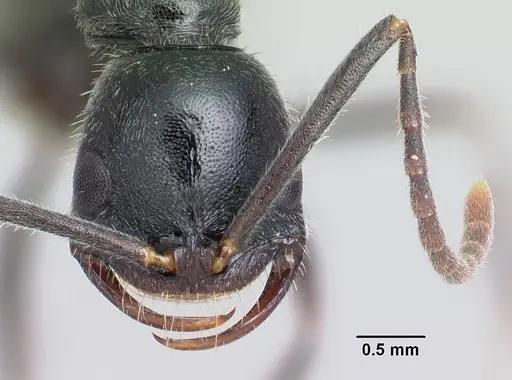
Leptogenys borivava is a small ponerine ant native to southwestern Madagascar, specifically found in the spiny forest and thicket habitats of the Mahafaly Plateau and PN Tsimanampetsotsa [1]. Workers are distinctive with their elongate head (longer than broad), relatively long antennal scapes, and body covered in long erect hairs with sparse pubescence [1]. They are black to dark brown in color, with brown basal portions on their legs and lighter brown tips on the abdomen [1]. This species belongs to the arcirostris complex within the truncatirostris species group [1]. In the wild, colonies have been found nesting in rotten logs while workers forage on the ground [1].
Quick Summary
- Difficulty: Unknown, limited data available
- Origin & Habitat: Southwest Madagascar, spiny forest/thicket habitats on the Mahafaly Plateau and PN Tsimanampetsotsa at elevations around 40m [1][2]
- Colony Type: Colony structure unconfirmed, only worker specimens have been collected [1]
- Size & Growth:
- Queen: Unknown, only workers have been described
- Worker: Workers measure approximately 1mm in head width (HW: 0.97-1.01mm) with head length 1.05-1.10mm [1]
- Colony: Unknown, no colony size data available
- Growth: Unknown
- Development: Unconfirmed, no development data exists for this species (Based on related Leptogenys species, development likely takes several months but this is an estimate)
- Antkeeping:
- Temperature: Based on their spiny forest habitat in southwestern Madagascar, they likely prefer warm conditions. Start around 24-28°C and observe colony activity [1]
- Humidity: Spiny forest habitats are relatively dry. Keep substrate moderately dry with some moisture available, avoid overly damp conditions [1][3]
- Diapause: Unknown, no seasonal data available for this species
- Nesting: In the wild, colonies nest in rotten logs [1]. In captivity, a naturalistic setup with rotten wood or cork, or a Y-tong/plaster nest with dry to moderately humid conditions would be appropriate. Avoid overly moist substrates.
- Behavior: Leptogenys ants are typically predatory, using their mandibles to capture prey. Workers forage on the ground in natural habitat [1]. Their small size (around 1mm) means escape prevention should be taken seriously, use fine mesh and tight-fitting lids. Temperament is not well-documented but most Leptogenys are not aggressive toward humans.
- Common Issues: Limited availability, this is a newly described species from Madagascar with few records, No captive breeding data available, founding behavior and development timeline unknown, Escape risk due to small size, they can squeeze through tiny gaps, Unknown temperature and humidity tolerances, keepers must experiment carefully, Wild-caught colonies may have parasites or not adapt to captive conditions
Natural History and Distribution
Leptogenys borivava is endemic to southwestern Madagascar, specifically found in the spiny forest and thicket habitats of the Mahafaly Plateau and PN Tsimanampetsotsa [1]. The spiny forest is a unique dry forest ecosystem characterized by thorny vegetation adapted to the arid conditions. This species was described in 2014 by Rakotonirina and Fisher based on worker specimens collected during field surveys [1]. All specimens have been found at low elevations around 40 meters, foraging on the ground or nesting in rotten logs [1]. The species can be identified by its elongate head (head index 92-94), relatively long scapes (scape index 115-119), and the presence of numerous long standing hairs on the body with sparse pubescence [1]. It differs from similar species like L. alatapia in having a more elongate head, and from L. arcirostris in its longer scapes and hairier body [1].
Housing and Nest Preferences
In their natural habitat, Leptogenys borivava colonies nest in rotten logs on the ground of the spiny forest [1]. For captive care, a naturalistic setup works best, provide a layer of dry to moderately humid substrate with pieces of rotten wood or cork for nesting. The spiny forest environment is relatively dry, so avoid overly damp conditions [3]. A Y-tong (acrylic) or plaster nest can also work if you maintain drier humidity levels. Since workers are only about 1mm long, use fine mesh on any ventilation holes and ensure all connections are sealed, these tiny ants can escape through remarkably small gaps. Provide a shallow water dish and a small outworld for foraging.
Feeding and Diet
Leptogenys ants are predatory, using their sharp mandibles to capture and subdue prey. While specific prey records for L. borivava do not exist, related Leptogenys species typically hunt small invertebrates like springtails, mites, and other micro-arthropods [1]. In captivity, offer small live prey such as fruit flies, pinhead crickets, small mealworms, and other tiny insects. You can also experiment with small pieces of raw meat or protein-based foods. Sugar sources are not typically important for Leptogenys as they are primarily predatory. Feed every 2-3 days, removing any uneaten prey after 24 hours.
Temperature and Seasonal Care
Leptogenys borivava comes from the warm, dry spiny forests of southwestern Madagascar where temperatures are consistently warm year-round [1]. There is no data on diapause requirements for this species. Based on their origin, they likely do not require hibernation and should be kept warm, aim for temperatures in the 24-28°C range. A heating cable on one side of the nest can create a temperature gradient. Monitor colony behavior: if workers cluster near the heated area, increase temperature slightly, if they avoid it, reduce heat. Since this species has not been kept in captivity before, careful observation and adjustment is necessary.
Handling and Temperament
Leptogenys borivava workers are small (around 1mm) and their temperament is not well-documented. Most Leptogenys ants are not aggressive toward humans and lack a painful sting. However, they are predators with well-developed mandibles and may bite if handled roughly. The main concern for keepers is their small size, they are excellent escape artists and can squeeze through gaps that seem impossible. Always use fine mesh (at least 0.5mm or smaller), seal all edges with fluon or similar barriers, and check enclosures frequently. When observing or moving colonies, do so gently to avoid stressing the ants. [1]
Frequently Asked Questions
How long does it take for Leptogenys borivava to go from egg to worker?
This is unconfirmed, no development data exists for this species. Based on related Leptogenys species, expect several months (possibly 3-6 months) from egg to first worker, but this is only an estimate.
Can I keep Leptogenys borivava in a test tube setup?
Test tubes can work for founding colonies, but this species naturally nests in rotten logs in relatively dry conditions. A test tube with a water reservoir can work, but monitor humidity carefully, they prefer drier conditions than many ants.
What do Leptogenys borivava ants eat?
Like other Leptogenys species, they are predatory. Offer small live prey like fruit flies, springtails, small mealworms, and other tiny insects. Sugar sources are not typically important for this genus.
Are Leptogenys borivava ants aggressive?
Their temperament is not well-documented, but most Leptogenys are not aggressive toward humans. They have mandibles for hunting prey, not for defending against large threats. They may bite if handled roughly.
Do Leptogenys borivava ants need hibernation?
Unknown, no seasonal data exists for this species. Based on their origin in warm southwestern Madagascar, they likely do not require a diapause period.
How big do Leptogenys borivava colonies get?
Colony size is unknown, no colony size data has been recorded. Related Leptogenys species typically form colonies of several hundred workers.
What is the best nest type for Leptogenys borivava?
In the wild they nest in rotten logs. In captivity, a naturalistic setup with cork or rotten wood, or a Y-tong/plaster nest with dry to moderately humid conditions works well.
Are Leptogenys borivava good for beginners?
No, this species has no captive care history and limited data available. It is not recommended for beginners. Start with more established species like Lasius or Messor that have well-documented care requirements.
Where is Leptogenys borivava found in the wild?
Only in southwestern Madagascar, specifically the Mahafaly Plateau and PN Tsimanampetsotsa, in spiny forest and thicket habitats at about 40 meters elevation.
How do I prevent Leptogenys borivava from escaping?
Their small size (about 1mm) makes them excellent escape artists. Use fine mesh (0.5mm or smaller) on all ventilation, seal all edges and connections with fluon or similar barriers, and check enclosures frequently.
References

This caresheet is licensed under CC BY-SA 4.0 .
CASENT0430091
View on AntWeb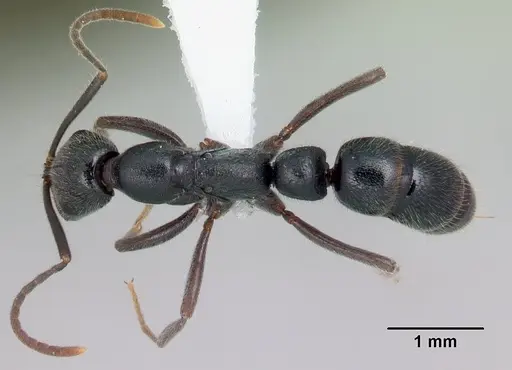
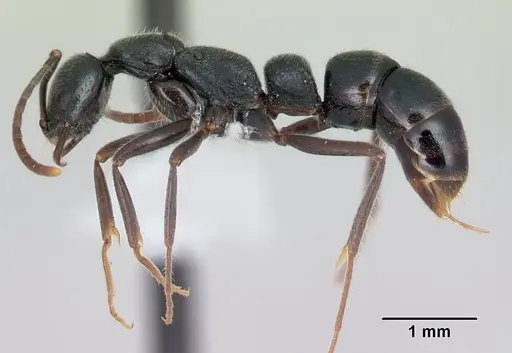
Literature
Loading...Loading products...