

Leptogenys aspera
- Scientific Name
- Leptogenys aspera
- Tribe
- Ponerini
- Subfamily
- Ponerinae
- Author
- André, 1889
- Distribution
- Found in 1 countries
Leptogenys aspera Overview
Leptogenys aspera is an ant species of the genus Leptogenys. It is primarily documented in 1 countries , including Indonesia. Detailed taxonomic data and occurrence records can be further explored via authoritative databases such as AntWeb or the Global Biodiversity Information Facility (GBIF).
Leptogenys aspera
Leptogenys aspera is a medium-sized ponerine ant native to Southeast Asia, found across Vietnam, Laos, Thailand, and Myanmar. Workers measure approximately 6.75mm with a distinctive dark black shiny body contrasted by orangish antennae, mandibles, legs, and the tip of the abdomen. This species is easily recognized by its remarkable mandible structure featuring seven teeth, three short teeth on the basal margin, a basal angle, two distinct teeth on the masticatory margin, and an acute apical tooth. The head is longer than wide, and the body has a coarsely rugose sculpture pattern. Colonies are found in lowland to mid-elevation forests (up to 500m) where they nest in rotting wood. The queen and male castes remain unknown, making colony establishment from wild-caught queens impractical.
Quick Summary
- Difficulty: Medium
- Origin & Habitat: Southeast Asia, Vietnam, Laos, Thailand, and Myanmar. Found in dry evergreen forest, rainforest, and evergreen forest habitats at elevations up to 500m. Nests in rotting wood [1].
- Colony Type: Unknown colony structure. Queen caste has not been described, so wild colony organization is unconfirmed.
- Size & Growth:
- Queen: Unknown, queen caste has not been described [1]
- Worker: Approximately 6.75mm total length, head length 1.34-1.57mm, width 1.03-1.19mm, Weber's length 2.08-2.28mm [2][1]
- Colony: Unknown, no colony size data available
- Growth: Unknown, no development data available
- Development: Unknown, development has not been studied. Based on typical Ponerinae patterns, expect 6-10 weeks at tropical temperatures. (No direct data exists. Related Leptogenys species typically show moderate growth rates.)
- Antkeeping:
- Temperature: Keep at 24-28°C. This species comes from tropical Southeast Asia where temperatures are consistently warm year-round. A gentle gradient allowing warmer and cooler areas is recommended.
- Humidity: Keep moderately humid, around 60-80%. Their natural habitat includes rainforest and evergreen forest environments. The nest substrate should remain damp but not waterlogged.
- Diapause: Unknown, no data on overwintering requirements. Given their tropical origin, they likely do not require a true diapause but may show reduced activity during cooler periods.
- Nesting: Provide rotting wood or a moist nest substrate. In captivity, a naturalistic setup with damp soil/wood or a Y-tong/plaster nest works well. They prefer tight, enclosed spaces typical of forest-floor nesting ants.
- Behavior: This is a predatory ponerine ant. Workers are active foragers that hunt small invertebrates. They likely use their distinctive mandibles to capture prey. Like other Leptogenys species, they are probably moderately aggressive when defending the colony. Escape prevention should be good, workers are a manageable size at nearly 7mm. They form a distinct constriction between the first and second gastral segments.
- Common Issues: queen unavailability, the queen caste has never been described, making it impossible to start colonies from wild-caught queens, no development data, without known development times, predicting colony growth is difficult, unknown colony structure, we don't know if they are single-queen or multi-queen colonies, humidity management, forest-floor ants need balance between damp substrate and mold prevention, limited availability, this species is rarely available in the antkeeping hobby
Appearance and Identification
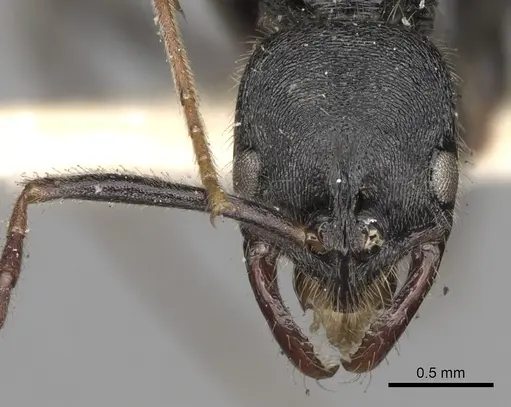
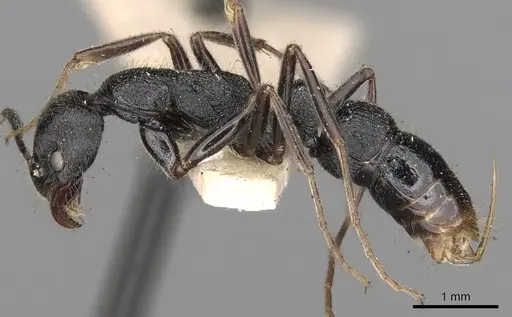
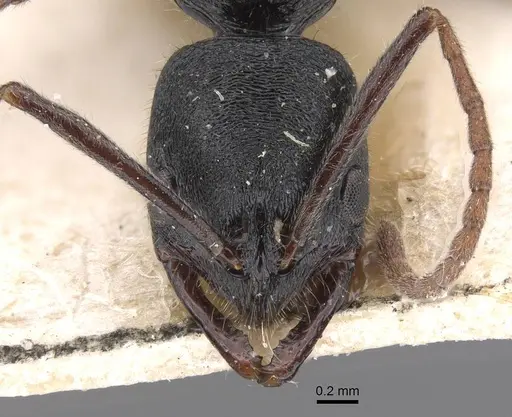
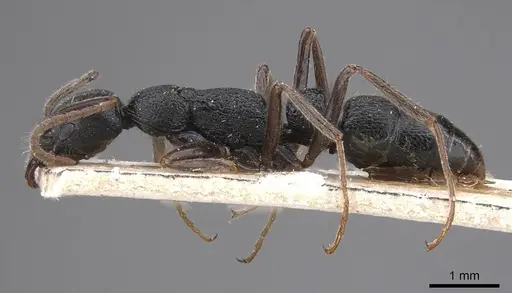
Leptogenys aspera workers are medium-sized ants measuring approximately 6.75mm in total length. The most distinctive feature is their remarkable mandible structure with seven teeth, three short teeth on the basal margin, a basal angle, two distinct teeth on the masticatory margin, and a sharp apical tooth. The head is longer than wide (cephalic index 72-77), with large eyes positioned anterior to the mid-length of the head that break the lateral outline. The body is black and shiny, with contrasting orangish coloration on the antennae, mandibles, femora, tibiae, tarsi, and gastral segments III-V. The thorax, petiole, and first abdominal segment have a coarsely rugose sculpture, while the head dorsum is rugose throughout. A distinct constriction is visible between gastral segments I and II. These identification features make them relatively easy to distinguish from other Leptogenys species in their range. [2][1]
Distribution and Habitat
This species is known from Vietnam, Laos, Thailand, and Myanmar in Southeast Asia. The precise range extends from central Vietnam (Thua Thien-Hue province) through central Laos (Vientiane area) to eastern and southern Thailand. Specimens have been collected from various forest types including dry evergreen forest, rainforest, and evergreen forest at elevations ranging from near sea level to approximately 500m. Most collection records come from lowland to mid-elevation habitats. The record from Sulawesi based on ant larvae described by Wheeler & Wheeler (1976) is considered a likely misidentification and has been removed from the accepted distribution. There is some geographical variation in morphology, specimens from central Laos have a propodeal dorsum and declivity that form a continuous curve, while those from Vietnam and Thailand show these features separated by a blunt angle. [1]
Nest Preferences
In their natural habitat, Leptogenys aspera nests in rotting wood. Specimens have been collected from decaying wood in dry evergreen forest environments. This is typical of many Ponerine ants that are forest-floor dwellers. For captive care, provide a naturalistic setup with damp soil or a wooden element where they can establish their nest. Alternatively, a Y-tong (acrylic) nest or plaster nest with moisture chambers works well for this type of forest-floor ant. The nest should have tight chambers and passages scaled to their size. Keep the nest substrate consistently moist but not waterlogged, the ants should be able to move between damp and drier areas within the nest to self-regulate their humidity needs. [1]
Feeding and Diet
As a Ponerine ant, Leptogenys aspera is predatory. They likely hunt small invertebrates including springtails, mites, and other micro-arthropods found in the leaf litter layer of forest floors. Their distinctive seven-toothed mandibles are adapted for capturing and handling prey. In captivity, offer small live prey such as fruit flies, pinhead crickets, mealworms, and other appropriately-sized insects. Sugar sources may be accepted occasionally, but their primary diet should be protein-rich prey. Feed every 2-3 days, adjusting based on colony consumption. Remove any uneaten prey after 24-48 hours to prevent mold issues.
Temperature and Care
Leptogenys aspera originates from tropical Southeast Asia, so they require warm conditions. Keep the nest area at 24-28°C for optimal activity and any potential brood development. Room temperature within this range is acceptable, but you may need a heating cable or mat on one side of the nest to maintain warmth if your room runs cool. Use a thermostat with any heating equipment to prevent overheating. Since they come from humid tropical forests, maintain moderate to high humidity around 60-80%. This can be achieved by keeping the nest substrate moist and using a water reservoir or misting as needed. Ensure adequate ventilation to prevent mold while maintaining humidity.
Colony Status and Availability
One of the biggest challenges with Leptogenys aspera is that the queen caste has never been described. This means no one has documented a queen of this species, and wild colony structure remains completely unknown. Without queens, the species cannot be established in captivity through traditional founding methods. This also means we don't know if they are single-queen (monogyne) or multi-queen (polygyne) colonies, or how they might found new colonies. The species is rarely available in the antkeeping hobby, and when it does appear, it is almost always as a colony with workers rather than a founding queen. If you obtain a colony, treat it carefully as replacement queens cannot be reliably sourced. [1]
Frequently Asked Questions
Can I start a Leptogenys aspera colony from a queen?
No, the queen caste of this species has never been described, so wild-caught queens are not available. You can only obtain established colonies with workers from existing hobby stock.
How long does it take for Leptogenys aspera to develop from egg to worker?
This has not been studied. Based on typical Ponerinae development patterns, expect approximately 6-10 weeks at tropical temperatures (24-28°C), but this is an estimate only.
What do Leptogenys aspera ants eat?
They are predatory ants that hunt small invertebrates. Feed small live prey like fruit flies, springtails, pinhead crickets, and mealworms. Protein-rich foods should be offered regularly, with sugar water occasionally accepted.
Are Leptogenys aspera ants aggressive?
Like other Ponerine ants, they are likely moderately aggressive when defending their colony. Their large mandibles suggest they can deliver a painful bite if threatened. Handle with care and use proper escape prevention.
What temperature do Leptogenys aspera ants need?
Keep them warm at 24-28°C. This matches their tropical Southeast Asian habitat. A temperature gradient allowing them to choose warmer or cooler areas is ideal.
Do Leptogenys aspera ants need hibernation?
Unknown, no data exists on their seasonal requirements. Given their tropical origin, they likely do not require a true diapause but may show reduced activity during cooler periods.
How big do Leptogenys aspera colonies get?
Unknown, no colony size data is available. Related Leptogenys species typically form colonies of several hundred to a few thousand workers.
Can I keep multiple Leptogenys aspera queens together?
This is unknown. The colony structure of this species has not been documented, and we don't know if they are single-queen or multi-queen colonies. Do not attempt combining unrelated queens.
What type of nest should I use for Leptogenys aspera?
A naturalistic setup with rotting wood or damp soil works best, as they nest in rotting wood in the wild. Alternatively, a Y-tong or plaster nest with moisture chambers maintains the humid conditions they need.
Is Leptogen aspera good for beginners?
No, this species is not recommended for beginners. The queen is unknown, making colony establishment impossible. Limited availability and lack of development data make them a challenging species even for experienced keepers.
References

This caresheet is licensed under CC BY-SA 4.0 .
CASENT0281940
View on AntWeb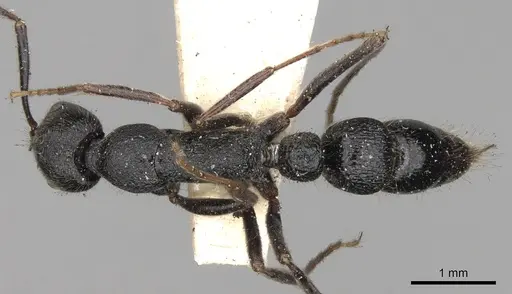
CASENT0915462
View on AntWeb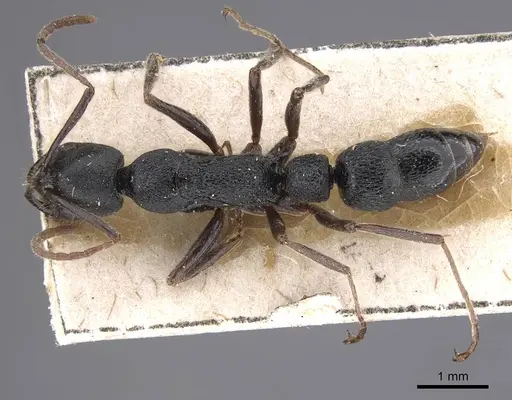
Literature
Loading...Loading products...