

Leptogenys amazonica
- Scientific Name
- Leptogenys amazonica
- Tribe
- Ponerini
- Subfamily
- Ponerinae
- Author
- Borgmeier, 1930
- Distribution
- Found in 1 countries
Leptogenys amazonica Overview
Leptogenys amazonica is an ant species of the genus Leptogenys. It is primarily documented in 1 countries , including Ecuador. Detailed taxonomic data and occurrence records can be further explored via authoritative databases such as AntWeb or the Global Biodiversity Information Facility (GBIF).
Leptogenys amazonica
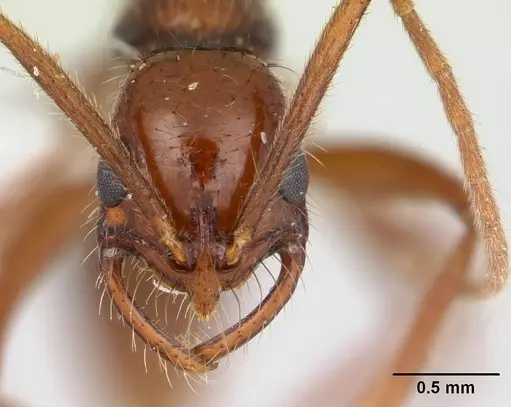
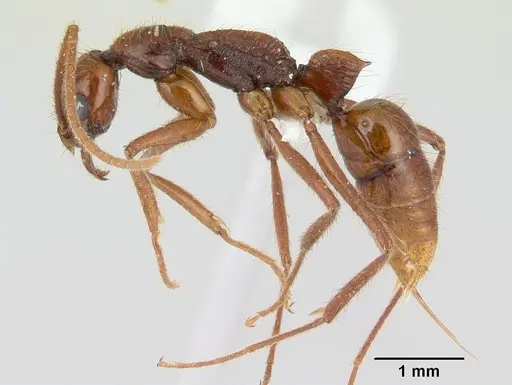
Leptogenys amazonica is a small to medium-sized predatory ant belonging to the Ponerinae subfamily. Workers measure approximately 1.2mm in head length with a distinctive appearance: the head, mandibles, antennae, legs, and gaster are ferruginous to orange, while the mesosoma and petiole are a darker ferruginous brown. The head is longer than wide, and the mandibles are elongate and arched. This species belongs to the unistimulosa species group and is found across the Amazon basin in Brazil, Colombia, and Ecuador [1].
These ants are predators that nest in decomposing logs on the forest floor in humid, forested areas. Workers are fast-moving and extremely skittish, when disturbed, they rapidly flee into surrounding leaf litter or beneath the log itself. Nests typically contain at least 100 workers. This species was previously unrecorded in parts of Colombia's Caquetá department until relatively recent surveys [2].
Quick Summary
- Difficulty: Medium
- Origin & Habitat: Amazon basin: Brazil, Colombia, Ecuador. Found in humid forested ravines at elevations around 1000m, typically nesting in decomposing logs on the ground [3]. Also recorded in open disturbed areas and beneath palm leaf petioles [3].
- Colony Type: Colony structure is not well documented. Based on related Leptogenys species, likely monogyne (single queen) colonies. Queen and male castes remain unknown [1].
- Size & Growth:
- Queen: Undescribed, queen has not been documented [1]
- Worker: HL 1.21-1.27mm, HW 0.96-0.99mm [1]
- Colony: At least 100 workers per colony in observed nests [3]
- Growth: Unknown, likely moderate based on related species
- Development: Unknown, no direct development data available. Related Ponerinae species typically take 6-10 weeks at optimal temperature. (Development timeline unconfirmed for this species. Estimates based on genus-level patterns for Ponerinae ants.)
- Antkeeping:
- Temperature: Keep around 24-28°C. These are tropical ants from humid Amazon forests, so they need warm, stable conditions. A heating cable on one side of the nest creates a suitable gradient.
- Humidity: High humidity is essential, they naturally live in damp forest floor environments. Keep the nest substrate consistently moist but not waterlogged. Provide a water tube for drinking.
- Diapause: No diapause required, being a tropical species, they do not need a hibernation period. Maintain warm conditions year-round.
- Nesting: Natural nesting is in decomposing logs on the forest floor. In captivity, a naturalistic setup with rotten wood pieces or a Y-tong/plaster nest with high humidity works well. They prefer dark, humid chambers and will abandon bright or dry areas.
- Behavior: Workers are extremely fast-moving and skittish. They are predatory, hunting small invertebrates in the leaf litter. When disturbed, they rapidly flee into surrounding debris, this escape behavior must be considered when setting up their enclosure. They are not aggressive toward humans but will defend the nest if threatened. Their small size (under 2mm) means escape prevention is critical, use fine mesh and tight-fitting barriers.
- Common Issues: escape prevention is critical due to their tiny size, they can squeeze through the smallest gaps, skittish behavior means they may abandon nests that are too bright or dry, high humidity requirements can lead to mold if ventilation is poor, predatory diet makes feeding more challenging than for omnivorous species, slow colony growth may frustrate beginners, colonies may take months to establish
Housing and Nest Setup
Leptogenys amazonica requires a setup that mimics their natural habitat in humid Amazon forests. They nest in decomposing logs on the forest floor, so a naturalistic terrarium with rotten wood pieces, leaf litter, and moist substrate works well. The substrate should be kept consistently damp but never waterlogged. You can use a mix of soil and organic matter like coco fiber or peat moss.
Alternatively, a Y-tong (acrylic) nest with plaster or soil chambers can work if you maintain high humidity. Place a water tube connected to the nest to provide moisture. These ants prefer dark, humid conditions and will avoid bright areas, so cover the front of the nest with a dark cloth or use an LED-less setup. Provide an outworld connected to the nest where you can offer prey items. [1][3]
Feeding and Diet
As predatory ants in the Ponerinae subfamily, Leptogenys amazonica are active hunters that need live prey. In the wild, they hunt small invertebrates in the leaf litter. In captivity, offer small live prey such as fruit flies (Drosophila), springtails, tiny crickets, and other micro-arthropods. They will likely ignore dead prey initially, the movement triggers their hunting response.
Feed them prey items 2-3 times per week, adjusting based on colony size and consumption. Remove any uneaten prey after 24 hours to prevent mold. While some Ponerinae accept sugar sources, this is not well documented for this species. Offer sugar water or honey occasionally, but do not rely on it as a primary food source. A varied diet of different small prey items helps ensure proper nutrition.
Temperature and Humidity
These are tropical ants requiring warm, humid conditions. Maintain temperatures between 24-28°C (75-82°F) consistently. A slight temperature gradient allows the colony to regulate their own conditions, place a heating cable on one side of the nest, but never directly on the ants. Room temperature in the low-to-mid 20s°C may suffice in warm rooms.
Humidity is critical, aim for 70-80% relative humidity within the nest. The substrate should feel consistently moist but not soggy. Use a moisture reservoir (water tube or sponge) connected to the nest to maintain humidity. Mist the outworld occasionally, but avoid direct misting on the ants. Poor humidity leads to colony decline and worker mortality. [3]
Behavior and Temperament
Workers of Leptogenys amazonica are extremely fast-moving and skittish. When their nest is disturbed, they immediately scatter into surrounding leaf litter or beneath debris, this is a key survival behavior. In captivity, this means they may bolt from the nest when you open it for feeding or maintenance.
They are not particularly aggressive toward keepers and rarely sting. However, they will defend the nest if directly threatened. Their small size (under 2mm workers) makes them excellent escape artists. Use fine mesh (at least 0.5mm) on all openings and apply fluon or other barriers to prevent escapes. Avoid handling them directly as they can squeeze through gaps you might not notice. [1][3]
Colony Establishment
Since the queen of this species has not been described, obtaining a colony may require finding a wild colony or capturing a mated queen during nuptial flights (though flight timing is unknown). If you obtain a colony from the wild, look for nests in decomposing logs in humid forested areas.
When introducing a colony to captivity, replicate their natural conditions as closely as possible. Use moist substrate and provide plenty of hiding spaces. The colony may take time to settle, do not disturb them excessively during the adjustment period. Established colonies with 100+ workers have been observed in the wild, so expect moderate growth over time. [1][3]
Seasonal Care
As a tropical species from the Amazon basin, Leptogenys amazonica does not require diapause or hibernation. Maintain warm, humid conditions year-round. There is no distinct seasonal slowdown in their native habitat.
Avoid exposing them to temperatures below 20°C for extended periods, as this can stress and kill the colony. Room temperature in the mid-to-high 20s°C is ideal. If your room is cooler, use a heating cable or mat to maintain appropriate temperatures. Consistency is key, avoid sudden temperature fluctuations. [3]
Frequently Asked Questions
How long does it take for Leptogenys amazonica to produce first workers?
The exact development timeline is unknown for this species. Based on related Ponerinae ants, expect approximately 6-10 weeks from egg to worker at optimal temperature (24-28°C). The queen has not been described, so captive colony establishment from a found queen is not well-documented.
What do Leptogenys amazonica eat?
They are predatory ants that need live prey. Feed small live insects like fruit flies, springtails, and tiny crickets. They hunt by chasing down prey in the leaf litter. Remove uneaten prey after 24 hours to prevent mold.
Can I keep Leptogenys amazonica in a test tube?
Test tubes are not ideal for this species. They naturally nest in decomposing logs and require high humidity. A naturalistic setup with moist substrate and rotten wood, or a Y-tong nest with humidity chambers, works better. Test tubes dry out too quickly.
Are Leptogenys amazonica good for beginners?
This species is rated as medium difficulty. They require specific conditions (high humidity, warm temperatures, live prey) that make them more challenging than common species like Lasius or Tetramorium. They are also extremely fast and skittish, which can make observation difficult. Not recommended as a first ant.
How big do Leptogenys amazonica colonies get?
Observed natural colonies have at least 100 workers. The maximum colony size is unknown but is likely larger for established colonies. Related Leptogenys species can form colonies of several hundred workers.
Do Leptogenys amazonica need hibernation?
No, they do not require hibernation. Being tropical ants from the Amazon basin, they need warm conditions year-round. Maintain temperatures between 24-28°C consistently.
Why are my Leptogenys amazonica dying?
Common causes include: low humidity (they need 70-80% humidity), temperatures below 20°C, too-bright nesting areas, and inadequate prey. They are also prone to escaping through tiny gaps. Check your setup matches their humid forest floor habitat requirements.
When should I move Leptogenys amazonica to a formicarium?
Move them when the colony reaches at least 50 workers and the test tube or founding setup becomes cramped. However, given their humidity requirements, a naturalistic terrarium is often better than a standard formicarium. Provide moist substrate and hiding spaces.
Can I keep multiple Leptogenys amazonica queens together?
Colony structure is not well-documented for this species. Based on related Leptogenys, they are likely monogyne (single queen). Combining unrelated queens is not recommended as it has not been studied and may result in fighting.
How do I prevent Leptogenys amazonica from escaping?
Use fine mesh (0.5mm or smaller) on all openings. Apply fluon or petroleum jelly to the upper edges of the enclosure. Check for tiny gaps regularly, these ants are under 2mm and can squeeze through remarkably small spaces. Keep the outworld well-lit and the nest area dark to encourage them to stay in the nest.
What is the best nest type for Leptogenys amazonica?
A naturalistic setup with moist soil/substrate and decomposing wood pieces best mimics their natural habitat. Y-tong nests with plaster or soil chambers can work if you maintain high humidity. Avoid dry nests or bright lighting, they will abandon these areas.
References

This caresheet is licensed under CC BY-SA 4.0 .
CASENT0178836
View on AntWeb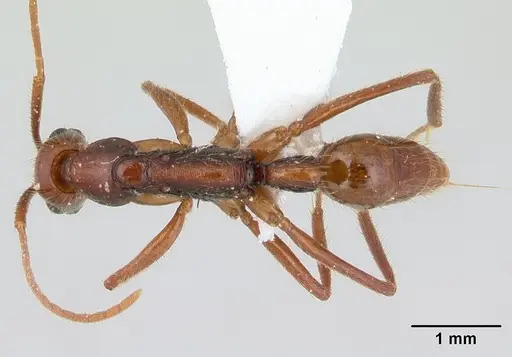
Literature
Loading...Loading products...