

Leptanilloides mckennae
- Scientific Name
- Leptanilloides mckennae
- Subfamily
- Dorylinae
- Author
- Longino, 2003
- Distribution
- Found in 1 countries
Leptanilloides mckennae Overview
Leptanilloides mckennae is an ant species of the genus Leptanilloides. It is primarily documented in 1 countries , including Costa Rica. Detailed taxonomic data and occurrence records can be further explored via authoritative databases such as AntWeb or the Global Biodiversity Information Facility (GBIF).
Leptanilloides mckennae
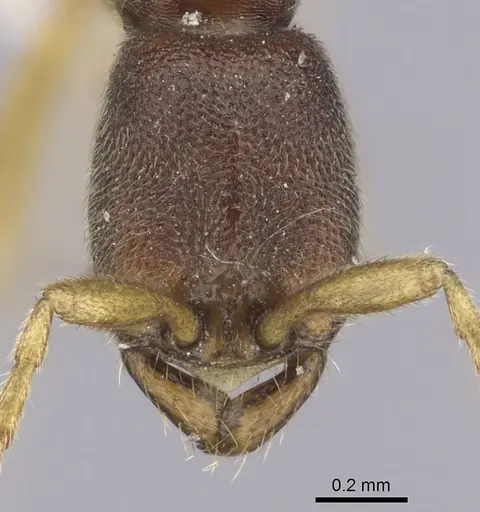
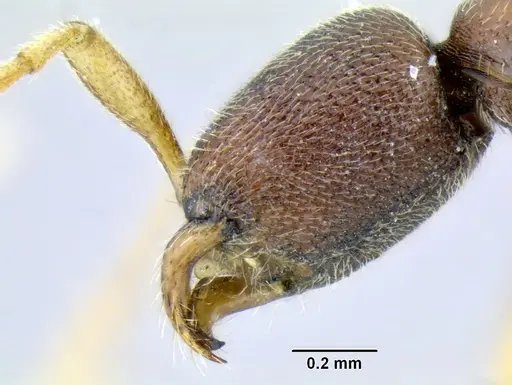
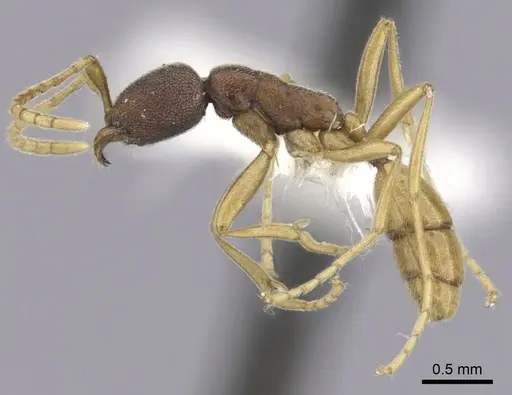
Leptanilloides mckennae is a tiny, cryptic ant species from the Monteverde cloud forest region of Costa Rica. Workers measure just 0.7-0.75mm in head length, making them among the smallest ants in the Dorylinae subfamily (army ants and their relatives). They have a distinctive appearance with a red-brown head capsule that grades to yellow-brown on the gaster and appendages, and they lack eyes entirely, a common trait of leaf-litter dwelling ants. The gaster shows clear constrictions between segments, and the postpetiole is notably smaller than the petiole. This species was discovered in 1995 and remains known only from the original type collection in moist forest leaf litter at 1300m elevation in the Bajo del Tigre Reserve. As a member of the doryline section, they are related to army ants but are small, specialized predators that forage individually in the leaf litter rather than in large swarms.
Quick Summary
- Difficulty: Expert
- Origin & Habitat: Monteverde cloud forest, Costa Rica at 1300m elevation in moist forest leaf litter [1]. The Bajo del Tigre Reserve sits on the Pacific slope where habitat shifts abruptly from seasonal dry conditions at lower elevations to cold, wet cloud forest above [1].
- Colony Type: Unknown. Only known from a few dozen workers collected in a single leaf litter sample, colony structure (single queen vs multiple queens) has not been documented [1].
- Size & Growth:
- Queen: Undescribed, queen has not been documented [1]
- Worker: 0.7-0.75mm head length (HL),0.56-0.64mm head width (HW) [1]
- Colony: Unknown, only a few dozen workers were collected in the type sample [1]
- Growth: Unknown
- Development: Unconfirmed, no captive breeding data exists for this species. Based on typical Dorylinae patterns, expect 6-10 weeks at warm temperatures, but this is an estimate. (Development timeline has not been studied. Related Dorylinae species typically develop relatively quickly, but Leptanilloides are small litter-dwelling ants with likely different patterns.)
- Antkeeping:
- Temperature: Keep at low-to-mid 20s°C (around 22-26°C). This species comes from a cool montane cloud forest environment at 1300m elevation where temperatures are moderate year-round [1]. Avoid high temperatures.
- Humidity: High humidity required, they inhabit moist cloud forest leaf litter. Keep the nest substrate consistently damp but not waterlogged, with good ventilation to prevent mold. The substrate should feel moist to the touch.
- Diapause: Likely a mild seasonal slowdown given the montane origin, but specific requirements are unconfirmed. The Monteverde region experiences seasonal variation but lacks harsh winters. Consider a brief cool period (2-3 months around 15-18°C) during the dry season if the colony shows reduced activity.
- Nesting: Naturalistic setup with very small chambers works best. In the wild they live in moist forest leaf litter, so a setup mimicking damp soil with fine passages scaled to their tiny size is appropriate. Y-tong nests with narrow chambers or small acrylic nests with tight dimensions can work, but escape prevention is critical given their minute size.
- Behavior: These are extremely small, cryptic ants that forage individually in leaf litter rather than in swarms like larger dorylines. They are predaceous, likely hunting tiny arthropods in the micro-soil environment. Workers are blind (no eyes) and navigate using chemical cues. They are not aggressive and pose no threat to humans, their tiny size means they cannot sting effectively even if they have a stinger. Escape prevention is critical due to their minute size, they can squeeze through standard barrier setups. This species is rarely kept and there is no established husbandry knowledge.
- Common Issues: escape prevention is critical, they are extremely small and can squeeze through standard barriers, no captive breeding data exists, this species may be very difficult to establish and maintain, predatory diet requirements are poorly understood, may need specialized micro-prey, high humidity needs can lead to mold problems if ventilation is poor, virtually no information on founding behavior makes queen establishment uncertain
Discovery and Distribution
Leptanilloides mckennae was discovered in 1995 by Duane McKenna during a leaf litter sampling study in the Monteverde region of Costa Rica. The type series was collected from a 0.5m² plot in the Bajo del Tigre Reserve at 1300m elevation on June 22,1995 at 7:00am. Only a few dozen workers were collected, and this remains the only known collection of the species. The species was formally described by John T. Longino in 2003,making it one of the more recently described Neotropical ants. The Monteverde area is famous for its cloud forests and dramatic ecological transitions, within a few kilometers, the landscape shifts from highly seasonal dry conditions on the lower slopes to cold, wet cloud forest at higher elevations. This species occupies the transitional moist forest zone. [1]
Identification and Morphology
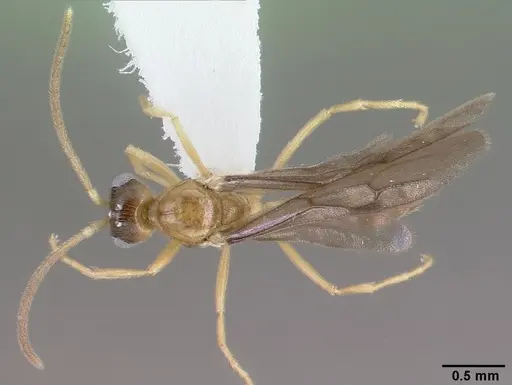
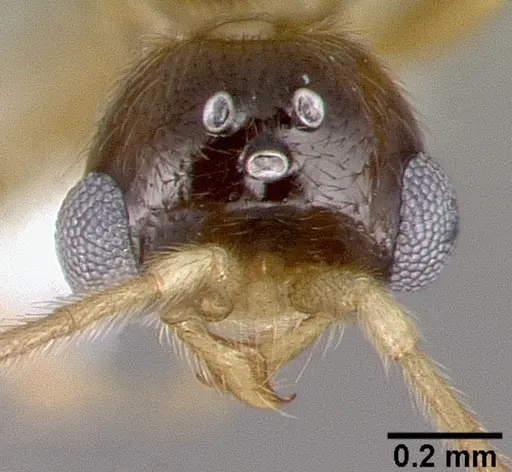
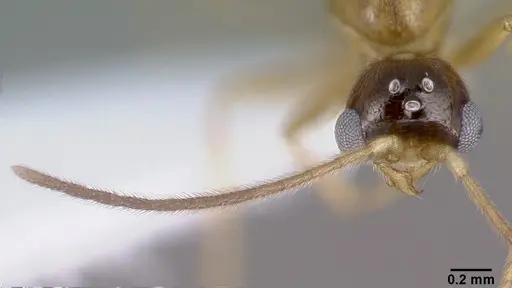
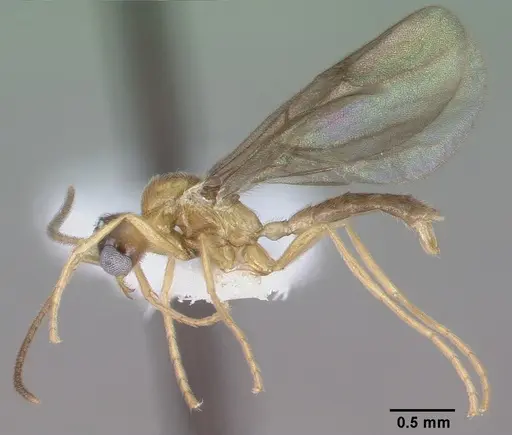
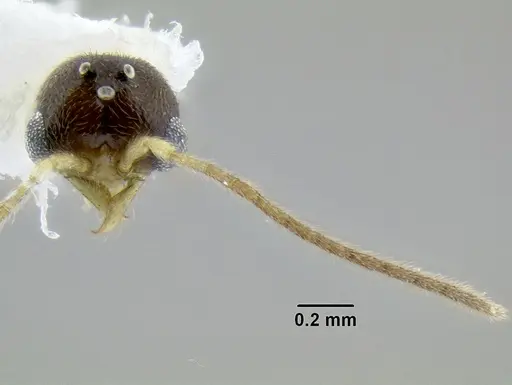
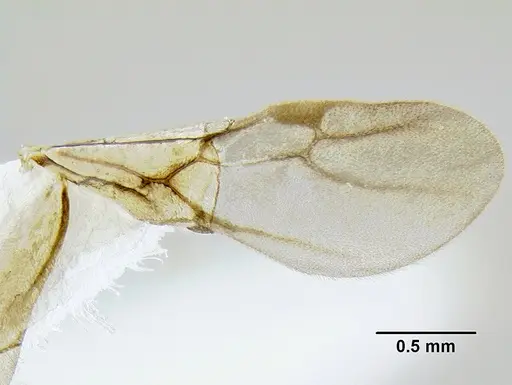
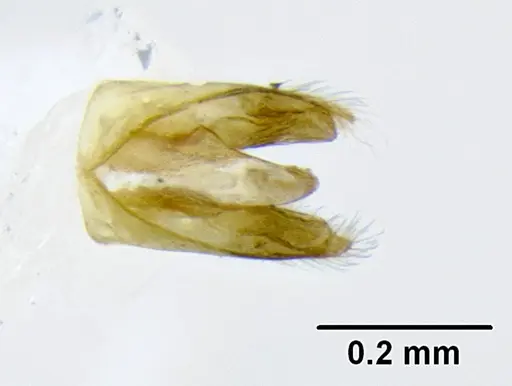
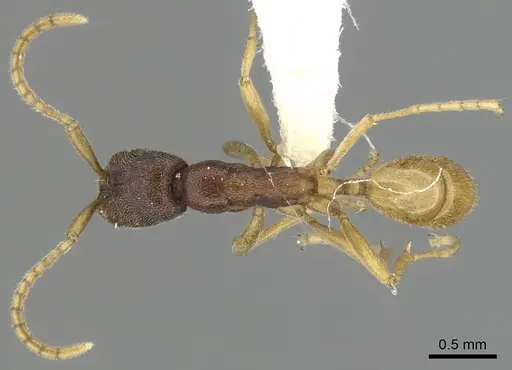
Workers of L. mckennae are tiny, measuring 0.7-0.75mm in head length. They can be identified by several key features: they lack genal teeth (teeth on the cheek area), the dorsal face of the propodeum is much longer than the posterior face, the postpetiole is smaller than the petiole when viewed from the side, and the gaster has distinct constrictions between segments. The head capsule, mandibles, and pronotum are red-brown, grading to lighter yellow-brown on the propodeum, petiole, postpetiole, gaster, and legs. Notably, these ants lack eyes entirely, a common adaptation to life in dark leaf litter environments. The antennae are 12-segmented, and the mandibles have approximately 10 very small teeth along the masticatory margin. Males have been discovered through DNA analysis and are slightly smaller than workers at approximately 2.7mm total length, with 13-segmented antennae and reduced wing venation. [1]
Taxonomy and Relationships
Leptanilloides mckennae belongs to the subfamily Leptanilloidinae, which is part of the doryline section, the same evolutionary branch that includes army ants (Ecitoninae) and other specialized predatory ants. The species is a member of the Leptanilloides legionarius species group. This genus occupies an interesting phylogenetic position: they are related to army ants but have evolved a completely different lifestyle, living as tiny, cryptic predators in leaf litter rather than the large swarming colonies typical of army ants. The discovery of this species and others like it has helped clarify the evolutionary relationships within the doryline ants, showing that the army ant 'syndrome' (large colonies, swarm raids, nomadism) evolved from ancestors more like Leptanilloides. The genus Leptanilloides contains several species distributed throughout the Neotropics, with L. mckennae being the only species confirmed from Costa Rica.
Housing and Care
Housing Leptanilloides mckennae presents significant challenges due to their minute size and the complete lack of captive husbandry information for this species. The nest setup should mimic their natural leaf-litter environment: a naturalistic setup with very small chambers and narrow passages scaled to their tiny worker size (under 1mm). Y-tong nests with fine chambers or small acrylic formicaria with tight dimensions may work, but escape prevention is absolutely critical, these ants can likely squeeze through gaps that would contain larger species. Maintain high humidity (think damp forest floor) but ensure adequate ventilation to prevent mold. Temperature should be kept cool-to-warm (around 22-26°C), reflecting their origin in a cool montane cloud forest. Feeding is speculative but likely requires small live prey, these are predatory doryline ants, so offer micro-arthropods like springtails, tiny mites, or fruit fly larvae. Sugar sources may be accepted but should not be relied upon as a primary food source. [1]
Conservation Status
Leptanilloides mckennae is known only from a single collection in the Monteverde region of Costa Rica. The Monteverde cloud forest is a protected area, but the species' extremely limited known distribution raises concerns about its conservation status. The Bajo del Tigre Reserve represents a critical habitat zone that bridges dry lowland areas and wet cloud forests, this transitional environment may harbor unique species found nowhere else. Given that the species has only been collected once despite targeted ant surveys in the region, it appears to be either genuinely rare or difficult to collect. Climate change poses a particular threat to cloud forest species as the cloud layer ascends to higher elevations, potentially pushing species like this off the tops of mountains. The true population status of this species remains unknown. [1]
Frequently Asked Questions
How big do Leptanilloides mckennae workers get?
Workers are extremely tiny, measuring only about 0.7-0.75mm in head length. This makes them among the smallest ants in the Dorylinae subfamily. Males are slightly smaller at approximately 2.7mm total length.
Where does Leptanilloides mckennae live?
This species is known only from the Monteverde region of Costa Rica at 1300m elevation. It was collected from moist cloud forest leaf litter in the Bajo del Tigre Reserve. This is the only known location for the species.
Are Leptanilloides mckennae ants aggressive?
These ants are not aggressive and pose no threat to humans. They are tiny, cryptic predators that forage individually in leaf litter rather than in aggressive swarms. Their small size also means they cannot effectively sting.
What do Leptanilloides mckennae ants eat?
As predatory doryline ants, they likely hunt small arthropods in the leaf litter environment. In captivity, you should offer small live prey such as springtails, tiny mites, or fruit fly larvae. Sugar sources may be accepted but should not be the primary food. This is speculative since no captive feeding observations exist.
Can beginners keep Leptanilloides mckennae?
This species is not recommended for beginners. It is extremely rare in the antkeeping hobby, has no established captive husbandry protocols, and requires specialized care. The complete lack of information on colony founding, development, and basic care makes success very unlikely.
Do Leptanilloides mckennae queens need to forage during founding?
The founding behavior of this species has not been documented. Most Dorylinae are claustral (queen seals herself in and lives off stored fat), but Leptanilloides may have different patterns. Without data, this remains unknown.
What temperature do Leptanilloides mckennae ants need?
Keep them at cool-to-warm temperatures, around 22-26°C. This species comes from a cool montane cloud forest environment at 1300m elevation in Costa Rica, where temperatures are moderate year-round. Avoid high temperatures.
How long does it take for Leptanilloides mckennae to develop from egg to worker?
The development timeline has not been studied for this species. Based on typical Dorylinae patterns, development might take 6-10 weeks at warm temperatures, but this is purely an estimate with no direct evidence.
Do Leptanilloides mckennae ants have eyes?
No, workers completely lack eyes. This is a common adaptation for ants that live in dark leaf litter environments where vision is not useful.
Is Leptanilloides mckennae a good ant species for antkeepers?
No. This species is not recommended for antkeepers at any experience level. It is known only from a single scientific collection, has never been kept in captivity, and there is no husbandry information available. The few individuals available in the antkeeping hobby likely come from wild collection and are extremely difficult to maintain.
References

This caresheet is licensed under CC BY-SA 4.0 .
Literature
Loading...Loading products...