

Leptanilloides chihuahuaensis
- Scientific Name
- Leptanilloides chihuahuaensis
- Subfamily
- Dorylinae
- Author
- MacGown <i>et al.</i>, 2015
- Distribution
- Found in 1 countries
Leptanilloides chihuahuaensis Overview
Leptanilloides chihuahuaensis is an ant species of the genus Leptanilloides. It is primarily documented in 1 countries , including United States of America. Detailed taxonomic data and occurrence records can be further explored via authoritative databases such as AntWeb or the Global Biodiversity Information Facility (GBIF).
Leptanilloides chihuahuaensis
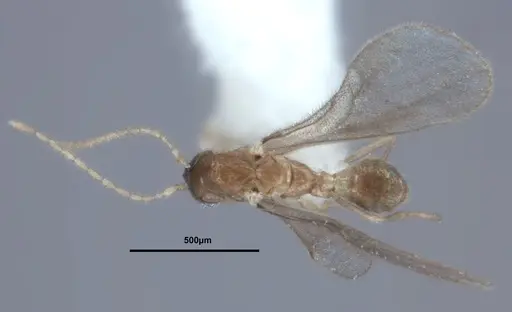
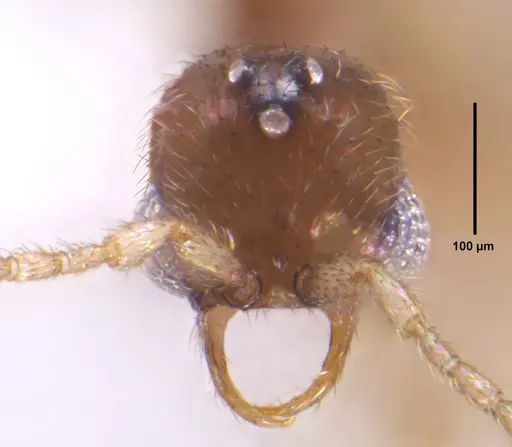
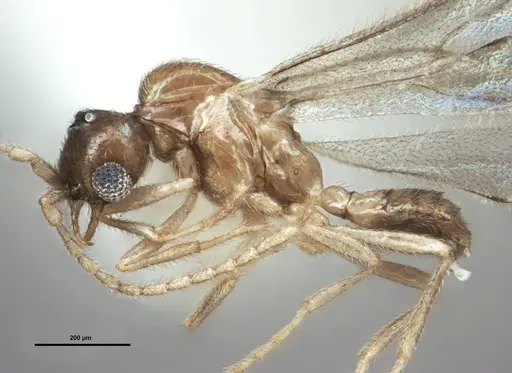
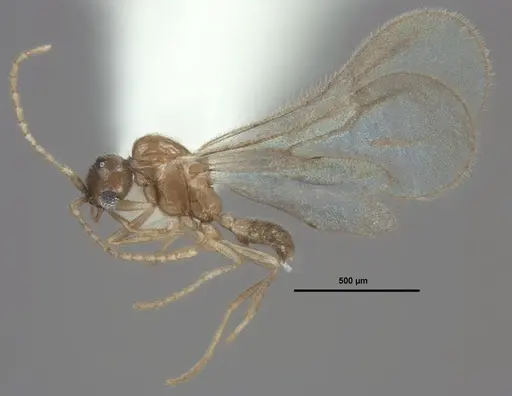
Leptanilloides chihuahuaensis is an extremely rare ant species and the first member of its genus recorded in the United States. Males are minute, only about 0.22-0.24mm in head length, with a light yellowish-brown body and darker markings on the head and abdominal segments [1]. The species was only discovered in 2014 in the Davis Mountains of western Texas, representing a 2,500km range extension from its previously known distribution in southern Mexico and Central America [1]. This ant lives in a dramatically different habitat than other Leptanilloides species, which are typically found in cloud forests, but L. chihuahuaensis inhabits semiarid grassland and desert scrub at elevations around 1,500m [1][2]. The genus belongs to Dorylinae, the army ant subfamily, though this species' specific behavior remains completely unknown.
Quick Summary
- Difficulty: Expert
- Origin & Habitat: Davis Mountains, Jeff Davis County, Texas, USA, semiarid grassland and desert scrub habitat in the Chihuahuan Desert region at approximately 1,500m elevation [1][2]
- Colony Type: Unknown, species is only known from male specimens, no workers or queens have ever been collected or described [1]
- Size & Growth:
- Queen: Unknown, queens have never been collected or described [1]
- Worker: Unknown, workers have never been collected or described [1]
- Colony: Unknown, no colony has ever been observed [1]
- Growth: Unknown
- Development: Unknown, no colony has ever been maintained (This species has never been kept in captivity. No workers or queens have ever been collected, so captive husbandry is not possible.)
- Antkeeping:
- Temperature: Unknown, no captive data exists. Based on location in the Davis Mountains of West Texas, temperatures likely range from hot summers to cool winters. Do not attempt to keep this species without workers.
- Humidity: Unknown, no captive data exists. The habitat is semiarid with average annual precipitation around 44cm, mostly falling May-October [1].
- Diapause: Unknown, likely experiences seasonal dormancy given the temperate Chihuahuan Desert location, but no specific data exists.
- Nesting: Unknown, no natural nests have ever been found. Other Leptanilloides species are presumed to nest in soil or rotting wood like other Dorylinae, but this is unconfirmed for L. chihuahuaensis.
- Behavior: Completely unknown. As a Dorylinae member, the genus likely exhibits some army ant behaviors, but nothing has been documented for this species. Males were collected in Malaise traps in July, suggesting nuptial flights occur during summer months [1]. Escape risk cannot be assessed since no workers exist for comparison.
- Common Issues: This species cannot be kept, only males have ever been collected, and no one has documented workers or queens, There is no established husbandry information for this species whatsoever, The species was only discovered in 2014 and remains one of the rarest ants in North America, Without workers, there is no way to establish a colony in captivity
Why This Species Cannot Be Kept
Leptanilloides chihuahuaensis is one of the rarest ant species in the United States and cannot be kept in captivity under any circumstances. The species is known only from six male specimens collected in Malaise traps in July 2014 in Davis Mountains State Park, Texas [1]. No workers, no queens, and no colony have ever been documented. This is not a case of limited data, literally every aspect of this species' biology that would matter to an antkeeper is completely unknown. The males collected were probably part of a nuptial flight, but we have no idea where their colony was located or how many queens and workers it contained. Without workers or queens to observe, there is no foundation for developing captive husbandry protocols. Even if you were to find a colony, the species' tiny size (males are only about 0.22-0.24mm head length) and unknown requirements would make captive maintenance extremely challenging if not impossible [1].
Natural History and Discovery
This species represents a major range extension for the genus Leptanilloides, previously known only from southern Mexico through Central America in cloud forest habitats [1]. The discovery of L. chihuahuaensis in the semiarid grasslands of the Chihuahuan Desert was unexpected, it lives in a dramatically different habitat than its relatives. The species was named for the Chihuahuan Desert region where it was found [1]. Males were collected at two sites within Davis Mountains State Park: one on a hillside in highland grassland at 1,556m elevation, and another in a riparian area within desert scrub/grassland at 1,498m elevation [1][2]. The collection occurred during July 21-25,2014,using Townes-style Malaise traps [1]. The climate features hot summers, cool dry winters, with over 80% of annual precipitation (about 44cm) falling between May and October [1].
Taxonomy and Identification
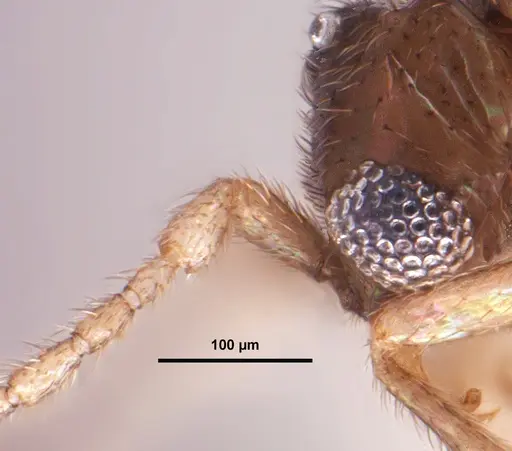
Leptanilloides belongs to the subfamily Dorylinae, commonly known as army ants. However, this genus is unusual among army ants in that its biology is poorly understood and colonies have rarely been observed. The males of L. chihuahuaensis can be identified by their minute size (head length 0.22-0.24mm), light yellowish-brown color with darker head and abdominal margins, and wing venation lacking submarginal cells and stigma [1]. The species differs from other described Leptanilloides males by its smaller size, finer pilosity, and specific genitalic structures. The paramere (male genital piece) is about as long as the petiole, and the forewing lacks the pterostigma (stigma) found in some related species [1]. Only six male specimens have ever been collected, all from this single location in Texas.
Related Species and What We Might Expect
While L. chihuahuaensis itself has never been studied in captivity, other Leptanilloides species may provide some hints, though with significant caveats. The genus Leptanilloides is part of Dorylinae, which includes more familiar army ants known for nomadic hunting behavior and large colonies. However, Leptanilloides appears to be a more cryptic genus, possibly with smaller colonies and less dramatic hunting behavior. Other species in the genus have been collected in Central American cloud forests, typically at higher elevations [1]. The fact that this Texas species lives in a completely different habitat (semiarid grassland vs. cloud forest) suggests it may have adapted different behaviors. Without any colony samples, these are purely speculative inferences and should not be used as the basis for captive care. Any attempt to keep this species would be purely experimental with no guidance available.
Frequently Asked Questions
Can I keep Leptanilloides chihuahuaensis ants?
No. This species cannot be kept because only male specimens have ever been collected. No one has ever documented workers or queens, so there is no way to establish a colony in captivity. Even if you found a colony, the species was only discovered in 2014 and has no established husbandry protocols.
Where can I find Leptanilloides chihuahuaensis?
This species is only known from Davis Mountains State Park in Jeff Davis County, Texas, USA. It has never been found anywhere else in the world. Even in this location, it appears to be extremely rare, only six males were collected across multiple trap sessions.
What do Leptanilloides chihuahuaensis eat?
Unknown. No feeding observations have ever been made. As a Dorylinae member, it might share some dietary habits with army ants (predatory on other arthropods), but this is entirely speculative for this species.
How big do Leptanilloides chihuahuaensis colonies get?
Unknown. No colony has ever been observed. The only specimens collected are males, and the species remains one of the most poorly known ants in North America.
What is the temperature requirement for Leptanilloides chihuahuaensis?
No captive temperature data exists. The species lives in the Chihuahuan Desert at about 1,500m elevation, where summers are hot and winters are cool. Without any colony samples, there is no way to determine appropriate captive temperatures.
How long does it take for Leptanilloides chihuahuaensis to develop from egg to worker?
Unknown. No eggs, larvae, or workers have ever been documented. The species has never been maintained in captivity, so development timelines are completely unknown.
Is Leptanilloides chihuahuaensis a good species for beginners?
No. This species cannot be kept under any circumstances. It is only known from six male specimens collected in 2014,and no one has ever documented a colony. Even if colonies were found, the species would likely be extremely difficult to maintain given its unknown requirements and extremely small size.
Does Leptanilloides chihuahuaensis need hibernation?
Unknown. The species lives in the Chihuahuan Desert where winters are cool, so some form of seasonal dormancy is biologically plausible, but no specific data exists. Without any colony to observe, this remains entirely speculative.
Can I start a colony with a queen I catch?
No queens have ever been collected for this species. Only males have been documented, and they were caught in Malaise traps during what was presumably a nuptial flight. There is no information on where to find queens or how they might found colonies.
References

This caresheet is licensed under CC BY-SA 4.0 .
MEM207971
View on AntWeb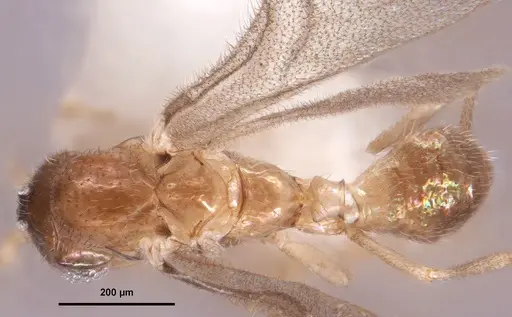
Literature
Loading...Loading products...