

Leptanilloides anae
- Scientific Name
- Leptanilloides anae
- Subfamily
- Dorylinae
- Author
- Brandão <i>et al.</i>, 1999
- Distribution
- Found in 1 countries
Leptanilloides anae Overview
Leptanilloides anae is an ant species of the genus Leptanilloides. It is primarily documented in 1 countries , including Brazil. Detailed taxonomic data and occurrence records can be further explored via authoritative databases such as AntWeb or the Global Biodiversity Information Facility (GBIF).
Leptanilloides anae
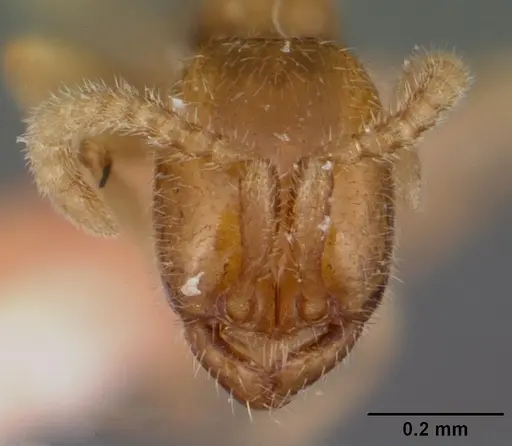
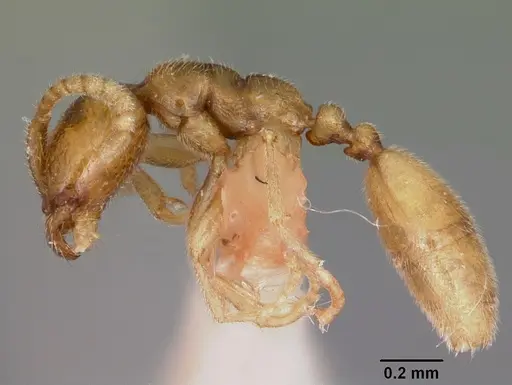
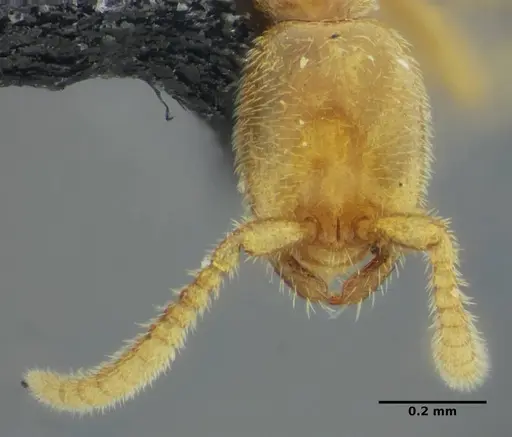
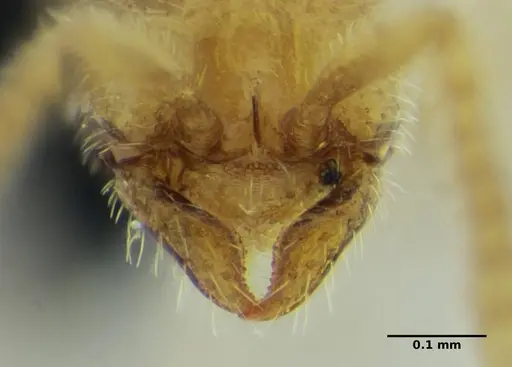
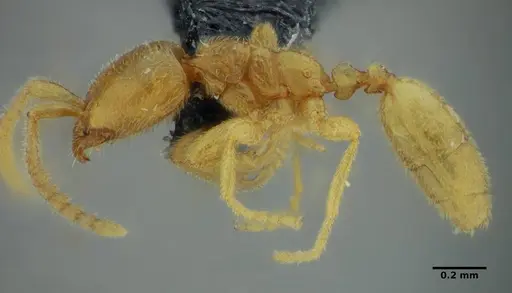
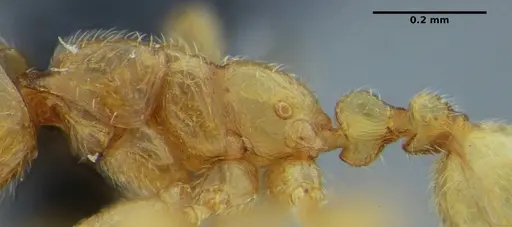
Leptanilloides anae is a tiny army ant species from the Dorylinae subfamily, found only in São Paulo, Brazil. Workers are among the smallest of all army ants, measuring just 0.46mm head length and 0.52mm body length [1]. They have distinctive rounded head sides and a deep notch separating their thorax from abdomen, making them identifiable under magnification [2]. These ants show classic army ant behavior, they hunt in coordinated columns and attack prey together, similar to the well-known Neivamyrmex species [1][3]. This species was discovered preying on an arthropod under a piece of cow dung near a stream in an area that was originally tropical forest [1].
Quick Summary
- Difficulty: Expert
- Origin & Habitat: Brazil (São Paulo state, Mirassol). Originally broad-leaved tropical forest, collected in Eucalyptus plantation near a stream (Fazenda da Lima) [1][2].
- Colony Type: Colony structure is unconfirmed. As a Dorylinae member, they likely form multi-queen colonies typical of army ants, but this has not been documented for this specific species.
- Size & Growth:
- Queen: Unknown, only workers have been described [4].
- Worker: 0.46mm head length,0.37mm width,0.52mm body length [4].
- Colony: Unknown, only the type series of 18 workers has been collected [4].
- Growth: Unknown
- Development: Unconfirmed, no development data exists for this species. (Army ant development is typically fast once established, but no specific data is available for L. anae.)
- Antkeeping:
- Temperature: Keep warm, roughly 24-28°C. Based on their Brazilian tropical origin and the warm, humid conditions where they were found near a stream [1].
- Humidity: High humidity required. Found near water in a historically humid tropical forest area. Keep substrate consistently moist but not waterlogged.
- Diapause: Unlikely, as a tropical species from southeastern Brazil, they probably do not require a diapause period. However, seasonal behavior has not been studied.
- Nesting: Ground-nesting species. In captivity, a naturalistic setup with moist substrate (like soil or sand-clay mix) would be appropriate. They likely nest in shallow chambers under cover (like under the cow dung where they were found) [1]. A test tube setup with a water reservoir could work for founding colonies.
- Behavior: This species shows classic army ant behavior, they forage in coordinated columns and hunt prey together in groups [3]. Workers are aggressive predators, attacking and dismembering arthropods on the soil surface [1]. They are very small and likely have excellent escape prevention needs. Temperament is likely defensive given their predatory nature and army ant lifestyle. Foraging activity was observed on a cloudy morning, suggesting they may be more active in cooler, overcast conditions [1].
- Common Issues: extremely limited availability, this species has rarely been collected and is not available in the antkeeping hobby, no captive breeding data exists, all information comes from a single field collection, tiny size makes escape prevention critical, standard barriers may not work, specialized predator requiring live prey, cannot survive on sugar alone like many ants, unknown founding behavior, queen biology has not been documented
Species Overview and Identification
Leptanilloides anae is a rare and poorly known army ant species endemic to São Paulo state, Brazil. Originally described as Leptanilloides anae in 1999,it was later transferred to the genus Leptanilloides in 2016 [2]. Workers are tiny, among the smallest of all Dorylinae, with a head length of only 0.46mm. The most distinctive identifying features are the rounded sides of the head when viewed face-on and a deep notch (emargination) separating the thorax from the abdomen [4]. Only the worker caste has been described, queens and males remain unknown. The species name honors Ana Diniz, daughter of collector Jorge L. M. Diniz [2].
Natural History and Foraging Behavior
This species displays classic army ant behavior. Workers were observed moving in organized columns similar to Neivamyrmex army ants, hunting prey on the soil surface [1]. The type series was collected while they were actively preying on an unidentified arthropod, they had already dismembered part of their prey when discovered [1]. Another observation documented group-predation by a colony on an arthropod, confirming they hunt cooperatively [3]. They were found under a piece of cow dung near a stream, suggesting they prefer shaded, humid microhabitats close to water. The area was originally broad-leaved tropical forest [1]. The single collection was made on a cloudy morning, which may indicate preference for cooler or overcast conditions for foraging.
Housing and Nesting
In the wild, these ants nest in the ground under cover, the type specimens were found under cow dung on the soil surface [1]. For captive care, a naturalistic setup with moist substrate would best mimic their natural habitat. A mixture of soil and sand or clay would allow them to create shallow chambers. Alternatively, a test tube setup with a water reservoir could work for keeping a colony, though they may need more space for foraging. Given their tiny size, escape prevention must be excellent, even standard test tube cotton can be too loose. Use fine mesh barriers and ensure all connections are sealed. The key is providing a humid environment with access to a foraging area where they can hunt live prey.
Feeding and Diet
Leptanilloides anae are strict predators. The only documented feeding observations show them actively hunting and dismembering arthropods on the soil surface [1][3]. In captivity, they will need a constant supply of small live prey. Appropriate foods would include tiny insects like fruit flies, small mealworms, springtails, and other micro-arthropods. Unlike many ants, they are unlikely to accept sugar water or honey as a food source, their hunting behavior suggests they are obligate predators. Feed small prey items every few days, adjusting based on colony size and consumption rate. Remove uneaten prey to prevent mold issues.
Temperature and Seasonal Care
As a tropical species from southeastern Brazil, Leptanilloides anae requires warm conditions. The region where they were found (São Paulo state) has a warm, humid climate with temperatures typically ranging from 20-30°C year-round. Keep the nest area around 24-28°C, with a slight gradient if possible. They were found near a stream, indicating they prefer humid conditions [1]. A heating cable on one side of the nest can help maintain appropriate temperatures. Whether they require any seasonal dormancy is unknown, but given their tropical origin, a diapause period is unlikely. Maintain consistent warmth and humidity year-round.
Challenges and Limitations
This is one of the most challenging ants to keep due to extremely limited information. Only 18 workers have ever been collected, all from a single location in 1979 [4]. No queens have been described, no colony has ever been observed in a nest, and no captive breeding attempts have been documented. This species is essentially unavailable in the antkeeping hobby and would be extremely difficult to acquire. Even if obtained, the lack of baseline data means keepers would be experimenting with every aspect of care. The tiny size also presents practical challenges, standard antkeeping equipment may not be scaled appropriately. This species is recommended only for expert antkeepers with specific interest in rare army ants who have the resources to attempt experimental husbandry.
Frequently Asked Questions
How big do Leptanilloides anae workers get?
Workers are tiny, only about 0.5mm total body length. Their head length is 0.46mm and body length (mesosoma) is 0.52mm [4].
What do Leptanilloides anae eat?
They are strict predators that hunt arthropods. Workers have been observed attacking and dismembering prey in coordinated group attacks [1][3]. They will need live small insects like fruit flies, springtails, or tiny mealworms in captivity.
Where does Leptanilloides anae live in the wild?
Only known from São Paulo state, Brazil. The type locality is Mirassol, in an Eucalyptus plantation near a stream that was originally broad-leaved tropical forest [1][2].
Are Leptanilloides anae good for beginners?
No. This is an expert-level species with essentially no captive care information. Only 18 workers have ever been collected, queens are unknown, and no breeding data exists. They are not available in the hobby and would require experimental care [4].
Do Leptanilloides anae need hibernation?
Unlikely. As a tropical species from southeastern Brazil, they probably do not require a diapause period. However, their exact seasonal behavior has not been studied.
How do I set up a nest for Leptanilloides anae?
A naturalistic setup with moist substrate (soil or sand-clay mix) works best, since they were found under cow dung on the ground [1]. They likely nest in shallow chambers. Ensure excellent escape prevention due to their tiny size.
What temperature should I keep Leptanilloides anae at?
Keep them warm, around 24-28°C. This matches their tropical Brazilian origin and the warm, humid conditions where they were found near a stream [1].
Can I keep multiple queens together?
Unknown. Colony structure has not been documented for this species. As Dorylinae, they may naturally form multi-queen colonies, but this is unconfirmed [1].
How fast do Leptanilloides anae colonies grow?
Unknown. No development data exists for this species, and only 18 workers have ever been collected [4].
Why is Leptanilloides anae so rarely collected?
This species is known only from the type series collected in 1979. Army ant colonies can be nomadic and difficult to locate. The area where they were found (Eucalyptus plantation near a stream) may no longer exist in suitable condition [1].
Is Leptanilloides anae available in the antkeeping hobby?
No. This is one of the rarest ant species in existence, only 18 workers have ever been documented, all from a single 1979 collection. They are not known to be kept by any antkeepers and would be essentially impossible to acquire [4].
References

This caresheet is licensed under CC BY-SA 4.0 .
CASENT0104667
View on AntWeb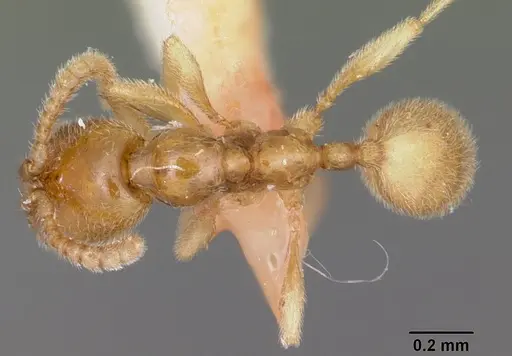
UFV-LABECOL-003543
View on AntWeb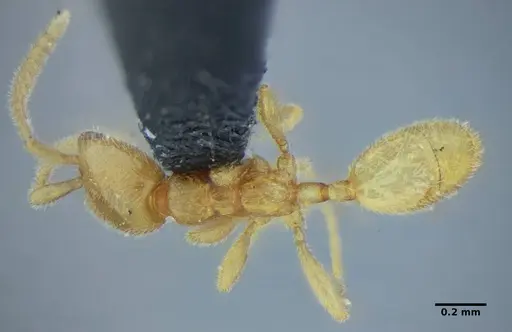
Literature
Loading...Loading products...