

Leptanilla vaucheri
- Scientific Name
- Leptanilla vaucheri
- Tribe
- Leptanillini
- Subfamily
- Leptanillinae
- Author
- Emery, 1899
- Distribution
- Found in 1 countries
Leptanilla vaucheri Overview
Leptanilla vaucheri is an ant species of the genus Leptanilla. It is primarily documented in 1 countries , including Morocco. Detailed taxonomic data and occurrence records can be further explored via authoritative databases such as AntWeb or the Global Biodiversity Information Facility (GBIF).
Leptanilla vaucheri
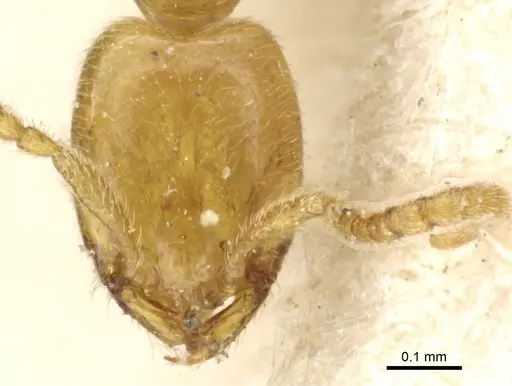
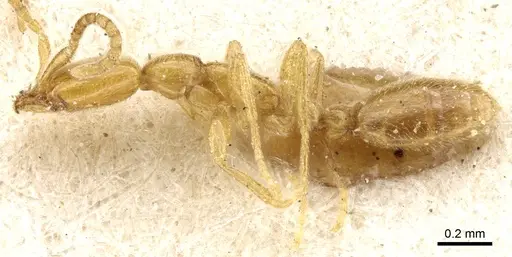
Leptanilla vaucheri is a tiny ant species endemic to Morocco, one of the smallest ants in the world. Workers measure approximately 1-1.5mm, making them nearly invisible to the casual observer. They have a pale yellowish to light brown coloration and distinctive mandibles with four teeth. The species was first described by Emery in 1899 from specimens collected in Tanger, Morocco [1].
This genus is known for its extremely cryptic lifestyle, these ants nest deep underground and are rarely seen on the surface. They are among the most elusive ants in the Palaearctic region, which has made studying their biology particularly challenging. The related Leptanilla species from Morocco are recognized by their narrow, pear-shaped petiole (the narrow waist segment) when viewed from above [2].
Quick Summary
- Difficulty: Expert
- Origin & Habitat: Endemic to Morocco in the Palaearctic region, found primarily around Tanger and Koumch [1]. They inhabit Mediterranean woodland and likely nest in soil or under stones in warm, dry areas.
- Colony Type: Colony structure is unconfirmed for this specific species. Based on genus patterns, likely small colonies with a single queen.
- Colony: Monogyne
- Founding: Claustral
- Size & Growth:
- Queen: Estimated 2-3mm, queens are larger than workers but still tiny
- Worker: Approximately 1-1.5mm
- Colony: Likely small colonies of several dozen to a few hundred workers based on genus patterns
- Growth: Unknown, likely slow to moderate based on small colony size
- Development: Estimated 6-10 weeks based on related Leptanilla species and optimal temperature (Development timeline is unconfirmed for this species. Small colony size suggests relatively slow growth.)
- Antkeeping:
- Temperature: Keep around 22-26°C, mimicking warm Mediterranean conditions. A gentle heat gradient allows ants to regulate their temperature.
- Humidity: Low to moderate, these are dry habitat ants. Keep substrate moderately moist but allow it to dry between waterings. Avoid overly damp conditions.
- Diapause: Likely a short winter rest period during the cooler months (November-February), reducing activity but not a true deep hibernation.
- Nesting: Use a naturalistic setup with fine substrate (sand/soil mix) or a Y-tong/plaster nest with narrow chambers. They need tight, dark spaces and will likely nest in the deepest, most humid areas of the nest.
- Behavior: Extremely cryptic and reclusive, these ants spend most of their time underground. Workers are rarely seen on the surface. They are likely predacious on small soil micro-arthropods. Escape prevention is critical due to their tiny size, they can squeeze through the smallest gaps. They are not aggressive and likely flee from threats rather than defend.
- Common Issues: tiny size makes escape prevention difficult, use fine mesh and tight-fitting lids, colonies are very small and grow slowly, beginners may lose patience, wild-caught colonies may be difficult to establish in captivity, they are extremely reclusive and may be hard to observe, specific humidity requirements are poorly understood and may cause founding colony failure
Why This Species Is Challenging
Leptanilla vaucheri is one of the most difficult ants to keep in captivity. They are extremely small, cryptic, and rarely seen even in their native habitat. Unlike more common ant species, there is almost no captive care information available for this species or even closely related ones. They represent a true challenge even for experienced antkeepers, you are essentially pioneering their husbandry. Expect a steep learning curve and be prepared for colony losses, especially during the founding stage. The rewards of observing such a rare species justify the effort for dedicated enthusiasts.
Housing and Nest Setup
Due to their minute size, standard ant keeping setups need modification. Use test tubes with very small water reservoirs or custom mini-nests. A Y-tong (acrylic) nest with chambers scaled to their tiny size works well, avoid tall, open spaces. The nesting chamber should be dark and humid. Create an outworld with a small foraging area. Escape prevention is critical: their tiny size allows them to squeeze through gaps invisible to the naked eye. Use fine mesh (at least 0.5mm mesh or tighter) on all openings and consider applying Fluon to the rim of the nest. A naturalistic setup with a thin layer of sandy soil allows for natural digging behavior but makes observation more difficult.
Feeding and Nutrition
Based on genus patterns, Leptanilla species are likely predacious, hunting small soil micro-arthropods like springtails, mites, and tiny insects. In captivity, offer small live prey such as fruit flies, pinhead crickets (very small), and other tiny arthropods. Sugar sources are unlikely to be accepted, these are specialized predators, not sugar-seekers. Feed small prey items every few days, removing any uneaten prey within 24 hours to prevent mold. The founding queen will need no food, claustral queens survive on stored fat reserves until their first workers emerge.
Temperature and Seasonal Care
Maintain temperatures in the low-to-mid 20s Celsius (22-26°C). A heating cable on one side of the nest creates a temperature gradient, allowing the ants to choose their preferred zone. During winter (roughly November to February in the Northern Hemisphere), reduce temperatures to around 15-18°C to simulate their natural Mediterranean winter. Do not feed during this rest period and reduce water slightly. Activity will slow significantly but the colony should remain alive. Avoid sudden temperature changes, these ants prefer stability.
Observation Challenges
Be prepared for a colony that is rarely visible. Leptanilla vaucheri spends most of its time underground in the nest chamber. Workers may only emerge briefly to hunt or tend to the queen. You might go days or weeks without seeing any activity. This is normal behavior for the genus, do not mistake their reclusiveness for illness or death. Use a red film over the nest for observation if your setup allows it, as ants are less disturbed by red light. Patience is essential with this species.
Frequently Asked Questions
Is Leptanilla vaucheri good for beginners?
No. This species is absolutely not recommended for beginners. They are tiny, cryptic, and there is virtually no captive care information available. Even experienced antkeepers will face challenges establishing and maintaining this species. If you are interested in Leptanilla, start with more commonly kept ant species first.
How long does it take for the first workers to appear?
The exact timeline is unconfirmed for this species, but based on related Leptanilla patterns, expect 6-10 weeks from egg to worker at optimal temperature (around 24°C). The founding queen seals herself in and will not emerge until her first nanitic (first) workers hatch. Do not disturb the nest during this time.
Can I keep multiple Leptanilla vaucheri queens together?
This has not been documented. Based on genus patterns, they likely form single-queen colonies. Combining unrelated queens is not recommended as it may result in fighting. If you obtain a colony, assume it is a single-queen colony and house accordingly.
What do Leptanilla vaucheri ants eat?
They are likely specialized predators on small soil micro-arthropods. Offer tiny live prey such as fruit flies, small springtails, and very small crickets or mealworms. Sugar water is unlikely to be accepted. Do not feed large prey items, they cannot tackle anything bigger than themselves.
Do Leptanilla vaucheri ants sting?
Given their extremely small size (1-1.5mm), any sting would be negligible even if present. They are not considered dangerous to humans and would likely flee rather than attempt to defend. However, they may have defensive chemicals instead of a stinger, as is common in the genus.
What temperature should I keep Leptanilla vaucheri at?
Keep the nest at 22-26°C, with a slight gradient if possible. Room temperature in most homes (20-22°C) may be acceptable, but warmer conditions (around 24°C) likely promote better colony growth. Reduce to 15-18°C during winter rest.
How big do Leptanilla vaucheri colonies get?
The maximum colony size is unconfirmed, but based on genus patterns and their tiny size, colonies likely reach only several dozen to a few hundred workers. They are not large colony builders like some other ant genera.
Why can't I see my ants?
This is normal. Leptanilla species are extremely cryptic and spend most of their time underground. You may go weeks without seeing workers. They are nocturnal and may be more active at night. Use a gentle red light to observe without disturbing them.
Do they need hibernation?
Likely yes, a short winter rest period. Reduce temperatures to 15-18°C from roughly November to February, reduce feeding, and allow the colony to slow down. This mimics their natural Mediterranean climate cycle.
Where can I get Leptanilla vaucheri?
This species is extremely rare in the antkeeping hobby. It is endemic to Morocco and has rarely been collected. You are unlikely to find captive-bred colonies for sale. If you do obtain a colony, it would likely be from a specialized researcher or very niche collector.
References

This caresheet is licensed under CC BY-SA 4.0 .
CASENT0903767
View on AntWeb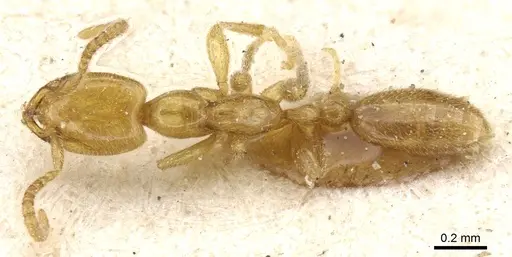
Literature
Loading...Loading products...