

Leptanilla thai
- Scientific Name
- Leptanilla thai
- Tribe
- Leptanillini
- Subfamily
- Leptanillinae
- Author
- Baroni Urbani, 1977
- Distribution
- Found in 1 countries
Leptanilla thai Overview
Leptanilla thai is an ant species of the genus Leptanilla. It is primarily documented in 1 countries , including Thailand. Detailed taxonomic data and occurrence records can be further explored via authoritative databases such as AntWeb or the Global Biodiversity Information Facility (GBIF).
Leptanilla thai
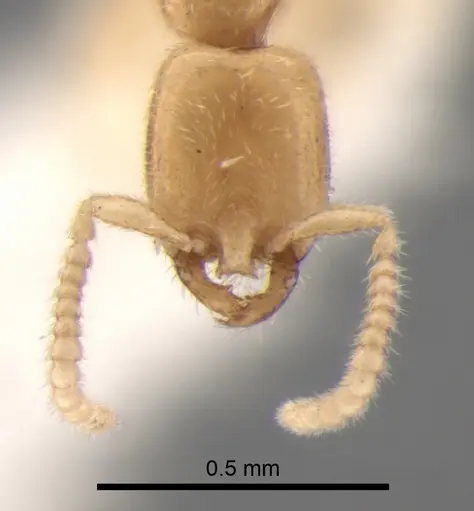
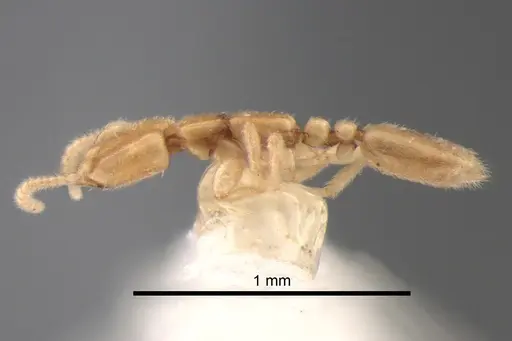
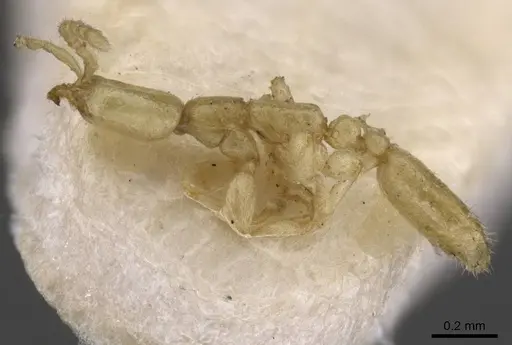
Leptanilla thai is an exceptionally tiny ant species native to southern Thailand, specifically found in the Khao Chong area of Trang Province. Workers measure just 1.40-1.50 mm in total length, making them among the smallest ants in the world [1][2]. They have distinctive features including a three-toothed mandible, a bilobed clypeus, and a pair of whitish markings on the front of the head [2]. This species belongs to the Leptanillinae subfamily, a group of cryptic, subterranean ants that are rarely encountered due to their hidden lifestyle. The genus Leptanilla has undergone recent taxonomic revisions, with Yavnella and Noonilla now synonymized under this genus [3].
Quick Summary
- Difficulty: Expert
- Origin & Habitat: Southern Thailand (Khao Chong, Trang Province) in the Indomalaya Region. These ants live in tropical forest environments, likely nesting in soil or rotting wood in shaded, humid areas [4][2].
- Colony Type: Colony structure is unconfirmed for this species. Based on typical Leptanilla patterns, they likely form small colonies with a single queen.
- Size & Growth:
- Queen: Unknown, not yet described [5]
- Worker: 1.40-1.50 mm total length, with head measuring 0.36 mm length and 0.27 mm width [1][2]
- Colony: Likely small, possibly under 100 workers based on related species
- Growth: Unknown, likely moderate to fast for a tropical species
- Development: Unconfirmed, likely 4-8 weeks based on typical tropical Leptanilla patterns (No direct development data exists for this species. Related tropical Leptanilla species typically develop quickly in warm, humid conditions.)
- Antkeeping:
- Temperature: Keep at 24-28°C, reflecting their tropical Thai habitat. A gentle heating gradient allows workers to self-regulate.
- Humidity: High humidity is essential, aim for 70-85%. These subterranean ants prefer consistently moist substrate conditions.
- Diapause: Unlikely, as a tropical species from southern Thailand, they probably do not require a diapause period. Maintain warm conditions year-round.
- Nesting: Use a test tube setup or small acrylic nest with fine chambers scaled to their tiny size. Keep the nesting area dark and humid. A small outworld for foraging completes the setup.
- Behavior: Leptanilla thai is extremely cryptic and rarely seen on the surface. They are likely predatory on the brood of other ants, as is typical for the genus. Workers are blind or nearly so and navigate chemically. Their tiny size makes them excellent escape artists, escape prevention must be exceptional. They are not aggressive toward humans and pose no sting risk due to their minute size.
- Common Issues: escape prevention is critical due to their extremely small size, they can squeeze through the tiniest gaps, high humidity requirements can lead to mold if ventilation is inadequate, their cryptic lifestyle makes them difficult to observe and easy to neglect, specialized diet requirements are poorly understood, they may refuse common ant foods, wild-caught colonies are extremely rare and difficult to establish
Understanding Leptanilla thai
Leptanilla thai is one of the smallest ant species in the world, with workers measuring a mere 1.40-1.50 mm in total length [1]. This species was originally described by Baroni Urbani in 1977 from specimens collected in southern Thailand [6]. The species is part of the Leptanilla thai species-group, which phylogenetic studies often recover as sister to the rest of the genus Leptanilla [3].
The genus Leptanilla has undergone significant taxonomic revision in recent years. Molecular phylogenomic studies have led to the synonymy of Yavnella and Noonilla with Leptanilla, expanding our understanding of this group [3]. Workers of this genus can be identified by their three-toothed mandible, bilobed clypeus, and the presence of whitish markings on the front of the head [2]. The palpal formula for L. thai workers is 2,1,which is shared with L. laventa [7].
These ants are extremely rare in both wild and captive populations. Their subterranean lifestyle and tiny size make them one of the most challenging ant species to keep.
Housing and Nest Setup
Housing Leptanilla thai requires attention to scale and humidity. Because they are among the smallest ants in the world, standard ant keeping equipment is completely unsuitable. You will need to use a test tube setup with a very small water reservoir, or a custom-made acrylic nest with chambers scaled to their tiny size.
The nesting area should be kept dark, these ants are adapted to subterranean life and avoid light. Cover the nest with a dark cloth or use an acrylic nest with an opaque cover. Humidity is critical: aim for 70-85% relative humidity inside the nest. The substrate should feel consistently moist but never waterlogged.
Escape prevention cannot be overstated. These ants can squeeze through gaps that are virtually invisible to the human eye. Use fluon on all edges of the outworld, ensure all lids fit tightly, and consider double-checking all connections. Even a tiny gap that seems insignificant will result in lost ants.
A small outworld (2-3 cm diameter) provides space for feeding. Keep this area simple and easy to clean.
Feeding and Diet
The diet of Leptanilla thai is not well documented, but based on what we know about the genus, they are likely predators that specialize on the brood of other ants. In the wild, they probably raid the nests of other ant species underground, similar to the behavior documented in related Leptanilla species.
In captivity, you should attempt to offer small live prey. Given their tiny size, their prey items must be correspondingly small. Potential foods include:
- Live springtails (the most reliable option)
- Small fruit fly larvae
- Tiny isopods or mites
- Very small mealworm pieces
Sugar sources are unlikely to be accepted. Unlike many ants that readily consume honey or sugar water, Leptanilla are specialized predators and may ignore sweet substances entirely. Focus on providing appropriate live prey.
Feed small amounts every 2-3 days and remove any uneaten prey promptly to prevent mold.
Temperature and Seasonal Care
Leptanilla thai originates from tropical southern Thailand, where temperatures remain warm year-round. Keep your colony at 24-28°C for optimal activity and development. This is warmer than most temperate ant species require, reflecting their tropical origin.
A heating cable or small heat mat placed under one end of the nest can create a temperature gradient, allowing workers to move between warmer and cooler areas as needed. Place the heating element on top of the nest rather than underneath to avoid excessive drying from below.
Unlike temperate species, these ants do not require a winter diapause. Maintaining warm, stable conditions year-round is essential. Avoid temperature drops below 22°C, as this could slow or stop colony activity and potentially harm the brood.
Monitor humidity closely when using heating, as warm conditions can dry out the nest substrate faster. Rehydrate as needed.
Behavior and Observation
Observing Leptanilla thai requires patience and the right equipment. These ants are cryptobiotic, they spend most of their time hidden underground and are rarely seen on the surface. Workers are likely blind or have very reduced eyesight, relying instead on chemical cues and pheromone trails to navigate.
When you do see activity, it will likely be focused on foraging. Workers will emerge briefly to hunt for prey, then return to the nest. This behavior happens mostly in darkness, which adds to the challenge of observation.
The colony will likely remain small, probably under 100 workers even in mature colonies. This is typical for the genus and reflects their specialized, cryptic lifestyle. Do not expect the large, bustling colonies seen in species like Camponotus or Formica.
Their small size and hidden lifestyle mean these ants are more like a hidden ecosystem than a visible pet. Enjoy them for what they are: a rare glimpse into one of the most secretive groups of ants in the world.
Frequently Asked Questions
How small are Leptanilla thai ants?
Workers are extremely tiny at just 1.40-1.50 mm total length, making them among the smallest ants in the world. Their head alone measures only 0.36 mm long and 0.27 mm wide [1][2].
Is Leptanilla thai suitable for beginners?
No. This species is rated Expert difficulty due to their extremely small size, specialized habitat requirements, poorly understood diet, and need for high humidity. They are one of the most challenging ant species to keep.
What do Leptanilla thai eat?
Based on typical Leptanilla behavior, they are likely predators specializing on ant brood. In captivity, offer small live prey like springtails, tiny fruit fly larvae, or very small arthropods. Sugar sources are unlikely to be accepted.
Do Leptanilla thai need hibernation?
No. As a tropical species from southern Thailand, they do not require diapause. Keep them warm year-round at 24-28°C.
How many queens does Leptanilla thai have?
The colony structure is unconfirmed for this species. Based on typical Leptanilla patterns, they likely form single-queen colonies, but this has not been directly documented.
How long does it take for Leptanilla thai to develop from egg to worker?
The development timeline is unconfirmed for this species. Based on related tropical Leptanilla species, it likely takes 4-8 weeks under optimal warm conditions, but this is an estimate.
Can I keep Leptanilla thai in a test tube?
Yes, a test tube setup is actually recommended due to their tiny size. Use a small test tube with a tight-fitting cotton plug and a small water reservoir. Cover with dark material to keep the nest dark and humid.
Why are Leptanilla thai so rarely kept?
They are extremely difficult to keep for several reasons: their minute size makes escape prevention challenging, their humidity requirements are high, their diet is specialized and poorly understood, and wild colonies are rarely encountered. They are truly an expert-only species.
Do Leptanilla thai sting?
While they likely have a stinger, it is far too small to penetrate human skin. They pose no sting risk to keepers.
Where does Leptanilla thai live in the wild?
They are found only in southern Thailand, specifically in the Khao Chong area of Trang Province. They live in tropical forest environments, likely nesting in soil or rotting wood in shaded, humid locations [4][2].
References

This caresheet is licensed under CC BY-SA 4.0 .
CASENT0842752
View on AntWeb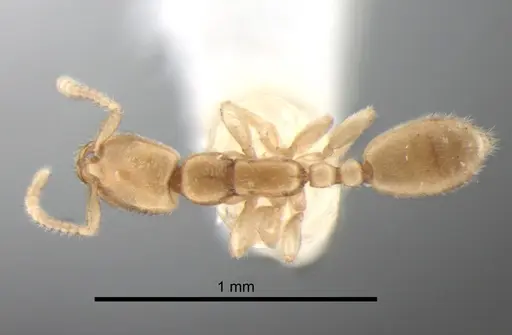
CASENT0911455
View on AntWeb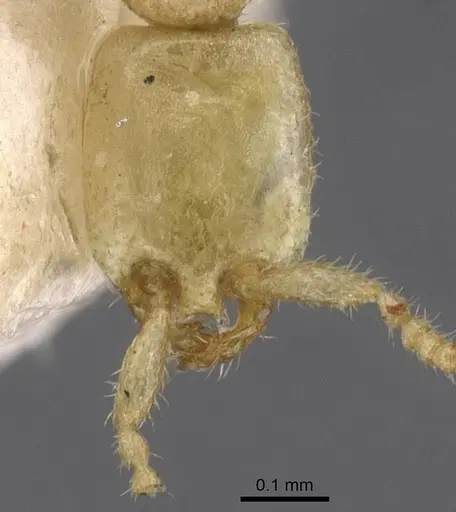
Literature
Loading...Loading products...