

Leptanilla doderoi
- Scientific Name
- Leptanilla doderoi
- Tribe
- Leptanillini
- Subfamily
- Leptanillinae
- Author
- Emery, 1915
- Distribution
- Found in 1 countries
Leptanilla doderoi Overview
Leptanilla doderoi is an ant species of the genus Leptanilla. It is primarily documented in 1 countries , including Italy. Detailed taxonomic data and occurrence records can be further explored via authoritative databases such as AntWeb or the Global Biodiversity Information Facility (GBIF).
Leptanilla doderoi
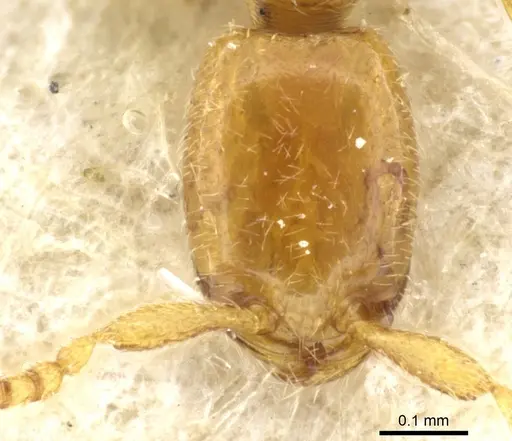
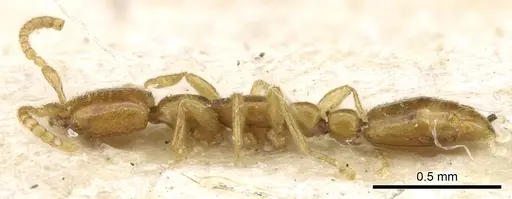
Leptanilla doderoi is an extremely tiny ant species endemic to the island of Sardinia, Italy. Workers are among the smallest ants in Europe, measuring over 1.5mm in length [1]. They belong to the subfamily Leptanillinae, a group of rare, subterranean ants that are rarely encountered due to their hypogaeic (underground) lifestyle. The species was originally described by Emery in 1915 and was later synonymized with L. revelierii before being recognized as valid again in 1990 [1]. These ants have a strongly punctured propodeum and a relatively broad petiolar node [1]. As a Sardinian endemic, this species is a real treasure for ant enthusiasts interested in rare Mediterranean species.
Quick Summary
- Difficulty: Expert
- Origin & Habitat: Sardinia, Italy, Mediterranean island environment. These ants are found in the wild under stones in Sardinia's Mediterranean climate [2]. The island features hot, dry summers and mild, wet winters.
- Colony Type: Unknown colony structure. Leptanilla species typically form small colonies, but the exact colony type for L. doderoi has not been studied.
- Size & Growth:
- Queen: Unknown, not documented in available literature
- Worker: Over 1.5mm [1]
- Colony: Estimated small (likely under 200 workers based on typical Leptanilla patterns)
- Growth: Unknown, no development data available
- Development: Unknown, no direct measurements exist. Based on related Leptanilla species and their small size, development likely takes several months (No specific data available for this species. Leptanilla genus members are known to develop slowly due to their subterranean lifestyle and specialized feeding requirements.)
- Antkeeping:
- Temperature: Keep at room temperature around 20-24°C. Mediterranean species from Sardinia should tolerate moderate warmth. Monitor colony activity to determine optimal range.
- Humidity: Maintain moderate to high humidity in the nest area. These are subterranean ants that likely prefer damp soil conditions. Keep the substrate consistently moist but not waterlogged.
- Diapause: Likely requires a mild winter rest period (diapause) from November to February, consistent with Mediterranean species. Reduce temperature to around 15°C during this period.
- Nesting: Use a naturalistic setup with fine substrate or a Y-tong/plaster nest with small chambers. These tiny ants require tight passages scaled to their minute size. Provide a moisture source and keep the nest area humid.
- Behavior: These ants are extremely cryptic and spend most of their time underground. They are not aggressive and unlikely to bite or sting due to their minute size. Workers are slow-moving and forage primarily in soil. Escape prevention is critical due to their tiny size, they can squeeze through the smallest gaps. They are not escape artists in terms of climbing ability, but their minute size means they require fine mesh barriers and tight-fitting lids.
- Common Issues: escape prevention is critical, their extremely small size means they can slip through standard barriers, no established husbandry guidelines exist, this species is rarely kept in captivity, feeding is challenging, they likely require very small live prey like springtails or micro-arthropods, slow colony growth means patience is essential and beginners may lose colonies to neglect, wild-caught colonies may have parasites or fail to adapt to captive conditions
Discovery and Taxonomy
Leptanilla doderoi was first described by Carlo Emery in 1915 from specimens collected in Sardinia [1]. The species was originally found by Herr Dodero at Teulada in southern Sardinia [2]. For several decades, it was considered a junior synonym of L. revelierii, but was revived as a valid species by Leo and Fancello in 1990 based on morphological studies [1]. The species belongs to the subfamily Leptanillinae, a group of rare ants that are poorly known due to their subterranean habits. Leptanilla ants are among the smallest ants in the world, and L. doderoi is considered a large-sized species within the genus at over 1.5mm [1].
Distribution and Habitat
Leptanilla doderoi is a Sardinian endemic, meaning it is found only on the island of Sardinia, Italy [3][4]. This makes it one of the rarest ant species in Europe. The species has been recorded from the southern part of the island, particularly around the Teulada area [2]. Sardinia's Mediterranean climate features hot, dry summers and mild, wet winters. These ants are hypogaeic, meaning they live primarily underground, typically found under stones where they nest in soil [2]. Their subterranean lifestyle explains why they are so rarely encountered and poorly studied.
Keeping Rare Mediterranean Ants
Leptanilla doderoi represents a significant challenge even for experienced antkeepers due to the complete lack of captive husbandry information. This species is not commonly kept in captivity, and there are no established care protocols. If you obtain a colony, expect a steep learning curve and be prepared to experiment carefully. The most critical aspects will be providing appropriate humidity, finding suitable tiny prey items, and preventing escapes. Room temperature around 20-24°C should be suitable for this Mediterranean species. The nest should be kept humid with a moisture source, as these are subterranean ants that naturally live in damp soil. Given their extreme rarity, any successful captive breeding would be a significant contribution to antkeeping knowledge.
Feeding and Nutrition
The diet of Leptanilla doderoi in the wild has not been documented, but Leptanilla species are generally considered predatory, feeding on small soil arthropods and their larvae. In captivity, you will likely need to provide very small live prey such as springtails, micro-arthropods, or newly hatched fruit fly larvae. These tiny ants cannot tackle large prey items. Do not expect them to accept sugar water or honey, Leptanilla are not typically sugar-feeding ants. Offer small live prey items regularly and remove any uneaten prey to prevent mold issues. The cryptic nature of these ants means they may only forage at night or in low-light conditions.
Frequently Asked Questions
How long do Leptanilla doderoi workers live?
Worker lifespan has not been documented for this species. Based on typical Leptanilla patterns and their small size, workers likely live for several months to a year.
Can I keep Leptanilla doderoi in a test tube setup?
A test tube setup may work for a founding colony, but these tiny ants require very small water reservoirs and tight cotton plugs to prevent escapes. A naturalistic setup with fine substrate or a small Y-tong nest may be better long-term. The key is preventing escape, their minute size allows them to squeeze through standard test tube barriers.
What do Leptanilla doderoi ants eat?
Their exact diet is unknown, but Leptanilla species are predatory on small soil arthropods. In captivity, offer very small live prey like springtails, micro-arthropods, or tiny fruit fly larvae. Do not expect them to accept sugar sources.
How fast do Leptanilla doderoi colonies grow?
Colony growth rate is unknown. Based on related Leptanilla species and their subterranean lifestyle, growth is likely slow. Expect months between the founding stage and the first workers, and many more months to reach significant colony size.
Do Leptanilla doderoi ants sting?
Due to their extremely small size, they would be unable to penetrate human skin even if they possessed a stinger. They are not considered dangerous to humans.
Are Leptanilla doderoi good for beginners?
No. This species is rated Expert difficulty due to their extreme rarity, complete lack of established care guidelines, tiny size requiring excellent escape prevention, and specialized feeding requirements. Only experienced antkeepers should attempt this species.
Do Leptanilla doderoi need hibernation?
As a Mediterranean species from Sardinia, they likely benefit from a mild winter rest period (diapause). Reduce temperatures to around 15°C from November to February, mimicking their natural seasonal cycle.
Where does Leptanilla doderoi come from?
This species is endemic to Sardinia, Italy, it is found nowhere else in the world. It was originally described by Emery in 1915 and was rediscovered and validated as a separate species in 1990 [1][3].
How big do Leptanilla doderoi colonies get?
Maximum colony size is unknown but is estimated to be small, likely under 200 workers based on typical Leptanilla colony sizes. These are not large colony-forming ants.
Why are Leptanilla doderoi so rarely kept?
This species is extremely rare in the wild (Sardinian endemic), cryptic due to their subterranean lifestyle, and has no established captive husbandry protocols. They are among the least-studied European ants, making them challenging even for experienced antkeepers.
References

This caresheet is licensed under CC BY-SA 4.0 .
CASENT0903768
View on AntWeb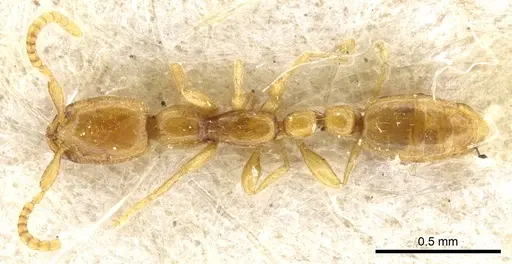
Literature
Loading...Loading products...