

Leptanilla charonea
- Scientific Name
- Leptanilla charonea
- Tribe
- Leptanillini
- Subfamily
- Leptanillinae
- Author
- Barandica <i>et al.</i>, 1994
- Distribution
- Found in 1 countries
Leptanilla charonea Overview
Leptanilla charonea is an ant species of the genus Leptanilla. It is primarily documented in 1 countries , including Spain. Detailed taxonomic data and occurrence records can be further explored via authoritative databases such as AntWeb or the Global Biodiversity Information Facility (GBIF).
Leptanilla charonea
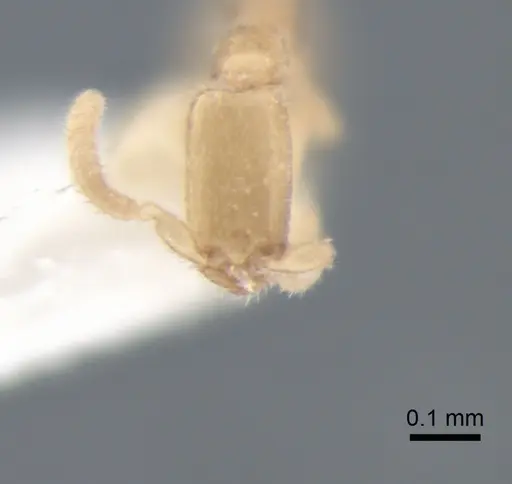
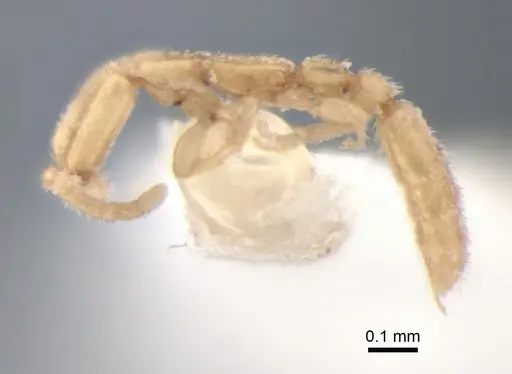
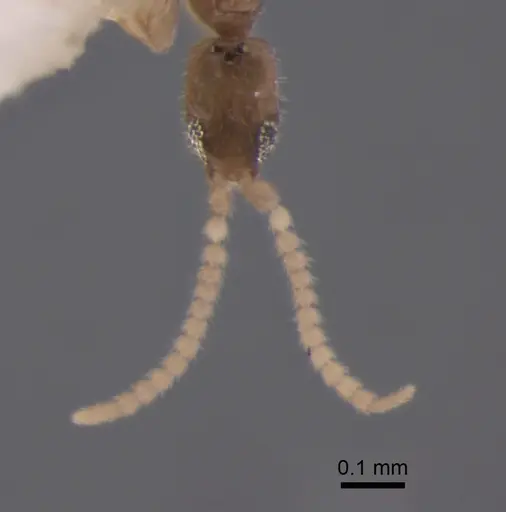
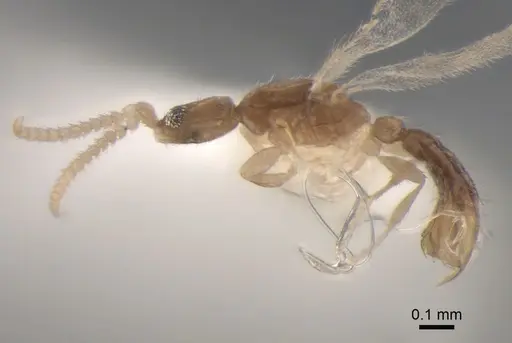
Leptanilla charonea is an extraordinarily tiny subterranean ant endemic to central Spain. Workers measure a mere 1.07-1.24mm in total length, making them among the smallest ants in Europe [1]. Their pale yellow coloration with brownish margins on the alitrunk, petiole, and postpetiole helps distinguish them from related species [1]. These ants live deep underground in moist soil, typically found at depths around 13cm beneath the surface near the roots of vegetation [2].
What makes L. charonea particularly fascinating is their specialized larval biology. The larvae possess unique hemolymph feeding structures, specialized taps on abdominal segment IV that allow workers to feed on the larvae's hemolymph, a behavior documented in several Leptanilla species [3]. The queen is ergatoid (born without wings), dichthadiiform, and was found in a physogastric state (with a swollen abdomen full of developing eggs) when discovered [1]. This is one of the rarest European ants to keep, with virtually no captive breeding records.
Quick Summary
- Difficulty: Expert
- Origin & Habitat: Endemic to the Iberian Peninsula, specifically central Spain (Madrid and Ávila provinces). Found in very moist soil at depths around 13cm, beneath small roots on slopes of dry rivulets, often near Temnothorax nests [1][4].
- Colony Type: Single-queen colonies (monogyne). The queen is ergatoid, she is born without wings and resembles a large worker. One colony was documented with 34 workers plus one physogastric queen [1][5].
- Colony: Monogyne
- Size & Growth:
- Queen: 1.31mm total length [1]
- Worker: 1.07-1.24mm total length [1]
- Colony: Likely under 100 workers, one documented colony had 34 workers [1]
- Growth: Unknown, likely slow given subterranean lifestyle
- Development: Unconfirmed, no captive breeding data exists (Related Leptanilla species suggest development takes several months. This is entirely speculative for this species.)
- Antkeeping:
- Temperature: Unknown for this species. Based on related Leptanilla and their subterranean habitat in central Spain, aim for cool to moderate temperatures around 15-20°C. Avoid overheating.
- Humidity: High. These ants come from permanently moist soil environments covered with moss. The nest was found in very moist soil at 13cm depth [2]. Keep substrate consistently damp but not waterlogged.
- Diapause: Likely yes. As a temperate species from central Spain, they probably require a winter rest period. However, specific diapause requirements are unconfirmed.
- Nesting: Subterranean specialists. In captivity, they would need a deeply filled naturalistic setup or custom dugout nest with moist substrate. They nested in a small ovoidal chamber (6mm × 2mm) under a root at 13cm depth [2].
- Behavior: Extremely cryptic and rarely seen. Workers are tiny, pale, and move slowly. They are likely predaceous on soil micro-arthropods, similar to other Leptanilla species. Escape risk is significant despite their small size, they can squeeze through minute gaps. Aggression levels are unknown but likely low given their subterranean lifestyle. They are not known to sting and would be harmless to humans due to their minute size.
- Common Issues: this species has never been kept in captivity, no care protocols exist, subterranean lifestyle makes them extremely difficult to house and observe, colony size is very small and growth is likely slow, wild-caught colonies may not survive transfer to captive conditions, moisture requirements are critical, drying out kills them quickly
Why Leptanilla charonea Is an Advanced Keeper's Challenge
This species represents one of the most difficult antkeeping targets in Europe. Leptanilla charonea is a subterranean (hypogaeic) ant that lives its entire life underground, rarely if ever coming to the surface [6]. The original type colony was discovered only by accident, researchers were excavating a Temnothorax fuentei nest and found the Leptanilla chamber 1.5cm below the Temnothorax nest [2]. This means they are essentially never encountered through normal ant collection methods.
The practical implications are severe. There are no established captive breeding protocols, no documented successful colonies in antkeeping literature, and no commercial sources for this species. Even if you obtain a wild colony, their tiny size (workers are just over 1mm), deep nesting preference, and specific moisture requirements make survival uncertain. This is a species for researchers or extremely experienced keepers willing to experiment with novel husbandry methods. Consider this an experimental project rather than a standard antkeeping endeavor.
Natural Nesting and Habitat
In the wild, Leptanilla charonea nests in very specific underground conditions. The type colony was found at 13cm depth in soil that was described as 'very moist' and covered with a layer of moss [2]. The nest chamber was tiny, just 6mm long and 2mm in diameter, roughly the size of a rice grain. It was located under a small root, with a small gallery extending downward from the chamber [2].
The soil type was not described in detail, but the moisture level suggests loamy or clay-rich soil that retains water. The location was on the upper slope of a small dry rivulet (seasonal water course), indicating they prefer areas with consistent subsurface moisture even when surface water is absent [2]. This is consistent with other Leptanilla species, which are known to be subterranean specialists that avoid the dry surface environment.
For captive care, you would need to replicate these conditions: a deeply-filled nest (at least 10-15cm of substrate), consistently moist but not waterlogged soil, and protection from light and vibration that would stress these cryptic insects.
Feeding and Diet
The diet of Leptanilla charonea has not been studied, but related Leptanilla species provide strong clues. Leptanilla larvae possess unique mouthparts with outwardly-directed mandibles adapted for digging into prey, and they have specialized hemolymph feeding structures that allow adult workers to feed on larval hemolymph [3]. This suggests the species is predatory on soil micro-arthropods such as springtails, mites, and other tiny invertebrates.
In captivity, you would need to provide tiny live prey, probably springtails or similar micro-arthropods would be most appropriate. Standard ant foods like mealworms would be far too large. Sugar sources are unlikely to be accepted given the predatory nature of the genus. Even if you can obtain a colony, feeding would be a significant challenge requiring culture of appropriate tiny prey.
Colony Structure and Reproduction
The known colony was small, 34 workers plus one ergatoid queen [1]. The queen is remarkable: she is ergatoid, meaning she was born without wings and looks like an enlarged worker. She is also dichthadiiform, a specialized body form where the thorax is reduced and the abdomen is massively swollen with developing eggs (physogastric) [1].
This is different from typical ant queens that have wings and go on nuptial flights. Ergatoid queens mate on or near the nest and never leave the underground environment. This explains why these ants are so rarely encountered, they simply don't come to the surface even for reproduction.
The colony was collected 'just at the beginning of the egg-laying stage' according to the original researchers [2], suggesting the queen had recently started reproducing after establishing the colony. This indicates the colony was relatively young.
References

This caresheet is licensed under CC BY-SA 4.0 .
CASENT0842631
View on AntWeb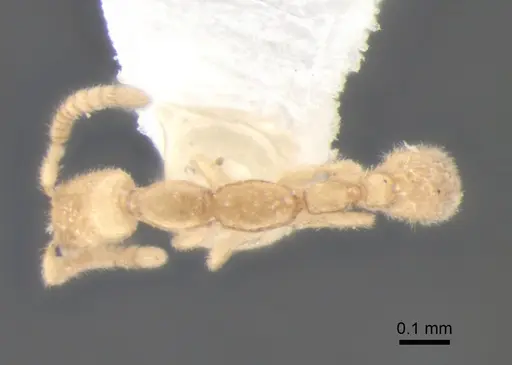
CASENT0842637
View on AntWeb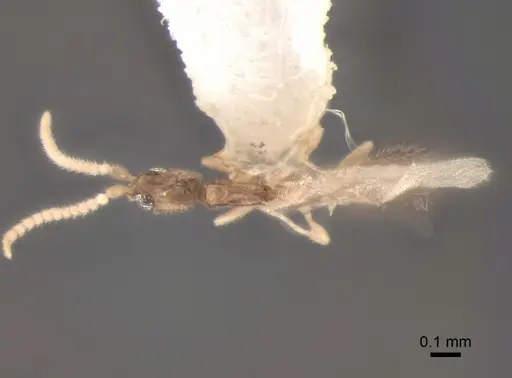
Literature
Loading...Loading products...