

Lepisiota opaca
- Scientific Name
- Lepisiota opaca
- Tribe
- Plagiolepidini
- Subfamily
- Formicinae
- Author
- Forel, 1892
- Distribution
- Found in 2 countries
Lepisiota opaca Overview
Lepisiota opaca is an ant species of the genus Lepisiota. It is primarily documented in 2 countries , including China, India. Detailed taxonomic data and occurrence records can be further explored via authoritative databases such as AntWeb or the Global Biodiversity Information Facility (GBIF).
Lepisiota opaca
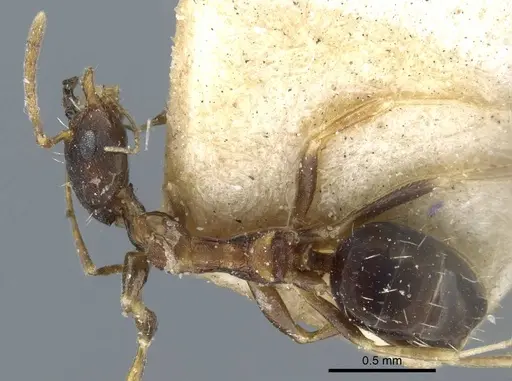
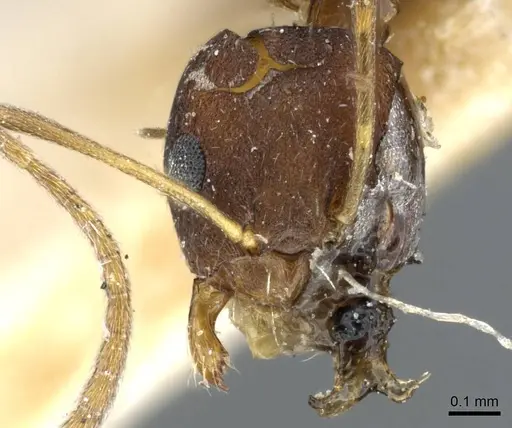
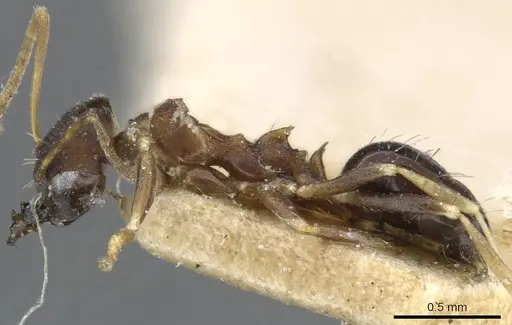
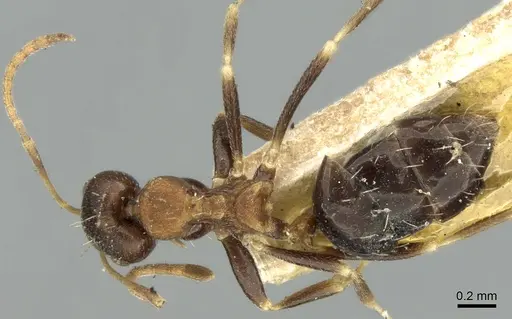
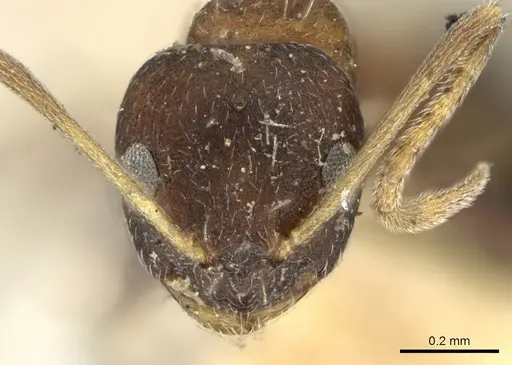
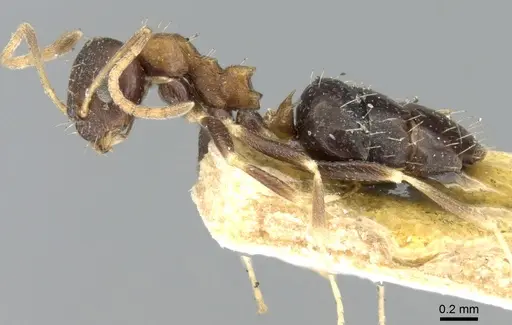
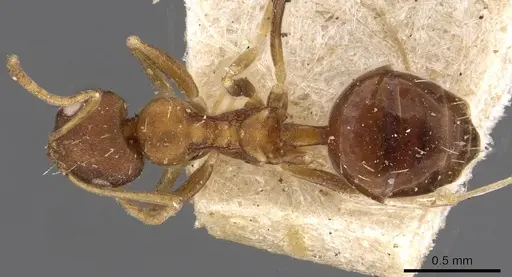
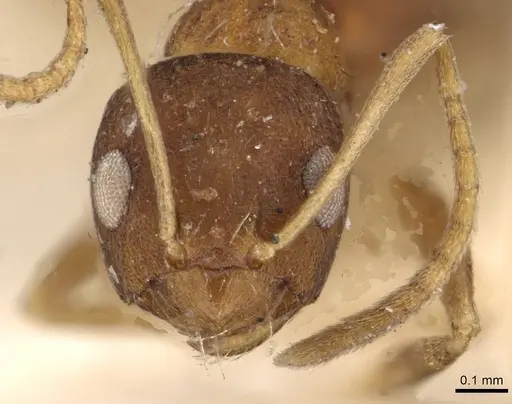
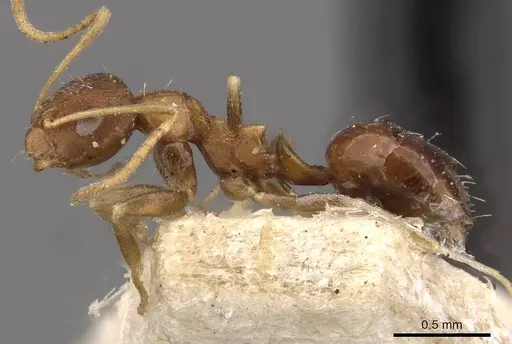
Lepisiota opaca is a medium-sized ant native to South and Southeast Asia. Workers measure 2.2-2.5mm with a distinctive appearance: a smooth, shiny body that sets them apart from related species (which have dull, coarsely sculptured bodies). The head is reddish-brown, the thorax and petiole are reddish-yellow, and the abdomen is a striking purplish-black, sometimes with a light patch at the front. They have propodeal spines and a petiole with two upward-pointing spines, giving them an antler-like appearance that earned them the common name 'Red Antler Ant' [1]. This is one of the smaller Lepisiota species in India and is relatively widespread across the region, though not common in collections [2].
What makes this species interesting is its flexibility, it's classified as an opportunist functional group, meaning it can adapt to various conditions but prefers undisturbed environments. It shows seasonal patterns, being active in summer, rainy, autumn, and spring seasons but absent in winter [3]. In India, they are commonly found at elevations between 340-1640 meters, often by beating vegetation in forested areas [4][2].
Quick Summary
- Difficulty: Medium
- Origin & Habitat: Native to South and Southeast Asia. Found across India (Arunachal Pradesh, Assam, Himachal Pradesh, Goa, Jammu & Kashmir, Karnataka, Kerala, Madhya Pradesh, Maharashtra, Sikkim, West Bengal), Sri Lanka, Nepal, and southern China [5][6]. They inhabit mid-elevation areas (340-1640m) in regions with varied climate, from tropical wet zones to subtropical areas. In India, they are relatively common in forested regions and are collected mainly by beating vegetation [2].
- Colony Type: Colony structure is not well-documented in scientific literature. Based on typical Lepisiota genus patterns, they likely form single-queen colonies (monogyne), though this requires confirmation for this specific species.
- Size & Growth:
- Queen: Not directly measured in available literature, estimated 5-7mm based on genus patterns for medium-sized Lepisiota
- Worker: 2.2-2.5mm [2]
- Colony: Estimated 500-2000 workers based on related Lepisiota species and opportunist colony growth patterns
- Growth: Moderate, based on seasonal activity patterns showing active foraging across multiple seasons [3]
- Development: Estimated 6-10 weeks based on typical Formicinae development at optimal temperature (Development time is estimated, direct measurements not available for this species. Related Formicinae species typically develop in 6-10 weeks at room temperature.)
- Antkeeping:
- Temperature: Keep at 22-28°C. This species comes from varied elevations in India (340-1640m) suggesting they can adapt to a range of temperatures. In captivity, room temperature (22-26°C) is typically suitable. Avoid temperatures below 15°C as they are not found in winter [3].
- Humidity: Moderate humidity (50-70%). They are found in areas with varied moisture levels, from wet zones in Sri Lanka to drier regions. Keep nest substrate lightly moist but not waterlogged. Provide a water source.
- Diapause: Yes, they show seasonal absence in winter months (not found in Punjab Shivalik during winter [3]). Provide a cool period (15-18°C) for 2-3 months during winter, reducing feeding and activity.
- Nesting: They nest in soil and under stones in natural habitats. In captivity, a test tube setup works well for founding colonies. For established colonies, a Y-tong (AAC) or plaster nest with narrow chambers suits their small size. They prefer dark, enclosed spaces and are often found in shaded areas.
- Behavior: These ants are active foragers with an opportunist feeding strategy. Workers are moderate in size (2.2-2.5mm) and can escape through small gaps, use fine mesh barriers. They are not particularly aggressive but will defend their nest if threatened. They show seasonal patterns, being most active in warm months and reducing activity in winter. Workers forage individually and can adapt to various food sources. Their small size and active foraging make them engaging to watch.
- Common Issues: winter dormancy failure, colonies not given proper cool period may become stressed or die, escape risk, small workers can squeeze through standard barrier gaps, use fine mesh, slow colony growth, moderate growth rate may frustrate beginners expecting fast development, seasonal confusion, keepers may overfeed during natural winter dormancy period, habitat disturbance sensitivity, they prefer undisturbed environments, avoid frequent nest inspections
Housing and Nest Setup
For Lepisiota opaca, start with a standard test tube setup for the founding queen. Use a test tube with a water reservoir sealed with cotton, this provides humidity without flooding. The queen will seal herself in and should not be disturbed until workers emerge (typically 4-8 weeks). Once the colony reaches 15-30 workers, you can consider moving to a formicarium. A Y-tong (AAC) nest works well because it provides dark, enclosed chambers that this species prefers. Alternatively, a plaster nest with narrow passages scaled to their 2-2.5mm worker size works nicely. Avoid large, open spaces, these ants feel safer in tight chambers. Add a shallow foraging area with a water station and feeding dish. Use fine mesh on any openings, these small ants are excellent escape artists. [2]
Feeding and Diet
As an opportunist species, Lepisiota opaca accepts a varied diet. In captivity, offer protein sources like small insects (fruit flies, pinhead crickets, mealworms) and sugar sources (sugar water, honey, diluted maple syrup). They are foragers that adapt to available food, so a varied diet is beneficial. Feed small prey items 2-3 times per week, removing uneaten prey after 24 hours. Keep a constant sugar water supply, change every 2-3 days to prevent fermentation. In the wild, they forage on vegetation and ground, so they likely collect honeydew and small arthropods. Their small size means prey should be appropriately sized, no larger than the ant's head.
Temperature and Seasonal Care
Maintain temperatures between 22-28°C for optimal colony health and development. This species comes from varied elevations in India (340-1640m), suggesting good temperature tolerance within that range. They show clear seasonal patterns in the wild, present in summer, rainy, autumn, and spring but absent in winter [3]. This means they require a diapause (winter rest) period. In captivity, provide 2-3 months at 15-18°C during winter months, reducing feeding to once weekly or less. Do not feed heavily during dormancy as the ants will be less active. Room temperature is usually suitable for most of the year, but you may need a heating cable in winter if your room drops below 15°C.
Behavior and Observation
Workers of Lepisiota opaca are active foragers that search for food individually rather than using mass recruitment. They are moderate in speed and can be entertaining to watch as they explore their foraging area. The species is not particularly aggressive, they will retreat rather than attack unless their nest is directly threatened. However, they will defend vigorously if cornered. They are small ants (2.2-2.5mm) with good climbing ability, so escape prevention is essential. Use Fluon on container rims and fine mesh (0.5mm or smaller) on any ventilation holes. Their seasonal activity pattern means you'll see more foraging in warm months and less in winter, this is normal, not a problem. [1]
Growth and Development
Colony growth is moderate rather than rapid. A newly founded colony may take 6-10 weeks to produce first workers (nanitics), which will be smaller than mature workers. From there, growth depends on temperature, feeding, and queen productivity. As an opportunist species, colonies can grow to several hundred workers, but exact maximums are not documented for this species. The key to healthy growth is consistent feeding, proper humidity, and avoiding disturbing the nest too frequently. These ants prefer stability, frequent nest moves or inspections can stress colonies and slow development. Be patient, moderate growth rate is normal for this species. [2]
Frequently Asked Questions
How long does it take for Lepisiota opaca to produce first workers?
Expect first workers (nanitics) to emerge in 6-10 weeks after the queen lays eggs, assuming temperatures around 22-26°C. This is an estimate based on related Formicinae species, direct development data for L. opaca is not available. The first workers will be smaller than mature workers.
Do Lepisiota opaca ants need hibernation?
Yes, they require a winter rest period. In the wild, they are not found during winter months [3]. In captivity, provide 2-3 months at 15-18°C during winter, reducing feeding significantly. This diapause is important for colony health and seasonal cycling.
What do Lepisiota opaca ants eat?
They are opportunists that accept varied foods. Offer small insects (fruit flies, small crickets, mealworms) as protein 2-3 times per week, and keep a constant sugar source (sugar water, honey, or maple syrup). Remove uneaten prey within 24 hours.
Are Lepisiota opaca ants good for beginners?
They are rated as medium difficulty. They require attention to seasonal care (winter dormancy) and escape prevention due to their small size. They are not as forgiving as some common species, but with proper research they can be kept successfully by intermediate antkeepers.
How big do Lepisiota opaca colonies get?
Based on related species and their opportunist classification, colonies likely reach 500-2000 workers. Exact maximums are not documented. Growth is moderate, expect several months to reach substantial colony size.
Can I keep multiple Lepisiota opaca queens together?
Colony structure is not well-documented for this species. Based on typical Lepisiota patterns, they likely form single-queen colonies. Combining unrelated queens is not recommended as it has not been studied and could result in fighting.
When should I move my colony to a formicarium?
Move to a formicarium (like Y-tong or plaster nest) once the colony reaches 15-30 workers and the test tube space becomes cramped. Ensure the new nest has appropriately sized chambers for their small 2-2.5mm workers. Move gently and connect the test tube to the new nest in a dark room to minimize stress.
Why are my Lepisiota opaca ants not foraging much?
Check the season, they are naturally less active in winter months. If it's not winter, ensure temperatures are in their range (22-28°C) and they have appropriate humidity. Also check that the nest area is dark and quiet, as they prefer enclosed spaces.
Are Lepisiota opaca invasive anywhere?
They have been recorded as an invasive species in some studies [7], but this appears to be context-dependent. They are native across South Asia and are not considered a major invasive threat in most regions. Always check local regulations before considering any ant release.
References

This caresheet is licensed under CC BY-SA 4.0 .
Literature
Loading...Loading products...