

Lepisiota elegantissima
- Scientific Name
- Lepisiota elegantissima
- Tribe
- Plagiolepidini
- Subfamily
- Formicinae
- Author
- Collingwood & Van Harten, 2011
- Distribution
- Found in 1 countries
Lepisiota elegantissima Overview
Lepisiota elegantissima is an ant species of the genus Lepisiota. It is primarily documented in 1 countries , including United Arab Emirates. Detailed taxonomic data and occurrence records can be further explored via authoritative databases such as AntWeb or the Global Biodiversity Information Facility (GBIF).
Lepisiota elegantissima
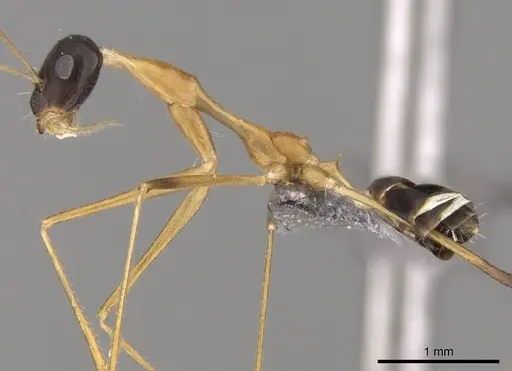
Lepisiota elegantissima is a striking, slender ant species native to the Arabian Peninsula, specifically the United Arab Emirates and Oman. Workers measure 4.25-4.60mm and feature an unmistakable appearance: a black head and gaster contrasting with a yellowish-brown midbody and petiole, plus exceptionally long yellow legs and antennae that give this species its elegant look [1][2]. The mesonotum is unusually tube-like and narrow, and the scape index exceeds 4.4, meaning the antennae are disproportionately long compared to other ant species [1]. This species was only formally described in 2011 and is known only from worker caste specimens collected in wadis using water traps and malaise traps [1][2].
What makes L. elegantissima particularly interesting is its extreme rarity in scientific collections and its limited distribution. It appears to be endemic to the UAE region with Afrotropical zoogeographic affinities [3]. Beyond its distinctive elongated body form, very little is known about this species' biology, colony structure, or behavior in the wild. This makes it a challenging species for antkeepers seeking something truly unusual, but also means much remains to be discovered through captive observation.
Quick Summary
- Difficulty: Hard
- Origin & Habitat: United Arab Emirates and Oman. Found in wadi habitats (dry river beds that experience seasonal water flow), collected in water traps and malaise traps at Wadi Maidaq (25°18'N 56°07'E) [1][2]. The UAE and Oman feature hot, arid to semi-arid climates with very limited rainfall.
- Colony Type: Unknown. Colony structure has not been documented for this species. Most Lepisiota species are single-queen (monogyne) colonies, but this remains unconfirmed for L. elegantissima.
- Size & Growth:
- Queen: Not documented, queen caste unknown
- Worker: 4.25-4.60mm total length [1][2]
- Colony: Unknown, only known from scattered worker specimens
- Growth: Unknown, no colony development data exists
- Development: Unknown, no direct observations. Based on typical Formicinae patterns and warm climate origin, estimate 6-10 weeks at optimal temperature, but this is a rough guess. (Development timeline is entirely unstudied. The estimate is based on genus-level inference from related Formicinae ants in warm climates.)
- Antkeeping:
- Temperature: Keep warm, roughly 26-32°C. This species originates from the hot UAE climate where temperatures regularly exceed 40°C in summer. A heating cable on one side of the nest creating a gentle gradient is recommended.
- Humidity: Low to moderate. The UAE and Oman are arid regions, so aim for drier conditions than most tropical ants, think 40-60% relative humidity. Provide a small water tube for drinking but avoid constant moisture.
- Diapause: Likely, most temperate and subtropical ants from seasonal climates enter some form of winter rest. However, the exact requirements are unconfirmed. Consider providing a cool period (15-20°C) for 2-3 months during winter months.
- Nesting: No specific nesting data exists. Based on wadi habitat and genus patterns, they likely nest in soil or under stones in dry areas. A naturalistic setup with compact soil or a Y-tong/plaster nest with dry chambers would likely work. Avoid overly humid conditions.
- Behavior: Behavior is unstudied. Based on genus membership, expect typical Formicinae behavior, relatively fast-moving workers with moderate aggression when defending the nest. They likely forage individually rather than in large raiding parties. Their extremely long legs suggest they may be fast runners. Escape risk is moderate given worker size around 4-4.5mm, standard barriers should work but fine mesh is recommended as a precaution.
- Common Issues: Very limited availability, this species is rarely available in the antkeeping hobby since it was only described in 2011, No established care protocols, everything about keeping this species is speculative, Unknown colony structure means you may not know if your setup is appropriate, Lack of data on founding behavior makes it unclear how to start a colony, Risk of purchasing misidentified specimens, only workers are known, and identification keys are limited
Appearance and Identification
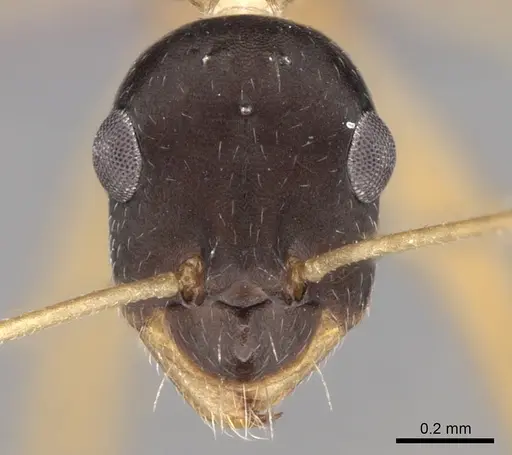
Lepisiota elegantissima workers are unmistakable due to their extremely elongated body form. The total length ranges from 4.25-4.60mm, but what really stands out is the proportion of their body parts [1]. The head and gaster are black, while the midbody (mesosoma) and petiole are yellowish-brown. Their legs and antennae are entirely yellow, with the apical parts of the middle and hind femora showing blackish coloration [1][2].
The most distinctive feature is the scape index exceeding 4.44, this means their antennae are exceptionally long relative to head size, far more than most ant species [1]. The mesonotum is described as tube-like, very thin, narrow and long relative to the pronotum and propodeum. The petiole is long with very short blunt lateral processes (small teeth), and the propodeum has a pair of fine upright teeth [1]. There are almost no dorsal hairs except for a few on the clypeus and some very short hairs on the petiole, giving them a relatively smooth appearance [1]. This combination of features makes them one of the most elegant-looking ants in the genus.
Distribution and Habitat
This species is known only from the United Arab Emirates and Oman, making it endemic to this region of the Arabian Peninsula [3][4]. The type specimens were collected from Wadi Maidaq in the UAE (coordinates 25°18'N 56°07'E) using yellow and white water traps between October and November 2006,with additional specimens collected in 2010 [1][2]. Additional workers were collected in a malaise trap at Wadi Wurayah in March 2007 [2].
Wadis are dry river beds that only carry water during the rainy season, creating unique microhabitats in otherwise arid landscapes. The collection dates (October-November and March) suggest these ants may be most active during the cooler months in the UAE, though this is based on limited data. The species shows Afrotropical zoogeographic affinities, meaning it shares evolutionary connections with ant species found in sub-Saharan Africa rather than with typical Middle Eastern fauna [3].
Temperature and Climate Requirements
Since this species comes from the UAE and Oman, you should replicate warm, arid conditions. The UAE features extremely hot summers (often above 40°C) and mild winters (15-25°C). Annual rainfall is very low, typically under 100mm per year.
For captive care, aim for nest temperatures in the range of 26-32°C. A heating cable placed on one side of the nest can create a temperature gradient, allowing the ants to choose their preferred zone. During the cooler winter months, you might consider reducing temperatures slightly to around 20-24°C to simulate seasonal changes, though their exact diapause requirements are unknown.
Humidity should be kept relatively low compared to tropical ant species. Target roughly 40-60% relative humidity, the nest should not be constantly damp. A small water tube for drinking is essential, but avoid creating humid, stagnant conditions that could lead to mold problems. The substrate (if using a naturalistic setup) should be allowed to dry out between waterings.
Feeding and Diet
The diet of Lepisiota elegantissima has not been studied in detail. As a member of the subfamily Formicinae (which includes genera like Camponotus, Lasius, and Polyrhachis), they likely have typical ant dietary preferences: sugar sources (honeydew, nectar, sugar water) and protein (insects, small arthropods).
Based on the genus patterns and their Arabian origin, they probably tend aphids and other honeydew-producing insects for sugar. For protein, offer small insects like fruit flies, pinhead crickets, or mealworms. Sugar water or honey water should be available at all times.
Start with offering a variety of foods and observe what they accept. Given their small colony sizes in the wild (based on limited specimens), they likely don't need large quantities of food. Remove any uneaten prey after 24-48 hours to prevent mold.
Challenges in Keeping This Species
Lepisiota elegantissima presents significant challenges for antkeepers. First and foremost, availability is extremely limited, this species was only described in 2011 and remains poorly known in the scientific community. You may struggle to find colonies or queens for sale.
Second, there are no established care protocols for this species. Everything recommended here is based on inference from the genus and the species' geographic origin. You will essentially be pioneering the husbandry of this species, which can be both exciting and risky.
Third, the unknown colony structure creates uncertainty. If you obtain a queen, you won't know if she's from a single-queen or multi-queen colony type, which affects how you should house her.
Finally, there's always a risk of misidentification. Since only workers are known and the genus contains several similar-looking species, sellers or yourself may misidentify specimens. Take clear photos and compare against the original description (head and gaster black, midbody yellowish-brown, extremely long antennae and legs) [1].
Future Research and Observation Opportunities
This species represents a genuine opportunity for antkeepers to contribute to scientific knowledge. Because so little is known about Lepisiota elegantissima, careful observations in captivity could yield valuable insights.
Key questions that captive colonies could help answer include: What is the exact colony structure (single queen or multiple)? How does the queen found a new colony, does she seal herself in (claustral) or must she forage (semi-claustral)? What is the complete development timeline from egg to adult? What temperatures and humidity levels do they prefer? What foods do they accept?
If you successfully keep this species, consider documenting your observations and sharing them with the antkeeping community or even with researchers studying Arabian ants. Captive observations of species like this are genuinely valuable since so little field data exists.
Frequently Asked Questions
How do I identify Lepisiota elegantissima workers?
Look for workers around 4.25-4.60mm with a distinctive color pattern: black head and gaster, yellowish-brown midbody and petiole. The most striking feature is the extremely long yellow antennae and legs, the scape index exceeds 4.4,which is unusually high. The mesonotum is tube-like and narrow, and the petiole has very short blunt lateral teeth [1].
Where does Lepisiota elegantissima come from?
This species is endemic to the United Arab Emirates and Oman on the Arabian Peninsula [3][4]. The type specimens were collected from Wadi Maidaq in the UAE using water traps [1].
What temperature should I keep Lepisiota elegantissima at?
Aim for warm conditions around 26-32°C, reflecting the hot UAE climate. Use a heating cable on one side of the nest to create a gradient. During winter, a slight reduction to 20-24°C may be appropriate, though exact diapause requirements are unknown.
What do Lepisiota elegantissima ants eat?
Their diet is unstudied, but based on genus patterns, they likely accept sugar sources (honey water, sugar water, honeydew) and protein (small insects like fruit flies, pinhead crickets, mealworms). Offer a variety and observe what they prefer.
How hard is Lepisiota elegantissima to keep?
This species is rated as difficult to keep. There are no established care protocols, the species is rarely available, and almost nothing is known about their biology in captivity. Only experienced antkeepers willing to experiment should attempt this species.
How big do Lepisiota elegantissima colonies get?
Unknown. The species is only known from scattered worker specimens collected in traps, no established colonies have been documented. Based on related Lepisiota species, they likely reach a few hundred workers at most.
Can I keep multiple Lepisiota elegantissima queens together?
Unknown. The colony structure (single queen vs multiple queens) has not been documented for this species. Most Lepisiota species form single-queen colonies, but combining unrelated queens is not recommended without evidence they can coexist.
What humidity do Lepisiota elegantissima need?
Keep humidity relatively low, around 40-60% relative humidity, reflecting the arid UAE environment. Avoid constantly damp conditions. A small water tube for drinking is essential, but the nest should not be humid.
How long does it take for Lepisiota elegantissima to develop from egg to worker?
Unknown, no direct observations exist. Based on typical Formicinae development in warm climates, a rough estimate would be 6-10 weeks from egg to first worker at optimal temperature, but this is entirely speculative.
What type of nest should I use for Lepisiota elegantissima?
No specific data exists. Based on their wadi habitat and UAE origin, a naturalistic setup with compact soil or a Y-tong/plaster nest with relatively dry chambers would be appropriate. Avoid overly humid conditions.
Is Lepisiota elegantissima available in the antkeeping hobby?
Extremely rare. This species was only described in 2011 and remains one of the least-studied Arabian ants. You will likely struggle to find colonies or queens for sale. If you do obtain specimens, be very careful about identification.
References

This caresheet is licensed under CC BY-SA 4.0 .
CASENT0264380
View on AntWeb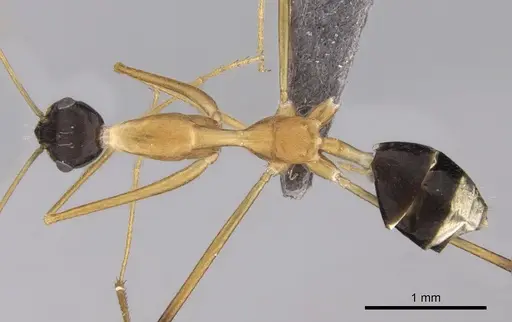
Literature
Loading...Loading products...